Parsley is one of the most widely grown and most universally consumed fresh herbs in the world, a bright, clean, versatile Mediterranean herb that has been cultivated for over 2,000 years across Europe, the Middle East, and beyond. Native to the central Mediterranean region — particularly Sardinia, Algeria, and Tunisia — it spread through Roman cultivation across Europe and is today grown commercially on every inhabited continent. The global parsley market is valued at hundreds of millions of dollars annually, with the United States, Germany, France, Italy, and Israel among the largest commercial producers of both fresh and dried parsley.
There are two primary forms of cultivated parsley — flat-leaf and curly — that dominate both commercial and home garden production, alongside a third, less widely grown root parsley type valued in Eastern European cooking. Most parsley varieties grow to 12 to 18 inches in height as compact, mounding biennial plants that produce their finest, most abundant leaf growth in the first year before flowering and setting seed in the second. Parsley grows across USDA zones 2 to 11 as an annual or biennial herb, performing best in cool to moderate temperatures and thriving in spring and autumn in warm climates where summer heat causes premature bolting.
Nutritionally, parsley is extraordinarily impressive for such a commonly used garnish herb — a single 100-gram serving of fresh parsley provides over 500 percent of the recommended daily vitamin K intake, over 130 percent of vitamin C, and significant amounts of vitamin A, folate, and iron alongside powerful antioxidant flavonoids including apigenin and luteolin. It is simultaneously one of the most nutritionally dense green herbs available and one of the most frequently wasted, used as a garnish in such small quantities that its nutritional contribution goes largely unrealized. The essential oil of parsley seed — containing apiole and myristicin — is used in the pharmaceutical, fragrance, and traditional medicine industries.
Parsley is consumed across virtually every food culture in the world — as a garnish in European and North American cooking, as a primary ingredient in Middle Eastern tabbouleh where it is used by the cupful, as an essential component of French bouquet garni and fines herbes blends, in Italian salsa verde and gremolata, in British and American fish and potato preparations, and as a fundamental flavoring in stocks, soups, and sauces across the professional cooking world. The root of Hamburg Parsley is eaten as a primary vegetable across Poland, Germany, and Eastern Europe where it is as fundamental to traditional cooking as the carrot is in Western European cuisine. The extraordinary versatility of parsley across culinary traditions, the ease with which it can be grown in virtually any temperate climate, and its outstanding nutritional value collectively make it one of the most important and irreplaceable herbs in the entire world of food production.
Types of Parsley
1. Italian Flat-Leaf Parsley
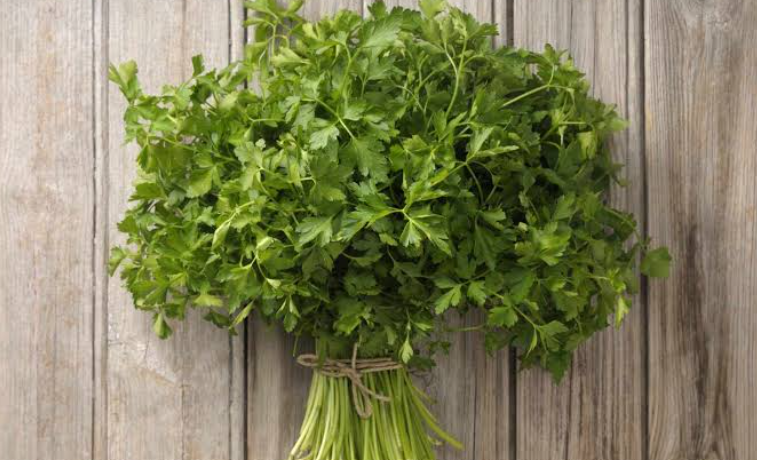
Italian Flat-Leaf Parsley is the most widely used and most highly regarded culinary parsley in professional cooking worldwide, producing broad, flat, deeply lobed, vivid dark green leaves with a robust, clean, bright, complex herbal flavor significantly more assertive and aromatic than the milder curly varieties. It is the parsley of choice for virtually every professional chef globally and is the standard parsley in Italian, French, Middle Eastern, and broader Mediterranean cooking traditions where it functions both as a primary ingredient and as an essential flavoring component in countless preparations. It grows to 12 to 18 inches, is widely available from all mainstream seed suppliers, and is universally considered the definitive culinary parsley by professional cooks and food authorities.
2. Curly Parsley
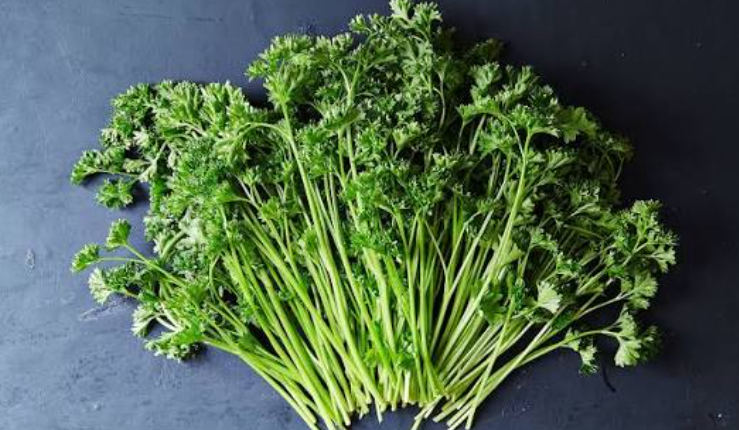
Curly Parsley is the most widely sold parsley in mainstream supermarkets and grocery stores across the United Kingdom and North America, producing densely ruffled, tightly curled, bright green leaves that are visually distinctive and highly decorative as a plate garnish but have a milder, less complex flavor than flat-leaf varieties. Despite being considered inferior in flavor by most professional chefs who overwhelmingly prefer flat-leaf, curly parsley remains enormously popular in home cooking and commercial food service for its attractive appearance and its very long shelf life in refrigerated retail displays where the dense curling helps the herb retain moisture and visual freshness. It grows to 10 to 14 inches as a compact, dense, attractive mounding plant.
3. Giant Italian Flat-Leaf Parsley
Giant Italian is a large-leafed selection of flat-leaf parsley producing exceptionally broad, bold, very dark green leaves of outstanding size — significantly larger than standard flat-leaf varieties — alongside the same robust, assertive, clean herbal flavor that makes Italian flat-leaf parsley the chef’s preferred culinary herb. The larger leaf size makes it considerably more productive per plant for harvesting and more visually impressive in the garden, and the deep, dark green color indicates high chlorophyll and nutritional content. It grows vigorously to 18 to 24 inches in height, making it one of the tallest and most productive flat-leaf parsley varieties for both home and commercial herb garden production.
4. Hamburg Parsley (Root Parsley)
Hamburg Parsley is the most important and widely grown root parsley variety, producing thick, white, carrot-like edible roots alongside usable, well-flavored fresh leaves on a vigorous plant reaching 18 to 24 inches in height. The roots have a distinctive, rich, parsley-celery flavor that is fundamental to Polish, German, Czech, Hungarian, and broader Eastern European cooking — used in soups, broths, stews, and roasted vegetable preparations as a primary flavoring vegetable. The roots mature in 70 to 90 days from sowing, can be stored through winter in cool conditions like carrots, and are available from heritage and specialist vegetable seed suppliers in Europe and North America.
5. Moss Curled Parsley
Moss Curled is one of the most tightly and densely curled of all curly parsley varieties, producing an extraordinarily compact, finely ruffled, moss-like leaf texture that is the most decorative of any curly parsley type and the traditional choice for classic fine dining plate garnishing in European restaurant kitchens. The very dense, tight curling of the leaves creates a visually striking, almost fluffy, cushion-like appearance and the compact, mounding plant habit reaches only 10 to 12 inches in height, making it excellent for decorative edging in formal herb gardens. It is widely available from mainstream seed suppliers and has been a staple of traditional European cooking garnishing for several centuries.
6. Triple Curled Parsley
Triple Curled is a selection of curly parsley with particularly deeply and intricately ruffled leaves — more tightly and abundantly curled than standard curly varieties — that creates the most visually elaborate and decorative curly parsley presentation available to gardeners and chefs. The intensely frilled, triple-layered curling of the leaves makes it outstanding for garnishing applications where maximum visual impact is desired, and the compact, dense, well-branched plant habit remains consistently attractive throughout the entire growing season. It is widely available from mainstream seed suppliers and is a popular choice for decorative formal herb garden edging alongside its culinary garnishing role.
7. Dark Green Italian Parsley
Dark Green Italian is a specifically color-selected strain of flat-leaf parsley chosen for exceptionally deep, rich, dark green leaf color that provides maximum visual impact in fresh herb displays and indicates high chlorophyll content alongside the same excellent, robust, clean culinary flavor of standard Italian flat-leaf parsley. The leaves are noticeably darker and more intensely green than standard flat-leaf varieties, making them particularly attractive both in the garden and as a culinary garnish. It is favored by commercial fresh herb producers supplying premium supermarket fresh herb ranges where deep, vivid green color is one of the most important visual quality indicators for retail display.
8. Forest Green Parsley
Forest Green is a compact, productive curly parsley variety producing very dark, deep green, densely curled leaves of good flavor and outstanding color intensity that is one of the darkest-colored of all commercially available curly parsley varieties. The deep forest green color provides significantly more visual impact than standard paler curly varieties, and the compact, mounding plant habit of 10 to 14 inches suits both garden border edging and container growing. It is increasingly favored over paler standard curly varieties by gardeners and commercial producers who value the combination of deep color, dense leaf production, and attractive plant habit.
9. Krausa Parsley
Krausa is an important German curly parsley variety producing very densely curled, bright to medium green leaves of good flavor and particularly vigorous, productive growth that has made it one of the most commercially significant curly parsley varieties in German and broader Central European herb production. The vigorous growth habit, dense leaf canopy, good flavor quality, and reliable productivity under the cool, maritime conditions of Central European growing regions have made Krausa a widely planted choice among professional herb growers in Germany, the Netherlands, and neighboring countries. It is available from specialist European commercial herb seed suppliers.
10. Plain Leaf Parsley (Single Parsley)
Plain Leaf or Single Parsley is the simplest and most ancestral form of cultivated parsley, producing flat, relatively simple, lightly lobed leaves without the deep serration and complexity of modern Italian flat-leaf varieties or the dense curling of curly types. It was the most widely grown parsley in European gardens before the development of the deeply lobed Italian and densely curled varieties that now dominate commercial and home production, and it remains grown by heritage vegetable enthusiasts and seed saving communities who value its historical significance and the clean, mild, pleasant parsley flavor of this simpler, more primitive form. It is available from specialist heritage seed suppliers.
11. Titan Parsley
Titan is a vigorous, large-growing flat-leaf parsley variety producing very tall, robust plants reaching 24 to 30 inches in height — significantly taller than most standard flat-leaf varieties — with large, broad, dark green leaves of good culinary flavor and outstanding productivity per plant that suit commercial fresh herb operations seeking maximum leaf yield per square meter. The exceptional plant height, large leaf size, and vigorous growth habit make Titan one of the most productive flat-leaf parsley varieties available for commercial fresh herb production, and the good leaf quality ensures the abundant harvest meets the flavor standards required for premium fresh herb retail. It is available from specialist commercial herb seed suppliers.
12. Prezzemolo Gigante d’Italia
Prezzemolo Gigante d’Italia is the traditional Italian giant flat-leaf parsley selection, producing very large, broadly lobed, strongly flavored, dark green leaves on vigorous plants of 18 to 24 inches with a full, rich, complex, assertive parsley flavor considered by Italian professional cooks to be among the finest quality parsley available for the robust, richly flavored cooking of the Italian culinary tradition. This traditional selection reflects centuries of Italian horticultural development aimed at producing the largest, most flavorful, most productive flat-leaf parsley varieties, and it represents the authentic Italian parsley that has been grown in kitchen gardens across Italy for generations. It is available from Italian and specialist European heritage vegetable seed suppliers.
13. Bravour Parsley
Bravour is a modern commercial flat-leaf parsley variety developed specifically for hydroponic and protected environment cropping systems, producing compact, vigorous, consistently productive plants well-suited to year-round controlled environment agriculture that supplies supermarket fresh herb ranges with consistent, high-quality parsley throughout every season. It combines good leaf quality and flavor with the production consistency, disease resistance, compact habit, and adaptation to artificial lighting conditions required for modern commercial fresh herb production under glass and in hydroponic systems. It is available from specialist commercial herb seed suppliers serving professional fresh herb producers.
14. Wega Parsley
Wega is a Dutch commercial flat-leaf parsley variety developed for professional fresh herb production in the Netherlands and broader Northern European growing regions, producing consistent, vigorous, well-flavored plants suited to commercial cultivation in both field and protected cropping systems under the cool, maritime conditions characteristic of northwestern European herb farming. The reliable production performance, good leaf quality, adaptation to Northern European conditions, and the consistent fresh market appearance of the harvested herb have made Wega an important variety in Dutch and Belgian commercial parsley production for both domestic and export markets. It is available from specialist commercial herb seed suppliers.
15. Arat Parsley
Arat is a modern flat-leaf parsley variety developed specifically for outstanding disease resistance — particularly against septoria leaf spot and downy mildew, the two most economically damaging fungal diseases affecting commercial parsley production in cool, humid growing conditions — alongside good leaf quality and vigorous, productive growth suited to commercial fresh herb production with reduced fungicide inputs. The improved disease resistance makes Arat particularly valuable for organic and low-spray fresh parsley production systems where the ability to maintain healthy, high-quality leaf production without chemical disease control is a critical commercial and marketing advantage. It is available from specialist commercial herb seed suppliers.
16. Gigante di Napoli Parsley
Gigante di Napoli, meaning Giant of Naples in Italian, is a traditional southern Italian flat-leaf parsley variety producing very large, broadly lobed, strongly flavored, dark green leaves on vigorous, tall plants that reflect the Neapolitan and broader southern Italian tradition of growing large, bold, assertive, full-flavored herbs suited to the robust, richly spiced, intensely flavored cooking of the Campania, Calabria, and Sicily regions. The very large leaf size, outstanding flavor intensity, and vigorous growth habit make it one of the most productive and flavorful traditional Italian parsley varieties and a treasured part of southern Italian kitchen garden heritage. It is available from Italian heritage and specialist European seed suppliers.
17. Catalogno Parsley
Catalogno is a traditional Italian and western Mediterranean flat-leaf parsley variety producing very broad, large, flat, relatively lightly lobed leaves with a mild, clean, pleasant parsley flavor that is somewhat gentler and less assertive than the deeply lobed, strongly flavored Italian giant varieties. The broader, flatter leaf form makes it particularly suitable for using whole leaves as a wrap or base in food presentations and the mild, clean flavor suits applications where a subtler parsley character is preferred alongside strongly flavored companion ingredients. It is grown primarily in Mediterranean home gardens and by traditional market gardeners and is available from specialist Italian and Spanish heritage vegetable seed suppliers.
18. Parsley Microgreens
Parsley Microgreens are the tiny, young seedlings of flat-leaf or curly parsley harvested at 14 to 21 days after germination — somewhat later than most microgreen crops because parsley germinates slowly and requires patience — when the cotyledon leaves and first true leaves are fully developed, producing intensely flavored, nutritionally dense, miniature parsley plants with a bright, clean, concentrated parsley flavor more vivid and assertive than mature fresh parsley leaves. They are widely grown in professional kitchen gardens, hydroponic operations, and home sprouting setups as a refined garnish and flavor accent on soups, seafood, egg dishes, and any preparation where clean, intense parsley flavor and visually delicate appearance add culinary value.
19. Neapolitan Parsley (Celery-Leafed Parsley)
Neapolitan Parsley, also called celery-leafed parsley or cutting parsley, is an unusual Italian heritage variety producing broad, flat, celery-like leaves on long, thick, edible, celery-like stems that are used in Italian cooking as both a herb and as a vegetable stem ingredient — the thick stems being blanched, braised, or eaten raw in salads in much the same way as cellar stalks. The flavor is a rich, complex blend of parsley and celery character unique among parsley varieties, reflecting the deep Italian tradition of breeding multi-purpose vegetables that provide maximum culinary versatility from a single plant. It is available from Italian heritage seed specialists and is primarily grown in traditional southern Italian kitchen gardens.
20. Japanese Mitsuba
Japanese Mitsuba is not a true parsley but the Japanese culinary equivalent, occupying the same role as a fresh, delicate green herb garnish and flavoring in Japanese cooking that flat-leaf parsley occupies across European and Mediterranean cuisine. It produces three-lobed, bright green leaves with a gentle, slightly parsley-like, slightly celery-like, delicate aromatic flavor used in soups, rice dishes, egg preparations, and as a garnish across traditional Japanese cuisine. It grows to 12 to 18 inches, prefers partial shade and cool, moist conditions, and is increasingly available from Asian specialty herb nurseries worldwide as Japanese culinary culture continues to gain international interest.
21. Grüne Perle Parsley
Grüne Perle, meaning Green Pearl in German, is a fine German curly parsley variety producing very dense, dark green, tightly curled leaves of good flavor and outstanding ornamental appeal on compact, vigorous, well-branched plants that have made it one of the most respected curly parsley varieties in German horticultural tradition. The particularly dense and uniform curling of the leaves creates an attractive, perfectly rounded, ball-like plant form that is as ornamentally beautiful in the garden border as it is useful in the kitchen and as a garnish, and the deep green color and good culinary flavor make it a genuinely dual-purpose ornamental and culinary herb plant. It is available from German and specialist European herb seed suppliers.