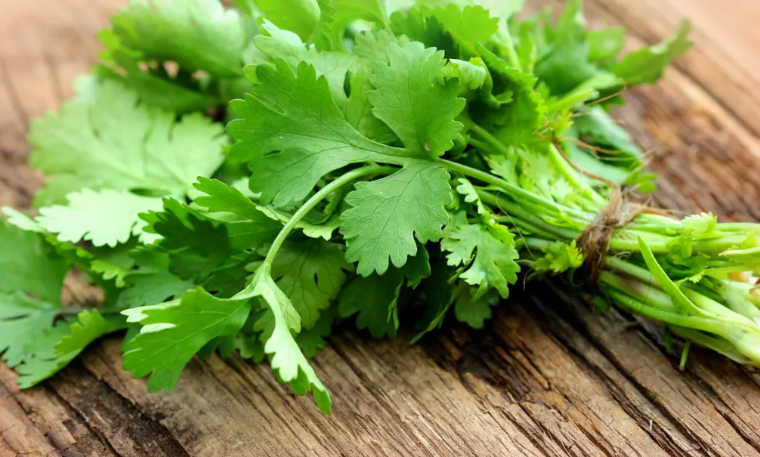
Coriander is one of the most ancient, most widely cultivated, and most culturally significant herb and spice plants in the world, remarkable for being the only commonly used culinary plant where both the fresh leaves and the dried seeds are harvested as entirely distinct and commercially separate ingredients with fundamentally different flavors, aromas, and culinary applications.
The fresh leaves — called cilantro in North America and Latin America, coriander leaf in the United Kingdom, dhania in South Asia, and pak chee in Southeast Asia — are the most widely consumed fresh herb in the world by volume, while the dried seeds are one of the most important and widely used spice seeds in global cooking. Coriander seeds have been found in ancient Egyptian tombs dating to 3,000 BCE and the plant is mentioned in ancient Sanskrit texts, the Bible, and classical Greek and Roman literature, making it one of the most extensively documented plants in human history.
Coriander is grown commercially on every inhabited continent in an extraordinary range of climates, from the cool temperate growing conditions preferred by the fresh leaf crop to the warm, dry conditions that produce the finest flavored seeds. India is the world’s largest producer of coriander seeds, accounting for approximately 70 percent of global production, with Rajasthan, Madhya Pradesh, and Gujarat being the primary producing states.
Global coriander seed production exceeds 600,000 metric tons annually and the fresh cilantro herb market adds many hundreds of thousands of additional tons of fresh leaf production, with Mexico, the United States, India, China, and Thailand among the largest fresh cilantro producers.
The fresh leaves and dried seeds of coriander share the same plant but have almost completely different flavor profiles — a fascinating botanical paradox that makes coriander uniquely versatile among all culinary plants. The fresh leaves produce a bright, citrusy, slightly soapy, complex aromatic character from aldehyde compounds including decenal and decanal that is one of the most polarizing flavors in the culinary world, loved intensely by the majority of the global population across Asian, Latin American, and Middle Eastern cultures and strongly disliked by a minority of people — approximately 4 to 14 percent of the Western population — who have a genetic sensitivity to the aldehydes that makes the fresh herb taste overwhelmingly of soap. The dried seeds, by contrast, produce a warm, citrusy, slightly sweet, earthy, nutty flavor from linalool and other aromatic compounds that is universally appealing.
Coriander is consumed in an extraordinary diversity of forms and applications across the world’s food cultures — fresh leaves as a garnish and primary herb in Mexican salsa, Indian curry, Vietnamese pho, and Thai dishes; dried and ground seeds as a foundational spice in Indian curry powder, garam masala, ras el hanout, and Chinese five spice; whole seeds in pickling spice blends and craft beer brewing; the roots in Thai curry paste production where the intense, earthy, aromatic coriander root flavor is as valued as the leaf; and the essential oil in perfumery and pharmaceutical applications.
The global coriander essential oil market is growing significantly alongside increasing demand for natural fragrance ingredients, and coriander oil — particularly from Russian and European seed sources — is an important ingredient in fine perfumery where its warm, woody, slightly floral character suits numerous fragrance compositions.
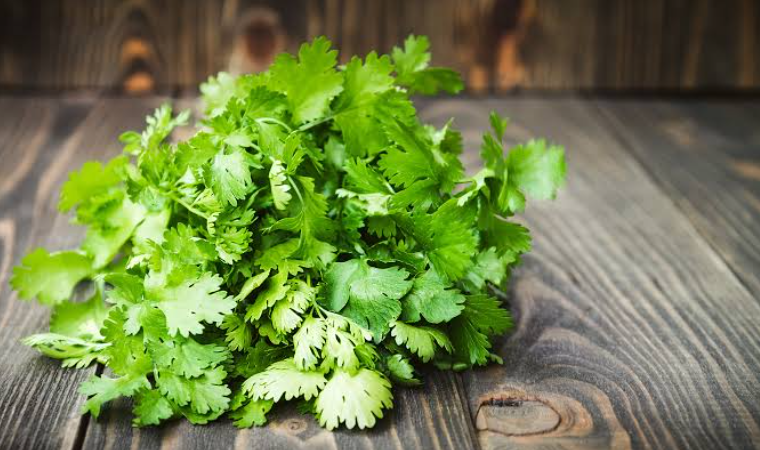
Types of Coriander
1. Common Coriander (Standard Culinary)
Common Coriander is the most widely grown and commercially important coriander variety globally, the standard culinary coriander planted by home gardeners and commercial producers alike across every continent for both fresh leaf and dried seed production.
It produces medium to large, bright green, deeply lobed leaves with the characteristic, complex, citrusy, aromatic fresh coriander fragrance and flavor, followed by round, ribbed, pale yellow-brown seeds of good, warm, citrusy flavor after flowering. Most coriander sold in supermarkets, herb markets, and seed packets without a specific named variety designation falls into this broad category of standard culinary coriander selected primarily for productive leaf growth and reliable garden performance.
2. Slow-Bolt Coriander
Slow-Bolt Coriander is the most practically important coriander selection for home gardeners and commercial fresh herb producers, selected specifically for the ability to remain in the leafy, vegetative stage — producing fresh, harvestable leaves — significantly longer than standard varieties before bolting to flower and seed in response to warm temperatures or lengthening days.
Standard coriander bolts frustratingly quickly in warm weather, sometimes within weeks of planting, and the development of slow-bolt varieties has dramatically extended the practical fresh herb production season available to gardeners in warm climates. Varieties including Leisure, Calypso, and Santo represent some of the most widely grown and commercially available slow-bolt coriander selections.
3. Santo Coriander
Santo is one of the most widely grown and most widely recommended slow-bolt coriander varieties, producing abundant, vigorously growing, large, dark green, well-flavored leaves on a compact, upright plant before eventually bolting to flower and seed.
It is one of the most widely available named coriander varieties in mainstream seed retail across North America and Europe and is consistently recommended by gardening publications and horticultural extension services as the best all-round coriander variety for home garden fresh leaf production. The combination of good leaf production, decent bolt resistance, and wide availability has made Santo the default named coriander variety in most English-language seed catalogues.
4. Leisure Coriander
Leisure is a specifically developed slow-bolt coriander cultivar producing very dense, leafy, vigorous growth and significantly better bolt resistance than standard coriander varieties — remaining in the vegetative leafy stage for considerably longer in warm weather before the onset of flowering — making it one of the most productive and practical varieties for summer fresh herb production in warm climates where standard coriander bolts within days of planting.
The leaves are large, dark green, and of excellent flavor quality and the improved bolt resistance makes Leisure particularly well-suited to succession planting programs aimed at maintaining a continuous supply of fresh coriander leaf through the growing season.
5. Calypso Coriander
Calypso is another important slow-bolt coriander cultivar producing compact, upright, densely leafy plants with excellent bolt resistance and good fresh leaf flavor, widely available from mainstream seed suppliers in North America and Europe as a reliable, productive alternative to standard coriander for warm-season fresh herb production.
The compact, upright growth habit of Calypso makes it particularly well-suited to container growing and close-spaced intensive production in small garden spaces and raised beds where maximum leaf production per square foot is the primary productivity objective. It is widely available from mainstream seed suppliers globally.
6. Vietnamese Coriander (Rau Ram)
Vietnamese Coriander, called rau ram in Vietnamese and laksa leaf in Malaysian and Singaporean cooking, is not a true coriander but a distinct herb species with a strongly coriander-like, peppery, slightly citrusy, somewhat more pungent and spicy flavor that makes it a used substitute or complement to true coriander across Vietnamese and Southeast Asian cooking.
It is an essential ingredient in Vietnamese beef noodle soup and numerous other Vietnamese preparations, in Malaysian and Singaporean laksa soup — one of the most celebrated dishes in Southeast Asian cuisine — and in various Thai and Cambodian traditional preparations. It grows as a spreading, moisture-loving perennial in USDA zones 9 to 12.
7. Thai Coriander (Pak Chee)
Thai Coriander refers to the specific coriander varieties and selections preferred in Thai cooking, where both the fresh leaves — called pak chee — and particularly the roots — called raak pak chee — are used as essential culinary ingredients in a way that is relatively unusual in coriander’s global culinary use.
Thai coriander varieties are selected for robust flavor, vigorous root development, and adaptation to Thai growing conditions, and the roots are an essential ingredient in Thai curry pastes, stir-fry preparations, and marinades where the intense, earthy, concentrated coriander root flavor is considered an irreplaceable component of authentic Thai flavor profiles. The coriander root is rarely used outside Thai and some Cambodian cooking.
8. Moroccan Coriander
Moroccan Coriander refers to the coriander varieties grown in Morocco — one of Africa’s most important spice producers — primarily for dried seed production, with Moroccan coriander seeds valued in European spice markets for their good, warm, aromatic flavor quality.
Morocco produces significant quantities of coriander seeds for export to European markets alongside its important production of cumin, caraway, and other spice seeds, and Moroccan-origin coriander seed is widely available in European wholesale and retail spice markets. Coriander is an essential ingredient in Moroccan ras el hanout spice blend and in the chermoula herb and spice marinade fundamental to Moroccan cooking.
9. Indian Coriander Seed (Rajasthan)
Rajasthan Coriander Seed represents the most commercially important coriander seed production in the world, with Rajasthan state in northwestern India producing approximately 45 to 50 percent of India’s enormous national coriander seed output from the arid and semi-arid growing conditions of districts including Kota, Bundi, Jhalawar, and Baraan.
Indian coriander seeds are broadly divided into the smaller, rounder, more intensely flavored Eagle variety widely used in Indian cooking and exported to global Indian diaspora markets, and the larger, more oval Badami (almond-shaped) variety preferred for essential oil extraction and export to European and North American spice markets. Both varieties are traded in enormous volumes through the spice trading hub of Kochi and other major Indian spice markets.
10. Russian Coriander Seed
Russian Coriander Seed is an important and commercially distinctive coriander seed type produced in the Russian Federation, Ukraine, and other former Soviet states where coriander has been grown as a significant commercial crop for the domestic food industry and essential oil production since the Soviet era.
Russian and Eastern European coriander seeds tend to be larger, more oval, and lower in essential oil content than Indian varieties but produce a higher yield of linalool-rich essential oil of specific character valued in European perfumery and food flavoring industries where the warm, floral, citrusy, slightly woody character of Russian coriander oil is used in gin botanicals, fragrance compositions, and natural flavor preparations.
11. Egyptian Coriander
Egyptian Coriander is an important Middle Eastern coriander production, grown in Egypt’s Nile Delta and Upper Egypt regions for both domestic consumption and export to European and Middle Eastern spice markets. Egyptian coriander seeds are medium-sized with a warm, clean, citrusy, mildly sweet flavor that suits the broad range of Middle Eastern and North African culinary applications where coriander seed is a fundamental spice.
Egypt is one of the important Mediterranean basin coriander producers alongside Morocco and Turkey, and Egyptian coriander seed is widely available in Middle Eastern specialty food markets across Europe and North America.
12. Cilantro Microgreens
Cilantro Microgreens are the tiny, young seedlings of coriander harvested at 7 to 14 days after germination when the cotyledon leaves are fully developed and the first true leaves are just beginning to emerge, producing intensely flavored, nutrient-dense, miniature versions of the fresh coriander herb with a bright, clean, citrusy, true coriander flavor that is prized by chefs for its visual delicacy and concentrated flavor intensity.
Cilantro microgreens are one of the most popular and widely grown microgreen varieties in professional kitchen gardens, hydroponic urban farms, and home sprouting operations, used as a garnish on tacos, soups, tartare preparations, and any dish where the clean, bright cilantro flavor and visually attractive delicate leaf form add value.
13. Long-Standing Coriander
Long-Standing Coriander encompasses a group of slow-bolting, heat-tolerant coriander varieties selected specifically for the longest possible fresh leaf production season before the inevitable onset of flowering, combining the leaf quality of the finest culinary coriander with the most extreme bolt resistance available in any commercially available variety.
These varieties are particularly valued by commercial fresh herb producers who need to maintain supply for as many weeks as possible from each planting and by home gardeners in warm climates who struggle to keep standard coriander in leaf production through the summer. They are typically available from specialist herb and vegetable seed suppliers rather than mainstream garden centers.
14. Delfino Coriander
Delfino is a distinctive coriander variety producing extraordinarily finely divided, feathery, dill-like, almost thread-fine leaves quite unlike the broad, lobed leaves of standard coriander — creating a visually dramatic, delicate, lacy herb that is used primarily as an ornamental garnish where the fine, feathery texture adds visual refinement alongside the true coriander flavor.
The name refers to the dolphin-fin-like appearance of the finely divided leaf segments and the variety is particularly popular in fine dining presentations where the delicate leaf form provides a sophisticated visual contrast to more standard herb garnishes. It grows with less vigor than standard coriander but produces excellent flavor quality.
15. Lemon Coriander
Lemon Coriander is a specialty coriander variety or selection producing fresh leaves with a noticeably more pronounced, bright, citrusy, lemon-like aromatic note alongside the standard coriander character, attributed to a slightly different balance of volatile aromatic compounds — particularly higher decenal and citrusy aldehyde content — that gives the fresh leaves a more vividly lemony fragrance than standard varieties.
It is grown primarily by specialty herb producers, culinary enthusiasts, and chefs who value the more brightly citrusy character for specific culinary applications where a lighter, more lemon-forward fresh herb note is desired. It is available from specialist herb seed suppliers rather than mainstream garden retail.
16. Leisure Long Standing
Leisure Long Standing is an enhanced slow-bolt selection combining the good leaf quality and bolt resistance of the standard Leisure variety with additional selection pressure for extended vegetative growth under warm-temperature and long-day conditions.
It represents the continuing development of improved slow-bolt coriander varieties for commercial fresh herb production and is available from specialist vegetable and herb seed suppliers serving commercial herb growers who need the most extreme bolt resistance available in any commercially produced coriander variety to maintain fresh supply through warm growing seasons.
17. Rani Coriander
Rani is an important named Indian coriander variety developed by Indian agricultural research institutions, producing good-quality fresh leaves alongside high-yielding, well-flavored seeds suited to both culinary use and essential oil extraction in Indian commercial production.
Named cultivar development by Indian agricultural universities and research institutes has significantly improved yields, disease resistance, and quality consistency in commercial Indian coriander production, and Rani represents one of the important improved varieties contributing to India’s dominant position in global coriander production. It is primarily grown in Rajasthan and Gujarat for commercial seed production.
18. Coriander Seed Microgreens
Coriander Seed Microgreens are a specific category of coriander microgreen produced by germinating whole, unhulled coriander seeds — which are technically fruits containing two seeds each — in growing media and harvesting at the cotyledon stage, producing small but intensely flavored seedlings with a particularly rich, warm, slightly spicy coriander flavor that differs subtly from the bright, citrusy character of mature coriander leaf microgreens.
The harder seed coat of coriander seeds makes them slightly more challenging to germinate evenly than many other microgreen crops, and splitting the seeds before planting — by gently crushing them to separate the two seeds within each fruit — significantly improves germination speed and uniformity.
19. Cruiser Coriander
Cruiser is a commercial fresh herb coriander variety developed for hydroponic and protected cropping production systems, producing compact, densely leafy, vigorous growth suitable for high-density planting in glasshouse and polytunnel fresh herb production where consistency, uniformity, and reliable year-round performance are more important than the bolt resistance required for outdoor summer production.
It represents the development of coriander varieties specifically optimized for the controlled environment agriculture systems that now supply a significant and growing proportion of fresh herbs to supermarket retail supply chains in North America and Europe where year-round consistency of supply is a commercial requirement.
20. Confetti Coriander
Confetti Coriander is a highly ornamental coriander variety producing extremely finely divided, feathery, thread-fine leaves similar in concept to Delfino but with an even more delicate, almost needle-like, fern-like leaf structure that creates a uniquely refined and visually striking fresh herb of outstanding garnish quality for fine dining applications.
The extraordinarily fine, confetti-like leaf segments that give this variety its evocative name provide maximum visual delicacy as a garnish while maintaining genuine coriander flavor in the fresh herb, making it a favorite among chefs who want both culinary authenticity and visual refinement from their garnishing herbs. It is available from specialist culinary herb seed suppliers.
21. Pot-Grown Coriander
Pot-Grown Coriander refers to the specific compact, densely leafy coriander selections developed and produced specifically for sale as living pot herb plants in supermarket produce sections and garden centers, where consumers purchase a pot of actively growing, fresh coriander to harvest leaves from at home over a period of several weeks before the plant bolts.
These varieties are selected for compact growth habit, dense, leafy appearance at the small pot size in which they are sold, good shelf life in retail conditions, and a relatively slow bolt rate that gives the consumer a reasonable window of fresh leaf harvest. They represent an important segment of the commercial fresh herb market that has grown substantially.
22. Cilantro Salsa Verde Type
Salsa Verde cilantro varieties are informal selections of standard coriander made by Latin American and Mexican seed companies for varieties that perform best in the warm to hot growing conditions of Mexico, Central America, and the southern United States where they are used primarily in fresh salsa, guacamole, and Mexican cooking applications.
These selections tend to have good heat tolerance, a vigorous, robust growth habit suited to warm-climate production, and a bright, assertive, clean coriander flavor well-suited to the bold, vibrant flavor profiles of Mexican and Central American cooking where coriander leaf is one of the most fundamental and heavily used fresh herbs.
23. Guatemalan Coriander (Culantro Guatemalteco)
Guatemalan Coriander refers to the coriander leaf varieties grown across Guatemala and used extensively in Guatemalan and broader Central American cooking where fresh coriander — called culantro in local Spanish — is as fundamental to the local cuisine as it is to Mexican cooking.
Guatemalan coriander cultivation benefits from the country’s diverse range of altitudes and climates, allowing production of fresh coriander virtually year-round in highland conditions where cool temperatures extend the productive leaf season considerably beyond what is achievable in lowland tropical conditions. Guatemala is an important Central American coriander-producing nation for both domestic use and regional export.
24. Culantro (Long-Leafed Coriander)
Culantro, also called long-leafed coriander, sawtooth coriander, shadow bennie, or recao, is a distinct tropical herb species that is not a true coriander but produces a very similar, somewhat more intense, slightly more pungent coriander-like flavor from similar aldehyde compounds and is used as a coriander substitute and complement across Caribbean, Latin American, Southeast Asian, and West African cooking traditions where the true coriander plant grows poorly in heat and humidity. It produces long, serrated, tough-edged leaves that are significantly more heat and humidity tolerant than true coriander and can be grown year-round in tropical climates where standard coriander would bolt immediately. It is essential in Puerto Rican sofrito, Vietnamese pho, and Thai soups.
25. Japanese Coriander (Mitsuba)
Japanese Mitsuba, while not a true coriander, occupies a similar culinary role in Japanese cooking as a fresh herb with a mild, slightly parsley-like, slightly coriander-like, slightly celery-like, delicate aromatic character that is used as a garnish and fresh flavoring in Japanese soups, rice dishes, and traditional preparations in the same way that coriander leaf is used across other Asian cuisines. The three-leafed structure gives mitsuba its Japanese name meaning three leaves and the delicate, shade-tolerant plant grows well in the cool, moist conditions of Japanese temperate gardens where true coriander would quickly bolt in summer heat. It is increasingly available from Asian specialty herb nurseries outside Japan.
26. Peruvian Coriander (Huacatay)
Huacatay, also called black mint or Peruvian black marigold, is a strongly aromatic Andean herb used extensively in traditional Peruvian and Bolivian cooking where it provides a complex, unique, slightly citrusy, slightly minty, slightly tarragon-like aromatic character that is completely different from true coriander but fills a similar role as an essential, fresh, green aromatic herb in the dishes where it is used.
It is an essential ingredient in traditional Peruvian aji de gallina, ocopa sauce, and numerous other Andean preparations and is increasingly available as a paste in jars from Latin American specialty food suppliers as interest in Peruvian cuisine grows internationally.
27. African Coriander (Aframomum)
African coriander refers to several aromatic African herbs from different plant families that provide coriander-like aromatic contributions to West and Central African cooking traditions, where the name coriander is applied colloquially to various locally important herbs that provide similar fresh, aromatic, slightly citrusy flavoring roles in local cuisines.
The specific plants identified as African coriander vary considerably between different West African countries and culinary traditions, reflecting the extraordinary botanical diversity of the African continent and the rich tradition of using locally available aromatic herbs in place of imported spices. These herbs are primarily of interest to food anthropologists and cooks exploring authentic African culinary traditions.
28. Chinese Coriander Seed Production
Chinese Coriander encompasses the significant coriander seed production across China’s northern and northwestern growing regions — particularly Shanxi, Inner Mongolia, and Xinjiang provinces — where coriander seeds are grown at commercial scale for the domestic Chinese spice market and for export to Asian and international markets.
China is one of the world’s largest coriander seed producers alongside India and is the primary supplier of affordable coriander seeds to the enormous Chinese domestic cooking market where both coriander seeds and fresh coriander leaf are fundamental ingredients in northern Chinese cooking, Xinjiang lamb preparations, and the diverse culinary traditions of China’s vast interior regions where coriander has been cultivated for centuries.
29. Coriander Sprouts
Coriander Sprouts are germinated coriander seeds harvested at 3 to 5 days when the small, pale sprouts are just emerging from the seed, before the green leaf tissue has fully developed, producing a mild, slightly earthy, subtly coriander-flavored sprout used in salads, sandwiches, and health food preparations where a delicate coriander note is desired in a sprout form.
They are less intensely flavored than mature coriander microgreens or fresh coriander leaf but provide a gentle, accessible coriander character in a nutritionally dense, living food form that suits the raw food, sprouting, and living nutrition movements that have contributed to growing consumer interest in sprouted seeds of all kinds. They are grown at home in sprouting jars or trays.
30. Heritage Coriander Varieties
Heritage Coriander Varieties encompass the diverse range of traditional, open-pollinated, non-hybrid coriander varieties that have been cultivated for generations in specific regions — including varieties like Jantar, Rajendra Swati, Co-1, Co-2, Co-3, and RCr-20 developed by Indian agricultural research stations specifically for Indian growing conditions — alongside numerous locally adapted varieties maintained by traditional farmers, seed saving communities, and agricultural gene banks across India, Morocco, Eastern Europe, and other historically important coriander-growing regions.
These heritage varieties collectively represent thousands of years of agricultural selection for specific local climates, culinary preferences, and end uses and are maintained by seed saving organizations, agricultural gene banks, and traditional farming communities as an irreplaceable genetic resource for future coriander improvement.