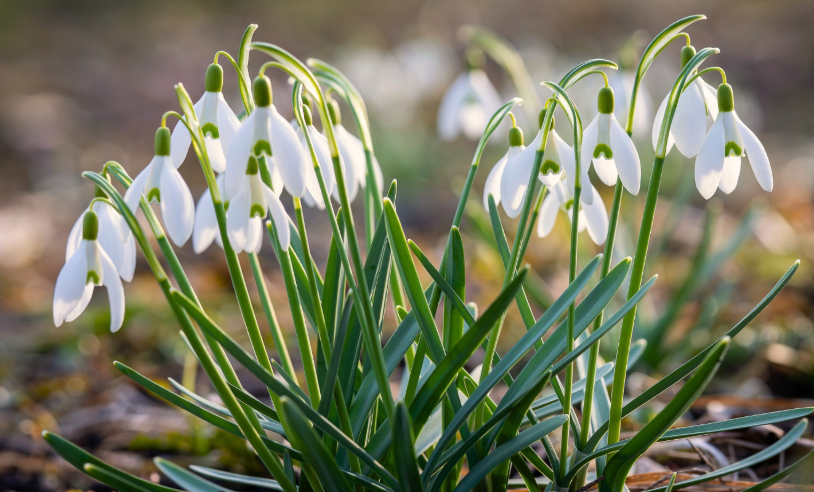
Snowdrop (Galanthus nivalis) is a small bulbous perennial belonging to the amaryllis family, native to woodlands and meadows across Europe and parts of the Middle East. As a plant, it produces narrow, strap-like grayish-green leaves that emerge directly from the bulb, typically reaching just 4 to 6 inches (10 to 15 centimeters) in height. Each bulb sends up one or two slender flower stems, giving the plant a delicate, understated appearance.
The flowers are small, nodding, and bell-shaped, consisting of three larger outer petals and three smaller inner petals often marked with green. These blooms appear in pure white, hanging gracefully from thin stems that sway gently in late winter breezes. Despite their fragile look, the flowers are remarkably resilient against cold and even light snow.
Snowdrops are famous for being among the very first flowers to bloom each year, often pushing through frozen or snow-covered ground in late winter to early spring. This early appearance has made them a cherished symbol of hope and the approaching end of winter in many cultures.
The plant naturally spreads through bulb division and self-seeding, gradually forming dense colonies known as drifts when left undisturbed. Over time, a single planting can multiply into a substantial carpet of white blooms beneath trees and shrubs.
Snowdrops thrive in USDA zones 3 through 7, where cold winters provide the chilling period necessary for proper flowering. They are particularly well-suited to woodland gardens, where dappled shade from deciduous trees mimics their natural habitat.
This plant is most commonly used for naturalizing in lawns, beneath deciduous trees, and along woodland paths, where its early blooms provide welcome color before most other plants have emerged. Its small size also makes it suitable for rock gardens and container displays.
While individually modest in size, snowdrops create a powerful visual impact when massed together, transforming dull late-winter landscapes into scenes of delicate white color. Their reliability and early bloom time have secured their place as a beloved garden staple for centuries.
Also Read: How To Grow And Care For Snowdrop Flower
How to Grow Snowdrop From Seed
- Collect Seeds at the Right Time: Snowdrop seed pods form after flowering and should be harvested when they begin to yellow and split open. This typically occurs several weeks after the blooms fade in spring. Timing is important, as pods can scatter seeds quickly once fully ripe.
- Understand the Sticky Seed Coating: Snowdrop seeds have a sticky, sugary coating called an aril that attracts ants, which help disperse the seeds naturally. This coating also plays a role in germination signals. Gardeners collecting seeds should be aware this coating may need to be cleaned before sowing.
- Sow Seeds Fresh Whenever Possible: Snowdrop seeds germinate best when sown fresh, shortly after collection, rather than stored for extended periods. Fresh seed has significantly higher germination rates than seed that has dried out. Delaying sowing can result in poor or erratic germination.
- Prepare a Suitable Seed-Starting Mix: A well-draining mix combining loam, sharp sand, and leaf mold provides ideal conditions for germination. This mimics the woodland soil where snowdrops naturally grow. Avoid heavy, compacted mixes that retain excess moisture.
- Sow Seeds in Trays or Pots: Scatter seeds thinly over the surface of the prepared mix and cover lightly with a fine layer of grit or sand. Seeds should not be buried too deeply, as light can aid germination. Trays should be placed in a sheltered outdoor location.
- Provide a Cold Period for Germination: Snowdrop seeds typically require a period of cold exposure, or stratification, before they will germinate. Leaving sown trays outdoors over winter allows natural temperature fluctuations to break dormancy. This cold requirement mimics the conditions seeds would experience in the wild.
- Keep the Growing Medium Consistently Moist: While seeds are germinating, the soil should be kept evenly moist but never waterlogged. Drying out completely can prevent successful germination even after stratification. A light misting or careful watering helps maintain proper moisture levels.
- Expect a Long Germination Period: Germination can be slow and uneven, sometimes taking several months to over a year to occur. Patience is essential, as some seeds may not sprout until the second spring after sowing. Trays should not be discarded prematurely if no growth is initially visible.
- Protect Seedlings from Extreme Conditions: Once germination begins, young seedlings benefit from protection against harsh frost, intense sun, and heavy rain. A cold frame or sheltered position helps moderate these extremes. This protection supports steady, uninterrupted growth.
- Allow Seedlings to Grow Undisturbed: Snowdrop seedlings develop slowly and are best left undisturbed in their original containers for at least one full growing season. Disturbing tiny bulbs too early can damage their developing root systems. Patience during this stage greatly improves long-term survival rates.
- Thin Overcrowded Seedlings Carefully: If seedlings emerge too densely, gentle thinning may be necessary to prevent competition for nutrients and space. This should be done with great care to avoid damaging neighboring bulbs. Thinned seedlings can often be transplanted to their own containers.
- Feed Seedlings Lightly Once Established: After the first growing season, a diluted liquid fertilizer can support the development of young bulbs. Overfeeding should be avoided, as seedlings are still delicate at this stage. Light, infrequent feeding during active growth is sufficient.
- Transplant Young Bulbs After Dormancy: Once seedling bulbs have gone dormant after their second season, they can be carefully lifted and transplanted to a permanent location. This is typically done in late summer or early fall. Handling bulbs gently prevents damage to their delicate outer layers.
- Expect Several Years Before Flowering: Snowdrops grown from seed often take three to five years, or sometimes longer, before producing their first flowers. This extended timeline is normal for bulbous plants grown this way. Gardeners should set realistic expectations for this slower process.
- Plant Young Bulbs in Appropriate Sites: When ready for transplanting, young bulbs should be placed in the same partially shaded, humus-rich conditions preferred by mature snowdrops. Planting in informal drifts mirrors their natural growth pattern. Proper site selection at this stage supports long-term establishment.
- Maintain Patience for Long-Term Rewards: Growing snowdrops from seed is a slow process, but it can produce larger quantities of plants and introduce natural genetic variation. Over many years, seed-grown snowdrops can contribute to expanding naturalized colonies. The eventual reward is a self-sustaining, ever-spreading display of early spring blooms.
Also Read: How To Grow And Care For Verbena