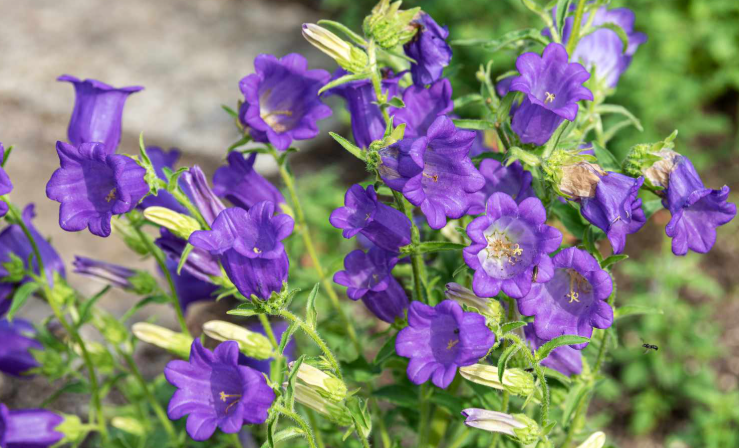
Canterbury Bells (Campanula medium) is a biennial flowering plant belonging to the bellflower family, native to southern Europe, particularly regions of Italy and France. As a plant, it forms a basal rosette of rough, hairy, lance-shaped leaves in its first year, followed by tall, upright flowering stems in its second year. The leaves are medium green, slightly toothed along the edges, and provide a sturdy foundation for the dramatic blooms that follow.
The plant typically reaches heights of 2 to 4 feet (60 to 120 centimeters), with sturdy, upright stems that may need staking in windy locations or when heavily laden with blooms. Its overall growth habit is columnar and somewhat formal, making it a striking vertical accent in cottage gardens and traditional borders.
The flowers are large, bell-shaped blooms that can measure up to 2 inches (5 centimeters) across, appearing in shades of blue, purple, pink, and white. These blooms cluster along the upper portions of the flowering stems, opening in succession from the bottom upward over several weeks in late spring to early summer.
Canterbury Bells has long been associated with cottage garden charm, often planted alongside foxgloves, delphiniums, and hollyhocks for a classic, old-fashioned look. Its dramatic vertical form and large blooms make it a favorite for cutting gardens, where the flowers hold up well in arrangements.
This plant prefers cool to moderate climates and tends to struggle in regions with very hot, humid summers. It performs best in USDA zones 4 through 8, where winters provide the chill period needed for proper flowering in the second year.
Pollinators such as bees and butterflies are strongly drawn to the open, bell-shaped blooms, making Canterbury Bells a valuable addition to pollinator gardens. The flowers’ shape and nectar accessibility make them particularly attractive to bumblebees.
Despite its biennial nature requiring a bit of patience, Canterbury Bells rewards gardeners with a spectacular, short-lived display of color that few other plants can match. Many gardeners stagger plantings each year to ensure a continuous supply of blooming plants.
Also Read: How to Grow and Care for Oleander Shrub
How to Grow and Care for Canterbury Bells
- Choose a Partly Shaded to Sunny Site: Canterbury Bells prefers full sun in cooler climates but benefits from afternoon shade in hotter regions. Too much intense heat can shorten the bloom period and stress the plant. Morning sun with afternoon protection often produces the best results.
- Prepare Rich, Well-Draining Soil: This plant thrives in fertile, organically rich soil that drains well but retains some moisture. Working compost into the planting area before sowing or transplanting improves both texture and nutrient content. Heavy clay soils should be amended to prevent waterlogging.
- Sow Seeds in Early Summer: For biennial growth, seeds are typically sown in early summer to allow plants to establish a rosette before winter. Seeds can be sown directly in prepared beds or started in trays for later transplanting. Light covering of soil is sufficient, as seeds need some light to germinate.
- Provide Consistent Moisture for Seedlings: Young seedlings require regular watering to keep the soil evenly moist without becoming waterlogged. Inconsistent watering during establishment can lead to weak root development. A gentle watering can or drip system works well for this stage.
- Thin and Space Plants Properly: Once seedlings are established, thin them to allow 12 to 18 inches between plants for proper air circulation. Overcrowded plants are more prone to fungal diseases and produce weaker flowering stems. Proper spacing also makes staking easier later.
- Mulch to Protect Overwintering Rosettes: A layer of mulch applied in fall helps protect the first-year rosettes from harsh winter temperatures. This is especially important in zones at the colder end of the plant’s hardiness range. Mulch should be pulled back slightly in early spring to allow new growth.
- Fertilize Lightly in Spring: As second-year plants begin active growth, a light application of balanced fertilizer supports strong stem and flower development. Excessive fertilizer, particularly high in nitrogen, can lead to floppy stems. A slow-release formula applied once in early spring is usually sufficient.
- Stake Tall Flowering Stems: Because flowering stems can reach considerable heights, staking helps prevent toppling from wind or heavy rain. Inserting stakes early in the season avoids damaging roots later. Soft ties should be used to avoid cutting into the stems as they grow.
- Water Regularly During Bloom Time: Consistent moisture during the flowering period helps prolong the bloom display and supports larger flowers. Allowing the soil to dry out completely can cause buds to drop prematurely. Watering at the base helps keep foliage dry and reduces disease risk.
- Deadhead Spent Blooms: Removing faded flowers encourages the plant to continue producing new buds along the stem. This simple task can extend the overall flowering period by several weeks. Deadheading also improves the plant’s overall appearance.
- Watch for Slugs and Snails: These pests are particularly attracted to the tender young foliage of Canterbury Bells, especially in damp conditions. Handpicking, barriers, or organic baits can help protect vulnerable plants. Morning inspections are often the most effective way to catch them.
- Monitor for Powdery Mildew: Humid conditions and poor air circulation can lead to powdery mildew on the leaves. Spacing plants properly and watering at soil level helps prevent this fungal issue. Affected leaves should be removed promptly to limit spread.
- Allow Some Plants to Self-Seed: Letting a few spent flower heads remain on the plant allows seeds to drop and germinate naturally. This can create a self-sustaining patch of Canterbury Bells over successive years. Self-seeded plants often appear in slightly different locations each season.
- Stagger Plantings for Continuous Bloom: Because Canterbury Bells is biennial, sowing seeds in consecutive years ensures a steady supply of blooming plants each season. Without staggered planting, gardens may experience a year without flowers. This approach requires planning but pays off with reliable color.
- Cut Flowers for Indoor Arrangements: The sturdy stems and long-lasting blooms make Canterbury Bells excellent for cutting gardens. Cutting flowers when buds are just beginning to open extends their vase life. Regular cutting can also encourage additional blooms along the stem.
- Remove Plants After Flowering: Since Canterbury Bells is biennial and typically dies after setting seed, spent plants can be removed to make room for new growth. This also helps maintain a tidy garden appearance. Composting spent plants returns organic matter to the soil for future use.
Also Read: How To Grow And Care For Verbena