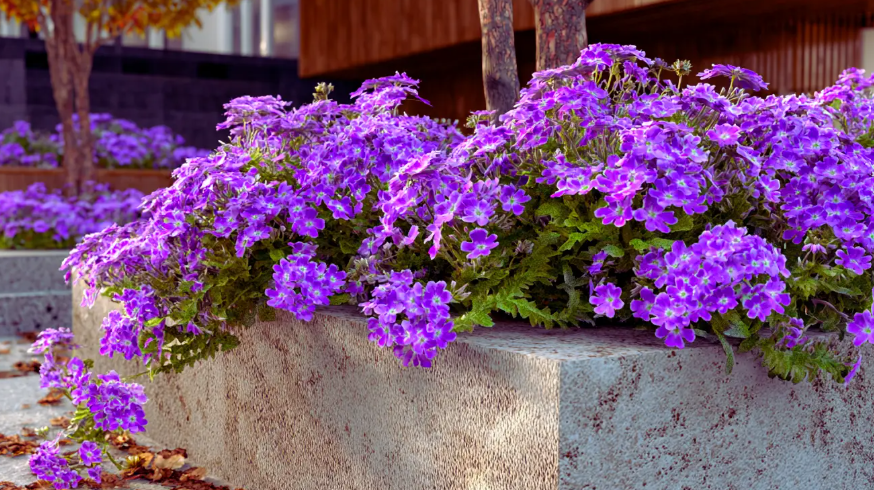
Verbena is a genus of flowering plants comprising over 250 species, ranging from low-growing groundcovers to upright perennials, widely valued for their clusters of small, vividly colored blooms. Native primarily to the Americas, with some species also found in Europe and Asia, verbena has become a garden favorite for its versatility and long bloom season.
The flowers appear in dense, rounded or flat-topped clusters in shades of purple, pink, red, white, and blue, often blooming continuously from late spring until the first frost. Many varieties also produce a light, pleasant fragrance that attracts butterflies, bees, and hummingbirds in abundance.
Verbena plants typically range from 6 inches to 4 feet (15 to 120 centimeters) in height depending on the species, with trailing types like Verbena canadensis spreading up to 3 feet wide as effective groundcovers. Upright varieties such as Verbena bonariensis can tower over surrounding plants, adding vertical interest to mixed borders.
This plant is celebrated for its heat and drought tolerance once established, making it an excellent choice for hot, sunny gardens where many other flowering plants struggle. Its resilience also extends to poor soil conditions, where verbena often outperforms more demanding ornamentals.
Verbena is grown as an annual in cooler climates but behaves as a tender perennial in USDA zones 9 through 11, where it can survive mild winters. In zones below this range, gardeners often replant verbena each season or bring container specimens indoors.
With its nonstop color, pollinator appeal, and easy-care nature, verbena has earned a permanent place in hanging baskets, window boxes, border edges, and rock gardens across countless garden styles.
Also Read: How To Grow Verbena From Seeds
How to Grow and Care for Verbena
- Select a Full Sun Location: Verbena requires at least 6 to 8 hours of direct sunlight daily to produce its best floral display. Insufficient light leads to weak stems and reduced blooming.
- Prepare Well-Draining Soil: This plant strongly prefers sandy or loamy soil with excellent drainage, as wet roots quickly lead to disease. Amending heavy clay soil with grit or compost before planting improves results significantly.
- Plant After Frost Danger Passes: Wait until soil has warmed and all risk of frost has ended before planting verbena outdoors. Spacing depends on variety, with trailing types needing 12 to 18 inches between plants.
- Water Moderately During Establishment: New plants need regular watering for the first few weeks to develop strong roots. Water at the base rather than overhead to reduce the risk of fungal issues.
- Allow Soil to Dry Between Waterings: Once established, verbena prefers slightly dry conditions and is quite drought-tolerant. Overwatering is one of the most common causes of verbena decline.
- Fertilize Lightly and Regularly: A diluted balanced fertilizer applied every 4 to 6 weeks during the growing season supports continuous blooming. Avoid high-nitrogen formulas, which encourage foliage at the expense of flowers.
- Deadhead Spent Blooms: Removing faded flower clusters encourages the plant to produce new buds rather than setting seed. Regular deadheading can dramatically extend the bloom period.
- Pinch Back for Bushier Growth: Pinching the tips of young plants encourages branching and a fuller, more compact habit. This is especially useful for trailing varieties in containers.
- Mulch to Conserve Moisture: A thin layer of mulch around the base helps regulate soil temperature and reduce water evaporation. Keep mulch away from direct contact with stems to prevent rot.
- Watch for Powdery Mildew: This common fungal issue appears as a white coating on leaves, especially in humid conditions or when air circulation is poor. Spacing plants properly and watering at soil level helps prevent it.
- Monitor for Spider Mites and Aphids: These small pests can cause stippled, discolored leaves and weakened growth if left unchecked. Insecticidal soap or a strong water spray usually controls minor infestations.
- Grow in Containers and Hanging Baskets: Verbena’s trailing habit makes it ideal for spilling over the edges of pots and baskets. Use a well-draining potting mix and ensure containers have adequate drainage holes.
- Propagate by Stem Cuttings: Take 3 to 4 inch cuttings from healthy stems in spring or summer and root them in moist potting mix. This is an easy way to multiply favorite varieties for free.
- Overwinter in Mild Climates: In USDA zones 9 through 11, verbena may survive winter with minimal protection, especially with a layer of mulch. In colder zones, treat as an annual or bring container plants indoors.
- Combine with Companion Plants: Verbena pairs beautifully with petunias, marigolds, and ornamental grasses in mixed beds and borders. Its sprawling or upright forms complement both bold and delicate companion textures.
- Encourage Pollinator Visits: Planting verbena near vegetable gardens or other flowering plants helps draw in butterflies, bees, and hummingbirds. This not only adds beauty but supports overall garden pollination.
Also Read: Different Types of Verbena Shrubs