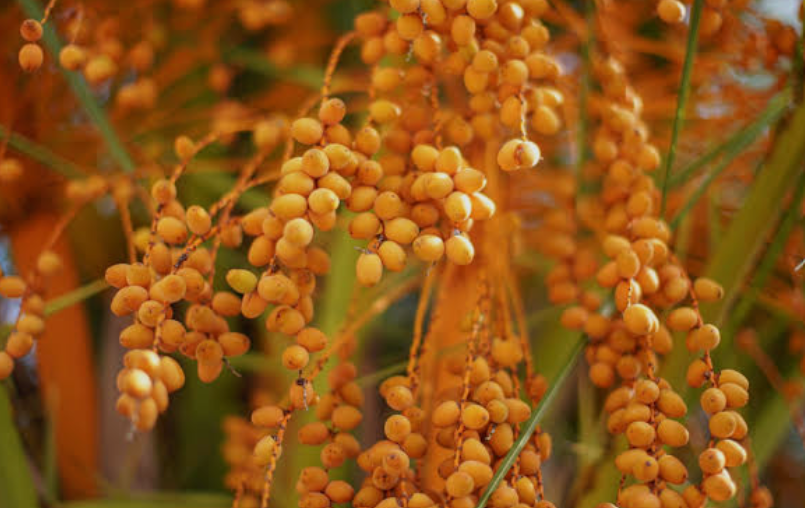
The types of palm fruits are more varied than the two most people know, the coconut and the date. The palm family contains about 2,600 species, and almost every one bears fruit. Those fruits range from pea-sized berries to nuts weighing several pounds.
Botanically, most palm fruits are built alike. Each has an outer skin, a middle layer of flesh or fiber, and a hard inner shell that protects the seed. What differs is which layer has grown large, and that decides how the fruit is used.
Some palm fruits are valued for sweet flesh, some for oil and some for the seed itself. Others serve as medicine or as a mild stimulant instead of food. A few must be cooked before they can be eaten.
Most fruiting palms grow only in the tropics or in hot deserts, though a small number tolerate frost. The 10 palm fruits below show the full range of the family, and each entry notes where the palm is grown.
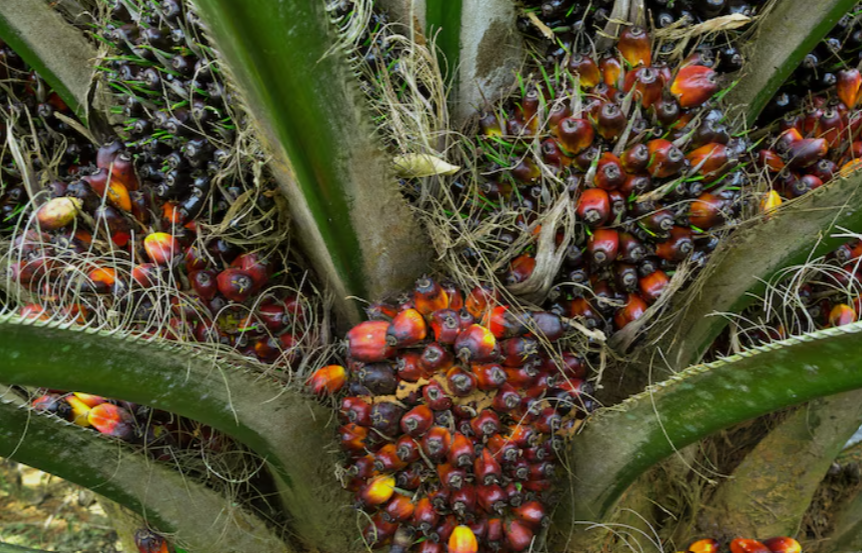
1. Coconut
The coconut is the largest palm fruit in common use. It is oval and can weigh 3 pounds or more. A smooth green or yellow skin covers a thick husk of brown fiber. Inside the husk is a hard, woody shell. The shell is lined with white flesh. The center is filled with clear, sweet water.
The husk lets the fruit float, which is how coconuts spread between islands. The flesh is eaten fresh, grated or dried. Dried flesh is pressed for coconut oil. The husk fiber is spun into rope, and the shell is made into charcoal. A single palm bears 50 to 100 nuts a year. Coconuts are grown on tropical coasts around the world, chiefly in Indonesia, the Philippines, India, Sri Lanka and Brazil.
2. Date
The date is the sweetest of the palm fruits. It is oblong, with thin skin and soft, sugary flesh. A single slender seed lies at the center. Dates ripen from green through yellow or red to brown. They hang in long, heavy clusters below the leaves. Hundreds of named varieties exist.
The University of Florida explains that the palm’s name means finger-bearing, a reference to its fruit clusters. The university notes that the edible fruits are 1 to 3 inches long. Dates are sold as soft, semi-dry or dry types. They store well, which made them a vital food for desert travelers. The palm prefers dry climates but grows along rivers and oases. Dates are grown across North Africa and the Middle East, in Pakistan, and in the deserts of California and Arizona.
3. Açaí
Açaí is a small, round berry-like fruit. It is deep purple, almost black, when ripe. Each fruit is about half an inch across. A large seed takes up most of it. The edible pulp is only a thin skin around the seed. The fruits grow in long, hanging sprays.
The pulp is separated by soaking and rubbing the fruits in water. The result is a thick, dark purple liquid. It is rich in fat and has an earthy, slightly bitter taste. It must be used or frozen quickly, since it spoils fast. Harvesters climb the slender trunks to cut the clusters by hand. Açaí comes from the floodplain forests of northern Brazil and neighboring Amazon countries.
4. Peach Palm Fruit
Peach palm fruit is a starchy palm fruit used like a vegetable. It is egg-shaped and 1 to 2 inches long. The skin is smooth and ripens to red, orange or yellow. The flesh is dense, dry and orange. One hard, dark seed sits inside. Seedless fruits also occur and are highly prized.
The fruit is boiled before eating. Cooking softens the flesh and removes an irritating substance. The flavor is nutty and mildly sweet. It is eaten with salt, honey or mayonnaise, or ground into flour. A plantation can stay productive for 50 to 75 years. Peach palm fruit is grown from Costa Rica and Panama south through Colombia, Ecuador, Peru and Brazil.
5. Oil Palm Fruit
Oil palm fruit is grown for oil, not for eating fresh. Each fruit is plum-shaped and weighs up to an ounce. It ripens from black to bright orange-red. The fruits are packed tightly into huge, spiky bunches. A bunch can weigh 40 pounds or more. The flesh is fibrous and saturated with oil.
Purdue University notes that a bunch contains 500 to 4,000 fruits. The orange-red flesh yields palm oil, and the seed yields a colorless kernel oil. The two are produced in a ratio of about 10 to 1. About 90% of palm oil goes into food. The university describes it as the highest-yielding oil crop. Oil palm fruit is grown mainly in Indonesia and Malaysia, and also in Nigeria, Thailand, Colombia and Brazil.
6. Betel Nut
The betel nut is the seed of the areca palm fruit. The whole fruit is egg-shaped and about 2 inches long. It ripens from green to orange or red. A fibrous husk surrounds the seed. The seed is hard, round and mottled brown and white inside. It is the only part used.
The seed is sliced and chewed, usually with lime paste wrapped in a pepper leaf. It acts as a mild stimulant. It turns saliva and teeth red. Health authorities classify it as a cause of mouth cancer. It is not a food in the ordinary sense. Betel nut is grown in India, Bangladesh, Sri Lanka, Myanmar, Indonesia, Taiwan and Papua New Guinea.
7. Salak
Salak is a palm fruit covered in scales. It is pear-shaped and about 2 to 3 inches long. The skin is brown, thin and brittle. Its overlapping scales look like snakeskin. Inside are three cream-colored segments. Each segment holds a smooth, inedible seed.
The flesh is firm and crunchy. It tastes sweet and tangy, with a slight astringency. The fruit grows at the base of a low, very spiny palm. Pickers need thick gloves to reach it. It is eaten fresh or preserved. Salak is grown in Indonesia, Malaysia and Thailand.
8. Palmyra Fruit
Palmyra fruit is a large, heavy palm fruit. It is round and 4 to 8 inches across. The skin is smooth and dark purple to black. The husk is tough and fibrous. Inside are up to three large seeds. Each seed is set in orange, stringy pulp.
The fruit is eaten at two stages. Young fruits hold soft, translucent kernels that are eaten fresh as a cooling treat. Ripe fruits have sweet orange pulp that is squeezed out for cakes and sweets. Sprouted seeds are also boiled and eaten. The tall fan palm that bears them lives for a century or more. Palmyra fruit is grown in India, Sri Lanka, Bangladesh, Myanmar, Thailand and Cambodia.
9. Jelly Palm Fruit
Jelly palm fruit is one of the few palm fruits from a frost-hardy palm. It is round and about an inch wide. It ripens to yellow or orange. The flesh is juicy and fibrous. A hard stone lies at the center. The fruits hang in dense clusters.
The University of Florida notes that the orange-yellow fruits are the size of large dates and are often made into jams or jellies. The flavor is sweet and sharp, with tropical notes. The fruit ripens in summer. Fallen fruit can be messy on paths. The palm grows slowly to about 20 feet. Jelly palms are native to southern Brazil and Uruguay and are planted across the southeastern United States, California and the Mediterranean.
10. Saw Palmetto Berry
The saw palmetto berry is a medicinal palm fruit. It is oval and about an inch long. It ripens from green through orange to blue-black. The flesh is oily and has a strong, pungent smell. One hard seed sits inside. The berries grow on branched stalks among the fan-shaped leaves.
The taste is sharp and soapy. Native peoples of the Southeast ate the berries as a regular food. Today they are dried and sold as an herbal supplement. Black bears and other wildlife rely on them. Florida requires a permit to harvest them. Saw palmetto grows across Florida and along the coastal plain from South Carolina to Louisiana.
Key Takeaways:
- Palm fruits come in diverse forms: Palm trees produce fruits of different sizes, shapes, colors, and textures, ranging from tiny berries to large, fibrous coconuts.
- Coconuts and dates are among the best-known palm fruits: Coconuts (Cocos nucifera) are valued for their water, flesh, and oil, while dates (Phoenix dactylifera) are widely consumed as sweet, nutritious fruits.
- Not all palm fruits are edible: Some species produce fruits suitable for human consumption, while others are inedible or require proper processing before use.
- Palm fruits have significant economic value: They provide food, cooking oils, beverages, fibers, and raw materials for various industries around the world.
- Palm fruits vary in color and maturity: Depending on the species and ripeness, fruits may appear green, yellow, orange, red, purple, or brown.
- Palm fruits support wildlife and ecosystems: Many palm species produce fruits that serve as food for birds, mammals, and other animals, helping sustain tropical and subtropical ecosystems.