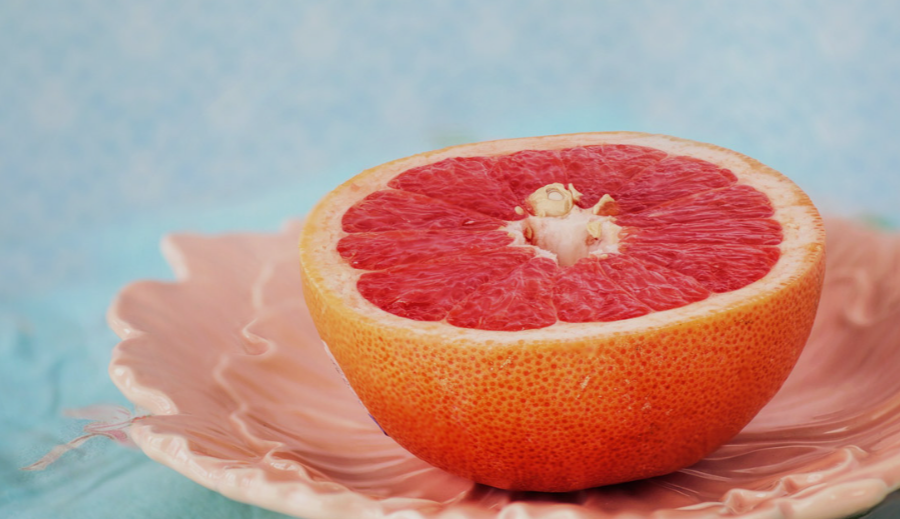
Fruits that are pink on the inside tend to keep the secret until the knife goes through. A grapefruit is yellow, a guava is pale green, and a mamey sapote looks like a dusty brown potato, yet each one opens to flesh the color of a rose or a slice of salmon. Few colors in the fruit bowl are as unexpected, and few look better on a plate.
Three different pigments are behind that color. Lycopene, the compound that reddens tomatoes, tints grapefruit, guava and watermelon when it is present in smaller amounts. Anthocyanins give the blush to pink-fleshed apples, figs and plums, while betalains produce the electric magenta of dragon fruit and prickly pear.
Pink is also the least stable flesh color. The same variety can turn out pale rose in one orchard and nearly red in another, depending on heat, cold nights and how long the fruit hangs on the tree. Growers of blood oranges and pink grapefruit watch the weather as closely as the calendar for exactly that reason.
The 24 fruits below include familiar citrus, tropical fruits from south Florida and Hawaii, and a few rare apples and currants that seldom reach a supermarket. Each entry describes the shade of pink to expect, what causes it and how the fruit tastes. Where the fruit is grown in the United States, that is covered too.
1. Ruby Red Grapefruit
Ruby Red grapefruit has smooth yellow rind, often with a faint blush, and juicy flesh that ranges from soft pink to deep rose. The color comes from lycopene, which the older white grapefruits lack entirely. It is sweeter and less bitter than white grapefruit, which helped make it the standard breakfast variety.
The variety was found in 1929 as a single red-fleshed branch on a pink grapefruit tree in the Rio Grande Valley of Texas. It went on to become the first grapefruit granted a United States patent. Texas named red grapefruit its official state fruit in 1993, and the Rio Grande Valley is still the center of production.
2. Cara Cara Orange
The Cara Cara looks like an ordinary navel orange until it is cut, when it reveals flesh the color of pink grapefruit. It is seedless and low in acid, with a sweetness that many people compare to berries or cherries. The pink comes from lycopene, a pigment that standard navel oranges do not produce.
The University of California, Riverside records that the variety was discovered in 1976 at Hacienda Cara Cara in Venezuela, as a mutation on a Washington navel orange tree. It is now widely planted in California’s San Joaquin Valley. The fruit ripens from late fall into winter, alongside the regular navel crop.
3. Variegated Pink Lemon
The variegated pink lemon is striped green and cream on the outside while young, and the stripes fade to yellow as it ripens. The flesh inside is a clear, light pink with very few seeds. Despite the color of the pulp, the juice runs almost clear, so pink lemonade made from it needs help from another fruit.
The tree was found around 1931 in Burbank, California, as a sport on an ordinary Eureka lemon. Its leaves are also splashed with cream and green, which makes it a popular patio and landscape tree. The fruit is as sour as a regular lemon and is used the same way.
4. Chandler Pummelo
The Chandler pummelo is a giant citrus, larger than a grapefruit, with thick yellow rind and firm pink flesh. The segments are less juicy than grapefruit and are usually eaten after the tough membrane is peeled away. The taste is mild and sweet, with almost none of the bitterness of grapefruit.
The variety was bred at the University of California, Riverside, and released in 1961. It is a cross between two Thai pummelos, one pink and one sweet. California grows most of the American crop, and demand peaks around Lunar New Year, when pummelos are given as gifts.
5. Blood Orange
Blood oranges vary more in flesh color than any other citrus, from orange streaked with pink to solid maroon. The pigment is anthocyanin, the same compound that colors raspberries and red cabbage. Early in the season, or after a mild winter, most fruits are pink-flecked more often than fully red.
The color develops only when warm days are followed by cold nights, which is why blood oranges do well in California’s inland valleys. Moro is the darkest common variety, while Tarocco is usually lighter and sweeter. The flavor carries a berry-like note that ordinary oranges lack.
6. Pink Finger Lime
The finger lime is a narrow citrus about 2 to 3 inches long, filled with tiny round juice beads instead of soft pulp. In pink varieties those beads range from pale blush to bright coral. They pop on the tongue with a sharp, lime-like flavor, which has earned the fruit the nickname citrus caviar.
The tree is native to the rainforests of eastern Australia and comes in green, yellow and red forms as well. California growers raise it in small orchards, largely for restaurants. Chefs spoon the pink beads over oysters, seafood and desserts, where the color stands out.
7. Watermelon
Watermelon flesh runs from light pink to deep red, with the palest color near the rind and in older heirloom varieties. The University of Massachusetts notes that the fruit is 92% water and holds more lycopene than any other fresh fruit. That pigment is the sole source of its color, since watermelon contains almost no anthocyanin.
Florida, Georgia, Texas and California grow most of the American crop. A ripe melon has a creamy yellow patch where it rested on the ground and feels heavy for its size. Flesh that is pale pink all the way through usually means the melon was picked too early.
8. Pinkglow Pineapple
The Pinkglow pineapple looks like a normal pineapple on the outside and has rosy pink flesh inside. It was developed by Del Monte, which altered the fruit so that it keeps its lycopene instead of converting it to the yellow pigment found in ordinary pineapples. The flesh is sweeter and less acidic than a standard pineapple.
The Food and Drug Administration completed its safety review of the fruit in 2016, and sales to the public began in 2020. All of the fruit is grown in Costa Rica. It is shipped without its leafy crown, which the company removes and replants.
9. Dragon Fruit
Dragon fruit has bright pink skin with green-tipped scales, and the flesh may be white, pink or deep magenta depending on the variety. The pink and magenta types get their color from betalains, the same pigments found in beets. The flesh is soft and dotted with tiny black seeds, with a mild sweetness similar to a kiwifruit or pear.
The fruit grows on a climbing cactus whose large white flowers open for a single night. In the United States it is raised in southern California, south Florida and Hawaii. The magenta-fleshed types stain fingers and cutting boards, so they are best cut on a plate.
10. Prickly Pear
The prickly pear is the egg-shaped fruit of a paddle cactus, and the most common type has magenta skin and equally vivid flesh. The pulp is juicy and tastes like a cross between watermelon and bubblegum. It is full of small, hard seeds that are usually strained out or swallowed whole.
The skin carries tufts of tiny, hair-like spines that must be burned or scrubbed off before handling. The cactus grows wild across the Southwest, and the fruit is harvested in late summer. Its juice is used in syrups, jellies, candies and margaritas.
11. Pink Guava
Pink guava has thin, light green to yellow skin and soft, fragrant flesh that may be salmon, rose or deep pink. The aroma is strong and musky, and it can fill a room when the fruit is ripe. The center holds many small, hard seeds surrounded by sweeter pulp.
The University of Florida notes that guava flesh may be white, yellow, pink or red, and that American commercial production is in Hawaii, Puerto Rico and Florida. Trees in Florida can bear two crops a year, with the main one in summer. Pink types are eaten ripe or made into juice, paste and jelly.
12. Strawberry Papaya
The strawberry papaya is a small Hawaiian type, usually sold under the variety name Sunrise, with reddish-pink flesh. It is pear-shaped and weighs about 1 pound, far less than the large Mexican papayas. The flesh is soft, sweet and scented, and its color comes from lycopene.
Hawaii grows most of the papayas produced in the United States. The fruit is ready when the skin has turned mostly yellow and gives slightly under the thumb. The black seeds in the center are edible and have a sharp, peppery taste.
13. Red Banana
The red banana has maroon to purple skin and flesh that is cream-colored with a light pink or orange tinge. It is shorter and plumper than the common yellow banana. The texture is softer and the flavor sweeter, with a hint of raspberry.
Most red bananas sold in the United States are imported from Ecuador and Central America. They are ripe when the skin deepens in color and the fruit yields to gentle pressure. Eaten too early, they are starchy and dry, so patience is rewarded.
14. Pink Pearl Apple
The Pink Pearl apple has pale, yellow-green skin that is translucent enough to hint at the color underneath. The flesh is bright pink, crisp and distinctly tart. It holds its color when baked, which makes it a favorite for tarts and applesauce.
Breeder Albert Etter developed the apple in northern California, and it was introduced in 1944. It ripens early, from late August into September. The apples bruise easily and store poorly, so they are sold mostly at farmers’ markets on the West Coast.
15. Hidden Rose Apple
The Hidden Rose apple has yellow-green skin with a faint red blush and flesh that is deep rose pink from core to peel. The taste is sweet-tart, with a flavor often likened to strawberry lemonade. The flesh is firm and slow to brown after cutting.
The variety originated as a chance seedling found in Airlie, Oregon. It is also sold under the name Mountain Rose. The apples ripen in October and are grown mainly in Oregon and Washington.
16. Black Mission Fig
The Black Mission fig has purple-black skin and soft, jammy flesh in shades of pink and strawberry. The contrast between the dark skin and the pink interior is among the strongest of any fruit. The flavor is rich and very sweet, with tiny seeds that add a slight crunch.
Franciscan missionaries brought the variety to San Diego in the late 1700s, which is how it got its name. California now produces nearly all of the figs grown commercially in the United States. The trees bear two crops, a small early one in June and a larger one in late summer.
17. Brown Turkey Fig
The Brown Turkey fig has brownish-purple skin and flesh that is pink to amber, lighter than that of the Black Mission. The flavor is milder and less sugary. That makes it a good fresh-eating fig and a common choice for preserves.
It is one of the hardiest figs and is grown in backyards across the South and up the East Coast. Established trees survive winter lows near 10°F and often resprout from the roots after colder snaps. The fruit ripens from midsummer into fall.
18. Mamey Sapote
The mamey sapote has rough, brown skin like sandpaper and smooth flesh that ranges from salmon pink to deep red. The texture is creamy and dense, and the flavor is often compared to sweet potato, pumpkin and almond. A single large, glossy black seed sits in the center.
The University of Florida records that the tree was first introduced to southern Florida in the mid-1880s and is an important fruit in Miami-Dade County. Varieties differ in flesh color, with some pink and others red. The fruit is most often blended into milkshakes and ice cream.
19. Pomegranate
A pomegranate is filled with hundreds of juice sacs called arils, and their color runs from pale pink to dark red depending on the variety. Pink-aril types are generally sweeter and lower in acid than the deep red ones. Each aril surrounds a small seed, which is soft enough to eat in some varieties.
California’s San Joaquin Valley grows nearly all of the commercial crop in the United States. The fruit is harvested from September through November. Arils separate most easily when the fruit is broken apart in a bowl of water, where the white pith floats and the arils sink.
20. Strawberry
A strawberry is red on the surface, but the inside is usually pink, fading to white at the core. The shade depends on the variety and ripeness, and berries picked early for shipping are the palest. Fully ripe berries from a home garden are often red almost to the center.
California grows about 90% of the strawberries produced in the United States. Florida supplies the winter crop from the area around Plant City. Strawberries do not sweeten after picking, so color at harvest is the best guide to flavor.
21. Santa Rosa Plum
The Santa Rosa plum has purple-red skin and amber flesh that is flushed with pink and red, especially near the skin. It is juicy and aromatic, with sweet flesh and a tart skin. That balance has kept it popular for more than a century.
Plant breeder Luther Burbank introduced it in 1906 and named it after his home city of Santa Rosa, California. It was once the leading commercial plum in the state. It bruises too easily for long shipping, so today it is mainly a home orchard and farmers’ market fruit.
22. Dapple Dandy Pluot
The Dapple Dandy pluot has mottled skin in greenish-yellow and maroon, a pattern that earned it the trade name Dinosaur Egg. The flesh inside is creamy white marbled with pink and red. It is firm, very sweet and low in acid, with a flavor between plum and apricot.
The variety was bred by Zaiger Genetics in Modesto, California, the family firm that created the pluot. It ripens in August in California’s Central Valley. Like most pluots, it needs a second plum or pluot variety nearby for pollination.
23. Pink Champagne Currant
The Pink Champagne currant bears long clusters of small, translucent berries in a soft blush pink. The skin is so thin that the pink pulp and seeds are visible through it. The berries are sweeter and milder than red currants, which makes them pleasant to eat fresh.
The variety is a cross between a red currant and a white currant. The shrubs grow 3 to 5 feet tall and are hardy enough for the coldest northern states. The fruit ripens in midsummer and is used for jellies, sauces and garnishes.
24. Pink Brandywine Tomato
Pink Brandywine is a large heirloom tomato with rosy pink skin and pink-red flesh. The color differs from a standard red tomato because the skin is clear instead of yellow, which lets the flesh show through. Fruits often weigh 1 pound or more and have a rich, balanced flavor.
The variety is an Amish heirloom that dates to the 1880s. The plants have broad, smooth-edged leaves that resemble potato foliage. They need 80 to 100 days to ripen fruit, so gardeners in short-season areas start seed early.
Key Takeaways:
- Pink-fleshed fruits include tropical fruits, berries, melons, citrus fruits, stone fruits, and several specialty varieties.
- Popular examples include pink guava, pink dragon fruit, watermelon, grapefruit, pink-fleshed apples, and certain peach and plum varieties.
- The interior color can range from pale blush and soft pink to bright rose, coral, salmon, and reddish-pink, depending on the fruit and cultivar.
- Some fruits have naturally pink flesh when ripe, while others develop pink coloration only during particular stages of maturity.
- Pink-fleshed fruits can have very different textures, ranging from crisp and crunchy to juicy, soft, creamy, or jelly-like.
- Their flavors vary widely, including sweet, tart, acidic, floral, refreshing, and tropical notes.
- Fruit flesh color can be useful for identification, but it should be considered alongside the fruit’s shape, skin, seeds, texture, and other characteristics.