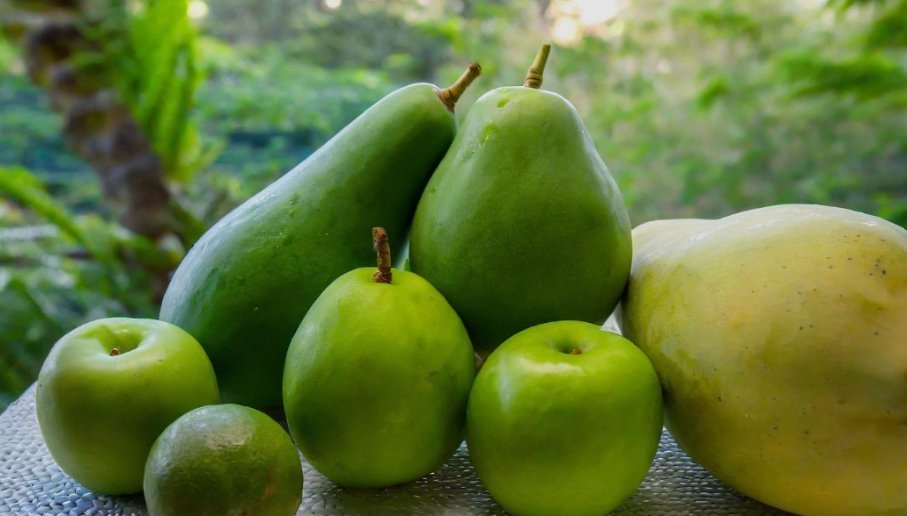
Green colored fruits are green because of chlorophyll, the same pigment that colors leaves. In most fruits, chlorophyll breaks down at ripening and other colors take over. That is why green so often means not ready.
The fruits on this list defy that rule in 3 different ways. Some stay green even when fully ripe, such as limes, kiwi flesh, and Granny Smith apples. Some are picked and eaten on purpose while unripe, such as cucumbers, okra, and green beans.
The third group is green on the outside only, with a rind that hides another color, as in a watermelon or an avocado. In all 3 cases, the usual advice to wait for a color change is useless. A shopper has to rely on feel, weight, smell, gloss, or size instead.
This list of 60 fruits covers citrus, orchard fruits, grapes, melons, tropical fruits, and garden crops that are fruits in the botanical sense. Each description gives which of the 3 groups the fruit belongs to and names the best ripeness test. Growing regions and seasons refer to the United States unless noted.
1. Persian Lime
Persian lime is the large, seedless lime sold in every supermarket. It is less acidic and less aromatic than a Key lime but far easier to juice. Mexico supplies most of what Americans buy.
This lime is harvested at the green stage that buyers expect. The fruit is medium to dark green at maturity, becoming yellow before dropping from the tree. The best limes feel heavy, give slightly, and have smooth, glossy skin.
2. Key Lime
Key lime is a small, round, seedy lime only 1 to 2 inches wide. Its juice is more acidic and far more fragrant than that of the Persian lime. It is the lime of the famous Florida pie.
Stores sell it green because it ships better that way, though it turns yellow when fully ripe. Green fruit is sharper, and yellow fruit is juicier. A thin, smooth rind and a heavy feel mark good fruit at either stage.
3. Makrut Lime
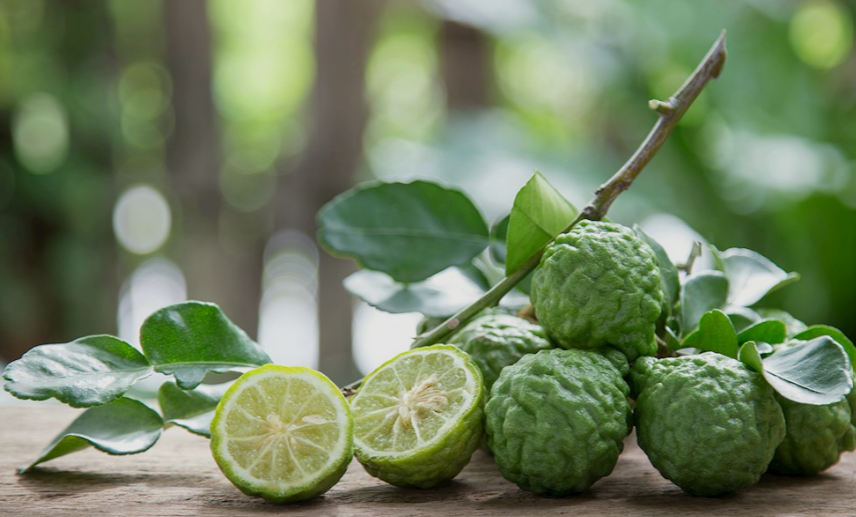
Makrut lime is a dark green citrus with a thick, deeply wrinkled rind. It holds little juice, and what there is tastes bitter. The value lies in the zest and in the glossy, double-lobed leaves.
Both are essential to Thai curries and soups. The fruit is used while firmly green, when the rind oils are strongest. California growers sell the leaves fresh or frozen at Asian markets.
4. Sudachi
Sudachi is a small Japanese citrus about the size of a golf ball. It is picked green in late summer and fall and used for its sharp, aromatic juice. In Japan it is squeezed over grilled fish, mushrooms, and noodles.
The fruit turns yellow-orange if left on the tree, but it loses its distinctive scent as it does. The green stage is therefore the intended one. A few California growers now supply it to restaurants.
5. Granny Smith Apple
Granny Smith began as a chance seedling in Australia in 1868. It is firm, crisp, and tart, and it holds its shape in baking. Washington State grows most of the American crop.
This apple stays green when ripe, although the shade is informative. Bright grass-green fruit is at its most tart, and fruit with a yellow cast is sweeter. A pink blush on one cheek shows it grew in full sun with cool nights.
6. Rhode Island Greening
Rhode Island Greening is one of the oldest American apples, grown near Newport since the 1650s. It was the country’s standard pie apple before Granny Smith arrived. It is the official state fruit of Rhode Island.
The apple is green at harvest in October and turns yellowish in storage. The flesh is firm, juicy, and sharply tart. It is found today mostly at orchards in New England and New York.
7. Green Anjou Pear
Green Anjou is the most abundant pear in the United States, grown mainly in Oregon and Washington. It is egg-shaped, juicy, and mildly sweet, with a hint of citrus. It is sold nearly all year.
This pear does not change color as it ripens, which leads many people to eat it too soon. The test is gentle thumb pressure on the neck near the stem. When the neck gives, the pear is ready.
8. Greengage Plum
Greengage is a small, round plum that stays green to yellow-green when ripe. Many fruit experts consider it the finest dessert plum for its dense, honey-sweet flesh. It was brought to England in 1724 by the man whose name it carries.
A ripe greengage softens, develops a faint yellow tint, and shows a pale, waxy bloom. Hard green fruit is sour. It ripens in August and is rarely seen outside farmers markets.
9. Green Almond
Green almond is the whole, immature fruit of the almond tree, picked in April and May. The fuzzy green hull is still soft, and the nut inside is a clear jelly. It is eaten whole, with a crisp texture and a tart, grassy taste.
This is a fruit eaten on purpose while unripe. The season lasts only a few weeks, until the inner shell hardens. Green almonds from California are sold at Middle Eastern markets and eaten with salt.
10. Desert King Fig
Desert King is a fig with green skin and strawberry-red flesh. It was found in California in 1930 and has become the standard fig for the cool Pacific Northwest. It bears a large early crop in midsummer.
The skin stays green when ripe, so the fruit is judged by touch. A ripe fig is soft and droops on its stem. Figs do not ripen after picking.
11. Thompson Seedless Grape
Thompson Seedless is the classic green table grape, grown in California since the 1870s. It is oval, crisp, and mildly sweet. It is also the grape behind most American raisins.
Grapes do not ripen after harvest, so the shade at purchase matters. Bright green berries are tart, and those with a yellow or amber tint are sweeter. Green, flexible stems show that the bunch is fresh.
12. Cotton Candy Grape
Cotton Candy is a pale green seedless grape released in California in 2011. It tastes strikingly like spun sugar, with a note of vanilla and very little tartness. The flavor comes from conventional cross-breeding, not from additives.
The grapes stay green when ripe, with a slight golden cast at their sweetest. The season is short, running from mid-August into September. They are sold under a single brand name.
13. Scuppernong
Scuppernong is a bronze-green muscadine grape and the first native grape cultivated in America. It is named for a river in North Carolina, where it is the official state fruit. The berries are large, thick-skinned, and musky-sweet.
Ripe fruit turns from plain green to greenish-bronze with small brown freckles. It also comes off the vine at a touch. The season runs from August into September across the Southeast.
14. Kiwi
Kiwi has fuzzy brown skin and bright emerald flesh around a ring of tiny black seeds. It is unusual in keeping its chlorophyll when ripe. California grows nearly all of the American crop.
The green is hidden, and the brown skin does not change, so touch is the only test. A ripe kiwi yields to gentle pressure like a ripe peach. Hard fruit ripens on the counter in a few days.
15. Kiwiberry
Kiwiberry is a grape-sized relative of kiwi with smooth, thin, green skin and no fuzz. It is eaten whole and tastes sweeter than a regular kiwi. The vine survives winters far colder than its larger cousin can.
The skin stays green when ripe, so softness is the guide. Ripe berries give easily and may wrinkle slightly. Oregon is the main source, and the season is short, in September and October.
16. Gooseberry
Green gooseberry is a grape-sized berry with translucent skin and pale stripes. It is very tart and is the traditional gooseberry for pies and fools. The bushes are thorny and suit cool northern gardens.
For cooking, the berries are picked in June while hard and green. Left longer, they soften, turn slightly translucent, and sweeten. Some states restrict the plants because they can host a disease of white pines.
17. Green Olive
Green olive is simply an olive picked before it ripens. Every olive variety starts green and turns purple and then black on the tree. Raw olives of any color are too bitter to eat and must be cured.
Green olives are firmer and sharper than ripe ones. The bright green Castelvetrano type is mild and buttery because of how it is cured. California’s canned black olives are also picked green and darkened during processing.
18. Feijoa
Feijoa, or pineapple guava, is an egg-shaped fruit with dull green skin and soft, cream-colored flesh. The flavor blends pineapple, guava, and mint. The shrub is a common hedge in California.
The skin does not change color, and the fruit signals ripeness by falling from the bush. Gardeners gather it from the ground every day or two. The flesh is scooped out with a spoon.
19. Honeydew
Honeydew is a smooth-skinned melon with pale green flesh, one of the few melons that is green inside. The flesh is very sweet and juicy when ripe. It does not sweeten much after harvest.
The rind turns from greenish-white to creamy yellow at ripeness and feels slightly waxy or tacky. The blossom end gives a little under the thumb. A hard, pale green honeydew was picked too early.
20. Santa Claus Melon
Santa Claus melon is a football-shaped Spanish melon with a blotchy, dark green rind. The flesh is pale green to white, crisp, and mildly sweet. Its name comes from its ability to keep until Christmas.
The thick rind stays mostly green, but it develops yellow streaks as the melon ripens. The blossom end also softens slightly. It is grown in California and Arizona and sold in fall and winter.
21. Watermelon
Watermelon is green on the outside only, with a striped or solid rind around red flesh. The rind itself is edible and is pickled in Southern kitchens. Florida, Georgia, Texas, and California are the leading growers.
The green rind offers 2 subtle clues. A ripe melon loses its shine and turns dull, and the patch where it lay on the ground turns from white to creamy yellow. A watermelon does not ripen after it is cut from the vine.
22. Pawpaw
Pawpaw is the largest edible fruit that is native to the United States, growing wild in 26 eastern states. It has thin green skin and soft, custard-like flesh. The taste is a blend of banana and mango.
The skin often stays green when the fruit is ripe, sometimes with a yellow tint or dark flecks. Softness and a strong, fruity smell are the tests that matter. Ripe pawpaws last only 2 to 3 days.
23. Hass Avocado
Hass is the pebbly-skinned avocado that makes up most of the American market. Every Hass tree descends from a single seedling planted by a California mail carrier in the 1920s. The flesh is rich, nutty, and high in oil.
It is one of the few avocados that signals ripeness with color, turning from green to purple-black. Avocados never soften on the tree and ripen only after picking. A ripe one yields to gentle pressure in the palm.
24. Florida Avocado
Florida avocados are large, smooth-skinned, bright green varieties that can weigh 1 to 2 pounds. They contain roughly half the oil of a Hass, so the flesh is lighter, milder, and more watery. The season runs from June to January.
These avocados stay green when ripe, which confuses shoppers used to Hass. The only test is a gentle squeeze. The firm flesh holds its shape well when sliced or cubed.
25. Keitt Mango
Keitt is a large mango that originated in Florida in the 1940s. The flesh is sweet, tangy, and nearly free of fiber. It is a late variety, sold from August to October.
The skin stays green even when the fruit is fully ripe, which makes it the hardest mango to judge by eye. Ripe fruit gives slightly under the thumb and smells sweet at the stem. Most of the supply comes from Mexico and California.
26. Green Mango
Green mango is any mango picked before it ripens and used as a sour, crunchy ingredient. It is shredded into Southeast Asian salads and pickled in Indian cooking. In Mexico it is sliced and eaten with chili and salt.
At this stage the flesh is pale, firm, and tart, because its starch has not yet turned to sugar. The fruit should be rock hard with no give at all. Any softening means it has started to ripen.
27. Green Papaya
Green papaya is the unripe fruit, with dark green skin and firm, white flesh. It has almost no flavor of its own and takes on the taste of a dressing. It is the base of the pounded salads of Thailand and Vietnam.
The fruit should be uniformly green and hard, with white seeds inside. Any yellow on the skin means the flesh has begun to soften and sweeten. Green papaya is also rich in an enzyme used to tenderize meat.
28. Green Plantain
Green plantain is a cooking banana used while still starchy and firm. It tastes more like a potato than a fruit. It is fried twice for tostones and mashed for mofongo.
The peel should be fully green and tight, with no yellow. It does not pull away like a banana peel and must be cut off with a knife. As the peel yellows, the flesh turns sweet and suits different dishes.
29. Guava
Guava is a round or pear-shaped tropical fruit with thin green skin. The flesh is white or pink, with a strong, musky perfume and small hard seeds. It grows in Florida, Hawaii, and Southern California.
Some varieties turn yellow when ripe, and others stay green. In both cases a ripe guava lightens in shade, gives under the thumb, and smells strongly sweet. Crisp green types are also eaten firm with salt.
30. Soursop
Soursop is a large, heart-shaped fruit covered in soft green spines. The white pulp inside is juicy and tangy, with a flavor like strawberry and pineapple. It is used mostly for juice and ice cream.
The skin stays green when ripe but shifts from dark and shiny to a duller, yellowish green. The fruit also softens and the spines spread apart. The black seeds are toxic and must be removed.
31. Cherimoya
Cherimoya is a heart-shaped fruit with green skin patterned like overlapping thumbprints. The white flesh is smooth and custard-like, with a taste of banana, pineapple, and pear. It grows in the coastal hills of Southern California.
The skin stays green when ripe, though it dulls and may brown slightly. A ripe fruit gives like a ripe avocado. The large black seeds are not edible.
32. Jackfruit
Jackfruit is the largest fruit that grows on a tree, commonly weighing 10 to 60 pounds. Its thick rind is green and covered in short, blunt spikes. It grows in South Florida and Hawaii.
At the green stage the flesh is firm and neutral in flavor, and it shreds like cooked meat. That unripe form is sold canned as a meat substitute. A ripening fruit turns yellow-brown, softens, and gives off a strong, sweet smell.
33. Breadfruit
Breadfruit is a large, round, green fruit with white, starchy flesh. It is cooked like a potato and is a traditional staple in Hawaii. A single tree can bear well over 100 fruits a year.
The fruit is harvested mature but still firm and green. Signs of maturity include smoother skin, a yellow-green tint, and dried beads of white sap on the surface. Left to soften, it becomes sweet and custardy.
34. Mamoncillo
Mamoncillo, also called Spanish lime or quenepa, grows in clusters of small, round, green fruits. Each has a thin, leathery shell around salmon-colored pulp and a large seed. The pulp is sweet-tart and is sucked off the seed.
The shell stays green when ripe but turns brittle and cracks cleanly between the teeth. It is a summer fruit in Puerto Rico and South Florida. The slippery seed is a choking hazard for small children.
35. Bilimbi
Bilimbi is a relative of starfruit that looks like a small, pale green cucumber. The fruits grow in clusters directly on the trunk and branches. They are crisp, juicy, and extremely sour.
It is used green in pickles, chutneys, and curries across Southeast Asia and is rarely eaten raw. The fruit turns yellowish and soft when overripe. It is grown on a small scale in Hawaii and South Florida.
36. Ambarella
Ambarella, or June plum, is an oval fruit 2 to 3 inches long with a spiny, fibrous seed. It is usually eaten green, when it is crunchy and tart like a green apple with a hint of pineapple. In Jamaica it is pressed into a popular juice.
Green fruit should be full-sized and firm. As it ripens it turns golden and becomes softer and sweeter. Dwarf trees fruit well in South Florida.
37. Amla
Amla, or Indian gooseberry, is a round, pale green fruit marked with 6 faint lines. It is intensely sour and astringent, with a curious sweet aftertaste. It is among the richest natural sources of vitamin C.
The fruit is firm and light green when mature and is harvested at that stage. It is seldom eaten plain and is usually pickled, candied, or dried. Indian grocery stores sell it frozen.
38. Black Sapote
Black sapote is a relative of persimmon with olive-green skin and flesh that turns dark brown-black. It is nicknamed the chocolate pudding fruit for its color and soft texture. The flavor is mild and sweet.
This fruit is inedible until it looks past its prime. The skin must turn dull and muddy and the fruit must feel mushy. A firm, bright green fruit is harshly astringent.
39. Young Coconut
Young coconut is a coconut harvested at 6 to 9 months, while the husk is still green. It holds the most water at this age, and the meat is a thin, soft jelly. The water is sweet and slightly nutty.
A good young coconut feels heavy and makes little sound when shaken, because it is full. As the nut matures, the husk browns, the water decreases, and the meat hardens. Stores often sell young coconuts with the green husk shaved to a white cone.
40. Chayote
Chayote is a pear-shaped, pale green gourd with shallow furrows and a single soft seed. The flesh is crisp and mild, somewhere between cucumber and zucchini. In Louisiana it is called mirliton and is traditionally stuffed.
It is picked at 4 to 6 inches, while firm and unblemished. Older fruit sprouts from the seed end and turns tough. The whole fruit, seed included, is edible.
41. Cucumber
Cucumber is a fruit that is always eaten unripe. It is about 95 percent water, with crisp, mild flesh and soft, undeveloped seeds. Slicing types are long and smooth, and pickling types are short and bumpy.
A cucumber left to ripen fully turns yellow or orange and becomes bitter and seedy. The right stage is firm, evenly dark green, and slender. Frequent picking keeps the vines producing.
42. Zucchini
Zucchini is an immature summer squash, harvested within days of flowering. It was developed in northern Italy in the late 1800s and came to America with Italian immigrants. The flesh is tender and mild.
It is best at 6 to 8 inches, while the skin is glossy and a fingernail pierces it easily. Left a week longer, it swells into a hard, seedy club 2 feet long. The plant’s yellow blossoms are edible as well.
43. Opo Squash
Opo squash, or bottle gourd, is a long, smooth, pale green gourd used in Asian cooking. The flesh is white, mild, and slightly sweet, much like zucchini. It is one of the oldest cultivated plants in the world.
For eating, it is picked young, at 10 to 15 inches, while the skin is still tender. A mature gourd dries into a hard, hollow shell. Those shells have been used for thousands of years as bottles, bowls, and instruments.
44. Acorn Squash
Acorn squash is a ribbed, dark green winter squash shaped like its name. The flesh is yellow-orange, mildly sweet, and a little nutty. It weighs 1 to 2 pounds, which suits baking in halves.
Unlike summer squash, it is harvested fully mature while still green. The key sign is the patch that rested on the soil, which turns from yellow to orange. A squash that has turned mostly orange is overmature and stringy.
45. Bitter Melon
Bitter melon is a warty, oblong green gourd valued across Asia for its sharp bitterness. Chinese types are pale and smooth-ridged, and Indian types are darker and spiky. It is stir-fried, stuffed, or simmered in soup.
It is eaten immature, while firm and green. Overripe fruit turns orange and splits open to show bright red seed coats. Salting or blanching the slices first softens the bitterness.
46. Okra
Okra is the ridged, tapered seed pod of a plant in the hibiscus family. It releases a thick juice when cut, which is what thickens gumbo. The flavor is mild and grassy.
The pods are immature fruit, and timing is everything. Growers note that pods are typically harvested by cutting at three to four inches in length. Larger pods quickly become woody and too tough to eat.
47. Green Bean
Green bean is the immature pod of the common bean, eaten whole before the seeds develop. Old varieties had a tough fiber along the seam, which is why they were called string beans. Breeders removed the string in the 1890s.
The pods are picked when about as thick as a pencil and still smooth. A fresh bean snaps cleanly in two. Pods with visible bulges are past their best and turn tough.
48. Sugar Snap Pea
Sugar snap pea is a pea with a thick, crisp, edible pod, released by an Idaho breeder in 1979. It came from a cross between a snow pea and an unusual thick-walled shelling pea. The whole pod is sweet and juicy.
The pods are ready when plump, glossy, and bright green. Their sugar begins turning to starch within hours of picking. That is why snap peas taste best eaten the same day.
49. Edamame
Edamame is the immature green pod of the soybean, boiled or steamed and served salted. The beans inside are sweet, nutty, and tender. The fuzzy pod itself is not eaten.
The harvest window is very short, often less than a week. Pods are picked when bright green and nearly full, before any yellowing begins. After that the beans turn starchy and lose their sweetness.
50. Tomatillo
Tomatillo is a small, round, green fruit that grows inside a papery husk. It is tart and bright, and it is the base of Mexican green salsa. It was cultivated in Mexico long before the tomato.
The fruit is ready when it fills the husk and splits it open. The skin underneath is sticky and should be rinsed. A tomatillo that has turned yellow is riper and sweeter but has lost the tang wanted for salsa.
51. Green Zebra Tomato
Green Zebra is a tomato that stays green when ripe, bred in Washington State and released in 1983. The fruits are 2 to 3 inches wide and striped in two shades of green. The flavor is bright, tangy, and slightly sweet.
The stripes are the ripeness signal. They change from pale green to yellow-gold while the background stays green, and the fruit softens slightly. A hard, all-green fruit is still sour.
52. Aunt Ruby’s German Green Tomato
Aunt Ruby’s German Green is a large heirloom beefsteak from Tennessee that often weighs 1 pound. It ripens to lime green with an amber tint. Many tasters rank its sweet, spicy flavor among the best of any tomato.
A ripe fruit shows a yellow-amber blush on the skin and a touch of pink at the bottom. It also gives under gentle pressure. Without those signs, it is easy to pick weeks too early.
53. Unripe Green Tomato
Unripe green tomato is an ordinary red tomato picked before it colors. It is firm, tart, and holds together in a hot pan, which makes it the tomato for Southern fried green tomatoes. It is also used for relish and pickles.
The best ones are full-sized and glossy, with a pale, whitish-green cast. Tomatoes at that stage will also ripen indoors if a frost threatens. Small, dark green fruit is too immature and tastes bitter.
54. Thai Eggplant
Thai eggplant is a round fruit the size of a golf ball, striped in green and white. It is crunchy, seedy, and slightly bitter. It is a standard ingredient in Thai green curry.
It is eaten immature, while firm and green. Any yellowing means the fruit is overripe and the seeds have hardened. The cut flesh browns quickly and is kept in salted water until cooking.
55. Green Bell Pepper
Green bell pepper is the unripe stage of a pepper that would turn red, yellow, or orange if left on the plant. It has a grassy, slightly bitter taste and crisp, thick walls. It costs less than colored peppers because it is harvested weeks earlier.
The right stage is full-sized, firm, and glossy, with heavy walls. Green peppers contain about half the vitamin C of fully ripe ones. They do not sweeten once picked.
56. Jalapeno
Jalapeno is the most widely used hot pepper in the United States, named for a city in Mexico. It is almost always picked green. Heat ranges from 2,500 to 8,000 Scoville units.
A mature green jalapeno is firm, glossy, and 2 to 3 inches long. Small tan lines on the skin are a sign of maturity and often of more heat. Left on the plant, it turns red and slightly sweeter.
57. Serrano
Serrano is a slim pepper that is smaller and noticeably hotter than a jalapeno. It measures 10,000 to 25,000 Scoville units. Its name refers to the mountain ridges of central Mexico where it originated.
The skin is thin and needs no peeling, so it is chopped raw into salsa and pico de gallo. It is picked green, firm, and shiny at 2 to 3 inches. The fleshy pods do not dry well and are used fresh.
58. Poblano
Poblano is a large, heart-shaped, dark green pepper from the Mexican state of Puebla. It is mild, at 1,000 to 2,000 Scoville units, with a rich, earthy flavor. It is the pepper for chiles rellenos.
The darkest green pods have the fullest flavor. They are usually roasted and peeled before use. A poblano left to ripen turns red and is dried to become the ancho chile.
59. Hatch Green Chile
Hatch green chile is a long, tapered pepper grown in the Hatch Valley of New Mexico. Each August and September, the pods are roasted in rotating drums outside stores across the Southwest. Heat varies by variety from mild to hot.
This type of pepper was created at the state university, home of the world’s longest-running chile breeding program, in the early 1900s. Pods are picked green when firm, glossy, and full-sized. The same pods turn red if left on the plant and are then dried.
60. Shishito
Shishito is a small, wrinkled, thin-walled Japanese pepper about 3 to 4 inches long. It is mild and slightly sweet, though roughly 1 pepper in 10 carries real heat. It is usually blistered in a hot pan and salted.
The peppers are picked green and tender. Left to mature, they turn red and become sweeter but tougher. The thin walls cook in a minute or two.
Key Takeaways:
- Green fruits come in a wide range of shapes, sizes, textures, flavors, and levels of ripeness.
- Many green fruits are naturally rich in vitamin C, fiber, antioxidants, and other beneficial plant compounds.
- Some fruits remain green when fully ripe, while others change from green to yellow, red, orange, or another color as they mature.
- Green-colored fruits grow in diverse climates, from tropical regions to temperate areas, and include both familiar and unusual varieties.
- Fruits such as avocado, kiwi, green apple, lime, guava, and green grapes demonstrate how varied green fruits can be.
- Besides being eaten fresh, green fruits are commonly used in salads, juices, smoothies, desserts, sauces, preserves, and other recipes.