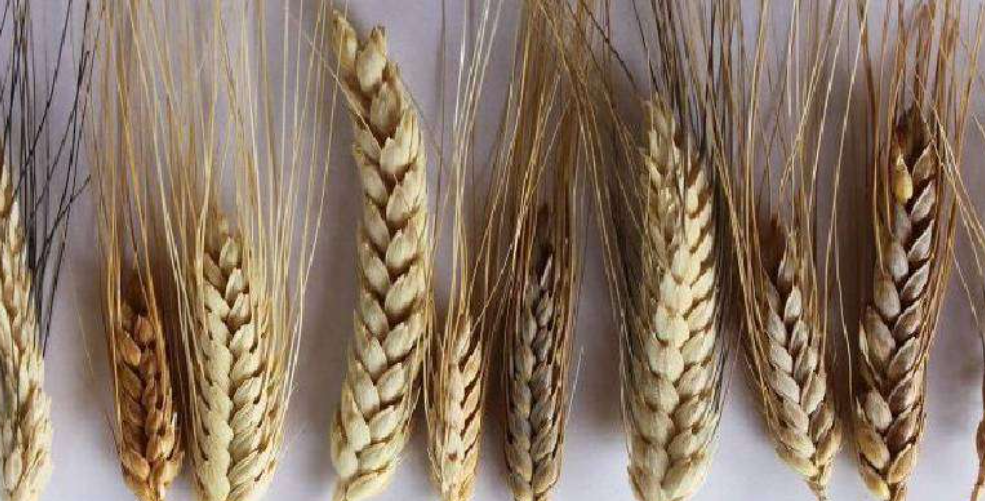
Wheat is the most widely cultivated crop in the world by harvested area and the most important source of plant-based protein and calories in the global human diet, forming the dietary foundation of civilizations across Europe, the Middle East, North Africa, Central Asia, and increasingly across sub-Saharan Africa and Latin America for over 10,000 years.
Domesticated from wild grasses in the Fertile Crescent region of the Middle East — encompassing modern-day Turkey, Syria, Iraq, and neighboring countries — wheat was among the very first plants brought under human cultivation and its domestication is considered one of the pivotal developments in the transition from hunter-gatherer to settled agricultural societies. Global wheat production exceeds 780 million metric tons annually, making it the second most produced grain crop after maize, with China, India, Russia, the United States, and France among the largest producers.
Wheat belongs to the genus Triticum within the grass family and encompasses a complex of related species at different ploidy levels — meaning different numbers of chromosome sets — ranging from diploid ancient species with two sets of chromosomes through tetraploid species with four sets to the dominant hexaploid bread wheat with six sets of chromosomes that accounts for the vast majority of global production.
This chromosomal complexity is the result of thousands of years of natural hybridization between different wild grass species followed by human selection, and it gives modern wheat an exceptionally large, complex genome — approximately five times larger than the human genome — that encodes the remarkable range of grain quality characteristics exploited in wheat breeding. There are an estimated 25,000 to 30,000 named wheat varieties documented worldwide across all species.
Nutritionally, wheat provides approximately 340 calories, 13 grams of protein, 71 grams of carbohydrate, and 2.5 grams of dietary fiber per 100 grams of whole grain flour, along with meaningful amounts of iron, zinc, magnesium, phosphorus, thiamine, niacin, and folate. The protein complex unique to wheat — gluten, composed of glutenin and gliadin proteins — is responsible for the viscoelastic, gas-trapping dough properties that allow wheat flour to be leavened with yeast into bread, making wheat the only grain naturally suited to producing the light, airy, risen loaves that have been the foundation of European and Middle Eastern diets for millennia.
Wheat is processed into an extraordinary range of food products across the world’s cuisines — milled into white and wholemeal flour for bread, pasta, noodles, cakes, biscuits, and pastries; cracked into bulgur for Middle Eastern salads and pilafs; semolina for pasta and couscous; and fermented into beer, whisky, and other alcoholic beverages.
The United States produces approximately 50 million metric tons of wheat annually, with Kansas alone accounting for approximately 20 percent of national production as the Heart of America’s wheat belt. The extraordinary diversity of wheat species and varieties available — spanning the most ancient diploid einkorn through the most technologically advanced modern bread wheat hybrids — represents one of the longest and most consequential relationships between a plant and human civilization in the entire history of agriculture.
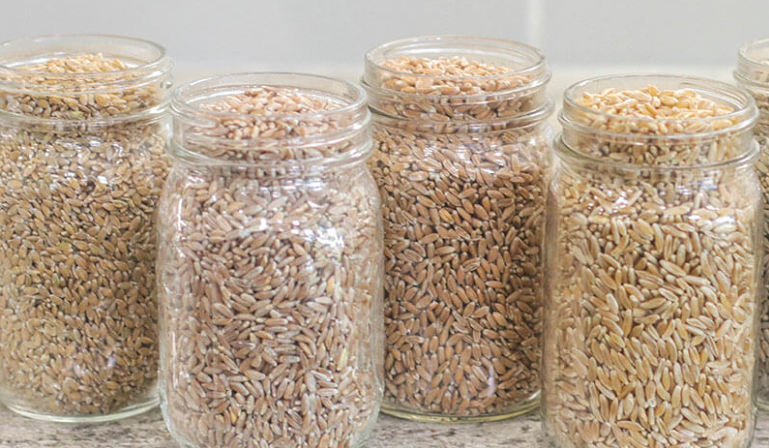
Types of Wheat Species
1. Common Wheat (Bread Wheat)
Common Wheat is by far the most important and widely grown wheat species in the world, accounting for approximately 95 percent of global wheat production and forming the basis of bread, flour, pasta, noodles, cakes, biscuits, and countless other staple food products consumed daily by billions of people across every inhabited continent. It is a hexaploid species — containing six sets of chromosomes from three ancestral grass species — and this genetic complexity underpins the extraordinary range of grain quality characteristics, climate adaptability, and disease resistance found across the thousands of common wheat varieties developed by breeders worldwide.
It is divided into hard and soft types based on kernel hardness, red and white types based on bran color, and winter and spring types based on growing season, with each combination suited to specific climates, production systems, and end-use applications ranging from artisan bread baking to industrial cracker and biscuit production.
2. Durum Wheat
Durum Wheat is the second most important cultivated wheat species, a tetraploid with four chromosome sets, accounting for approximately 5 to 7 percent of global wheat production and virtually all of the world’s pasta, couscous, bulgur, and semolina production.
It produces very hard, amber, high-protein, high-gluten-strength grains with exceptionally low moisture content that mill into the coarse, granular semolina flour uniquely suited to extruded pasta production — the viscoelastic properties of durum semolina dough allow pasta to be extruded through dies and dried without crumbling, a property no other wheat species can match. It is grown primarily in the Mediterranean basin, the Canadian prairies, the American Great Plains, and parts of Central Asia and the Middle East, and Italy, Canada, and Turkey are the world’s largest durum producers and exporters.
3. Spelt
Spelt is an ancient hexaploid wheat species closely related to common bread wheat, cultivated in Europe since at least 5,000 BCE and maintaining continuous cultivation through to the present day, producing plump, reddish, husked grains with a pleasant, nutty, slightly sweet flavor that is more complex and interesting than standard bread wheat.
It fell out of mainstream production in the late nineteenth and early twentieth centuries as higher-yielding, easier-threshing modern bread wheat varieties replaced it, but has experienced a significant commercial revival since the 1980s driven by consumer interest in ancient grains, artisan bread, and organic farming where spelt’s adaptability to low-input production systems is particularly valuable. Global spelt production has grown substantially over the past three decades, with Germany, Switzerland, Austria, and the United States among the largest producers of the revived crop.
4. Emmer
Emmer is a tetraploid wheat — one of the same ploidy level as durum wheat and sharing its four chromosome sets — that was one of the primary wheat crops of the ancient world, cultivated from the Fertile Crescent across the Mediterranean, Ethiopia, and the Indian subcontinent for thousands of years before being largely displaced by higher-yielding free-threshing wheat species.
It produces large, husked grains with a robust, earthy, nutty flavor and high protein content that has attracted renewed interest from artisan bakers, health food producers, and agricultural researchers studying ancient grain diversity. It remains an important subsistence crop in the Ethiopian highlands and parts of the Middle East, and small-scale commercial production has developed in Italy, where farro — the Italian name for emmer — has become an important specialty food product in Italian cuisine and export markets.
Also Read: Different Types of Sorghum
5. Einkorn
Einkorn is the most ancient of all cultivated wheat species, a diploid with only two chromosome sets — the simplest wheat genome — domesticated from wild einkorn in the Karacadag Mountains of southeastern Turkey approximately 10,000 to 12,000 years ago in one of the earliest and most consequential acts of plant domestication in human history.
It produces small, elongated, husked grains with an exceptionally rich, nutty, slightly sweet, complex flavor and a distinctive golden-yellow flour produced by high carotenoid pigment content in the grain — significantly higher than any modern wheat variety. It has attracted significant interest from researchers studying the origins of agriculture, from health-conscious consumers attracted to its high carotenoid, antioxidant, and protein content relative to modern wheat, and from artisan bakers who prize the rich, complex flavor of einkorn bread despite its more challenging baking properties.
6. Khorasan Wheat (Kamut)
Khorasan wheat is an ancient tetraploid wheat species believed to originate in the Fertile Crescent or the Khorasan region of present-day Iran and Afghanistan, producing very large, hump-backed, golden grains — roughly two to three times larger than standard wheat kernels — with a rich, buttery, nutty flavor and high protein content of 17 to 18 percent that is among the highest of any commonly grown wheat species.
It is marketed internationally under the trademarked brand name Kamut, which guarantees that the grain is grown organically, is never hybridized with other wheat species, and meets specific standards for grain size and quality set by the Kamut International company that owns and licenses the trademark. Kamut has become one of the most commercially successful ancient grain products in the global health food market since its introduction to North American consumers in the 1980s.
7. Club Wheat
Club Wheat is a hexaploid wheat species closely related to common bread wheat but producing distinctively compact, club-shaped spikes with very short, densely packed internodes that give the head a characteristic, blocky, club-like appearance quite unlike the more open, nodding heads of standard bread wheat.
It produces soft, starchy, low-protein, very white-milling grains that are ideal for the softest, finest-textured crackers, cakes, pastry flour, and Asian noodles — applications where the very low protein content and exceptional whiteness of club wheat flour produce results superior to standard soft wheat flour. It is grown primarily in the Pacific Northwest of the United States and in parts of northern Europe, accounting for a small but commercially important proportion of total wheat production.
8. Polish Wheat
Polish Wheat is a tetraploid wheat species most closely related to durum wheat, producing very tall plants — sometimes reaching 5 to 6 feet in height — with large, elongated grains enclosed in long, prominent husks and a starchy, soft-textured, relatively low-protein grain that was historically grown in parts of Central and Eastern Europe, particularly in Poland, the Czech Republic, and Ukraine.
It fell largely out of commercial cultivation in the late nineteenth and early twentieth centuries as higher-yielding modern species replaced it, but is maintained in gene banks and by heritage grain enthusiasts as a component of wheat genetic diversity with potential value for future breeding programs. Polish wheat is of limited current commercial importance but significant botanical and genetic interest as a component of the Triticum genus diversity that represents the raw material for future wheat improvement.
References
- Food and Agriculture Organization of the United Nations (FAO) — Wheat.
FAO — Wheat
An authoritative source covering wheat species, cultivation, environmental requirements, production, and the importance of wheat as a global cereal crop. - International Maize and Wheat Improvement Center (CIMMYT) — Wheat.
CIMMYT — Wheat
Provides research-based information on wheat diversity, breeding, varieties, disease resistance, climate adaptation, and wheat production. - USDA Agricultural Research Service — Wheat.
USDA Agricultural Research Service
Useful for scientific information about wheat genetics, breeding, grain quality, crop improvement, and different wheat characteristics. - Kansas State University Research and Extension — Wheat.
Kansas State University Research and Extension — Wheat
A valuable university source for information about hard red winter wheat, hard white wheat, soft red winter wheat, and other wheat classes, including their production characteristics and uses. - Oklahoma State University Extension — Wheat Production.
Oklahoma State University Extension — Wheat Production
Provides practical information on wheat types, production, planting, management, environmental adaptation, and crop characteristics. - University of Minnesota Extension — Small Grains: Wheat.
University of Minnesota Extension — Small Grains
Useful for understanding wheat growth, identification, production, diseases, and differences among wheat types grown in agricultural systems. - CABI — Triticum aestivum (Common Wheat).
CABI — Triticum aestivum
Provides scientific information on common wheat, including taxonomy, distribution, cultivation, ecology, uses, pests, and diseases. - U.S. Wheat Associates — Wheat Classes.
U.S. Wheat Associates — Wheat Classes
Particularly useful for explaining the major commercial wheat classes and how they differ in kernel characteristics, protein content, growing regions, and end uses.