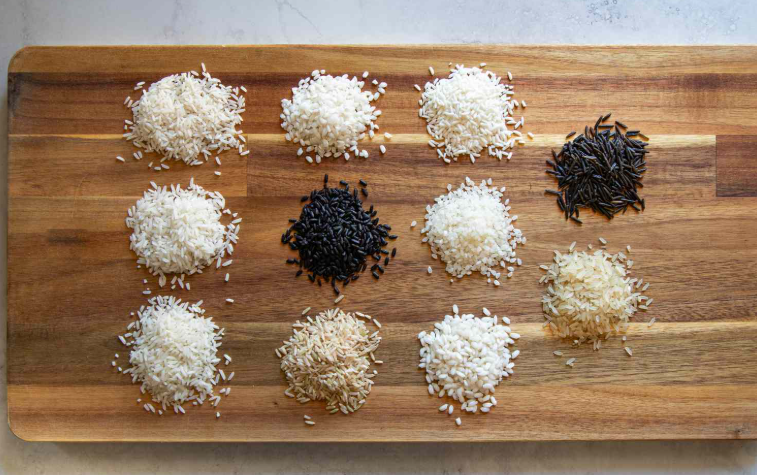
Rice is the most important staple food crop in human history, feeding more people on a daily basis than any other single food and forming the caloric foundation of diets across Asia, sub-Saharan Africa, Latin America, and the Middle East for thousands of years. Domesticated independently in China from wild rice around 7,000 to 9,000 years ago and in West Africa from a separate wild species several thousand years later, rice is today grown on every inhabited continent in an extraordinary range of climates, water conditions, and agricultural systems from flooded paddies to dryland hill cultivation. Global rice production exceeds 520 million metric tons of milled rice annually, making it the second most produced grain in the world after maize, with China, India, Bangladesh, Indonesia, and Vietnam among the largest producers and consumers.
There are two primary cultivated rice species — Asian rice and African rice — encompassing over 40,000 documented varieties that span an extraordinary range of grain lengths, shapes, textures, aromas, colors, and culinary properties. Most cultivated varieties fall into two broad subspecies — indica, producing long, slender grains that cook dry and separate, and japonica, producing shorter, rounder grains that cook moist and sticky — though numerous intermediate and specialty types blur these boundaries.
Rice is grown in USDA zones 7 to 12 in warm, humid conditions requiring between 3 and 6 months of frost-free growing season with either flooded paddy conditions or consistent irrigation, and most varieties mature in 90 to 180 days from transplanting or direct seeding depending on the type and climate.
Nutritionally, white milled rice provides primarily carbohydrates — approximately 206 calories, 45 grams of carbohydrate, and 4 grams of protein per cooked cup — with most of the fiber, vitamins, and minerals removed during the milling process that strips the bran and germ layers. Brown rice, which retains the bran and germ, is significantly more nutritious, providing meaningful amounts of magnesium, phosphorus, thiamine, niacin, and dietary fiber alongside the same caloric base. The global problem of beriberi — a thiamine deficiency disease — that affected populations dependent on milled white rice in the nineteenth and early twentieth centuries led directly to the discovery of vitamins and the scientific understanding of micronutrient deficiency diseases.
Rice is consumed in thousands of forms across the world’s cuisines — steamed, boiled, fried, fermented into beverages and vinegars, ground into flour for noodles and cakes, puffed into breakfast cereals, and incorporated into desserts, soups, salads, and dishes of every conceivable character across every food culture that grows it.
The United States produces approximately 20 billion pounds of rice annually, with Arkansas alone accounting for nearly 50 percent of American production, and rice is the second most traded agricultural commodity globally after wheat. The extraordinary diversity of rice varieties available — spanning delicate aromatic long-grains through sticky glutinous types to vivid pigmented black and red varieties — reflects thousands of years of agricultural selection across some of the most diverse farming cultures in human history.
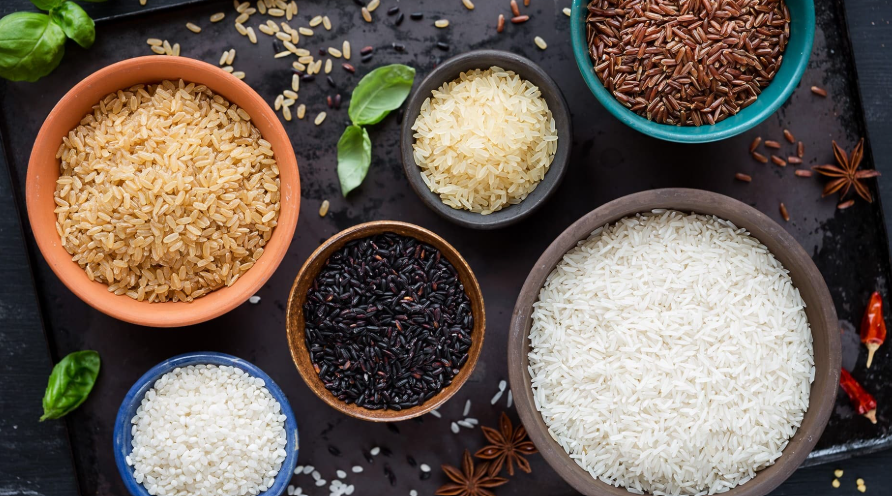
Types of Rice
1. Jasmine Rice
Jasmine rice is the most widely consumed aromatic rice variety in the world, the staple rice of Thailand and much of Southeast Asia and increasingly the most popular rice type in North American and European retail markets for its distinctive, subtle floral fragrance and soft, slightly sticky, moist-textured cooked grains.
It is a long-grain indica type that produces slender, translucent grains that cook to a soft, slightly clingy texture with a delicate, naturally occurring popcorn-like aroma produced by the compound 2-acetyl-1-pyrroline. Thailand exports over 7 million metric tons of jasmine rice annually, making it the world’s largest rice exporter by value, and Thai Hom Mali — the premium designation for authentic Thai jasmine rice — commands significantly higher prices than standard long-grain rice in international markets.
2. Basmati Rice
Basmati is the most prestigious aromatic rice in the world, grown in the foothills of the Himalayas across northern India and Pakistan and producing extraordinarily long, slender grains that elongate dramatically during cooking — sometimes reaching over twice their dry length — with a distinctive, intense, nutty, floral aroma and dry, separate, fluffy texture that is the definitive rice of Indian, Pakistani, and broader South Asian cuisine.
India and Pakistan together produce virtually all of the world’s genuine basmati, with India exporting approximately 4 to 5 million metric tons annually — accounting for over 60 percent of global basmati trade. The Geographical Indication protection restricts the authentic basmati designation to rice grown in specific regions of India and Pakistan.
3. Long-Grain White Rice
Long-Grain White Rice is the most widely consumed rice type in the United States and one of the most widely consumed globally, producing slender, elongated grains that cook to a dry, fluffy, separate texture ideal for the widest range of everyday rice preparations from simple steamed accompaniments to fried rice, pilafs, and rice salads.
American long-grain white rice produced primarily in Arkansas, Louisiana, Mississippi, Texas, and California is the standard everyday rice of American cooking and food service, and the United States is one of the world’s largest per-capita consumers of long-grain white rice among non-Asian nations. It matures in 120 to 150 days and is grown across USDA zones 7 to 10.
4. Short-Grain White Rice
Short-Grain White Rice produces plump, almost round grains with high starch content that cook to a soft, moist, sticky, clingy texture that holds together when formed into balls or pressed — making it the essential rice of Japanese, Korean, and other East Asian cuisines where rice is formed into sushi, onigiri, and other hand-shaped preparations.
It is the dominant rice type consumed in Japan, Korea, and northern China and the basis of the global sushi industry, which has made Japanese-style short-grain rice one of the most commercially important rice types worldwide outside of Asia. Most premium sushi rice varieties are grown in Japan, California, and Korea.
5. Arborio Rice
Arborio is the most widely known and commercially important risotto rice variety in the world, produced in the Po Valley of northern Italy and producing plump, round to medium-length grains with a very high starch content and a distinctive, large, pearly white center — called the pearl — that releases starch gradually during the slow, stirring cooking process of risotto to create the characteristic creamy, flowing, rich texture.
Individual grains maintain a firm, slightly chalky center even when the surrounding starches have been fully released and the risotto is at perfect consistency — the al dente quality that distinguishes properly made risotto. It is available from virtually every mainstream food retailer globally.
6. Sushi Rice
Sushi Rice is a specific preparation of Japanese short-grain rice seasoned with rice vinegar, sugar, and salt rather than a distinct variety, though the term is also used commercially to refer to Japanese-style short-grain rice varieties suited to sushi preparation.
The seasoning transforms cooked short-grain rice into the specific flavor and texture used in sushi — slightly tangy, subtly sweet, and sticky enough to hold together when pressed but not so gluey as to be unpleasant — that is the foundation of one of the world’s most globally successful cuisines. California-grown Calrose and other Japanese-type short-grain varieties are most commonly used for sushi preparation outside Japan.
7. Brown Rice
Brown Rice is whole-grain rice that retains its outer bran layer and germ after milling, resulting in a grain with significantly higher fiber, vitamin, mineral, and antioxidant content than white rice at the cost of a longer cooking time, chewier texture, and slightly nutty, earthy flavor that differs distinctly from the neutral, tender quality of milled white rice.
It contains approximately three times the fiber of white rice and meaningful amounts of magnesium, phosphorus, thiamine, and B vitamins that are removed during the milling process. Available in long-grain, medium-grain, and short-grain forms, brown rice has become one of the most popular whole-grain alternatives in health-conscious Western markets, with global consumption growing steadily over the past two decades.
8. Wild Rice
Wild Rice is botanically a distinct genus from cultivated rice — an aquatic grass native to the Great Lakes region of North America and parts of China — producing long, dark brown to near-black, slender, tubular grains with a distinctive, earthy, nutty, slightly smoky flavor and a chewy, firm texture quite unlike any cultivated rice variety.
It was a traditional staple food of the Ojibwe and other Great Lakes indigenous peoples for thousands of years and remains an important cultural and commercial product of Minnesota, Wisconsin, and the Canadian province of Manitoba. Nutritionally it is exceptional, containing nearly twice the protein of white rice alongside significant fiber and B vitamins.
9. Calrose Rice
Calrose is the most widely grown and consumed medium-grain rice variety in the United States, developed by the University of California and dominating California’s rice production since the 1940s, producing plump, medium-length grains that cook to a soft, moist, slightly sticky, cohesive texture intermediate between the dry fluffiness of long-grain rice and the pronounced stickiness of Japanese short-grain types.
It is the standard rice of Japanese-American cooking and the most commonly used rice for sushi in North American Japanese restaurants and home kitchens. California produces approximately 500,000 acres of Calrose annually for both domestic consumption and significant export to Japan, Korea, and other Asian markets.
10. Glutinous Rice (Sticky Rice)
Glutinous rice, also called sticky rice, sweet rice, or waxy rice, is a distinct genetic type of rice — both long-grain and short-grain forms exist — with almost entirely amylopectin starch rather than the amylose-amylopectin mixture of standard rice, which causes the grains to clump together and become very sticky when cooked.
It is the staple grain of Laos — the only country in the world where sticky rice is the primary everyday staple — and is essential across northern Thailand, northeastern Thailand, Myanmar, and the hill regions of southern China and Vietnam where it is traditionally steamed in bamboo baskets and eaten with the hands. It is also widely used across Asia in sweet confections, rice cakes, and ceremonial preparations.
11. Black Rice
Black Rice, also called forbidden rice, is an ancient variety or group of varieties with black or very dark purple bran layers containing extraordinarily high concentrations of anthocyanin antioxidants — the same pigments that color blueberries and red wine — that give the grains their dramatic, near-black color and make them among the most nutritionally valuable of all rice types.
When cooked, the black grains turn a vivid, deep purple-black that is visually dramatic and has made black rice one of the most fashionable specialty grains in contemporary health food and restaurant culture globally. It has a pleasant, slightly nutty, earthy flavor and a slightly chewy texture and is used in both savory and sweet preparations across Asian and Western cuisines.
12. Red Rice
Red Rice encompasses several distinct varieties — including Camargue red rice from France, Bhutanese red rice, and numerous Asian red varieties — all sharing the characteristic of red to reddish-brown bran layers produced by proanthocyanidin and other pigment compounds that give them significantly higher antioxidant content than white rice.
The various red rice types share a pleasantly nutty, earthy, slightly chewy character and a reddish-tan to deep terracotta color that makes them visually distinctive among whole-grain rice options. Red rice varieties are grown across Asia, Africa, and in the Camargue wetlands of southern France where the unique terroir produces a nutty, firm, distinctively flavored red rice considered a premium specialty food product in France and internationally.
13. Carnaroli Rice
Carnaroli is considered by Italian chefs to be the finest and most prestigious risotto rice available, superior to Arborio for the most demanding risotto preparations because it has a longer grain than Arborio, higher starch content, and firmer texture that allows it to maintain better al dente character even as the surrounding starch is fully released during cooking.
It produces an exceptionally creamy, flowing risotto of the finest texture while each grain retains a pleasant, distinct firmness at the center, and it is the rice of choice in the finest Italian restaurants worldwide for classic risotto Milanese, risotto ai funghi porcini, and other prestigious preparations. It is grown exclusively in the Piedmont and Lombardy regions of northern Italy.
14. Vialone Nano Rice
Vialone Nano is an important Italian risotto rice variety from the Veneto region, producing shorter, plumper grains than Carnaroli or Arborio with very high starch content and a distinctively silky, flowing texture when fully cooked that produces risotto with a looser, more liquid consistency — all’onda, meaning wave-like — favored in Venetian cooking over the drier, more compact risotto style preferred in Milan.
It holds Protected Geographical Indication status under European law as a product of the Veneto and is the traditional risotto rice of Venice, Verona, and the broader Veneto culinary tradition. The all’onda style of risotto Vialone Nano produces is considered by many Italian food authorities to be the most authentic and refined expression of risotto.
15. Parboiled Rice (Converted Rice)
Parboiled rice is a partially pre-cooked rice produced by soaking, steam-pressure cooking, and drying paddy rice before milling, a process that forces the water-soluble vitamins and minerals from the bran into the interior of the grain before the bran is removed, producing a milled white rice that retains significantly more nutritional value than standard milled white rice while cooking to a firm, separate, non-sticky texture that is very difficult to overcook.
Uncle Ben’s, the most widely recognized commercial parboiled rice brand, popularized converted rice in the United States and has been one of the best-selling rice products globally for decades. Parboiled rice is particularly popular in the United States, parts of Europe, and across West Africa.
16. Bomba Rice
Bomba is the most prestigious Spanish rice variety and the traditional, authentic choice for classic paella Valenciana, produced in the Valencia region of eastern Spain and producing short, round, very starchy grains that have the unique ability to absorb up to three times their volume in liquid — significantly more than any other rice variety — while maintaining a firm, separate, non-mushy texture even when fully cooked.
This extraordinary absorption capacity allows bomba rice to soak up all the flavors of the socarrat stock in which paella is cooked without disintegrating, producing the perfectly flavored, correctly textured paella that inferior rice varieties cannot achieve. It commands significantly higher prices than standard paella rice.
17. Valencian Rice (Senia and Bahía)
Senia and Bahía are the two most widely grown rice varieties in the Valencia region of Spain, used as more economical alternatives to premium Bomba rice for paella and other Spanish rice dishes.
They produce short, round, moderately starchy grains that absorb good quantities of cooking liquid and flavors, cooking to a softer, more tender texture than Bomba and requiring more careful timing to avoid overcooking. They are the standard paella rice varieties sold under the generic Valencian rice designation and account for the large majority of rice grown in the historically important rice-producing marshlands of the Albufera lagoon south of Valencia city.
18. Rosematta Rice
Rosematta is a traditional Kerala red rice variety from the Palakkad region of southern India, producing short, round, pinkish-red parboiled grains with a distinctive, earthy, slightly smoky flavor and a firm, chewy texture quite unlike standard white rice.
It is the traditional everyday rice of Kerala and is deeply embedded in the food culture of the region, used in traditional Kerala meals, puttu, and appam preparations. The retained red bran layer gives it significantly higher fiber and nutritional content than milled white rice, and it is increasingly available in Indian grocery stores and health food retailers internationally.
19. Texmati Rice
Texmati is an American-grown aromatic long-grain rice developed in Texas as a hybrid between standard American long-grain and basmati rice, producing grains with a mild, pleasant, popcorn-like aroma similar to but less intense than genuine Indian basmati alongside a dry, fluffy, separate cooking texture.
It is one of the most widely grown and consumed specialty aromatic rice varieties in the United States, available from mainstream American supermarkets as a domestic alternative to imported basmati that suits the American palate with a milder fragrance and slightly different texture than the Indian original. It is grown primarily in Texas and Arkansas.
20. Koshihikari
Koshihikari is the most widely grown and commercially important rice variety in Japan, accounting for approximately 35 to 40 percent of total Japanese rice production, and is regarded by Japanese consumers as the premium standard of Japanese short-grain rice quality — exceptionally glossy, sticky, sweet, and aromatic when freshly cooked, with a supple, slightly springy texture that makes it the preferred rice for high-quality sushi, onigiri, and everyday Japanese meals.
It was developed in Fukui Prefecture in 1956 and has become the benchmark variety against which all other Japanese rice varieties are measured for appearance, flavor, aroma, and texture. Premium Koshihikari commands some of the highest prices of any rice variety globally.
21. Akita Komachi
Akita Komachi is one of the most important Japanese short-grain rice varieties after Koshihikari, developed in Akita Prefecture and named after the legendary beauty Ono no Komachi, producing grains of exceptional whiteness, glossiness, stickiness, and sweet, clean flavor that are considered second only to Koshihikari in overall eating quality in Japanese consumer surveys.
It is grown primarily in the cool, clean-water conditions of Akita Prefecture in northern Japan where the combination of cool summer nights, pure mountain water, and fertile alluvial soils produces rice of extraordinary quality. It is exported to North America, Australia, and other markets as a premium Japanese rice variety.
22. Haiga Rice
Haiga rice is a Japanese partially milled rice in which only the outer bran layer is removed while the nutritious germ — the haiga — is retained, producing a rice that is more nutritious than standard white rice but cooks faster and tastes milder than brown rice. The retained germ provides meaningful amounts of vitamin E, B vitamins, and minerals that are lost in standard milling while the removal of the outer bran layer eliminates the slight bitterness and longer cooking time of brown rice.
It is consumed in Japan primarily by health-conscious consumers who want better nutrition than white rice provides without sacrificing the familiar, mild flavor and convenient cooking time of standard white rice.
23. Sprouted Brown Rice
Sprouted Brown Rice is produced by germinating brown rice until tiny sprouts emerge from the grain, a process that activates enzymes that break down phytic acid — an antinutrient that reduces mineral absorption — and increases the bioavailability of vitamins, minerals, and gamma-aminobutyric acid (GABA), a naturally occurring compound associated with calming effects and improved sleep quality.
The germination process also slightly softens the bran layer, reducing the cooking time compared to standard brown rice and producing a slightly sweeter, nuttier flavor with a more pleasant, less chewy texture. It is a popular health food product in Japan, where it is called GABA rice, and is increasingly available in Western health food markets.
24. Instant Rice
Instant Rice, also called minute rice or pre-cooked rice, is fully cooked rice that has been dehydrated and dried so that it can be reconstituted with boiling water in as little as 5 minutes — a fraction of the cooking time required for standard raw rice.
The pre-cooking and dehydration process alters the starch structure of the grains, producing a slightly different, somewhat less distinct texture than freshly cooked rice, and the convenience of instant preparation has made it one of the most widely purchased rice products in time-pressed Western households. Uncle Ben’s Instant Rice, Minute Rice, and similar commercial brands are among the most widely recognized food products in North America.
25. Risotto Rice (generic)
Generic risotto rice sold without a specific variety designation — typically Arborio or an Arborio-type variety from Italy, Spain, or other producing countries — is the most widely available and most commonly purchased specialty rice for home risotto production in North American and European retail markets.
While not matching the quality of premium Carnaroli or authentic Italian Arborio for the most demanding preparations, generic risotto rice produces acceptable, creamy risotto for everyday home cooking at significantly lower cost than premium named varieties. It is available from virtually every mainstream food retailer globally.
26. Popcorn Rice
Popcorn rice is an informal trade name for American-grown aromatic rice varieties, particularly those developed from Louisiana heritage varieties, that have a pronounced natural popcorn-like aroma produced by the compound 2-acetyl-1-pyrroline — the same aromatic compound responsible for the fragrance of basmati and jasmine rice.
Louisiana Popcorn, Delta Rose, and similar American aromatic varieties are grown primarily in Louisiana and Arkansas and have developed a following among American consumers who want domestic aromatic rice with a distinctive, appealing fragrance. The popcorn aroma is most pronounced in freshly harvested new-crop rice.
27. Carolina Gold Rice
Carolina Gold is the most historically important American rice variety, the heirloom long-grain rice that formed the basis of the enormous antebellum rice plantation economy of the South Carolina and Georgia Lowcountry from the colonial period through the Civil War and that was the premium rice of American and European markets for over a century.
It produces medium-long, golden-hulled grains with a pleasant, mild, slightly nutty flavor and a moist, slightly cohesive texture intermediate between standard long-grain and medium-grain types that makes it suitable for both pilaf-style and sticky preparations. Revived from extinction by agricultural historian Glenn Roberts of Anson Mills in the 1980s and 1990s, it is now available as a premium specialty rice.
28. Della Rice
Della is an American aromatic long-grain rice variety developed in Arkansas that combines the long-grain, dry, separate cooking characteristics of standard American long-grain rice with a pronounced, pleasant basmati-like aromatic fragrance.
It was one of the first domestically developed aromatic rice varieties in the United States and laid the groundwork for the subsequent development of Texmati, Jasmati, and other American aromatic varieties. It is grown primarily in Arkansas and is available from specialty food retailers as a domestic alternative to imported aromatic rice varieties.
29. Jasmati Rice
Jasmati is an American-grown aromatic rice variety developed as a hybrid between jasmine and basmati characteristics, producing long, slender grains with a mild, pleasant aromatic fragrance and a dry, fluffy, separate cooking texture. It is grown primarily in Texas and is marketed as a domestic aromatic rice combining elements of both jasmine and basmati in a single variety better adapted to American growing conditions than either of the imported original varieties.
It is available from mainstream American supermarkets and represents the continuing effort by American rice breeders to develop domestic alternatives to popular imported aromatic varieties.
30. Bhutanese Red Rice
Bhutanese Red Rice is a short to medium-grain, partially milled red rice grown in the high-altitude river valleys of Bhutan using traditional farming methods, with the distinctive red bran layer retained to give the grains their characteristic reddish color, nutty flavor, and higher nutritional content compared to milled white rice.
It cooks to a soft, slightly sticky, moist texture with a pleasant, mildly earthy, nutty flavor and retains a pinkish-red color in the cooked grain. It has become an important specialty and health food product in North American and European markets where it is valued for its combination of unusual appearance, pleasant flavor, nutritional benefits, and the story of traditional Himalayan cultivation that accompanies it.
31. Camargue Red Rice
Camargue Red Rice is a distinctive French specialty rice grown in the Camargue wetlands of the Rhône delta in southern France, the only major rice-producing region in Western Europe, producing short, round, naturally red to reddish-brown whole-grain grains with a firm, chewy, pleasantly earthy, nutty flavor and a beautiful terracotta-red color that partially transfers to the cooking water.
It is grown in the flooded salt marshes of the Camargue alongside the famous white horses and flamingoes that inhabit this unique wetland ecosystem, and the specific terroir of the Camargue gives the rice its distinctive mineral, slightly salty character. It is a protected European geographical indication product.
32. Japanese Mochi Rice
Mochi rice, also called mochigome in Japanese, is the Japanese designation for glutinous short-grain rice used specifically for making mochi — the traditional Japanese rice cake produced by pounding cooked glutinous rice into a smooth, elastic, stretchy dough that is formed into various traditional confections and ceremonial preparations.
The mochitsuki pounding ceremony traditionally performed at New Year is one of the most culturally significant rice-related traditions in Japan, and mochi in its many forms — including daifuku, sakuramochi, and kagami mochi — is central to Japanese seasonal and ceremonial food culture throughout the year. Mochi rice contains virtually all amylopectin starch, producing the maximum possible stickiness and elasticity when cooked.
33. Tapol Rice (Thai Sticky Rice)
Thai sticky rice, called khao niao in Thai, is a long-grain glutinous rice variety — distinctively different from the short-grain Japanese glutinous rice — that is the staple food of northeastern Thailand (Isan) and the whole of Laos, traditionally steamed in conical bamboo baskets called huad and eaten by hand, pressed into small balls to scoop up meat and vegetable accompaniments.
The long glutinous grains become very sticky and slightly translucent when steamed, developing a pleasant, mild, slightly sweet flavor and a satisfyingly chewy, elastic texture that is deeply embedded in the food cultures of the regions where it is the primary everyday staple. It is also essential in traditional Thai and Lao sweet desserts.
34. Risotto Nero Rice
Risotto nero, meaning black risotto, is a specific Italian preparation using squid ink to color risotto to a dramatic, near-black color rather than a distinct rice variety, but the term is included here because it represents one of the most visually dramatic rice dishes in Italian cuisine and requires the same Carnaroli, Vialone Nano, or Arborio risotto rice varieties used in standard risotto preparations.
The preparation originated in Venice and Venetian cooking traditions where the proximity to the Adriatic Sea makes cuttlefish and squid central ingredients, and the combination of the briny, mineral flavor of squid ink with the creamy texture of risotto rice creates one of the most distinctive and memorable Italian pasta dishes.
35. Nerone Black Rice
Nerone, named after the Roman emperor Nero, is an Italian-grown black rice variety producing medium-grain, black to very dark purple-black grains with high anthocyanin content in a variety adapted to Italian Po Valley growing conditions rather than relying on Asian imports.
It is the product of Italian agricultural research aimed at developing a domestically grown black rice variety for the Italian specialty food market, combining the visual drama and nutritional benefits of Asian black rice with the Po Valley terroir and the shorter supply chain of Italian domestic production. It is available from Italian specialty food shops and is used in contemporary Italian restaurant cooking for its visual impact.
36. Forbidden Black Rice (Chinese)
Chinese Forbidden Black Rice is the original Asian black rice tradition from which the concept of black rice emerged, produced primarily in Hebei Province and other regions of China from ancient heirloom varieties with near-black bran layers of extraordinarily high anthocyanin content that were historically restricted to imperial use.
The Chinese tradition of black rice encompasses multiple distinct varieties including long-grain and short-grain forms and including both glutinous and non-glutinous types, and Chinese black rice has been an important ingredient in traditional Chinese medicine and ceremonial cooking for thousands of years. It is increasingly exported to global health food markets.
37. Indonesian Black Rice
Indonesian Black Rice, called beras hitam in Indonesian, is a distinctly sweet, aromatic glutinous black rice grown across Java, Bali, and other Indonesian islands, used primarily in traditional Indonesian rice pudding — bubur ketan hitam — sweetened with palm sugar and served with coconut milk. It has a distinctively sweet, mild, slightly nutty, earthy flavor that differs from Chinese and Japanese black rice and makes it particularly suited to dessert preparations.
The combination of glutinous texture, sweet flavor, and dramatic near-black color with purple cooking water makes it one of the most visually striking and sensorially distinctive rice preparations in Southeast Asian cuisine.
38. Paddy Rice
Paddy rice, also called rough rice, refers to rice in its harvested state before any milling or processing — with the outer hull intact — and represents the form in which virtually all rice is produced, stored, and traded at the commodity level before processing into brown or white rice for consumption.
The hull is indigestible and must be removed before eating, producing brown rice, which can then be further milled to remove the bran and germ and produce white rice. Global paddy rice production statistics — which exceed 750 million metric tons annually — are regularly cited in agricultural reports and differ from milled rice production figures by approximately the weight of the hull removed during processing.
39. Aged Basmati Rice
Aged Basmati is a highly prized form of premium Indian basmati rice deliberately stored for one to two years — or sometimes longer — after harvest before sale, a practice that reduces the moisture content of the grains, allows the starch structure to change in ways that improve cooking quality, and intensifies and deepens the characteristic basmati aroma and flavor.
Freshly harvested basmati tends to cook stickier and less dramatically elongated than properly aged rice, and the price premium commanded by well-aged basmati reflects the significant improvement in cooking quality and aroma that aging produces. The finest aged basmati varieties from Dehradun in Uttarakhand and the Punjab foothills are among the most expensive rice products globally.
40. Indica Rice (Long-Grain Type)
Indica is one of the two primary subspecies of Asian cultivated rice, encompassing the long-grain, slender, dry-cooking varieties that dominate rice production and consumption across South Asia, Southeast Asia, Africa, and the Americas and that produce the dry, fluffy, separate-grain cooked texture preferred in these regions.
Indica varieties account for approximately 80 percent of global rice production and include most of the world’s most important commercial rice varieties including IR64, IR8, and numerous other Green Revolution high-yielding varieties that dramatically increased Asian rice production from the 1960s onward and prevented the famines predicted to result from rapid population growth. Most of the rice consumed globally is of the indica subspecies.
41. Japonica Rice (Short-Grain Type)
Japonica is the second primary subspecies of Asian cultivated rice, encompassing the short-grain, round, moist-cooking varieties that dominate rice production and consumption in Japan, Korea, northern China, and parts of Europe and the Americas and that produce the moist, cohesive, slightly sticky cooked texture preferred in these regions.
Japonica varieties include the premium table rice varieties of Japan and Korea — Koshihikari, Akita Komachi, Ilpum, and their relatives — as well as the Calrose varieties of California and the risotto varieties of northern Italy, all of which share the characteristic of producing short, round grains that cook moist and slightly sticky due to their higher amylopectin starch content.
42. IR8 Rice
IR8 is one of the most historically significant rice varieties ever developed, produced by the International Rice Research Institute in the Philippines in 1966 and known as the Miracle Rice of the Green Revolution for the dramatic, unprecedented yield increases it produced that dramatically transformed rice production across Asia.
Standard Asian rice varieties of the time produced 1 to 2 metric tons per hectare under favorable conditions, while IR8 produced 5 to 10 metric tons per hectare with adequate fertilization — a three to five times yield increase that helped prevent widespread famine across Asia as populations grew rapidly in the 1960s and 1970s. Dr. Peter Jennings and his IRRI colleagues who developed IR8 have been credited with saving the lives of hundreds of millions of people.
43. Golden Rice
Golden Rice is a genetically modified rice variety developed by Swiss and German scientists Ingo Potrykus and Peter Beyer to produce beta-carotene — the precursor to vitamin A — in the endosperm of the grain, which is normally white in all standard rice varieties.
Named for the golden-yellow color of the beta-carotene-containing grain, it was developed specifically to address vitamin A deficiency — a public health crisis affecting millions of children in rice-dependent developing countries that causes blindness and significantly increases mortality from infectious diseases. Despite being developed in the late 1990s and donated royalty-free to subsistence farmers in developing countries, regulatory and political opposition delayed its large-scale adoption for decades.
44. Basmati 370
Basmati 370 is one of the oldest and most traditional authentic basmati varieties still in cultivation, originating in the Dehradun region of what is now Uttarakhand, India and considered by basmati connoisseurs to be among the finest and most authentic expressions of the classic basmati character — extraordinarily long, pencil-thin grains with an intense, complex aroma and exceptional elongation during cooking.
It is lower yielding than modern improved basmati varieties and more difficult to grow, making it increasingly rare in commercial production, but it is treasured by traditional Indian farmers and exported as a premium specialty product to consumers who prioritize authentic aroma and flavor over yield and convenience.
45. Pusa Basmati 1121
Pusa Basmati 1121 is the most commercially important basmati rice variety in India, developed by the Indian Agricultural Research Institute and producing extraordinarily long grains — the longest of any commercial basmati variety — that elongate to remarkable lengths during cooking and command premium prices in international basmati markets.
Individual cooked grains can reach over 20 millimeters in length, making 1121 the variety used in premium Indian restaurant biryanis and pilafs where grain length is considered a mark of quality and prestige. It accounts for a very large proportion of Indian basmati exports and has transformed the international basmati market since its release in 2003.
46. Ponni Rice
Ponni is one of the most important and widely consumed traditional rice varieties of Tamil Nadu and other South Indian states, producing medium-grain, slightly translucent, moderately soft-cooking grains well-suited to the traditional South Indian practice of eating boiled rice with sambar, rasam, and vegetable dishes in a traditional thali meal.
Ponni raw rice and Ponni boiled rice — the parboiled form, processed using traditional Indian parboiling methods — are the staple everyday rice of millions of people across Tamil Nadu, Karnataka, and Kerala and form an inseparable part of South Indian food culture. Several improved Ponni selections including CO43 have been developed for higher yields while maintaining the traditional cooking quality.
47. Sona Masuri
Sona Masuri is one of the most widely consumed rice varieties across Andhra Pradesh, Telangana, and other South Indian states, accounting for a very large proportion of the total rice consumption in these states. It produces medium-grain, lightweight, aromatic grains of moderate starchiness that cook to a fluffy, slightly separate texture with a mild, pleasant aroma quite distinct from the intense fragrance of basmati.
Sona Masuri is available in brown, white, and the traditional parboiled forms and is widely exported to the large South Indian diaspora communities in North America, Europe, and Australia where it is the rice of choice for authentic South Indian home cooking.
48. Gobindobhog Rice
Gobindobhog is a prestigious, aromatic, short-grain rice variety grown exclusively in the Bardhaman district of West Bengal, India and considered one of the finest and most distinctive aromatic rice varieties of the Indian subcontinent.
It produces very small, round, opaque grains with an intensely sweet, floral, milky aroma that is quite unlike the typical basmati or jasmine fragrance and makes it uniquely suited to traditional Bengali sweet preparations — especially payesh, the Bengali rice pudding — and as an offering in Hindu religious ceremonies where the extraordinary aroma is considered particularly auspicious. It is grown on small plots using traditional methods and commands premium prices in Bengali markets.
49. Kalijira Rice
Kalijira, meaning black cumin in Bengali — a reference to the tiny, black-tipped appearance of the grains — is a miniature, aromatic short-grain rice variety from Bangladesh considered the finest rice of Bengali cuisine and one of the most distinctively aromatic of all South Asian rice varieties.
It produces very small, delicate grains with an intensely sweet, floral, popcorn-like aroma and a soft, sticky, mildly sweet cooked texture that makes it ideal for traditional Bengali festival cooking, rice puddings, and pilafs where the extraordinary aroma is the primary quality sought. It is available from specialist South Asian grocery retailers and is increasingly recognized internationally as one of the world’s great aromatic rice varieties.
50. Joha Rice
Joha is a family of traditional aromatic rice varieties from the Brahmaputra Valley of Assam in northeastern India, producing short to medium-grain, fragrant grains with a distinctive, sweet, sometimes described as rose-like or vanilla-tinged aroma quite different from basmati or jasmine rice fragrances.
Different Joha varieties — including Kola Joha, Bora Joha, and others — display slightly different aroma profiles and grain characteristics, and they are central to the traditional food culture of Assam where they are used in ceremonial preparations, traditional sweets, and everyday cooking. Assam Joha rice has received Geographical Indication recognition and is an important agricultural heritage product of northeastern India.
51. Hom Mali Rice
Hom Mali is the formal Thai agricultural designation for authentic Thai fragrant jasmine rice — the Hom Mali designation indicates compliance with specific standards for variety, origin, grain quality, and moisture content that distinguish genuine Thai jasmine rice from lower-quality imitations.
Only rice produced from the KDML105 or RD15 varieties grown in specific regions of Thailand — primarily the northeastern plateau of Isan — qualifies for Hom Mali certification, and the premium Hom Mali designation commands significant price premiums in international rice markets. New-crop Hom Mali harvested after the October to December main crop is particularly aromatic and sought after by connoisseurs.
52. Glutinous Black Rice (Chinese)
Chinese Glutinous Black Rice is a distinct variety from non-glutinous Chinese black rice, producing short, round grains with near-black bran layers and almost entirely amylopectin starch that makes them very sticky when cooked, combining the dramatic black color and high anthocyanin antioxidant content of black rice with the sticky, cohesive texture of glutinous rice.
It is used in traditional Chinese black rice porridge, black rice cakes, and festive preparations where both the sticky texture and dramatic color are desired. The combination of extremely high anthocyanin content and sticky cooking texture makes it both nutritionally distinctive and culinarily versatile across multiple traditional Chinese applications.
53. Nishiki Rice
Nishiki is one of the most widely available and commercially important Japanese-style short-grain rice brands in the United States, grown in California from Calrose-type medium-grain rice varieties and processed to produce a premium-quality rice of consistent grain size, whiteness, and cooking quality marketed specifically to Japanese-American consumers and to the growing American sushi and Japanese restaurant trade.
It is the most widely recognized Japanese-style rice brand in North American supermarkets and is the standard sushi rice used in the majority of American Japanese restaurants. The brand name means brocade in Japanese, evoking the refined, glossy appearance of well-cooked Japanese-style rice.
54. Tamaki Gold
Tamaki Gold is a premium Japanese-American rice brand produced from Koshihikari variety rice grown in the Sacramento Valley of California under strict quality protocols modeled on traditional Japanese premium rice production standards.
It is considered one of the finest quality Japanese-style rice products available outside Japan, regularly served in premium Japanese restaurants in the United States and sold as a specialty food product to consumers who want the closest possible approximation of authentic Japanese Koshihikari quality without the significant premium cost of importing rice from Japan. The Sacramento Valley’s long, hot days and cool nights produce Koshihikari of exceptional quality.
55. Sukoyaka Brown Rice
Sukoyaka is a Japanese-developed medium-grain brown rice variety grown in California specifically for the Japanese-American health food market, selected for producing brown rice of significantly better texture and faster cooking time than standard brown rice varieties while retaining the full nutritional benefits of the intact bran and germ layers.
It is marketed primarily to health-conscious Japanese-American consumers who want the nutritional benefits of brown rice without the tough, chewy texture and extended cooking time of standard brown rice. It represents the Japanese approach to improving the eating quality of nutritious whole-grain rice without sacrificing the health benefits of unrefined grain.
56. Doongara Rice
Doongara is an important Australian rice variety developed by NSW Department of Primary Industries, producing long, slender, aromatic grains marketed in Australia under the Sunrice Doongara Clever Rice brand for its low glycemic index of approximately 54 — significantly lower than most standard white rice varieties — that makes it particularly valuable for consumers managing blood sugar levels.
It is grown primarily in the Murrumbidgee Irrigation Area of New South Wales and has become an important specialty rice product in Australian health food markets. The combination of aromatic character, low glycemic index, and good cooking quality makes it one of the most health-positioned specialty rice products in Australian retail.
57. Kokuho Rose
Kokuho Rose is one of the most important and widely recognized Japanese-style medium-grain rice brands in the United States, produced by Koda Farms in California’s San Joaquin Valley from a proprietary medium-grain japonica variety developed specifically for the Japanese-American market and the growing American appetite for Japanese-style sticky, moist, cohesive-textured rice.
It produces plump, round grains that cook to a soft, glossy, mildly sweet, cohesive texture very similar to Japanese domestic short-grain rice, making it one of the most popular everyday table rice choices among Japanese-American households and in Japanese restaurants across the United States. Koda Farms, a fourth-generation Japanese-American family farm, has produced Kokuho Rose in California’s San Joaquin Valley since the 1950s and the brand has become one of the most trusted and widely available Japanese-style rice products in North American retail, available in mainstream supermarkets as well as Asian specialty grocery stores across the country.
58. Hitomebore
Hitomebore, meaning love at first sight in Japanese, is an important Japanese short-grain rice variety developed in Miyagi Prefecture as an improved, slightly more heat-tolerant alternative to Koshihikari, producing grains with excellent glossiness, stickiness, sweetness, and overall eating quality considered nearly equal to Koshihikari in Japanese consumer surveys.
It accounts for a significant proportion of Japanese domestic rice production, particularly in the Tohoku region of northern Honshu where its greater cold tolerance compared to standard Koshihikari makes it a more reliable choice in the cooler growing conditions. It is exported to North America and Australia as a premium Japanese rice variety.
59. Haenuki
Haenuki is a premium Japanese short-grain rice variety developed in Yamagata Prefecture, consistently ranked among the highest-rated Japanese rice varieties in the comprehensive annual rice taste rankings conducted by the Japan Grain Inspection Association, where it regularly achieves Special A grade — the highest possible rating — alongside Koshihikari and Tsuyahime.
It produces glossy, round, very sticky grains of exceptional sweetness and clean, fresh flavor and is marketed both domestically in Japan and internationally as a premium Japanese table rice of the highest quality. The cool, clean-water growing conditions of Yamagata Prefecture contribute significantly to its outstanding eating quality.
60. Tsuyahime
Tsuyahime, meaning glossy princess in Japanese, is one of the newest and most highly regarded Japanese premium short-grain rice varieties, developed in Yamagata Prefecture and achieving Special A status in Japanese rice taste evaluations since its commercial introduction.
It produces particularly glossy, attractive, round grains with exceptional sweetness, clean aroma, and a soft, supple, slightly springy cooked texture that Japanese consumers and rice evaluators consistently rate very highly. Yamagata Prefecture has established Tsuyahime as a flagship agricultural product and exports it as a premium specialty rice to discerning Japanese food consumers in North America, Europe, and Southeast Asia.
61. Ginnosuke
Ginnosuke is a Japanese short-grain rice variety developed specifically for producing exceptional quality sushi rice, selected for grain characteristics that suit the vinegar seasoning and hand-pressing of sushi preparation — including the appropriate level of stickiness to hold pressed sushi together without becoming gluey, the right moisture content after cooking, and a clean, mild flavor that complements rather than competes with the fish and other sushi toppings.
It is grown in Japan and available as a specialty product for professional sushi chefs and serious home sushi makers who want a rice variety specifically selected and optimized for sushi production rather than general table use.
62. Mineasahi
Mineasahi is a traditional Japanese rice variety from Shizuoka Prefecture that was one of the most important and widely grown Japanese rice varieties before being largely replaced by Koshihikari and other modern improved varieties, but which is maintained by heritage rice farmers and enthusiasts for its historical significance and pleasant, traditional flavor character.
It represents the broader category of traditional Japanese heirloom rice varieties that predate the Koshihikari era and are maintained by dedicated agricultural preservationists as living links to the pre-Green Revolution diversity of Japanese rice cultivation.
63. Ilpum Rice
Ilpum is one of the most prestigious and widely grown premium short-grain rice varieties in South Korea, producing round, very white, glossy grains of exceptional eating quality — very sticky, sweet, moist, and soft when cooked — that are comparable in quality to Japanese Koshihikari and are considered by Korean consumers to represent the gold standard of Korean domestic rice.
South Korea has a sophisticated domestic rice quality evaluation system similar to Japan’s, and Ilpum varieties consistently achieve the highest quality ratings. It is grown primarily in the fertile rice plains of Gyeonggi and Chungcheong provinces and exported as a premium Korean rice variety to Korean diaspora communities worldwide.
64. Chuchung Rice
Chuchung is an important Korean medium-grain rice variety widely grown across South Korea for everyday domestic consumption, producing round, slightly translucent, sticky, moist, sweet-tasting grains of good quality well-suited to everyday Korean rice meals — steamed rice served with multiple small side dishes — and for making traditional Korean rice preparations including tteok rice cakes and sikhye sweet rice beverage.
Korea’s rice culture is among the most sophisticated in Asia and the domestic rice industry is strongly protected by the Korean government, which maintains high tariffs on imported rice to preserve domestic rice farming and the cultural centrality of Korean-grown rice to Korean cuisine and identity.
65. Oryza Glaberrima (African Rice)
African Rice is the second domesticated rice species, distinct from Asian rice and domesticated independently in the inland delta of the Niger River in West Africa approximately 2,000 to 3,500 years ago, producing a robust, drought-tolerant, weed-competitive, flood-tolerant annual grain crop well-adapted to the specific agricultural and environmental challenges of West African rice farming.
While largely replaced in West African commercial production by higher-yielding Asian rice varieties in the twentieth century, African rice retains significant cultural importance and is maintained as a genetic resource of enormous value for breeding drought and flood tolerance into cultivated rice varieties worldwide. The NERICA hybrid varieties combining African and Asian rice genetics have become increasingly important.
66. NERICA Rice
NERICA, standing for New Rice for Africa, is a group of interspecific hybrid rice varieties developed by the Africa Rice Center by crossing African rice with Asian rice to combine the stress tolerance and weed competitiveness of African rice with the high yield potential and eating quality of Asian rice, creating varieties specifically adapted to the upland rainfed growing conditions of sub-Saharan Africa where irrigated paddy farming is not feasible.
NERICA varieties have been adopted by farmers across West and Central Africa, contributing to significant increases in rice yields in regions where rice self-sufficiency has been a long-standing agricultural development goal. They represent one of the most successful applications of interspecific hybridization in crop improvement history.
67. Oryza Punctata (Wild Rice Species)
Oryza punctata is one of approximately 22 wild rice species in the Oryza genus that serve as important genetic resources for rice improvement breeding programs, native to sub-Saharan Africa and containing genes for resistance to various rice pathogens and pests that have been transferred through interspecific crossing into cultivated rice varieties.
Wild Oryza species collectively represent an irreplaceable global genetic resource for the long-term sustainability of cultivated rice production, providing sources of disease resistance, drought tolerance, submergence tolerance, and other stress-adaptive traits that are being systematically catalogued and accessed by rice breeders worldwide through the genetic resources collections maintained at the International Rice Research Institute.
68. Zizania Palustris (Northern Wild Rice)
Northern Wild Rice is the primary commercially harvested wild rice species in North America, native to the Great Lakes region and growing naturally in the shallow, slow-moving, freshwater lakes and rivers of Minnesota, Wisconsin, and adjacent Canadian provinces where it was the traditional staple food of the Ojibwe, Menominee, and other Great Lakes indigenous peoples for thousands of years.
Commercial harvesting from natural stands using canoes — the traditional indigenous method — continues alongside paddy cultivation in California and other states, and the hand-harvested lake wild rice commands very significant price premiums over commercially paddy-grown wild rice for its superior flavor, firmer texture, and cultural authenticity.
69. Zizania Aquatica (Southern Wild Rice)
Southern Wild Rice is a wild rice species native to the eastern United States, growing in coastal wetlands and rivers from the Atlantic Seaboard through the Gulf Coast, that is distinct from the Northern Wild Rice of the Great Lakes and has been of lesser commercial importance but significant ecological value as a waterfowl food source in Atlantic and Gulf coastal wetland ecosystems.
It produces smaller grains than Northern Wild Rice and is harvested primarily by waterfowl rather than humans, serving as one of the most important natural food sources for migrating ducks and geese along the Atlantic Flyway. It is of botanical and ecological rather than primarily culinary or commercial significance.
70. Tepary Bean Rice Mix
Tepary bean rice mixes are traditional Sonoran Desert indigenous preparations combining native tepary beans with traditional desert-adapted grain crops including native American wild rice relatives as nutritious, drought-adapted staple food preparations that sustained the O’odham and other Sonoran Desert peoples through cycles of drought and abundance.
This entry represents the broader category of traditional indigenous North American rice and grain preparations that combined multiple native grains and legumes for nutritional completeness in challenging desert environments. These traditional food combinations are being revived as part of indigenous food sovereignty movements across North America.
71. Lotus Foods Volcano Rice
Volcano Rice is a specialty rice blend product from the California-based company Lotus Foods, combining black rice with various complementary whole-grain rice varieties to produce a visually dramatic, nutritionally enhanced rice product marketed to health-conscious Western consumers.
This entry represents the broader and rapidly growing category of specialty rice blend products — combining multiple colored, whole-grain, or specialty rice varieties in single consumer packages — that has transformed the specialty rice retail market over the past two decades. Rice blends, grain medleys, and combined grain products have become one of the fastest-growing categories in premium food retail globally.
72. Red Cargo Rice
Red Cargo Rice is the Thai name for whole-grain long-grain red rice produced in Thailand and marketed domestically and exported internationally as a nutritious, slightly chewy, reddish-brown whole-grain rice alternative to standard milled white rice. It is produced from traditional Thai red rice varieties with reddish bran layers retained after minimal milling that preserves the fiber, vitamins, minerals, and antioxidant pigments of the whole grain.
Red Cargo rice has become an important health food product in Thailand and in export markets across Asia and the Western world where growing consumer interest in whole-grain, colored, and nutritionally enhanced rice products has created significant commercial opportunity.
73. Riceberry Rice
Riceberry is a distinctive purple-black aromatic rice variety developed by Kasetsart University in Thailand, produced by crossing Hom Nil — a local dark-grain Thai variety — with Khao Dawk Mali 105 jasmine rice, combining the high anthocyanin content and dark color of the black rice parent with the aromatic fragrance and palatable eating quality of jasmine rice.
It produces small, slender, deep purple-black grains with a mild jasmine-like fragrance, a slightly sticky, soft, moist texture when cooked, and very high anthocyanin antioxidant content making it one of the most nutritionally positioned specialty rice varieties currently available. It is marketed in Thailand and internationally as a premium health food product.
74. Japanese Germinated Brown Rice (Hatsuga Genmai)
Hatsuga Genmai is the Japanese name for germinated brown rice — brown rice that has been soaked in warm water until tiny sprouts emerge, activating enzymes that improve nutrient bioavailability and GABA content — and represents a significant category of premium health food rice products in the Japanese market where the health benefits of whole grain rice are increasingly valued alongside the traditional preference for highly milled white rice.
Several commercial preparations and cooking devices have been developed in Japan specifically for producing germinated brown rice at home, reflecting the significant consumer interest in nutritionally enhanced whole-grain rice products in the Japanese health food market.
75. Akafumai (Red Rice)
Akafumai is a traditional Japanese red rice variety used in okowa — traditional Japanese steamed glutinous rice mixed with azuki beans and other ingredients that turns a distinctive pink-red color during cooking from a combination of red rice pigments and red bean cooking water.
Traditional Japanese sekihan — literally red rice — prepared for celebratory occasions combines glutinous rice with azuki beans to achieve the auspicious red coloring, but traditional red rice varieties like akafumai provide an alternative source of the traditional red color from the grain itself. Traditional red rice varieties are maintained by heritage Japanese farmers as important agricultural and cultural heritage products.
76. Oryza Sativa Japonica (Mountain Rice)
Mountain rice or upland rice cultivated under rainfed, non-flooded conditions in highland areas of Asia, Africa, and Latin America represents an important subsistence rice type grown by smallholder farmers in regions where paddies cannot be constructed or where water for irrigation is unavailable.
Upland rice varieties are specifically adapted to tolerate drought, acidic soils, and the variable rainfall of tropical highland growing conditions, producing lower yields than paddy rice but providing an essential food security crop for the hundreds of millions of smallholder farmers in highland tropical regions who depend on them. IRRI and national agricultural research programs have developed improved upland rice varieties with significantly better drought tolerance and yield potential.
77. Specialty Grain Blend (Multi-Grain Rice)
Multi-grain rice products combining white rice with various other grains — barley, millet, sorghum, black rice, red rice, and others — have become one of the fastest-growing categories in premium rice retail across East Asia, where Korean multi-grain rice (japgokbap) blending rice with various nutritious grains in traditional proportions has been a significant part of Korean traditional diet for centuries.
The Korean tradition of mixing multiple grains with rice for nutritional enhancement has become a major commercial food trend, with dozens of pre-mixed multi-grain rice products available in Korean supermarkets and Korean specialty grocers worldwide marketing the traditional health benefits of grain diversity in convenient modern packaging.
78. Indica x Japonica Hybrid Rice
Indica x Japonica hybrid rice represents an important frontier in rice breeding research, attempting to combine the high yield potential of indica varieties with the superior eating quality and cold tolerance of japonica varieties in a single plant — an objective that has proven technically challenging because of the significant genetic distance between the two subspecies that typically results in poor seed fertility in direct crosses.
Several national rice breeding programs in China, Japan, and Korea as well as IRRI have developed techniques for overcoming the indica-japonica crossing barrier, and successful hybrids have demonstrated yield potential significantly above either parent subspecies alone. These hybrids represent a potential pathway to the next generation of rice yield improvement.
79. Aerobic Rice
Aerobic rice is a type of rice specifically developed for production in well-drained, non-flooded, aerobic soil conditions — essentially allowing rice to be grown more like a dryland cereal crop without the flooded paddy conditions that make conventional rice production one of the most water-intensive agricultural systems in the world.
Conventional paddy rice production consumes approximately 2,500 liters of water per kilogram of grain produced, and the development of aerobic rice varieties capable of producing reasonable yields in non-flooded conditions with 40 to 70 percent less water is considered one of the most important priorities in global rice research as water scarcity increasingly threatens traditional paddy rice production in Asia and elsewhere.
80. Scented Red Rice (Keaw Ngow Daeng)
Keaw Ngow Daeng is a traditional Thai aromatic red rice variety combining the whole-grain nutritional benefits and reddish bran coloring of red rice with a mild but pleasant aromatic fragrance character, produced in small quantities by traditional Thai farmers in the northern and northeastern hill regions of Thailand for local markets and increasingly for premium export markets.
It represents the intersection of two important specialty rice characteristics — aromatic fragrance and pigmented whole-grain nutrition — in a single traditional variety and is part of the broader revival of interest in traditional Thai heirloom rice varieties that are nutritionally and culturally distinct from the commercial white jasmine rice that dominates Thai production and export. It is available from Thai specialty food suppliers and health food importers.