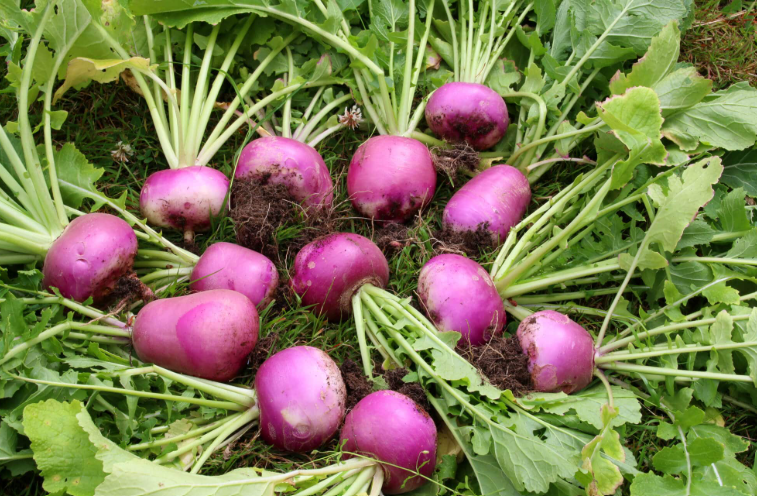
Turnips belong to the mustard family, scientifically known as Brassicaceae. Their scientific name is Brassica rapa, a species that also includes several other cultivated vegetables. Plants in this family are known for their cool-season growth and characteristic pungent flavor compounds. Turnips are biennial plants typically grown as annual crops for their swollen root and edible leafy tops.
Turnips are believed to have originated in regions of western Asia and Europe, particularly around the Mediterranean and temperate parts of Asia. They have been cultivated for thousands of years and were an important staple crop in ancient agricultural societies. Over time, turnips spread across Europe and Asia through trade and farming traditions and eventually became widely grown in many parts of the world.
The turnip plant produces a round or slightly flattened storage root that develops just below the soil surface. The skin is usually white or creamy with a purple or greenish top where sunlight reaches the root. The plant also forms broad, slightly hairy green leaves that grow from a rosette at the base. Both the root and the leafy tops are edible and valued for their distinctive flavor.
Turnips are versatile vegetables used in many traditional cuisines. The roots can be roasted, mashed, boiled, or added to soups and stews where they contribute a mildly sweet yet slightly peppery flavor. Younger turnips are often tender enough to be eaten raw in salads or sliced into slaws. The leafy tops, commonly called turnip greens, are also cooked and enjoyed as a nutritious leafy vegetable.
Turnips are low in calories but rich in important nutrients. They provide vitamin C, dietary fiber, and small amounts of potassium and other minerals that support overall health. The greens are particularly nutrient-dense, offering vitamins A, C, and K as well as antioxidants. Because of their nutritional value and versatility, turnips are often considered a healthy addition to balanced diets.
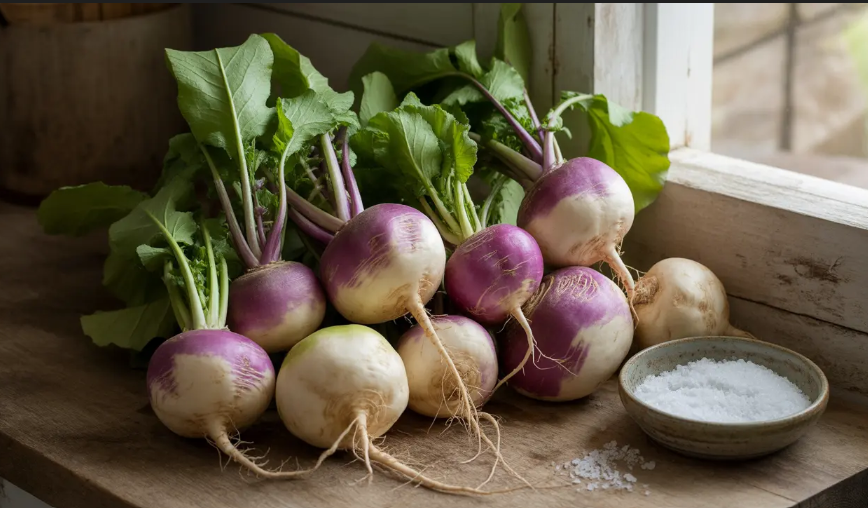
Best Turnip Varieties to Grow
Purple Top White Globe
This is the most widely recognized variety, featuring a round root with a creamy white bottom and a bright purple shoulder where it was exposed to the sun. It is prized for its reliability and versatility, offering a classic turnip flavor that works well in soups, mashes, and roasted dishes.
Tokyo Cross
A popular hybrid variety, the Tokyo Cross is known for its smooth, pure white skin and perfectly uniform shape. It is a fast-growing turnip that can be harvested early as a “baby” vegetable, providing a mild, sweet flavor that is excellent when eaten raw in salads.
Golden Ball
This heirloom variety stands out with its beautiful golden-yellow skin and deep amber flesh. It has a distinctive sweet and nutty flavor that is significantly milder than traditional white turnips, making it a favorite for those who find standard varieties too pungent.
Shogoin
Originating from Japan, the Shogoin turnip is primarily grown for its large, broad, and succulent greens, which are packed with nutrients. While the white, globular roots are edible and tender, the variety is most famous for providing a high yield of high-quality foliage.
Scarlet Queen
The Scarlet Queen is a striking variety with a vibrant red exterior and a crisp, snowy white interior. It adds a significant pop of color to fresh vegetable platters and possesses a mild, slightly peppery taste that bridges the gap between a turnip and a radish.
White Lady
A hybrid white turnip, the White Lady produces exceptionally smooth and round roots that are very uniform. It is specifically bred for its high sugar content and crisp texture, making it one of the best varieties for fresh snacking and gourmet salads.
Seven Top
This variety is an old Southern favorite grown almost exclusively for its greens. The roots of the Seven Top are tough, woody, and generally considered inedible, but the leaves are robust, flavorful, and traditionally used in slow-simmered “pot likker” recipes.
Gilfeather
Technically a natural cross between a turnip and a rutabaga, this Vermont heirloom is celebrated for its exceptionally sweet, creamy white flesh. It lacks the typical turnip “bite” and remains tender even when grown to a very large size, often used in desserts and creamy mashes.
Just Right
Just Right is a large, white hybrid turnip that is exceptionally cold-hardy, making it ideal for late-season harvests. It produces very uniform, high-quality roots and a dense head of greens, serving as an excellent dual-purpose crop for home gardeners.
Amber Globe
An old-fashioned variety with yellow flesh and a green-tinted top, the Amber Globe is known for its hardiness and storage capabilities. It maintains a sweet and tender profile even as it matures, making it a reliable staple for winter food supplies.
Hinona Kabu
A traditional Japanese “long” turnip, Hinona Kabu resembles a large carrot or a thin daikon radish. It features a white root with a purple top and is traditionally used in Japan for making elegant pickles due to its unique shape and refined flavor.
Market Express
Often referred to as a “salad turnip” or “baby turnip,” Market Express is bred to be harvested when small. It is pure white, crunchy, and has an incredibly mild flavor that is often compared to a cross between a radish and an apple.
Oasis
Oasis is a modern hybrid that has been specifically bred for sweetness, with a flavor profile often described as melon-like. The roots are pure white and remain crisp for a long time after harvest, making them a premium choice for raw vegetable trays.
Royal Crown
A high-yielding purple-top variety, Royal Crown is valued for its consistency and disease resistance. It produces very uniform roots that are excellent for commercial production, offering a balanced flavor that is both sweet and slightly earthy.
Snowball
As the name suggests, this heirloom produces perfectly round, small, snowy-white roots. It is a fast-growing variety that is tender and juicy, offering a flavor that is much more delicate than the larger, more common purple-top varieties.
Yorii Spring
This Japanese variety is specifically designed for early spring planting and quick maturation. It produces small, slightly flattened white roots that are incredibly tender, making it one of the first fresh vegetables available in the gardening season.
Kanmachi
A traditional Japanese “Kokabu” type, Kanmachi is small, round, and snowy white. It is frequently used in high-end culinary applications for its delicate texture and clean flavor, often served lightly steamed or thinly sliced in salads.
Goldana
A European variety, Goldana produces uniform, medium-sized roots with a distinct golden-yellow skin and flesh. It has a denser texture than many white varieties and is known for keeping its color and flavor well when roasted or boiled.
Platina
Platina is a flat-shaped white turnip that is favored by professional chefs for its unique aesthetic and consistent quality. It has a very crisp, mild taste and a smooth skin that often doesn’t require peeling before use.
Milan White
An Italian heirloom characterized by its flattened, disc-like shape and pure white color. It is a very early-maturing variety that has been grown for generations for its sweet, delicate flavor and its ability to thrive in cooler climates.
Purple Top Milan
Similar to the Milan White in its flattened shape, this variety features a beautiful purple blush across the top. It is an old Italian favorite prized for its rapid growth and tender flesh, often harvested when only a few inches wide.
Topper
Topper is a specialized variety focused almost entirely on greens production. It is bred to regrow its foliage very quickly after being cut, allowing gardeners to enjoy multiple harvests of flavorful, vitamin-rich leaves throughout the season.
Alltop
Another high-performance variety for greens, Alltop produces massive amounts of large, succulent leaves. It is highly resistant to bolting (going to seed), which ensures a longer harvest window for the foliage compared to many root-focused varieties.
Silky Sweet
This variety lives up to its name by offering an exceptionally smooth, silky texture and a high sugar content. It is almost entirely devoid of the typical turnip pungency, making it an ideal choice for children or those who are usually wary of the vegetable.