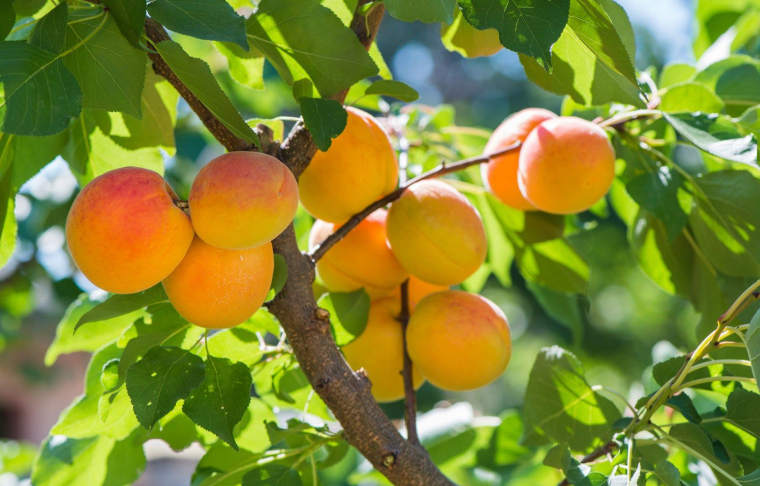
Self-pollinating apricot trees are fruit trees that can produce fruit without needing another apricot tree nearby. This means a single tree is capable of setting fruit on its own, making it a convenient choice for home gardeners with limited space. While they can still benefit from pollinators like bees, they do not rely on cross-pollination to produce a harvest.
These trees produce beautiful blossoms in early spring, often before their leaves fully appear. The flowers are usually white or pale pink and are not only attractive but also essential for fruit development. Because they are self-fertile, the pollen from the same tree can fertilize these flowers, leading to fruit formation.
Self-pollinating apricot trees are generally easy to grow in suitable climates. They prefer well-drained soil, plenty of sunlight, and protection from strong winds. Like many fruit trees, they can be sensitive to late frosts, especially when in bloom, which may affect fruit production if temperatures drop too low.
The fruit produced by these trees is typically sweet, juicy, and rich in flavor. Apricots can be eaten fresh, dried, or used in cooking and baking. Having a self-pollinating tree ensures a reliable yield, even if there are no other apricot trees nearby to assist with pollination.
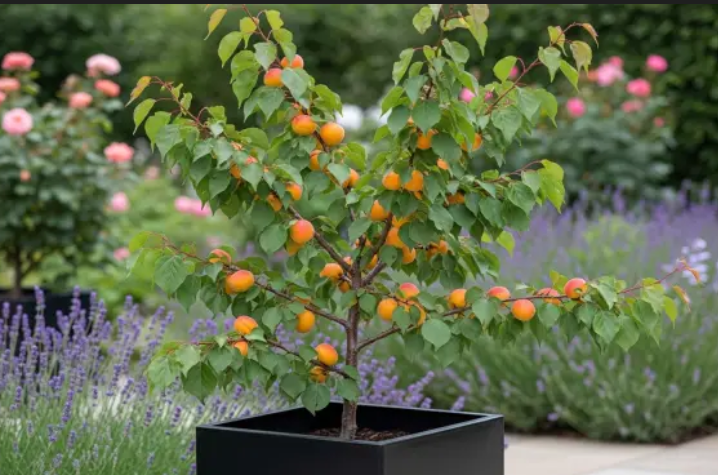
Self-Pollinating Apricot Trees
Moorpark (Prunus armeniaca — ‘Moorpark’)
One of the oldest and most celebrated apricot varieties in the world, Moorpark has been grown in European and North American gardens since the eighteenth century and remains a benchmark variety against which newer introductions are measured.
It produces large, richly flavored fruit of deep orange-yellow with a red blush, and its exceptional flavor — sweet, aromatic, and intensely apricot in character — is considered by many connoisseurs to be unsurpassed by any modern variety. It is fully self-fertile and crops reliably as a single tree, performing best when fan-trained against a warm, south-facing wall in cooler climates.
Harcot (Prunus armeniaca — ‘Harcot’)
Developed by the Horticultural Research Institute of Ontario in Canada, Harcot is one of the most cold-hardy and reliable self-pollinating apricot varieties available to growers in northern climates — its late-blooming habit reducing its vulnerability to the spring frosts that devastate the crops of earlier-flowering varieties.
It produces medium to large fruit of attractive deep orange with a red blush, and its flavor is sweet, rich, and well-balanced with excellent fresh-eating quality. Its combination of cold hardiness, late flowering, and reliable self-fertility has made it one of the most widely planted apricot varieties in Canada and the northern United States.
Goldcot (Prunus armeniaca — ‘Goldcot’)
Goldcot is a Michigan-bred variety developed specifically for reliability and hardiness in the challenging growing conditions of the Great Lakes region — its cold-hardy flower buds providing better frost resistance than most apricot varieties at the critical blossom stage.
It produces medium-sized, golden-yellow fruit of firm texture, good flavor, and excellent keeping quality — qualities that make it popular for both fresh eating and preserving. As a self-fertile variety it crops consistently as a single specimen, and its moderate, manageable tree size makes it well suited to smaller gardens where space is at a premium.
Tilton (Prunus armeniaca — ‘Tilton’)
Tilton is one of the most widely grown commercial and home garden apricot varieties in the western United States — a vigorous, productive, and reliably self-fertile tree that has been a staple of California and Pacific Northwest apricot production for well over a century.
It produces medium to large fruit of pale orange with a distinctive light red blush on the sun-exposed cheek, and its firm, moderately sweet flesh makes it an excellent dual-purpose variety for both fresh eating and the dried and preserved apricot trade. Its consistently heavy cropping and self-fertility make it one of the most dependable apricots for the American West Coast climate.
Tomcot (Prunus armeniaca — ‘Tomcot’)
Tomcot is a modern, early-ripening variety that has become one of the most popular self-fertile apricots in the UK and continental Europe — its very large, deep orange-red fruit and excellent sweet flavor making it particularly appealing to home gardeners seeking impressive visual impact alongside good eating quality.
It ripens earlier than most traditional varieties, typically in late June or early July in British conditions, making it useful for extending the apricot season from the beginning rather than the middle. Its large fruit size, attractive appearance, and self-fertility have made it a consistent bestseller among UK fruit tree nurseries.
Harogem (Prunus armeniaca — ‘Harogem’)
Another outstanding product of the Ontario Horticultural Research Institute’s apricot breeding program, Harogem combines the cold hardiness essential for northern growing conditions with an exceptionally rich, sweet flavor that earned it considerable acclaim upon its introduction.
Its medium-sized, deep orange fruit with red speckling has a melting, juicy texture and a flavor depth that compares favorably with the finest traditional European varieties. Like its stablemate Harcot it blooms relatively late, reducing frost risk to its crop, and its complete self-fertility means a single tree in a sheltered garden position can produce generous yields without any companion planting.
Blenheim (Prunus armeniaca — ‘Royal Blenheim’)
The Royal Blenheim — sometimes simply called Blenheim — is the most historically important and commercially significant apricot variety in California, where it once dominated the state’s vast dried apricot industry before being largely supplanted by higher-yielding modern varieties.
Its medium-sized, pale gold fruit with a distinctive red blush is considered by flavor enthusiasts to have an unmatched richness and complexity — a deeply aromatic, honey-sweet quality that is the reference point for what a truly excellent fresh apricot should taste like. It is fully self-fertile and still widely grown by home gardeners and artisan fruit producers who prize flavor above all other considerations.
Alfred (Prunus armeniaca — ‘Alfred’)
Alfred is one of the most reliable and widely recommended self-fertile apricot varieties for UK and northern European growing conditions — a consistently productive tree that combines reasonable cold hardiness with a flavor quality well above average for varieties suited to cooler climates.
Its medium-sized, orange-yellow fruit with a slight red flush ripens in mid-July in southern Britain and has a pleasant, sweet, well-balanced flavor with good juice content. It is particularly valued by UK home gardeners for its reliable self-fertility, its manageable tree vigor, and its consistent cropping even in years when spring frost causes partial blossom damage.
Scout (Prunus armeniaca — ‘Scout’)
Scout is one of the hardiest self-fertile apricot varieties ever developed — a Canadian prairie variety bred specifically to survive the brutal winters and short growing seasons of the Canadian plains and northern Great Plains states, where most apricot varieties cannot survive at all.
It produces relatively small fruit compared to modern commercial varieties, but its flavor is sweet and pleasant, and the tree’s extraordinary cold hardiness — surviving winter temperatures that would kill most apricot varieties outright — makes it uniquely valuable for growers in zone 3 and 4 climates where apricot growing is otherwise impractical. Its complete self-fertility ensures that a single specimen can produce fruit without any companion planting.
Westcot (Prunus armeniaca — ‘Westcot’)
Developed in Alberta, Canada — one of the most climatically challenging regions in which any apricot variety has been successfully bred — Westcot is a self-fertile prairie variety that combines exceptional cold hardiness with fruit quality significantly better than earlier prairie apricot introductions.
Its medium-sized, orange-yellow fruit has a sweet, mildly flavored flesh that is pleasant fresh and excellent for preserving, and its consistently reliable cropping in conditions that defeat most other apricot varieties has made it an important variety for northern gardeners determined to grow apricots beyond the conventional limits of the crop’s commercial range.
Puget Gold (Prunus armeniaca — ‘Puget Gold’)
Developed specifically for the cool, maritime climate of the Pacific Northwest — a region where late spring rains and cool temperatures during blossom time make reliable apricot cropping particularly difficult — Puget Gold is a self-fertile variety bred to produce consistent crops in conditions that challenge most apricot varieties.
Its large, golden-orange fruit has an excellent, sweet, full-flavored flesh, and its late-season ripening — typically August in the Pacific Northwest — means it avoids the worst of the region’s spring frost risk while still ripening fully before the autumn rains arrive. It is considered one of the best apricot choices for gardeners in Oregon, Washington, and British Columbia.
Rival (Prunus armeniaca — ‘Rival’)
Rival is a self-fertile apricot variety that has earned a strong reputation among North American home gardeners for its combination of reliable self-pollination, attractive large fruit, and good fresh eating quality across a wide range of growing conditions.
Its large, bright orange fruit with a red blush has firm, sweet flesh with a pleasant, mild apricot flavor — not as intensely aromatic as the finest traditional European varieties but considerably better than many modern commercial introductions bred primarily for yield and shipping durability. Its vigorous, productive growth and consistent self-fertile cropping habit make it a reliable choice for gardeners seeking a straightforward, dependable single-tree apricot for the home garden.