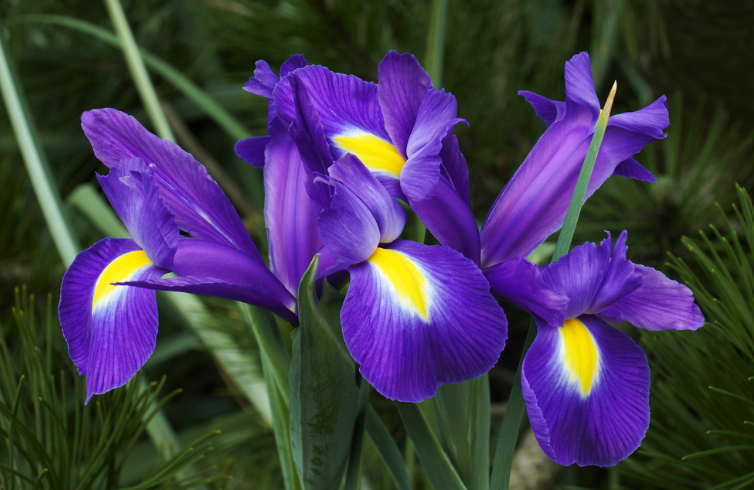
Irises are elegant flowering perennials admired for their striking, sculptural blooms and upright, blade-like foliage. They grow from underground structures that store energy, allowing them to return reliably year after year. Their flowers are often composed of distinct petal arrangements that create a layered, almost architectural appearance in the garden.
These plants are known for their wide range of colors, including soft pastels, deep purples, bright yellows, and intricate bi-color patterns. Many also feature delicate markings or contrasting veins that enhance their visual appeal. Their blooms typically appear in late spring to early summer, adding a burst of color during that period.
Irises generally prefer well-drained soil and plenty of sunlight, though they can adapt to different environments depending on growing conditions. They are relatively low-maintenance once established, requiring occasional division to prevent overcrowding and to maintain strong flowering performance over time.
Reblooming irises are particularly valued for their ability to flower more than once in a single growing season. After the initial bloom period, they can produce additional flower stalks later in the season, offering a second display. This repeat flowering extends their ornamental value and makes them a favorite among gardeners seeking prolonged color.
In general, reblooming types perform best when given consistent care, including adequate sunlight, moderate feeding, and proper spacing. Their ability to bloom again can vary depending on climate and growing conditions, but in favorable environments, they can provide multiple waves of flowers
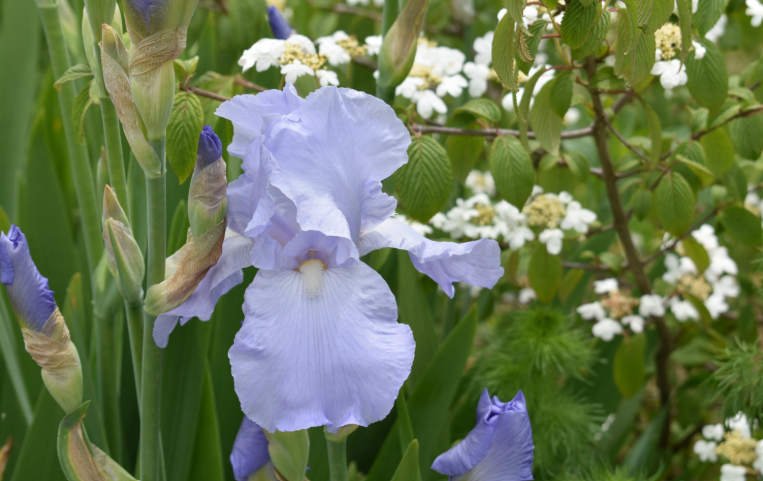
What Are Reblooming Irises?
Reblooming irises, also called remontant irises, are capable of producing multiple bloom cycles in a single season. They are found in both bearded irises (including miniature dwarf, standard dwarf, intermediate, border, and tall types) and beardless irises (such as Siberian, Japanese, Louisiana, or Aril irises). Rebloomers may produce a second crop of flowers on old growth or new growth, sometimes without requiring a chilling period, and can extend the flowering season from 4–8 weeks or more.
Reblooming Iris Flowers
Immortality
Perhaps the most famous and reliable of all reblooming irises, ‘Immortality’ is a tall bearded iris that produces pure, crystalline white flowers. Its ruffled petals and slight sweet fragrance make it a garden staple, and it is known for its exceptional ability to rebloom even in cooler climates where other varieties might struggle. It often serves as the benchmark for reliability in the world of remontant perennials.
Clarence
‘Clarence’ is a stunning neglecta-type iris, meaning it features light blue-white standards (the upper petals) and deeper blue-violet falls (the lower petals) with a distinct white patch near the beard. It is highly regarded for its vigorous growth and consistent fall bloom. The color transition is soft and ethereal, making it a favorite for gardeners who want a “cool” color palette for their autumn landscapes.
Harvest of Memories
Living up to its name, ‘Harvest of Memories’ brings a bright, sunny yellow to the garden twice a year. This variety is known for its solid, clear color and its wonderful, spicy fragrance. It is a tall, stately plant that stands up well to the elements, providing a much-needed pop of warmth when most other spring-flowering plants have long since faded.
Sugar Blues
‘Sugar Blues’ is celebrated for its massive, wisteria-blue blooms and an incredibly sweet, candy-like scent. The flowers are heavily ruffled, giving them a luxurious and ornate appearance. In addition to its visual and olfactory appeal, it is a robust rebloomer that can produce multiple stalks in the fall, provided it receives adequate water and fertilizer during the summer months.
City Lights
This variety offers a dramatic contrast, featuring deep violet-purple petals with a brilliant white “zonal” spray in the center of the falls, mimicking the glow of city lights against a night sky. It is a tall bearded iris with excellent branching, which helps it support the weight of its large, vibrant blooms. Its striking color makes it a perfect focal point for both spring and late-season garden beds.
Feed Back
‘Feed Back’ is one of the most reliable early rebloomers, often starting its second cycle as early as August in some regions. It features medium violet-blue flowers with bright yellow beards that provide a sharp point of contrast. Because it begins its rebloom cycle earlier than many other varieties, it is an excellent choice for gardeners in northern zones with shorter growing seasons.
Jennifer Rebecca
For those seeking pink hues, ‘Jennifer Rebecca’ is a standout variety with rose-pink, heavily ruffled petals and tangerine-colored beards. It is named after the daughter of the hybridizer and is known for its elegant form and dependable performance. While pink irises can sometimes be delicate, this variety is noted for its vigor and its ability to produce high-quality blooms in the autumn.
Champagne Elegance
‘Champagne Elegance’ is a sophisticated bitone iris with near-white standards and soft buff-apricot falls. It is widely considered one of the most beautiful irises in existence, regardless of its reblooming status. It has a delicate, almost peach-like fragrance and is exceptionally prolific, often producing a high volume of bloom stalks during its secondary autumn flush.
Best Bet
‘Best Bet’ is a classic bicolor iris that blooms very early in the spring and again in the fall. It features pale wisteria-blue standards and deep, velvety Royal blue falls. This “early-to-start” nature makes it a great way to kick off the iris season, and its dependable rebloom ensures that you get to enjoy its striking blue-on-blue contrast once again before the winter sets in.
Rosalie Figge
This variety is a deep, dark violet-purple that appears almost black in certain lighting. ‘Rosalie Figge’ is prized for its intense color saturation and its extremely hardy nature. It was bred to be a survivor, often thriving in conditions where more finicky cultivars might fail. Its dark blooms provide a beautiful counterpoint to the golden and orange tones typical of a fall garden.
Summer Olympics
‘Summer Olympics’ is a cheerful variety featuring lime-yellow standards and white falls with yellow hafts and beards. It is an “everblooming” type iris, meaning it can sometimes produce flowers sporadically throughout the summer rather than just in two distinct bursts. Its clean, bright colors and reliable performance have made it a popular choice for decades.
Victoria Falls
‘Victoria Falls’ is a light blue self (meaning it is the same color throughout) that is famous for its “signal” patch—a small white spot just below its white-tipped beards. It is unique because it often produces three branches and a terminal bud, leading to a very high bloom count. It has won numerous awards for its form and its ability to rebloom consistently across various climate zones.
Total Recall
This variety is known for its large, wide-petaled flowers that are a blend of creamy white and lemon yellow. ‘Total Recall’ is particularly noted for its “form”—the physical structure and ruffling of the flower are exceptionally modern and refined for a rebloomer. It is a vigorous grower that quickly forms large clumps, providing a massive display of color twice a year.
Earl of Essex
‘Earl of Essex’ is a “plicata” variety, which means it has a white base color with stitched or stippled edges of violet. This pattern gives the iris a delicate, hand-painted look. It is an older, time-tested variety that remains popular because of its reliable reblooming habit and its ability to produce many buds per stalk, ensuring a long-lasting bloom period.
Again and Again
Rounding out the list is ‘Again and Again’, a medium yellow iris that lives up to its name with a very high frequency of rebloom. The flowers are a solid, buttery yellow and are known for their sweet scent and heavy ruffling. It is a vigorous plant that is often one of the last irises to stop blooming in the late autumn, sometimes continuing until the first hard frost.