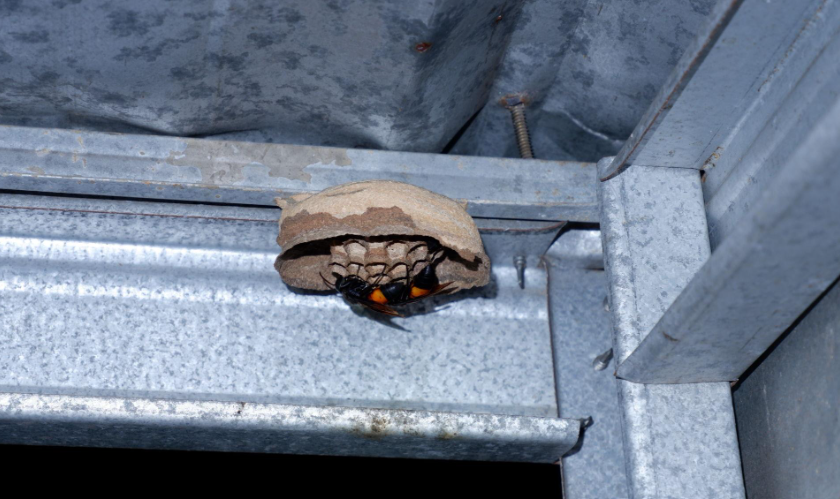
Most hornets are active during the day, but some species can remain active at night, especially in warm climates. These hornets may continue flying and foraging after sunset, taking advantage of quieter conditions and fewer predators. Their ability to function in low light makes them stand out from many other stinging insects.
Nocturnal hornets are often attracted to artificial lights such as porch bulbs, streetlights, or indoor lighting that shines outside. These lights can confuse their natural navigation and draw them closer to human spaces. As a result, people sometimes notice them buzzing around windows or outdoor lamps at night.
Their nighttime activity usually involves searching for food. Like their daytime relatives, they hunt other insects or collect sugary substances such as nectar and fruit juices. Night-flying insects that gather around lights can become easy targets, giving hornets an advantage when hunting in the dark.
These hornets rely more on senses like smell and touch rather than clear vision. While their eyesight is not as strong in darkness, they can still navigate effectively using scent trails and environmental cues. This helps them locate food and return safely to their nests.
Their nests remain active at night, although activity levels may be lower compared to daytime. Some workers may guard the nest while others continue light foraging. In warmer regions, where nights are mild, this extended activity can be more noticeable.
Although encountering hornets at night can be surprising, they are not usually aggressive unless disturbed. Most problems occur when people accidentally get too close to a nest or try to swat them near lights. Keeping outdoor lights dim or using warm-colored bulbs can reduce attraction and limit nighttime encounters.
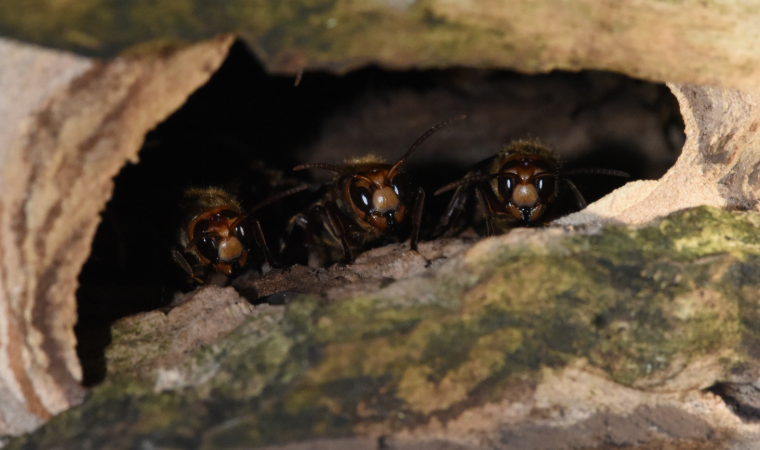
Hornets that Are Active at Night
European Hornet (Vespa crabro)
The European Hornet is one of the few true hornets that is notably active after dark. Unlike most stinging insects, it is strongly attracted to artificial light sources at night, which can make it seem aggressive when it flies into illuminated windows or lamps.
It is the largest eusocial wasp in Europe and has been introduced to North America. Workers forage at night to feed their colonies, making them a unique exception in the hornet world.
Asian Giant Hornet (Vespa mandarinia)
Famously known as the “murder hornet,” the Asian Giant Hornet is the world’s largest hornet and is capable of nocturnal activity, particularly during warmer months.
Queens and workers have been observed flying at night, especially during the colony’s peak growth phase when food demand is high. Their powerful mandibles and potent venom make nighttime encounters particularly dangerous for honeybee colonies, which they raid under the cover of darkness.
Black-Bellied Hornet (Vespa basalis)
Native to parts of Southeast Asia, the Black-Bellied Hornet is known to engage in nocturnal foraging behavior, especially in tropical climates where temperatures remain warm through the night.
It is a highly aggressive species that builds large, enclosed paper nests. Its nighttime activity is thought to be an adaptation that helps it avoid competition with daytime predators and rival insects while still meeting the colony’s nutritional needs.
Lesser Banded Hornet (Vespa affinis)
The Lesser Banded Hornet, widespread across South and Southeast Asia, is another species with documented nocturnal tendencies. It is strongly attracted to light — a behavior known as phototaxis — and frequently enters homes and buildings at night, drawn by indoor lighting.
This makes it one of the hornets most commonly encountered by humans after dark. Despite its relatively smaller size, it is fiercely defensive and will sting repeatedly when threatened.
Yellow Hornet (Vespa simillima)
Found across East Asia, including Japan and Korea, the Yellow Hornet has been observed foraging during twilight and into the night hours, particularly in late summer when colonies are at their largest and food requirements peak. Like several of its relatives, it is attracted to artificial light and can become disoriented around illuminated structures.
It tends to prey on other insects and can pose a nuisance — and a sting risk — to people spending time outdoors at night in its native range.