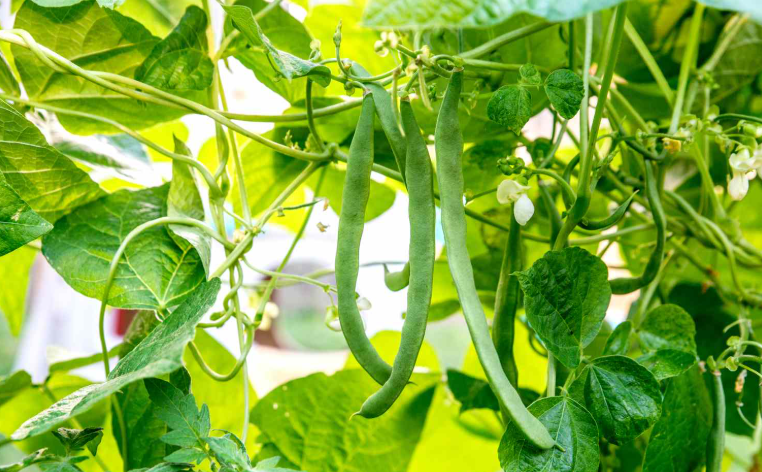
French beans, known botanically as Phaseolus vulgaris, are one of the most refined and culinarily celebrated members of the bean family, treasured in kitchens and gardens around the world for their slender, tender pods, delicate flavor, and elegant appearance on the plate.
The term “French bean” is used broadly across the United Kingdom, Europe, Africa, Asia, and Australia to describe a wide range of pod beans eaten whole before the seeds mature, and encompasses everything from the ultra-slim filet beans of classic French cuisine to climbing varieties, wax beans, and flat-podded types. Whether grown in a small kitchen garden, a raised bed, or a large allotment, French beans are among the most rewarding and productive of all summer vegetables.
Varieties of French Beans
Cobra French Bean (Phaseolus vulgaris ‘Cobra’)
Cobra is one of the most popular and highly regarded climbing French bean varieties available to home gardeners in the United Kingdom and Europe, producing long, slender, stringless pods of exceptional quality over an impressively extended harvest season that can last from midsummer right through to the first autumn frosts.
The pods are round, straight, deep green, and remarkably tender even at larger sizes, with a sweet, full, and satisfying flavor that is excellent steamed, stir-fried, or simply blanched and dressed with butter and seasoning.
It is a vigorous climbing variety that can reach 5 to 6 feet in height and requires a sturdy support of canes, a trellis, or netting to achieve its full potential, and its sustained productivity and exceptional pod quality have made it a firm favorite among allotment gardeners and kitchen garden enthusiasts across the British Isles and beyond.
Climbing French Bean (Phaseolus vulgaris ‘Blauhilde’)
Blauhilde, also known as the Blue Lake Climbing Bean or Purple Podded Climbing Bean, is a striking and highly productive German heirloom climbing variety that produces long, round, deep purple pods of outstanding eating quality on vigorous vines that can reach 6 to 7 feet in height.
The purple color makes harvesting an absolute pleasure, as the pods stand out dramatically against the green foliage and are virtually impossible to miss, and the flavor is excellent — sweet, tender, and mild — though the vivid purple color, as with most purple-podded beans, disappears entirely on cooking to leave a standard green pod.
Blauhilde is a heavy and sustained producer that performs particularly well in warm summers and benefits from regular harvesting every few days to encourage continuous pod set throughout the season, and its combination of ornamental beauty, reliable productivity, and good eating quality has earned it a devoted following among vegetable gardeners.
Dwarf French Bean (Phaseolus vulgaris ‘Tendergreen’)
Tendergreen is a classic, reliable, and widely grown dwarf bush French bean that has been a staple of British and European kitchen gardens for many decades, prized for its consistent performance, early maturity, and good-quality, stringless round pods with a solid, dependable flavor.
Growing to just 18 to 24 inches as a compact, self-supporting bush plant, it requires no staking or support structures and is an excellent choice for smaller gardens, raised beds, containers, and any situation where a tidy, manageable, and productive bean plant is required.
Tendergreen matures relatively early in the season and produces a concentrated crop over a period of several weeks, making it particularly suitable for gardeners who want to harvest a substantial quantity of beans in a short window for canning, freezing, or making preserves.
Safari French Bean (Phaseolus vulgaris ‘Safari’)
Safari is a highly regarded modern dwarf French bean variety that has earned an outstanding reputation among market gardeners, allotment holders, and kitchen garden enthusiasts for its exceptional productivity, uniformly straight pods, and excellent resistance to the bean diseases that can devastate less robust varieties in wet or humid growing seasons.
The pods are straight, round, stringless, and of good length, with a clean, fresh, sweet flavor and a firm yet tender texture that holds up well both fresh and after light cooking, and the plants produce a generous and relatively concentrated crop that is well suited to harvesting in bulk for freezing and preserving.
Safari’s combination of strong disease resistance, high yield, and consistently good pod quality has made it one of the most trusted and widely planted commercial and home garden French bean varieties currently available.
Annabel French Bean (Phaseolus vulgaris ‘Annabel’)
Annabel is an elegant and refined dwarf filet-style French bean that produces exceptionally slender, pencil-thin pods in the classic Haricot Vert tradition, with a delicate, sweet, and nuanced flavor that makes it one of the finest culinary French beans available for the home garden.
The pods are very fine, straight, and stringless, typically measuring just 4 to 5 inches in length, and they are at their absolute best harvested young and tender and cooked very briefly — blanched for just two to three minutes — to preserve their exceptional texture and flavor.
Annabel plants are compact and productive for a filet-type bean, and while they require more frequent harvesting than standard varieties to catch the pods at their peak slender perfection, the culinary quality of the result is outstanding and genuinely comparable to the finest filet beans served in quality French restaurants.
Purple Teepee French Bean (Phaseolus vulgaris ‘Purple Teepee’)
Purple Teepee is a charming and highly practical dwarf French bean variety that has won considerable popularity among home gardeners for one of its most clever and useful characteristics — its pods are produced at the top of the plant rather than hidden deep in the foliage, making them outstandingly easy to spot and harvest without having to rummage through leaves and stems to find them.
The pods are a vivid, deep purple — striking and ornamental in the garden — and they are round, straight, stringless, and of very good flavor, sweet and tender when harvested young, with the purple color turning green on cooking as with most purple-podded varieties.
The compact, upright plants of about 18 inches require no support, making Purple Teepee an outstanding choice for smaller gardens, raised beds, window boxes, and container growing, where its practical pod placement, ornamental color, and compact habit combine to make it one of the most garden-friendly French bean varieties available.
Borlotti French Bean (Phaseolus vulgaris ‘Borlotti’)
Borlotti, also known as Cranberry Bean or Tongue of Fire, is a spectacularly beautiful Italian heirloom French bean variety that produces broad, flat pods splashed and streaked with vivid crimson-red markings on a pale cream background, creating one of the most ornamental and visually striking displays of any vegetable in the kitchen garden.
It is a dual-purpose bean of outstanding versatility — the young pods can be eaten whole as a flat French bean when harvested early and tender, the partially mature seeds can be shelled and used as a fresh shell bean with a creamy, rich, chestnut-like flavor, or the fully mature seeds can be dried for use as a traditional Italian dried bean in soups, stews, and pasta e fagioli throughout the winter.
Growing as a climbing variety to 4 to 6 feet, Borlotti is both beautiful and productive, and it is a staple of Italian kitchen gardens where its multiple uses, ornamental appeal, and outstanding flavor are deeply appreciated.
Helda French Bean (Phaseolus vulgaris ‘Helda’)
Helda is a vigorous climbing flat-podded French bean variety that is particularly popular across the Middle East, Mediterranean Europe, and among gardeners of those cultural backgrounds in the United Kingdom and beyond, producing very long, broad, flat pods of outstanding eating quality that are ideal for the slow-braised, olive oil-enriched bean dishes that are central to Lebanese, Turkish, Greek, and Italian cooking traditions.
The pods can reach 8 to 10 inches in length and are broad, flat, fleshy, and deeply flavored, with a meaty texture and a rich, satisfying taste that improves with slow cooking in a way that slender filet beans or round-podded varieties cannot replicate.
Growing as a vigorous climbing vine to 5 to 6 feet, Helda is a sustained and generous producer throughout the summer months and is one of the most culinarily versatile and culturally significant of all the French bean varieties grown in British and European gardens today.
Dwarf Borlotti (Phaseolus vulgaris ‘Lingua di Fuoco Nano’)
Lingua di Fuoco Nano, which translates beautifully from Italian as Dwarf Tongue of Fire, is a compact bush form of the classic Borlotti climbing bean that offers all of the outstanding culinary versatility and visual beauty of the climbing Borlotti in a neat, self-supporting bush plant of just 18 to 24 inches that requires no staking or support.
The pods display the same gorgeous cream and crimson streaked coloring as the climbing form and are equally excellent eaten young as a flat French bean, used as a fresh shell bean when the seeds have swelled, or dried fully for winter storage as a traditional Italian dried bean.
The compact habit makes Lingua di Fuoco Nano particularly suitable for smaller gardens, raised beds, and containers, and it is an outstanding choice for gardeners who love the culinary tradition of Italian Borlotti beans but lack the space or support infrastructure for a vigorous climbing variety.
Valdor French Bean (Phaseolus vulgaris ‘Valdor’)
Valdor is a beautiful and distinctive golden-yellow wax French bean variety that produces straight, round, stringless pods in a warm, clear butter-yellow color that is ornamentally attractive in the garden and visually appealing on the plate, offering an elegant alternative to the standard green French bean for both growing and culinary use.
The flavor is mild, sweet, and buttery — slightly more delicate and less grassy than green-podded varieties — and the pods maintain their attractive golden color when cooked, making them a beautiful addition to mixed bean salads, vegetable platters, and composed dishes where color variety is valued.
Growing as a compact bush plant of about 18 to 24 inches, Valdor is a reliable and productive variety that performs well in warm summer conditions and is an excellent choice for gardeners and cooks who want to add visual interest and variety to both their vegetable garden and their kitchen repertoire.
Fasold French Bean (Phaseolus vulgaris ‘Fasold’)
Fasold is a reliable and productive dwarf French bean variety that has earned a strong reputation among home gardeners and small-scale market growers for its consistently high yield, good disease resistance, and straight, round, stringless pods of solid eating quality that are well suited to both fresh consumption and preserving.
The plants are compact and upright, producing their pods in a concentrated and accessible manner that makes harvesting straightforward and efficient, and the pods are uniform in size and appearance in a way that makes them particularly suitable for canning and bottling where consistency of pod size is an advantage.
Fasold is a dependable, no-nonsense French bean variety that may lack the glamour of some more ornamental or gourmet selections but delivers exactly what most home gardeners need most from a bean — a reliable, generous, and trouble-free crop of good-quality pods throughout the summer growing season.
Moonshine French Bean (Phaseolus vulgaris ‘Moonshine’)
Moonshine is a beautiful and somewhat unusual pale yellow to cream-colored wax French bean that produces attractive, lightly colored pods with a mild, delicate, and very refined flavor that is particularly well suited to fresh eating, light salads, and any dish where a subtle, understated bean flavor is preferred over the more robust taste of green-podded varieties.
The pods are straight, round, and stringless, borne on compact and productive bush plants that perform reliably in a range of summer conditions, and the unusually pale color of the pods — almost white in certain light — makes Moonshine one of the most visually distinctive and elegant of all the wax French bean varieties available to the home gardener.
It pairs particularly beautifully with purple-podded varieties in mixed bean salads, where the contrasting colors of pale cream, vivid purple, and deep green create a visually stunning and culinarily excellent combination.
Speedy French Bean (Phaseolus vulgaris ‘Speedy’)
Speedy is precisely what its name promises — one of the fastest-maturing French bean varieties available, capable of reaching harvest readiness in as few as 45 to 50 days from sowing, making it an outstanding choice for gardeners with short growing seasons, those who want to make multiple successive sowings throughout the summer, or anyone who simply cannot wait to get fresh beans on the table as quickly as possible after planting.
The pods are slender, straight, and stringless with a good, fresh flavor, borne on compact bush plants that require no support and are highly suitable for growing in containers, window boxes, and raised beds as well as in the open vegetable garden.
Speedy’s rapid maturity also makes it particularly useful for late-season sowings in late summer and early autumn, where its fast development from sowing to harvest means it can still produce a worthwhile crop before the first frosts bring the growing season to a close.
Pea Bean (Phaseolus vulgaris ‘Pea Bean’)
The Pea Bean is a fascinating and historically significant heirloom French bean variety that produces small, compact, round pods that somewhat resemble pea pods in their size and shape, containing small, round seeds marked with distinctive white and reddish-purple speckled patterns that are as beautiful as they are culinarily versatile.
The young pods can be eaten whole as a snap or French bean when very young and tender, but the variety truly comes into its own when the seeds are allowed to mature and are used as a fresh shell bean or dried for winter storage, at which point their rich, creamy, full-bodied flavor makes them outstanding in soups, stews, cassoulets, and slow-cooked bean dishes.
The Pea Bean has a long and interesting cultural history in the British Isles and has been grown in cottage gardens for generations, and its revival among heritage seed enthusiasts and traditional kitchen garden devotees has helped ensure that this charming and useful variety is not lost to horticultural history.
Algarve French Bean (Phaseolus vulgaris ‘Algarve’)
Algarve is a robust and heat-tolerant French bean variety developed to perform reliably in the warm, dry conditions of southern Europe and the Mediterranean region, and it has proven equally valuable in the warmer parts of the United Kingdom and northern Europe during hot, dry summers when other French bean varieties can struggle with heat stress, reduced flowering, and poor pod set.
The pods are straight, round, stringless, and of good length, with a clean, fresh flavor and a firm texture that holds up well both fresh and cooked, and the plants are vigorous, upright, and productive over a sustained period throughout the growing season.
Algarve’s exceptional heat and drought tolerance, combined with its reliable productivity and solid eating quality, make it one of the most practically useful French bean varieties for gardens in warmer regions or for planting in the hottest, most sun-exposed positions in the kitchen garden where other varieties might fade and fail during prolonged periods of summer heat.