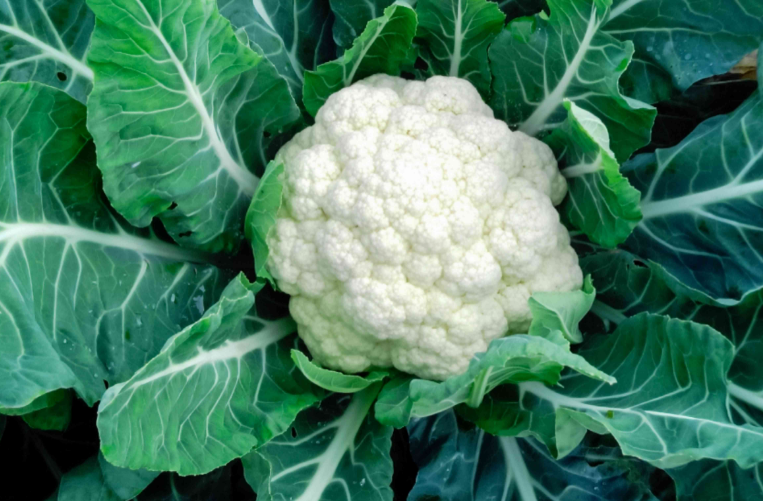
Cauliflower is a popular vegetable known for its compact white head, often called a “curd.” It belongs to the same plant family as broccoli, cabbage, and kale. Although the most common type is white, cauliflower also comes in other colors like purple, green, and orange. It is grown in many parts of the world and is valued for both its taste and versatility.
This vegetable grows best in cool climates and requires careful farming to produce high-quality heads. Farmers need to protect the developing curd from too much sunlight, which is why the outer leaves are sometimes tied over it. When harvested at the right time, cauliflower has a firm texture and mild flavor.
Cauliflower is widely used in cooking and can be prepared in many ways. It can be boiled, steamed, roasted, or even eaten raw. Its mild taste allows it to absorb flavors easily, making it suitable for a variety of dishes, from simple sides to more complex meals.
In recent years, cauliflower has become especially popular as a substitute for other foods. It is often used to make low-carb alternatives like cauliflower rice, pizza crust, or mashed “potatoes.” These uses have made it a favorite among people looking for lighter or more flexible meal options.
Nutritionally, cauliflower is rich in vitamins and minerals. It provides vitamin C, vitamin K, and fiber, which support overall health. It is also low in calories, making it a good choice for balanced diets. Its nutritional value adds to its appeal as a regular part of meals.
Varieties of Cauliflower
Snowball
The classic white cauliflower that most people picture when they hear the word, Snowball is a compact, uniform, and reliable variety producing dense, bright white curds of excellent quality.
It is one of the oldest and most widely grown cauliflower varieties in the world, having been cultivated in European gardens for centuries. Its tightly packed head, clean flavor, and consistent performance in a wide range of climates have kept it a staple of home and commercial growing alike.
Romanesco
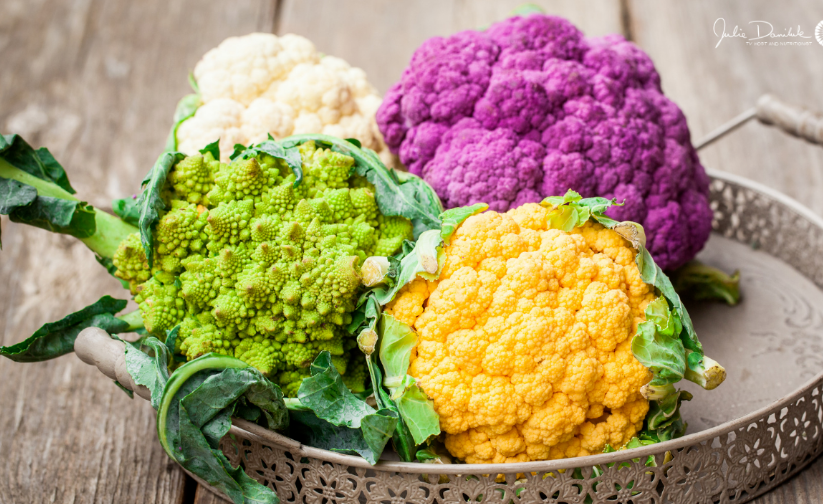
Arguably the most visually spectacular vegetable in existence, Romanesco produces a luminous lime-green head composed of perfectly formed logarithmic spirals — a natural fractal pattern so mathematically precise that it has been used in textbooks to illustrate the Fibonacci sequence.
Originating in Italy near Rome in the sixteenth century, it has a flavor that is milder, nuttier, and more delicate than standard white cauliflower. Each floret is itself a miniature version of the whole head — a property called self-similarity that makes it one of the most extraordinary edible plants ever cultivated.
Graffiti
Graffiti is a striking purple cauliflower whose vivid violet color comes from anthocyanins — the same class of antioxidant pigments found in red cabbage, blueberries, and red wine. Its color is most intense when eaten raw, fading to a more muted purple when cooked, and it adds dramatic visual impact to crudité platters and salads. Its flavor is slightly milder and sweeter than white cauliflower, and it holds its color better when steamed or roasted than when boiled. It is as nutritious as it is beautiful, with anthocyanins linked to significant antioxidant and anti-inflammatory benefits.
Cheddar
Named for the vivid orange color of its head — which does indeed resemble a block of orange Cheddar cheese — this American-developed variety gets its remarkable coloration from high concentrations of beta-carotene, the same compound that makes carrots orange.
Cheddar cauliflower contains roughly 25 times more beta-carotene than white varieties, making it among the most nutritionally dense cauliflower types available. Its flavor is slightly richer and more buttery than standard white varieties, and its color deepens and intensifies when roasted, making it particularly attractive as a side dish.
Purple Cape
One of the oldest purple cauliflower varieties, Purple Cape is a large, robust, and cold-hardy type traditionally grown in European gardens and particularly popular in the United Kingdom.
It overwinters in the ground and matures in late winter to early spring — making it one of the few cauliflower varieties that bridges the gap between the autumn harvest and spring planting season. Its purple coloration is produced by anthocyanins, and its flavor is considered full-bodied and slightly more assertive than delicate white varieties, suiting it well to hearty winter cooking.
Violetta Italia
An Italian heirloom purple variety, Violetta Italia produces a medium-sized head of deep violet-purple that fades to a vivid green when cooked — a color transformation that always surprises first-time growers. It is a vigorous, cold-tolerant variety well suited to autumn production in Mediterranean climates, and its nutty, slightly sweet flavor has made it a favorite in Italian cuisine for generations.
It is less compact than modern hybrid varieties but produces generous, loosely arranged curds with a texture and flavor that many chefs consider superior to tightly packed commercial varieties.
Sicilian Purple
Closely related to Violetta Italia but with an even deeper, more saturated purple coloration, Sicilian Purple is a traditional Sicilian heirloom that has been grown in the gardens and market farms of southern Italy for centuries. Its heads are somewhat irregular and loose compared to uniform commercial varieties, reflecting its ancient, unimproved lineage.
It is harvested in winter and early spring in its native Mediterranean climate and is prized for its intense flavor, which is richer and more complex than most modern commercial varieties. It is the cauliflower most commonly found in traditional Sicilian pasta dishes.
Di Sicilia Violetto
Similar to but distinct from Sicilian Purple, Di Sicilia Violetto is another traditional Sicilian heirloom producing heads of vivid purple-violet with a slightly more open, branching curd structure than tightly packed modern types. It is deeply embedded in the agricultural heritage of Sicily, where it has been grown in coastal market gardens for hundreds of years.
Its flavor is bold and distinctive — earthier and more mineral than northern European white varieties — and it is excellent roasted whole or broken into florets and dressed with olive oil and capers in the Sicilian tradition.
Green Macerata
An unusual Italian heirloom from the Marche region of central Italy, Green Macerata produces a medium-sized head of pale lime-green with a loose, open curd structure that distinguishes it from compact modern varieties.
It is a winter-maturing variety well suited to the cool, moist growing conditions of central Italian hill country, and it has been grown in the area around Macerata for centuries. Its flavor is mild, sweet, and slightly grassy — closer in character to broccoli than to standard white cauliflower — and it is considered one of the finest traditional Italian cauliflower varieties by seed conservationists working to preserve regional vegetable heritage.
Alverda
Alverda is a vivid lime-green Dutch hybrid cauliflower that produces a dense, uniform head of brilliant chartreuse-green — a color so bright and saturated that it appears almost artificially vivid on the plate. Its green color comes from the presence of chlorophyll, the result of selective breeding rather than the natural Romanesco spiral structure.
It retains its color reasonably well during cooking and has a mild, slightly sweet flavor well suited to steaming and roasting. It has become increasingly popular with chefs and home cooks seeking colorful alternatives to white cauliflower without the more complex growing requirements of Romanesco.
Veronica Romanesco
A modern hybrid Romanesco type developed for improved uniformity and market performance, Veronica produces the characteristic lime-green logarithmic spirals of traditional Romanesco in a more consistent, uniform head better suited to commercial production.
It retains the extraordinary visual appeal and distinctive nutty flavor of heirloom Romanesco while offering greater reliability and a more predictable harvest window. It is considered one of the best Romanesco types for home garden growing, combining the best aesthetic qualities of the ancient Italian original with the practical advantages of modern plant breeding.
Vitaverde
A green cauliflower hybrid with a more compact and tightly packed curd than Romanesco types, Vitaverde produces a solid, dome-shaped head of medium green that holds its color well during cooking. It is a vigorous, productive variety with good disease resistance, suited to both spring and autumn cropping in temperate climates.
Its flavor is mild and slightly sweet with a clean finish — appealing to consumers who find traditional white cauliflower bland but prefer a more familiar texture than the loosely spiraled Romanesco. It has found favor in the fresh market trade as a visually appealing specialty vegetable.
Autumn Giant
As its name suggests, Autumn Giant is bred for late season production — a large, vigorous variety that produces enormous white heads of excellent quality when harvested in autumn and early winter.
It is a particularly popular variety among UK allotment holders and home gardeners who want a reliable, generous cauliflower for autumn cropping, and its good weather tolerance makes it forgiving in the often unpredictable conditions of the British autumn growing season. Individual heads can reach impressive sizes, and the dense, creamy-white curds have a classic, full-flavored taste that holds up well in soups, gratins, and roasting.
All Year Round
True to its name, All Year Round is a versatile, reliable white cauliflower variety that can be sown and harvested across multiple seasons with consistent results — one of the few varieties genuinely capable of producing acceptable heads in both spring and autumn cropping in temperate climates.
It produces medium-sized, compact, pure white heads of good quality and its adaptability has made it a perennial favorite in British home vegetable gardens for well over a century. It is not the showiest or largest variety available, but its dependability, availability, and consistently good flavor have ensured its continued popularity across generations of UK gardeners.
Walcheren Winter
Walcheren Winter is a group of traditional European winter-hardy cauliflower varieties developed for overwintering in the ground and harvesting in late winter to early spring — filling the hungry gap when few other brassicas are available.
Named after the Walcheren region of the Netherlands where they were developed, these varieties are among the most cold-tolerant cauliflowers grown in northern Europe, capable of withstanding hard frosts with good foliage protection of the curd. They mature over the winter months and produce large, white, well-flavored heads that have been a staple of northern European winter cooking for generations.
Aalsmeer
A traditional Dutch winter cauliflower variety developed in the market gardening regions around Aalsmeer in the Netherlands, this cold-hardy type is bred for overwintering and spring maturity in the cool, often harsh conditions of northwestern European winters.
It produces solid, white, well-protected heads and has been a dependable variety for Dutch and Belgian market gardeners for generations. Like other Walcheren-type varieties it has been largely superseded in commercial production by modern hybrids but is maintained by seed libraries and heritage vegetable enthusiasts who value its historical significance and good flavor.
Igloo
A compact, early-maturing white hybrid cauliflower, Igloo is valued for its very tight, smooth, dome-shaped head that closely resembles — as its name suggests — an igloo in profile. It is a fast-growing variety suited to spring and early summer production, maturing in a relatively short window and producing uniform, commercially attractive heads.
Its compact plant size makes it suitable for closer spacing than larger varieties, increasing yield per square meter in intensive production systems. Its mild, clean flavor and attractive appearance have made it a consistent choice in the fresh market cauliflower trade.
Dok Elgon
A vigorous, large-heading white cauliflower bred for autumn production in northern European climates, Dok Elgon produces exceptionally large, solid, pure white heads with a smooth, fine-grained curd texture.
It is a robust variety with good field holding ability — remaining in harvestable condition in the field for an extended period without deteriorating — a quality particularly valued by market gardeners who need flexibility in their harvest scheduling. Its generous size, clean white color, and good flavor have made it a reliable commercial variety in the UK and northern European fresh market.
Fremont
Fremont is an early-season white hybrid cauliflower developed for spring production, valued for its reliable uniformity, strong vigor, and resistance to bolting — the tendency to flower prematurely when exposed to fluctuating spring temperatures.
It produces medium to large heads of clean white, tight-curd quality and is widely used in commercial production systems where consistent, predictable crop performance is essential. Its good heat tolerance relative to other spring varieties extends the harvest window compared to older open-pollinated spring types.
White Corona
White Corona is a very early maturing miniature white cauliflower — sometimes called a baby cauliflower or mini cauliflower — that produces small, individual-portion-sized heads rather than the large single heads of standard varieties.
These mini cauliflowers — typically five to eight centimeters across — are harvested as single-serving vegetables and have become popular in restaurant kitchens and with consumers looking for elegant presentation options. They are grown at closer spacing than standard varieties and mature with impressive speed.
Trevi
Trevi is a hybrid Romanesco-type cauliflower that produces the characteristic spiral, lime-green fractals of traditional Romanesco in a more uniform, commercially consistent form. It is valued for its reliable head shape, strong plant vigor, and good field tolerance — qualities that have made it a popular choice among specialty vegetable growers supplying high-end restaurants and farmers markets.
Its flavor is true to the Romanesco type — mild, nutty, and slightly sweet — and its visual appeal is unmatched by any other cauliflower form. It performs best in cool growing conditions with consistent moisture.
Depurple
Depurple is a modern purple hybrid cauliflower bred for improved color intensity and uniformity compared to older open-pollinated purple varieties. Its vivid violet-purple head is dense and compact, and unlike some purple varieties whose color fades significantly during cooking, Depurple retains a reasonable degree of its attractive coloration even after steaming.
It is a vigorous, productive variety with good disease resistance and a wide adaptability to different growing conditions and seasons. Its bold color, good flavor, and reliable performance have established it as one of the leading purple cauliflower varieties in contemporary commercial and home production.
Fioretto
Fioretto is a unique and visually distinctive Japanese-developed cauliflower variety that produces long, slender, branching flower stalks rather than a conventional compact head — its appearance falling somewhere between a conventional cauliflower and a loose-headed broccoli.
Each slender stem ends in a small white floret, and the entire plant has an open, airy, almost wild appearance that is completely unlike standard cauliflower forms. Its delicate, sweet flavor — milder than conventional cauliflower — and its attractive form have made it highly popular with innovative chefs who use it whole-roasted or lightly sautéed to showcase its unusual structure.
Mayflower
An early-season white variety bred for spring production, Mayflower is a reliable, consistent performer valued for its good weather tolerance and resistance to the buttoning — the formation of many small, separated heads rather than a single large one — that afflicts other spring cauliflowers when growing conditions fluctuate.
It produces solid, white, medium-sized heads of classic cauliflower appearance and flavor, and its predictable, dependable performance in the challenging temperature swings of spring growing has made it a long-standing favorite with UK commercial and home growers. Its quality and reliability have kept it relevant in an era of increasingly specialized hybrid varieties.
Candid Charm
Candid Charm is a white hybrid cauliflower valued for its self-blanching characteristic — the inner leaves of the plant naturally curl inward over the developing head, protecting it from sunlight and ensuring a clean white curd without the need for the traditional practice of manually tying leaves over the head.
This self-blanching quality significantly reduces the labor involved in growing high-quality white cauliflower and has made self-blanching varieties like Candid Charm popular with commercial growers and busy home gardeners. Its heads are medium-sized, well-flavored, and reliably uniform.
Flame Star
Flame Star is a vivid orange cauliflower hybrid that combines the visual drama of the Cheddar-type orange color with improved plant vigor, more reliable head formation, and better disease resistance than earlier orange varieties.
Its color — produced by high concentrations of beta-carotene — deepens and intensifies beautifully when the head is roasted, turning a rich, warm amber-orange that makes it one of the most visually dramatic roasted vegetables on any plate. Its flavor is mild, slightly sweet, and buttery, and its high beta-carotene content makes it one of the most nutritionally distinctive cauliflower types available.
Cassius
Cassius is a large, vigorous autumn white cauliflower bred for late-season production in northern European climates, valued for its exceptional head size, clean white curd, and good standing ability in the field through autumn and into early winter.
It is a robust, competitive variety capable of producing very large heads under good growing conditions — making it a showpiece variety for allotment holders and kitchen gardeners who take pride in impressive harvests. Its flavor is classic white cauliflower — mild, clean, and versatile — and its generous size provides excellent value in the kitchen.
Grafitti Hybrid
A hybrid improvement on the original Graffiti open-pollinated variety, Graffiti Hybrid delivers more consistent head size, more uniform color intensity, and better plant disease resistance than its open-pollinated predecessor.
Its deep violet-purple heads are among the most intensely colored in the cauliflower world, and the hybrid vigor of its breeding gives it stronger, more uniform plant development in a range of growing conditions. Like the original Graffiti, its color comes from anthocyanin antioxidants, and it retains more of its purple coloration during cooking than many other purple varieties, particularly when roasted.
Faro
Faro is a vigorous, productive white cauliflower hybrid bred for summer and early autumn production, valued for its strong plant frame, good heat tolerance, and consistent head quality even in warmer growing conditions that challenge other white varieties. Its medium to large heads are dense, smooth, and brilliantly white with a fine-grained curd texture, and its flavor is mild and clean with a slightly sweet finish.
It is a commercially important variety in continental European fresh market production and has also found favor with UK growers seeking a reliable, consistent summer cropping cauliflower.
Purple Sprouting Cauliflower (Brassica oleracea var. botrytis — sprouting type)
Distinct from the purple-headed cauliflower varieties, the Purple Sprouting type produces multiple small, loose purple florets on branching stems rather than a single compact head — a growth habit that bridges the distinction between cauliflower and broccoli.
It is cold-hardy, overwintering successfully in temperate climates and producing its purple sprouting shoots in late winter and early spring when few other vegetables are available. Its flavor is sweeter and more tender than standard cauliflower — the purple pigment indicating high anthocyanin content — and it is harvested repeatedly over several weeks as new shoots emerge.
Denali
Denali is a large-framed, vigorous white hybrid cauliflower bred for reliability and quality in both spring and autumn production windows, producing very large, densely packed heads of brilliant white with the self-blanching leaf habit that eliminates the need for manual curd protection.
Its combination of large head size, self-blanching growth, and wide seasonal adaptability have made it a popular choice with commercial growers who need a consistent, high-quality product across variable weather conditions. Its flavor is the classic mild white cauliflower profile, well suited to every cooking application from raw crudités to roasting to soup.
Goodman
Goodman is a white cauliflower variety bred specifically for autumn production, valued for its exceptional cold tolerance and ability to maintain harvestable head quality through autumn cold and frost better than many other varieties.
It produces large, solid, pure white heads with tightly packed curds and good protective leaf cover, and it has become a standard variety for UK and northern European autumn cropping programs. Its ability to stand in the field through deteriorating autumn weather without losing head quality gives growers important flexibility in harvest scheduling during one of the most unpredictable cropping periods of the year.
Nessie
Nessie is a compact, early-maturing white cauliflower hybrid valued for its exceptional uniformity — producing heads of remarkably consistent size, shape, and maturity across an entire planting — a quality of particular commercial importance where mechanical or rapid hand-harvesting requires predictable crop uniformity.
Its heads are medium-sized, tightly curded, and bright white with good self-blanching leaf protection. Its vigorous, disease-resistant plant development and reliable performance across variable weather conditions have established it as a dependable variety for commercial spring and summer production programs in temperate European climates.
Medallion
Medallion is an early to mid-season white hybrid cauliflower bred for spring and early summer production, valued for its compact plant size, rapid maturity, and excellent head quality. Its heads are round, smooth, and dense with the bright white curd color that commands premium prices in the fresh market, and its compact plant frame makes it well suited to closer planting spacings that maximize yield from limited growing space.
Its good bolting resistance — resistance to premature flowering during the fluctuating temperatures of spring — is a particularly valued characteristic in a season when many white cauliflower varieties struggle to produce quality heads consistently.
Crunchy Curds
Crunchy Curds is a specialty cauliflower variety selected specifically for its unusually firm, dense curd texture that retains its satisfying crunch even after moderate cooking — a quality that distinguishes it from standard varieties whose curds soften relatively quickly with heat.
It is a white variety of medium to large head size with classic appearance, and its textural advantage has made it popular with raw vegetable enthusiasts and with the increasingly popular cauliflower steak trend, where a firm, robust curd holds together better during high-heat pan-searing than softer varieties. Its flavor is mild and clean with a pleasant, slightly nutty finish.
Bishop
Bishop is a robust white cauliflower variety bred for autumn and early winter production, producing large, well-protected heads of excellent white quality with strong, upright foliage that provides good natural protection for the developing curd through the cooling temperatures of the autumn growing season.
Its large, vigorous plant frame and good cold tolerance allow it to maintain field quality well into the autumn months, providing growers with an extended harvest window. It is a reliable, productive variety that has been a consistent performer in UK and northern European autumn brassica production programs for many years.
37. Macerata Green
A distinct Italian heirloom from the Marche region, Macerata Green produces a loose, open head of pale green curds with a flavor that leans toward the sweet, grassy character of broccoli more than the sharper profile of white cauliflower. It is a winter-maturing variety deeply embedded in the culinary traditions of central Italy, where it is typically braised with olive oil, garlic, and anchovies in the regional style. Its open curd structure absorbs flavors readily during cooking, making it particularly well suited to these traditional slow-cooked preparations that showcase the distinctive character of central Italian winter vegetables.
Aquarius
Aquarius is a modern white hybrid cauliflower bred for summer production in continental European climates, valued for its strong heat tolerance, rapid maturity, and consistent head quality under the warm, sometimes dry growing conditions of European summers.
Its compact, tightly curded white heads are of excellent commercial quality and its good disease resistance package gives it reliable field performance through the challenging conditions of summer brassica production.
It is a commercially important variety in French and Spanish summer cauliflower production and has found increasing adoption in UK markets as growers seek summer-adapted varieties capable of producing quality heads in warmer conditions.
Pavilion
Pavilion is a compact, early-season white hybrid cauliflower bred for spring production, combining rapid maturity with excellent head quality and strong bolting resistance — the resistance to premature flowering under the fluctuating temperatures that make spring brassica production challenging.
Its medium-sized, tightly packed white heads are uniform in size and shape, with the self-blanching foliage habit that protects the curd without grower intervention. Its combination of early maturity, good quality, and reliable bolting resistance has established it as a trusted spring variety for both commercial and serious home vegetable growers in temperate climates.
Gypsy
Gypsy is a versatile, vigorous white cauliflower hybrid bred for broad seasonal adaptability, capable of producing acceptable head quality in both spring and autumn cropping windows with greater flexibility than most varieties bred specifically for one season.
Its medium to large white heads are dense, uniform, and reliably well-protected by the plant’s self-blanching foliage, and its strong plant vigor and broad disease resistance give it good performance across variable soil and weather conditions.
Its combination of seasonal flexibility, reliable quality, and ease of management have made it a practical choice for home gardeners who want consistent results without the complexity of managing multiple season-specific varieties