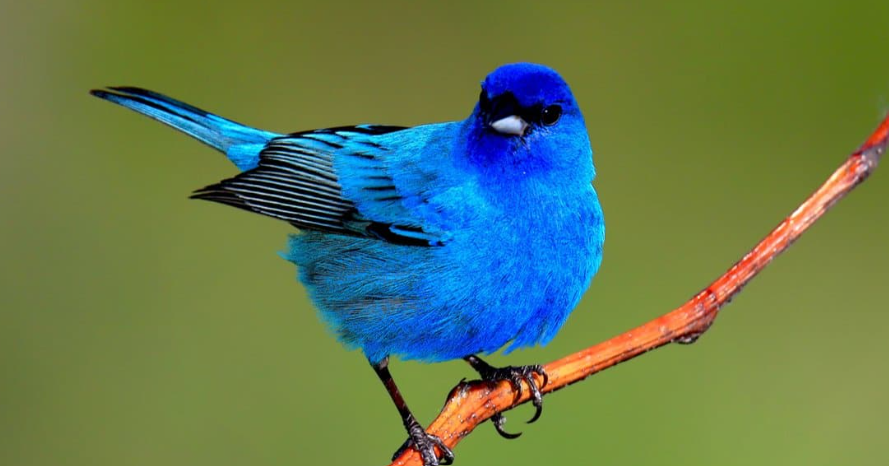
Blue-colored birds are admired for their striking appearance, often standing out vividly against green forests, open skies, or earthy landscapes. Their blue tones can range from soft, powdery shades to deep, shimmering hues. Interestingly, the blue color in many birds is not caused by pigment but by microscopic feather structures that scatter light, a phenomenon related to structural coloration. This gives their feathers a luminous quality that can shift slightly depending on lighting.
These birds can be found across a wide variety of habitats, including woodlands, grasslands, wetlands, and even urban areas. Their adaptability allows them to thrive in different climates, from temperate zones to tropical regions. The blue coloration often helps with communication, playing a role in attracting mates or signaling territory to others of the same species.
Behaviorally, blue-colored birds display a broad range of traits. Some are highly vocal and use melodious calls to communicate, while others rely more on visual displays, using their bright plumage during courtship rituals. Many are active during the day and can be seen perched in open areas or flitting quickly between trees and shrubs in search of food.
Their diets are equally varied, including insects, seeds, fruits, and sometimes small animals. This flexibility in feeding habits helps them survive seasonal changes and fluctuations in food availability. In many ecosystems, they contribute to seed dispersal and insect population control, making them important for maintaining ecological balance.
Different Kinds of Blue Birds
Blue Jay
The Blue Jay is one of the most recognizable birds in North America, sporting a vivid combination of blue, white, and black plumage with a bold crest atop its head.
Found throughout eastern and central North America, it is an intelligent, loud, and assertive bird known for its raucous calls and its habit of mimicking the cries of hawks to frighten other birds away from food sources. Blue Jays are also dedicated hoarders of acorns, playing a significant role in oak forest regeneration.
Eastern Bluebird
The Eastern Bluebird is a small, gentle thrush celebrated for its stunning sky-blue back and wings contrasted with a warm, rusty-orange breast.
Found across eastern North America, it nests in open woodlands, meadows, and farmlands, often using nest boxes provided by humans. The Eastern Bluebird is a symbol of happiness and hope in American culture, and its sweet, warbling song is one of the most cheerful sounds of the spring countryside.
Indigo Bunting
The Indigo Bunting is a small but breathtaking songbird whose male is covered almost entirely in brilliant, iridescent indigo-blue plumage that seems to glow in sunlight. Found across eastern North America, it frequents brushy fields, woodland edges, and roadsides during the breeding season. Despite its jewel-like appearance, the male’s blue is not produced by pigment but by microscopic structures in its feathers that refract light.
Mountain Bluebird
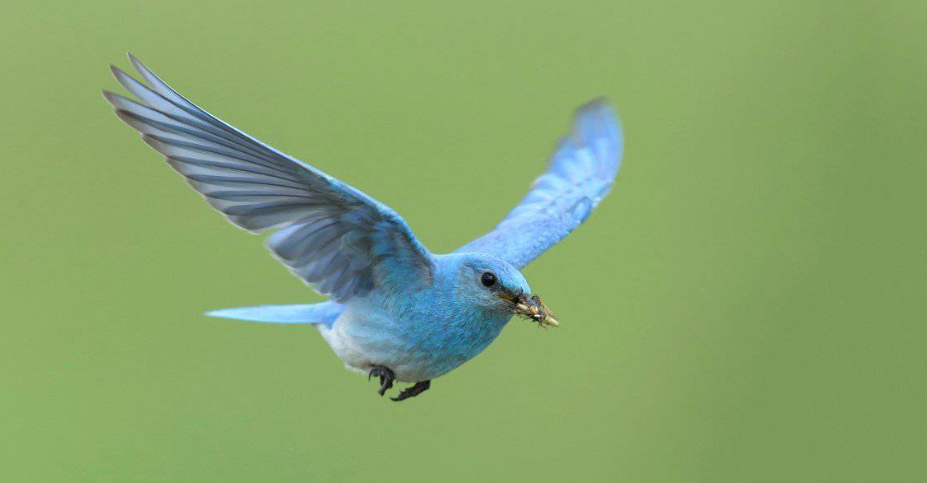
The Mountain Bluebird is perhaps the most purely blue of all North American birds, with males displaying an ethereal, sky-blue plumage across nearly their entire body.
It inhabits open mountain meadows, prairies, and sagebrush country of the American West, hovering gracefully over the ground before dropping to catch insects. The state bird of Idaho and Nevada, the Mountain Bluebird is a breathtaking sight against the backdrop of snow-capped peaks.
Cerulean Warbler
The Cerulean Warbler is a tiny, jewel-like bird of the eastern forest canopy, with males displaying a striking cerulean-blue back and head with white underparts streaked in blue.
It is one of the fastest-declining warblers in North America, threatened by both deforestation on its breeding grounds and loss of wintering habitat in the Andes. Spotting this bird high in the forest canopy is considered a prize among birdwatchers.
Blue Grosbeak
The Blue Grosbeak is a large, robust bunting whose male is cloaked in rich, deep blue plumage with distinctive chestnut wingbars. Found across the southern United States and into Central America, it frequents brushy fields, roadsides, and riparian thickets. Its large, powerful bill gives it a somewhat imposing appearance, and its rich, warbling song carries beautifully across open countryside during the breeding season.
Belted Kingfisher
The Belted Kingfisher is a stocky, blue-gray bird with a shaggy crest and a powerful, dagger-like bill perfectly adapted for diving into water to catch fish.
Found near streams, rivers, lakes, and coastal waters across North America, it is often spotted perching on a branch overhanging the water before plunging headfirst after its prey. Its loud, rattling call is one of the most distinctive sounds of the North American waterside.
Steller’s Jay
Steller’s Jay is a bold, handsome bird of western North American forests, with a deep black head and crest that grades into rich, cobalt-blue wings, back, and tail.
It is closely related to the Blue Jay but is distinctly darker and more dramatically colored. An intelligent and curious bird, it often visits campsites and picnic areas in mountain forests, stealing food with remarkable boldness and dexterity.
Blue-gray Gnatcatcher
The Blue-gray Gnatcatcher is a tiny, restless bird with soft blue-gray plumage, a long, expressive tail, and white eye rings that give it a perpetually wide-eyed look. Found across North America, it flits energetically through the foliage of woodlands and thickets in constant pursuit of small insects. Despite its diminutive size, it is remarkably feisty, frequently scolding larger birds with its thin, wheezy calls.
Common Kingfisher
The Common Kingfisher of Europe, Asia, and Africa is a dazzlingly colored bird with a brilliant turquoise-blue back and wings that flash like a jewel as it darts low over the water.
Its vibrant orange underparts contrast spectacularly with its blue plumage, making it one of the most eye-catching birds on the planet. It is a solitary and fiercely territorial bird of clean, slow-moving rivers and streams.
Superb Fairywren
The Superb Fairywren of Australia is a tiny, lively bird whose breeding male is cloaked in brilliant electric-blue and black plumage that shimmers almost supernaturally in sunlight. One of Australia’s most beloved birds, it lives in small family groups in gardens, scrublands, and woodland edges. Despite its small size, the Superb Fairywren is socially complex, with helpers from previous broods assisting parents in raising young.
Purple Martin
The Purple Martin is North America’s largest swallow and, despite its name, the male displays a stunning, deep iridescent blue-purple plumage that gleams richly in sunlight. A highly aerial bird, it spends most of its life in flight, catching insects on the wing with acrobatic grace. Purple Martins have developed an extraordinary dependence on human-provided nest boxes and gourds, and colonies of these birds are enthusiastically maintained by dedicated “Martin landlords.”
Tree Swallow
The Tree Swallow is a graceful, acrobatic bird with iridescent blue-green upperparts and clean white underparts. It is one of the first migratory birds to return to North America in spring, and it nests readily in nest boxes near open water. Flocks of Tree Swallows perform breathtaking aerial murmurations in late summer before their southward migration, twisting and turning in the sky in mesmerizing unison.
Blue-footed Booby
The Blue-footed Booby is perhaps most famous for its astonishingly vivid turquoise-blue feet, which the male displays in an elaborate, high-stepping courtship dance to attract females. Found along the Pacific coasts of Central and South America, particularly in the Galápagos Islands, it is a masterful diver, plunging vertically into the ocean from great heights to catch fish. Its comical appearance and charming behavior have made it one of the world’s most beloved seabirds.
Hyacinth Macaw
The Hyacinth Macaw is the largest parrot in the world and one of the most spectacular, draped almost entirely in magnificent cobalt-blue plumage with vivid yellow patches around the eyes and base of the bill. Found in the wetlands and woodlands of central South America, particularly the Pantanal of Brazil, it is a powerful and intelligent bird with a gentle disposition. Unfortunately, it is an endangered species due to habitat loss and the illegal pet trade.
Blue Dacnis
The Blue Dacnis, also known as the Turquoise Honeycreeper, is a small, vivid tanager of Central and South America whose male glows with brilliant turquoise-blue plumage accented by a black back and wings.
It inhabits forest canopies and edges, where it searches for nectar, berries, and insects with quick, nimble movements. Its stunning coloration makes it a highly sought-after sighting for birdwatchers exploring the Neotropical forests.
Bluebird of Paradise
The Bluebird of Paradise is one of the most breathtaking birds on Earth, native to the highland forests of Papua New Guinea. The male displays iridescent blue wings, a black head, and extraordinary elongated blue tail feathers that it fans out in a dramatic upside-down display to court females. Its otherworldly appearance and elaborate display behavior have made it one of the most iconic and celebrated birds in the world.
Blue Whistling Thrush
The Blue Whistling Thrush is a large, striking thrush of the mountain forests and rocky stream valleys of South and Southeast Asia. Its deep blue-black plumage is spangled with glistening blue-white spots that catch the light beautifully. It is renowned for its loud, melodious, human-like whistling song, often delivered at dawn and dusk near rushing mountain streams, earning it a place in the folklore and literature of the cultures that share its habitat.
Lazuli Bunting
The Lazuli Bunting is a small, exquisite songbird of western North America whose male is adorned with a head and throat of brilliant azure-blue, a rusty-orange breast, and white wingbars. It inhabits brushy hillsides, stream sides, and open woodlands during the breeding season, delivering its bright, complex song from the tops of shrubs and small trees. The male’s vivid blue coloring is at its most intense in bright sunlight, resembling a tiny, living gemstone.
Woodland Kingfisher
The Woodland Kingfisher is a vibrant African bird with a brilliant turquoise-blue back and wings, a white throat and breast, and a bold red and black bill. Unlike many kingfishers, it does not primarily eat fish but hunts insects, lizards, and small vertebrates in woodland and savanna habitats. Its loud, piercing, two-note call is one of the defining sounds of the African bush during the summer months.
Blue Nuthatch
The Blue Nuthatch is a stunning little bird of the montane forests of Southeast Asia, particularly found in Sumatra and the Malay Peninsula. It is almost entirely covered in rich, deep blue plumage, making it one of the most uniformly and intensely colored small birds in the world. Like other nuthatches, it creeps headfirst down tree trunks and along branches with remarkable agility, probing bark for insects with its sharp bill.
Splendid Fairywren
The Splendid Fairywren of Australia rivals even the Superb Fairywren in the brilliance of its plumage, with the breeding male displaying a stunning combination of brilliant cobalt and violet-blue across its head, back, wings, and tail. Found in scrubby, arid, and semi-arid regions of Australia, it is a bold and curious bird that readily investigates human intruders. Like other fairywrens, it lives in cooperative social groups with strong family bonds.
Purple Honeycreeper
The Purple Honeycreeper is a small, dazzling bird of the tropical forests of South America and Trinidad, with the male displaying deep violet-blue plumage set off by jet-black wings, tail, and mask, and bright yellow legs. It frequents the canopy and edges of humid forests, using its long, curved bill to probe flowers for nectar and search bromeliads for insects. Often seen in mixed flocks with other tanagers and honeycreepers, it is a jewel of the Neotropical forest.
White-throated Kingfisher
The White-throated Kingfisher is one of the most widespread and commonly seen kingfishers of Asia, sporting a brilliant turquoise-blue back and wings, a rich chestnut head and belly, and a stark white throat patch. It is highly adaptable, found not only near water but also in gardens, agricultural land, and forest edges, where it hunts a variety of prey from a prominent perch. Its loud, laughing call is one of the most familiar sounds of the Asian countryside.
Blue Peafowl
The Blue Peafowl, commonly known as the Indian Peacock, is one of the most magnificent birds in the world, with the male’s iridescent blue-green neck and breast shimmering in spectacular fashion. Native to the Indian subcontinent, it has been introduced widely around the world as an ornamental bird. The male’s legendary fan of iridescent “eyespot” tail feathers, spread in a dazzling courtship display, remains one of the most iconic sights in the natural world.
Blue-crowned Motmot
The Blue-crowned Motmot is a stunning bird of Central and South American forests, adorned with a turquoise-blue crown edged in black, green upperparts, and a long, distinctive racket-tipped tail that it swings like a pendulum when perched. It inhabits humid forests and forest edges, where it sits motionless on a shaded branch waiting to pounce on insects and small lizards. Its deep, owl-like hooting call is a mysterious sound of the tropical forest at dawn.
Blue Crane
The Blue Crane is the national bird of South Africa and is considered a sacred bird by the Zulu people. Despite its name, its plumage is a soft, pale blue-gray with a white crown and long, elegant trailing wing feathers that give it an aristocratic bearing. It inhabits grasslands, open farmlands, and the Karoo, and is known for its remarkable, elaborate dancing displays performed during courtship. Sadly, it is classified as a vulnerable species due to habitat loss and poisoning.
Verditer Flycatcher
The Verditer Flycatcher is a small, brilliantly colored bird of South and Southeast Asia, with the male displaying an almost uniform, striking blue-green turquoise plumage that makes it look like a tiny jewel perched on a wire or branch. It breeds in the Himalayas and northern forests and winters across South and Southeast Asia. Highly conspicuous and active, it sallies out from an exposed perch to catch insects in mid-air with graceful, precise flights.
Blue-and-yellow Macaw
The Blue-and-yellow Macaw, also known as the Blue-and-gold Macaw, is one of the most iconic and recognizable parrots in the world, with a brilliant turquoise-blue back, wings, and tail contrasting vividly with its rich golden-yellow underparts. Found across tropical South America, it inhabits forests, woodlands, and savanna near water. It is highly intelligent, long-lived, and sociable, and its stunning beauty and ability to mimic human speech have made it one of the most popular pet birds in the world.
Purple Gallinule
The Purple Gallinule is one of the most spectacularly colored waterbirds in the Americas, with iridescent purple-blue underparts, a green back, a red and yellow bill, and astonishing bright yellow legs. Found in freshwater marshes and swamps from the southeastern United States to Argentina, it walks atop floating lily pads with the help of its extraordinarily long toes. Despite its gaudy appearance, it can be surprisingly secretive, disappearing quickly into marsh vegetation when disturbed.
Blue Vanga
The Blue Vanga is a beautiful bird endemic to Madagascar, with the male sporting brilliant royal-blue upperparts, a white belly, a thick hooked blue bill, and a striking blue eye ring. It inhabits humid rainforests along the eastern coast of Madagascar, where it forages actively for insects, lizards, and small frogs. The vangas of Madagascar represent a remarkable example of adaptive radiation, evolving into a wide variety of ecological roles on their island home.
Turquoise Cotinga
The Turquoise Cotinga is a breathtakingly beautiful bird of the humid lowland forests of Central America, with the male displaying an almost unreal, gleaming turquoise-blue plumage punctuated by patches of deep purple on the throat and belly. It lives high in the forest canopy, where it feeds primarily on fruit. The male’s dazzling coloration is produced by specialized feather nanostructures that reflect and amplify specific wavelengths of light.
Blue Rock Thrush
The Blue Rock Thrush is a medium-sized, solitary thrush of rocky hillsides, cliffs, and ruins from southern Europe and North Africa across to East Asia. The male is a rich, deep slaty-blue with darker wings, giving it a handsome, understated elegance. Found perching prominently on boulders and walls, it delivers a melodious, clear song similar to that of a Blackbird. It is the national bird of Malta, where it lives year-round among the island’s ancient limestone cliffs.
Blue-crowned Parakeet
The Blue-crowned Parakeet, also called the Blue-crowned Conure, is a medium-sized parrot of South America characterized by its vivid blue cap, green body, and long, tapered tail. It inhabits savannas, forest edges, and open woodlands, where it moves in noisy, fast-flying flocks. Highly intelligent and playful, it has become a popular companion bird worldwide, and its remarkable temperament and affectionate nature have won it many devoted admirers.
Fairy Bluebird
The Fairy Bluebird is one of Asia’s most spectacularly beautiful birds, with the male displaying intense, glittering ultramarine-blue upperparts that seem to radiate light against its jet-black face, wings, and underparts. Found in the humid forests of the Indian subcontinent and Southeast Asia, it travels in small groups through the forest canopy in search of fruiting trees, particularly figs. Its liquid, melodious call often betrays its presence in the dense, high canopy before it comes into view.
Swallow Tanager
The Swallow Tanager is a remarkable and unique bird of South America, with the male displaying an extraordinarily vivid combination of turquoise-blue and green plumage with black wings and a distinctive triangular black mask. It is the sole member of its family, Tersindae, and represents an evolutionary bridge between tanagers and swallows. It inhabits forest edges and clearings, swooping after flying insects in a manner that gives it its evocative common name.
Blue-tailed Bee-eater
The Blue-tailed Bee-eater is a slender, colorful bird of South and Southeast Asia, with green upperparts, a yellow throat, a brown breast, and a distinctive elongated blue tail that it trails elegantly in flight. Like all bee-eaters, it is a master aerialist, catching bees, wasps, and other flying insects with pinpoint accuracy before beating them against a perch to remove the sting. It nests colonially in sandy banks and is a lively, sociable bird whose chattering calls brighten open farmlands and riversides.
Western Bluebird
The Western Bluebird is a small thrush of the open woodlands and forests of western North America, with the male displaying deep blue upperparts, a blue throat, and a rich chestnut-orange breast and flanks. It is closely related to the Eastern Bluebird and shares a similar gentle, unobtrusive character. Western Bluebirds often nest in tree cavities and nest boxes and can be found in loose, sociable groups during the winter months, foraging for berries and insects in orchards and woodland clearings.
Blue Dacnis
The Blue Dacnis, or Turquoise Honeycreeper, is a vivid gem of the South American and Caribbean forest canopy. Males are clothed in dazzling turquoise blue with contrasting black on the back, wings, and around the eyes, while females are soft green. Found from Trinidad to Bolivia and Brazil, it is a restless, acrobatic forager that probes flowers for nectar and picks small berries and insects from the foliage. It is most often seen in mixed-species flocks that sweep noisily through the canopy.
Blue Bunting
The Blue Bunting is a small, densely colored bird of Mexico and Central America, with the male cloaked in deep, rich navy and royal blue plumage with a slightly paler turquoise-blue crown and rump. It inhabits dense, brushy forest edges, thickets, and semi-open areas, where it forages for seeds and insects close to the ground. Despite its striking appearance, the Blue Bunting can be remarkably secretive, often detected by its sweet, complex song before being seen.
Blue-breasted Kingfisher
The Blue-breasted Kingfisher is a large, boldly colored kingfisher of West and Central African forests and forest edges, with a vivid blue head, wings, and tail, a blue-streaked white breast, and an enormous red and black bill.
Unlike many kingfishers, it often hunts away from water, preying on large insects, lizards, and frogs in the forest understory. Its loud, yelping calls ring out dramatically through the African forest, making it easy to detect even when concealed in dense vegetation.
Satin Bowerbird
The Satin Bowerbird of eastern Australia is one of nature’s most astonishing birds, with the mature male displaying a uniform, glossy, deep blue-black plumage that shimmers with an almost metallic satin sheen in sunlight.
Males are renowned for constructing elaborate bowers decorated with blue objects — feathers, berries, bottle caps, even pen lids — to attract females. The intensity of the male’s plumage, combined with his obsessive collecting behavior, makes him one of the most fascinating birds in the world.
Blue-cheeked Bee-eater
The Blue-cheeked Bee-eater is a large, elegant bee-eater that breeds across North Africa and the Middle East and winters in sub-Saharan Africa. It has vivid green plumage with a distinctive blue-and-white face, a yellow-and-brown throat, and long, elegant central tail streamers. It is a powerful and graceful flier, pursuing large flying insects such as dragonflies and hornets across open landscapes. Its fluid aerial hunting and striking coloration make it one of the most admired birds of the African and Middle Eastern skies.
Purple-breasted Cotinga
The Purple-breasted Cotinga is a spectacular fruit-eating bird of the Amazonian and Atlantic Forest canopy in South America, with the male displaying an intense, royal-blue body and a deep violet-purple breast patch of almost unbelievable vividness.
It is a silent, sedentary bird that sits motionless for long periods in the high canopy, making it both difficult to find and unforgettable when finally seen. The extraordinary color of its plumage is created entirely by structural nanostructures in the feather barbules rather than pigments.
Blue Mockingbird
The Blue Mockingbird is a medium-sized, entirely blue-gray bird endemic to Mexico, where it inhabits dense mountain forests, scrub, and ravines.
Unlike the familiar Northern Mockingbird, it is a shy and secretive bird that stays low in thick vegetation, though it betrays its presence with a remarkably complex, loud, and beautiful song. It has a distinctive dark mask through the eye, and its predominantly blue plumage, unusual among mockingbirds, gives it a distinctive and handsome appearance.
Blue-throated Hummingbird
The Blue-throated Mountain-gem, formerly known as the Blue-throated Hummingbird, is the largest hummingbird found in North America, a powerful and imposing species of mountain streams and canyons in the American Southwest and Mexico. The male’s large gorget of gleaming turquoise-blue is one of the most striking ornaments of any hummingbird in the region. It is a dominant, aggressive bird at feeders and flowers, chasing away smaller hummingbirds with speed and determination.
Little Blue Heron
The Little Blue Heron is a medium-sized wading bird of the Americas whose adult plumage is a deep, uniform slate-blue and maroon-purple, lending it a dignified and understated elegance.
Younger birds are entirely white, causing considerable confusion before they transition to adult colors. Found in marshes, swamps, and coastal wetlands from the eastern United States to South America, it is a patient and methodical hunter, stalking fish, frogs, and insects through the shallows with slow, deliberate steps.
Blue Coua
The Blue Coua is a stunning, non-parasitic cuckoo endemic to Madagascar, draped in rich cobalt-blue plumage with a bare, vivid blue facial skin patch around its eyes that gives it an almost alien appearance.
It inhabits both humid eastern rainforests and drier western forests, foraging for insects, lizards, and fruit in the forest understory and mid-canopy. Unlike many cuckoos, the Blue Coua raises its own young and is considered a devoted parent.
Plum-throated Cotinga
The Plum-throated Cotinga is a magnificent bird of the Amazonian lowlands, with the male displaying vivid turquoise-blue plumage across its body offset by a deep, rich plum-violet throat patch.
Found in the forest canopy along rivers and in várzea forests of western Amazonia, it is one of the most breathtakingly beautiful birds in a region renowned for spectacular avian diversity. Like other cotingas, it feeds primarily on fruit and sits quietly in the canopy for long periods.
Blue-crowned Laughingthrush
The Blue-crowned Laughingthrush is a striking bird of the mountain forests of southern China and northern Vietnam, adorned with a vivid blue crown and face mask, warm brown upperparts, and a rich, scaly breast pattern.
It is a highly sociable bird that moves through the forest in noisy, animated flocks, filling the mountain air with its rich, gurgling, laughing calls that give the laughingthrushes their evocative family name. It is considered a vulnerable species due to its restricted range and capture for the cage-bird trade.