Trees with long lifespans are among the most enduring forms of life on Earth, with some species living for hundreds or even thousands of years. These trees grow slowly, investing energy in strong structures and survival rather than rapid expansion. Their longevity often reflects a balance between steady growth and resistance to environmental stress.
Many long-living trees have dense, durable wood that protects them from decay, pests, and disease. This natural strength allows them to survive harsh weather, including storms, droughts, and temperature extremes. Over time, their trunks become thicker and more resilient, helping them endure for generations.
Some of the oldest tree species thrive in challenging environments where fewer threats exist. For example, certain high-altitude or desert trees grow in places with limited water and nutrients. These tough conditions reduce competition and slow growth, which can actually contribute to a longer lifespan.
Another important trait is their ability to recover from damage. Long-lived trees can often regrow bark, produce new branches, or continue living even if parts of them are lost. This resilience allows them to survive natural disturbances like fire, wind damage, or animal activity.
Trees with long lifespans also support ecosystems over extended periods. They provide shelter, food, and nesting spaces for many organisms, becoming central features in their habitats. Their presence helps maintain environmental stability and supports biodiversity over time.
In general, long-living trees are symbols of endurance and continuity. Their ability to survive for centuries or more highlights the strength of natural adaptation, while their lasting presence enriches landscapes and ecosystems in ways few other plants can match.
Trees With Long Lifespan
Great Basin Bristlecone Pine (Pinus longaeva)
The Great Basin bristlecone pine holds the extraordinary distinction of being the oldest known living organism on earth, with individual trees documented at well over 5,000 years of age — predating the pyramids of Egypt.
Growing in the harsh, windswept, high-altitude limestone mountains of the American West, these ancient, gnarled, twisted trees survive precisely because of the extreme adversity of their environment, where cold temperatures, poor soil, and fierce winds slow their growth to almost imperceptible annual increments that produce extraordinarily dense, resin-saturated wood virtually impervious to decay.
Coastal Redwood (Sequoia sempervirens)
The coastal redwood is the tallest tree on earth and one of the longest-lived, with ancient individuals exceeding 2,000 years of age and towering to heights of over 115 metres in the fog-drenched coastal forests of northern California and Oregon.
Its remarkable longevity is partly attributed to its extraordinarily thick, tannin-rich, spongy bark — sometimes exceeding 30 centimetres in depth — which provides exceptional resistance to fire, fungal disease, and insect attack, the three forces most likely to cut short the life of a forest giant.
Giant Sequoia (Sequoiadendron giganteum)
The giant sequoia is the most massive living thing on earth by volume, and among the most ancient, with the oldest known specimens exceeding 3,000 years of age in the Sierra Nevada mountains of California.
These colossal trees, with their cinnamon-red, deeply furrowed trunks that can exceed 9 metres in diameter at the base, are so large and so chemically defended that they have effectively outgrown most of the threats that limit the lifespan of other trees.
Common Yew (Taxus baccata)
The common yew is Europe’s longest-lived native tree, with certain ancient churchyard specimens in Britain and Ireland reliably estimated to be between 4,000 and 5,000 years old — making them among the oldest living things in the Northern Hemisphere.
Their extraordinary longevity is partly explained by the yew’s unique ability to regenerate from within, sending new stems up through the collapsing remains of the original trunk in a process of continual renewal that effectively allows the tree to outlive the decay of its own ancient wood.
Olive Tree (Olea europaea)
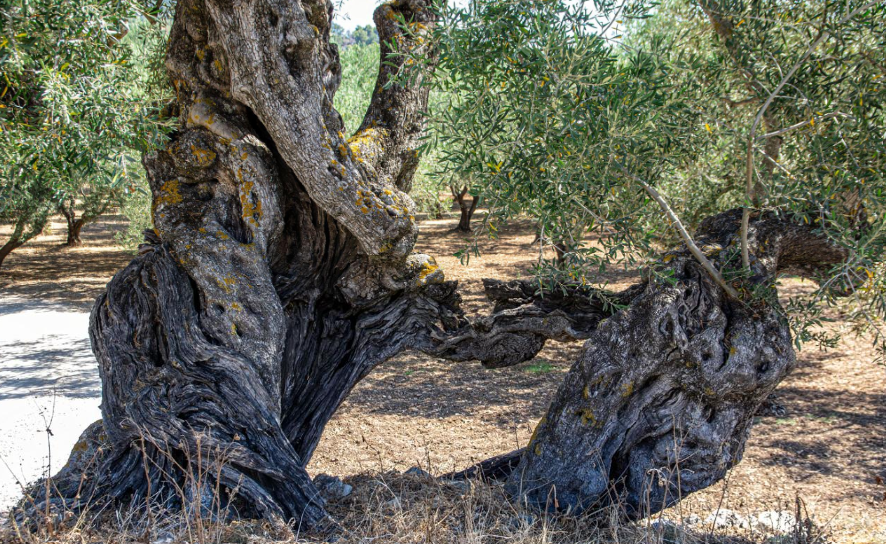
The olive tree is among the most venerable of all cultivated trees, with ancient specimens in the Mediterranean basin — particularly in Greece, Croatia, and the Levant — reliably dated to between 2,000 and 3,000 years of age, with some contenders claimed to be considerably older.
Its exceptional longevity is a product of its extraordinary resilience: capable of regenerating vigorously from the roots and stump after fire, drought, or cutting, the olive tree effectively refuses to die, making it a living symbol of endurance and renewal across Mediterranean cultures for millennia.
English Oak (Quercus robur)
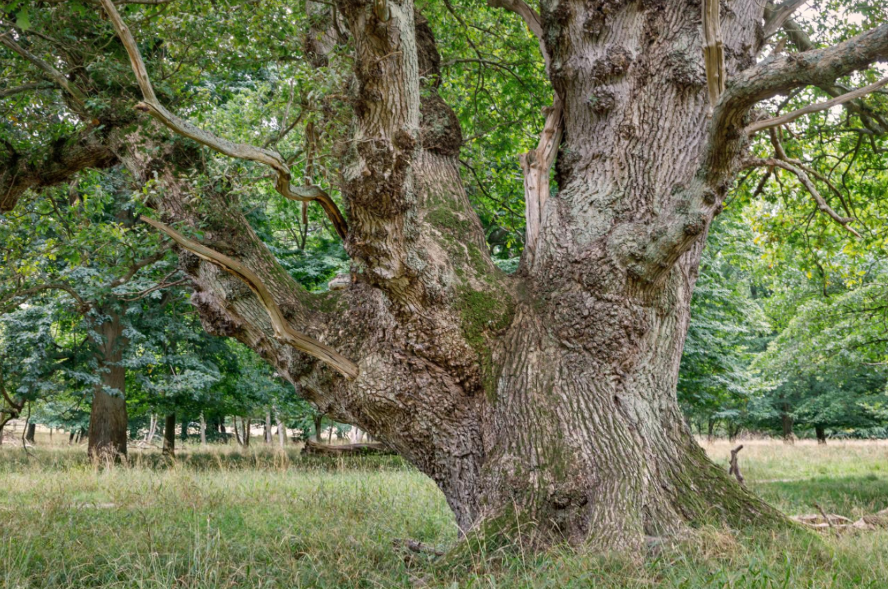
The English oak is one of the most ecologically important and longest-lived of all European trees, with ancient specimens regularly exceeding 1,000 years of age and a handful of the most celebrated veteran oaks in Britain estimated at between 1,000 and 1,500 years old.
As these great trees age, their crowns gradually reduce and their trunks become massively girthed, hollow, and deeply furrowed — a process that, far from signalling decline, actually increases their ecological value by creating the extraordinary diversity of microhabitats that supports over 2,300 known species of wildlife.
Alerce / Patagonian Cypress (Fitzroya cupressoides)
The alerce is a magnificent, slow-growing conifer from the cool, wet temperate rainforests of southern Chile and Argentina that rivals the bristlecone pine as one of the oldest living trees on earth, with individuals exceeding 3,600 years of age documented in the ancient forests of Patagonia.
Its deeply furrowed, reddish-brown bark and soaring, cathedral-like stature give it a presence of almost overwhelming grandeur, and the extraordinary density and durability of its timber — historically so prized that logging brought the species close to extinction — is itself a testament to the remarkable slowness and solidity of its growth.
Montezuma Cypress (Taxodium mucronatum)
The Montezuma cypress, or ahuehuete, holds a place of profound cultural and historical significance in Mexico, where the famous Árbol del Tule in Oaxaca — widely considered the stoutest tree in the world with a trunk circumference of over 58 metres — is estimated to be between 1,500 and 3,000 years old.
These massively trunked, semi-evergreen trees grow beside rivers and in wetlands across Mexico and Guatemala, where consistent moisture supports the extraordinary longevity and girth that makes the oldest specimens such breathtaking natural monuments.
Bald Cypress (Taxodium distichum)
The bald cypress is a magnificent, long-lived deciduous conifer from the swamps, river floodplains, and bayous of the southeastern United States, with ancient specimens routinely exceeding 1,000 years of age and the oldest known individuals approaching 2,600 years.
Its extraordinary tolerance of prolonged flooding — supported by the iconic, knobby “knees” that protrude from the water around its base — combined with its resin-rich, decay-resistant timber, equips it exceptionally well for the centuries of waterlogged existence that define the lives of the oldest individuals.
Kauri (Agathis australis)
The kauri is a colossal, long-lived conifer from the ancient forests of New Zealand’s North Island, with the largest living individual — the legendary Tāne Mahuta, or “Lord of the Forest” — estimated to be between 1,500 and 2,500 years old and revered as a living taonga, or treasure, by the Māori people.
Its massive, straight, silver-grey trunk, which can exceed 16 metres in girth in the oldest trees, rises from the forest floor with a smooth, almost architectural solidity that makes these ancient giants among the most impressive and moving of all living trees.
Sugi / Japanese Cedar (Cryptomeria japonica)
The Japanese cedar, or sugi, is Japan’s most widely planted and deeply culturally significant tree, with the famous sacred groves at Nikko and the ancient forests of Yakushima island containing specimens estimated at between 2,000 and 7,200 years of age — the latter figure, attributed to the celebrated Jōmon Sugi, making it potentially the oldest tree in Japan.
Its deeply furrowed, reddish-brown, fibrous bark and imposing, perfectly straight trunk give the oldest individuals a quality of ancient, silent authority that is entirely in keeping with their role as sacred trees at the heart of Japanese Shinto tradition.
Lebanon Cedar (Cedrus libani)
The cedar of Lebanon is one of the most symbolically powerful and historically significant of all long-lived trees, having provided the legendary timber used in the construction of Solomon’s Temple and appearing on the national flag of Lebanon as an emblem of eternity and resilience.
Ancient specimens in the remnant cedar groves of Lebanon and the Taurus Mountains of Turkey are estimated at between 1,000 and 3,000 years of age, their massive, horizontally spreading crowns and enormously girthed trunks creating a silhouette of majestic, painterly grandeur.
Ginkgo (Ginkgo biloba)
The ginkgo is the sole surviving species of an entire division of plants that flourished alongside the dinosaurs, earning it the name “living fossil” — and individual trees are among the longest-lived of any broadleaf species, with ancient temple ginkgos in China reliably dated to between 1,400 and 3,500 years of age.
Its extraordinary longevity appears to be underpinned by a remarkable resistance to disease, pests, and environmental stress that has been of intense interest to scientific researchers investigating the biological mechanisms of ageing.
Lime / Linden (Tilia spp.)
The common lime and its relatives are among Europe’s longest-lived broadleaf trees, with ancient specimens — particularly the famous Neuenburger Linde in Switzerland — estimated at well over 1,000 years of age, and the ability of linden trees to regenerate from their own fallen or pollarded trunks gives them a form of potential immortality that makes precise age calculations extremely challenging.
Their fragrant, cream-coloured midsummer flowers fill the surrounding air with one of the most intoxicating natural perfumes of the European countryside.
Sweet Chestnut (Castanea sativa)
The sweet chestnut is one of Europe’s most impressively long-lived and massively trunked broadleaf trees, with the legendary Castagno dei Cento Cavalli on the slopes of Mount Etna in Sicily estimated at an almost inconceivable 2,000 to 4,000 years of age — making it the oldest and largest known chestnut tree in the world.
The extraordinarily girthed, deeply twisted, and furrowed trunks of old sweet chestnuts have a uniquely dramatic, sculptural character that makes ancient specimens among the most visually spectacular of all veteran trees.
Black Locust (Robinia pseudoacacia)
The black locust is a fast-growing North American native tree whose remarkably dense, hard, and decay-resistant timber gives it an exceptionally long lifespan in the right conditions, with veteran specimens in its native Appalachian homeland estimated at several hundred years of age.
Its ability to fix atmospheric nitrogen through root nodule bacteria, its vigorous suckering and regeneration after disturbance, and the extraordinary durability of its heartwood combine to make it one of the most resilient and self-renewing of all long-lived temperate trees.
Wollemi Pine (Wollemia nobilis)
The Wollemi pine is one of the most remarkable tree discoveries of the modern era — a living fossil conifer believed extinct for 65 million years until a small, hidden population was discovered in a remote canyon in the Blue Mountains of New South Wales in 1994.
Genetic analysis of the surviving population suggests that individual trees may live for centuries, and the species’ extraordinary ability to produce multiple trunks from a single root system — effectively cloning itself — may give certain individuals a form of longevity that is difficult to quantify by conventional means.
Huon Pine (Lagarostrobos franklinii)
The Huon pine is a supremely slow-growing conifer from the temperate rainforests of Tasmania’s wild southwest, producing timber so saturated in natural oils and resins that it is virtually impervious to rot — with the oldest known living individuals exceeding 2,500 years of age and ancient subfossil logs preserved in river sediments for over 30,000 years.
Its extraordinary longevity and the preciousness of its beautifully grained, golden-yellow timber have made it both one of Tasmania’s most celebrated natural treasures and, historically, one of its most exploited.
Monkey Puzzle (Araucaria araucana)
The monkey puzzle is a magnificently prehistoric-looking conifer from the cool, volcanic mountain slopes of Chile and Argentina, with ancient individuals in the wild forests of the Andes estimated at between 1,000 and 2,000 years of age.
Its unique, architectural silhouette — built from whorls of stiff, sharply pointed, scale-like leaves covering every branch and twig — has remained essentially unchanged for over 200 million years, making the oldest living specimens a genuinely direct connection to the age of the dinosaurs.
Sessile Oak (Quercus petraea)
The sessile oak is the dominant oak of the ancient, moss-draped Atlantic oakwoods of western Britain, Ireland, and western Europe, and it shares the English oak’s capacity for extreme longevity — with veteran specimens in the ancient oak forests of Wales and Ireland reliably estimated at between 500 and 1,000 years of age.
Like all the ancient oaks, the oldest individuals support an extraordinary community of lichens, mosses, insects, birds, and bats that is entirely dependent on the veteran features — hollow trunks, dead wood, and deep bark crevices — that only centuries of slow growth can create.
Ponderosa Pine (Pinus ponderosa)
The ponderosa pine is a massively imposing conifer from the dry, montane forests of western North America whose thick, orange-plated, jigsaw-puzzle bark and vanilla-scented resin channels are perfectly designed for survival in the frequent, low-intensity fires that characterise its native habitat.
Old-growth individuals regularly exceed 500 years of age, and the oldest known specimens approach 1,000 years — their remarkable fire resistance allowing them to survive repeated burning events that would destroy less well-armoured trees over the course of their centuries-long lives.
Baobab (Adansonia digitata)
The African baobab is one of the most extraordinary and iconic trees on earth, with its massively swollen, water-storing trunk — which can exceed 11 metres in diameter in the oldest individuals — giving it an almost surreally sculptural presence in the dry savannah landscapes of sub-Saharan Africa.
Radiocarbon dating has confirmed ages of over 2,000 years for certain specimens, and the tree’s ability to store thousands of litres of water within its spongy trunk, to regenerate after fire, and to survive extreme drought makes it one of the most physiologically remarkable of all long-lived trees.
European Silver Fir (Abies alba)
The European silver fir is a tall, stately conifer from the mountain forests of central and southern Europe that can achieve lifespans of between 500 and 600 years in natural, undisturbed forest conditions — with certain ancient specimens in the primeval forests of the Balkans and the Carpathians estimated at approaching 800 years of age.
Its long, straight trunk, silvery-white bark on older trees, and the characteristic flat-topped crown that develops with great age give the oldest individuals a quietly imposing and architecturally impressive presence in the forest landscape.
Black Pine (Pinus nigra)
The black pine is a tough, adaptable conifer from the mountains and rocky hillsides of southern Europe and Asia Minor, capable of reaching ages of 500 years or more in its native habitat and considerably longer in the most sheltered, undisturbed mountain locations.
In Turkey’s Kazdağı mountains, ancient black pines of immense girth and character survive in stands that have remained essentially unchanged for centuries, their deeply furrowed, almost black bark and broad, domed crowns giving them a weathered dignity that perfectly reflects their great age.
Cryptomeria / Sugi Yakusugi (Cryptomeria japonica var. Yakushima)
The yakusugi — the name given specifically to ancient cryptomeria trees over 1,000 years old on Yakushima island in southern Japan — represent some of the most awe-inspiring veteran trees in the world, growing in a UNESCO World Heritage rainforest of extraordinary antiquity and biodiversity.
Their survival to such extreme age is a combination of Yakushima’s exceptionally high rainfall, the cold, nutrient-poor granite soils that slow growth to a near standstill and produce extraordinarily dense, resin-rich timber, and the island’s cultural tradition of reverence for these ancient trees as living embodiments of the spirit of the forest.