
Growing trees in pots and containers is a practical and attractive option for gardeners with limited space, patios, balconies, or urban environments. Container trees allow you to enjoy the beauty, shade, and sometimes fruit of trees without the need for a traditional garden. With proper care, many trees can thrive in containers for years, providing flexibility in design and placement.
Trees that naturally stay small or slow-growing are ideal because large root systems can become cramped. Dwarf varieties of fruit trees, ornamental trees, and small evergreens are especially popular for containers because they remain manageable and can flourish in limited soil volumes.
Using high-quality potting mixes that retain moisture but drain well helps prevent root rot and nutrient deficiencies. Pots should also have adequate drainage holes, and sometimes growers elevate containers slightly to ensure water flows freely and roots do not sit in water.
Container trees require regular watering and feeding. Because pots dry out faster than garden soil, trees in containers need consistent moisture, especially in hot weather. Fertilizing periodically helps replenish nutrients that are quickly used up in the limited soil, keeping the tree healthy and vigorous.
Also, regular trimming controls the shape and size, encourages healthy branching, and can improve flowering or fruit production. Pruning also prevents the tree from becoming root-bound or top-heavy, which can make the container unstable.
Many citrus trees, olive trees, Japanese maples, dwarf conifers, and flowering ornamentals are well-suited for containers. With careful selection, proper soil, and attentive care, trees grown in pots can provide beauty, shade, and even harvestable fruit while remaining versatile and mobile.
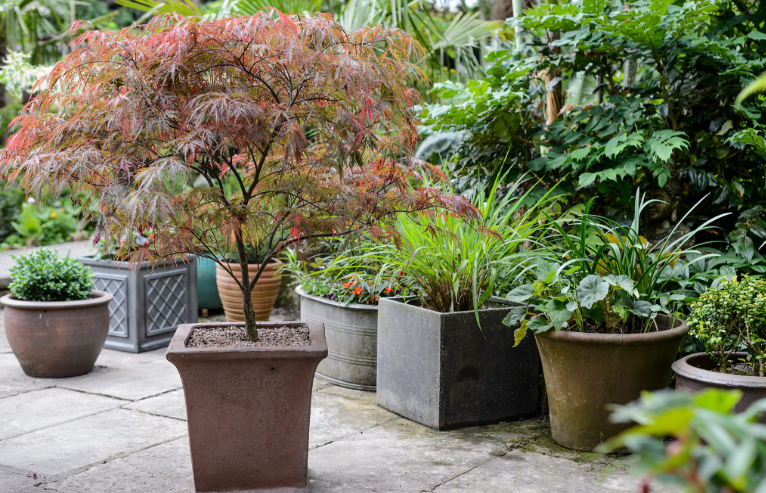
Trees Suitable For Large Pots
Japanese Maple
Japanese maple is the premier container tree with compact size, shallow root system, and spectacular foliage that thrives in pots for decades. These elegant trees adapt beautifully to containers reaching 6-12 feet in pots compared to 15-25 feet in ground. Japanese maple tolerates root restriction, responds well to pruning, and provides year-round interest making it ideal for container culture in partial shade.
Dwarf Citrus
Dwarf citrus trees including lemon, lime, orange, and kumquat produce full-sized fruit on compact trees perfect for container growing. These evergreen trees reach 4-8 feet in containers and produce fragrant flowers followed by edible fruit with proper care. Dwarf citrus thrives in containers, can be moved indoors during winter in cold climates, and provides both ornamental and productive value.
Olive Tree
Olive trees adapt excellently to containers with Mediterranean origins providing natural drought tolerance and compact root systems. These evergreen trees reach 6-10 feet in pots and develop attractive gnarled trunks and silvery foliage. Olive trees tolerate root restriction, prefer well-drained soil, and can produce fruit in containers with adequate sun and care.
Bay Laurel
Bay laurel provides aromatic evergreen foliage and culinary leaves on compact trees perfectly suited to container culture reaching 4-8 feet. This Mediterranean herb-tree tolerates regular pruning to maintain desired size and shape while producing fragrant edible leaves. Bay laurel adapts well to containers, can be trained as standards or topiary, and tolerates indoor overwintering in cold climates.
Dwarf Alberta Spruce
Dwarf Alberta spruce creates perfect pyramidal evergreen form in containers with extremely slow growth reaching 6-12 feet over many years. This compact conifer maintains dense bright green foliage and formal appearance without pruning making it ideal for containers. Dwarf Alberta spruce tolerates cold winters in pots, requires minimal maintenance, and provides year-round evergreen structure.
Calamondin Orange
Calamondin orange produces small tart oranges continuously on compact trees reaching 3-6 feet, making it ideal for indoor-outdoor container culture. This easy-care citrus blooms and fruits year-round with fragrant flowers and abundant small fruits. Calamondin tolerates indoor conditions better than most citrus, adapts to container restrictions, and provides continuous ornamental and productive value.
Acer palmatum ‘Bloodgood’
Bloodgood Japanese maple features deep purple-red foliage that holds color through summer on compact trees perfect for containers. This popular cultivar reaches 8-12 feet in pots and provides stunning dark foliage, red spring growth, and brilliant fall color. Bloodgood adapts excellently to containers, tolerates more sun than green varieties, and creates dramatic focal points.
Fig Tree
Fig trees produce delicious fruit on compact specimens that thrive in containers and can be overwintered indoors in cold climates. These deciduous trees reach 6-10 feet in pots and produce two crops annually in warm climates. Figs adapt well to container culture, tolerate root restriction that may enhance fruiting, and provide large dramatic leaves.
Meyer Lemon
Meyer lemon produces sweet lemons on compact trees reaching 4-6 feet in containers, making it the most popular container citrus. This cold-hardy citrus blooms and fruits year-round with fragrant flowers and abundant sweet-tart lemons. Meyer lemon tolerates indoor conditions, adapts excellently to containers, and provides reliable fruit production with proper care.
Podocarpus
Podocarpus provides evergreen foliage on compact trees that adapt well to containers and tolerate indoor conditions and pruning. These versatile conifers reach 6-10 feet in pots and feature yew-like foliage that responds well to shaping. Podocarpus tolerates low light, adapts to container restrictions, and can be trained as standards or kept compact.
Boxwood Standards
Boxwood trained as standards creates formal lollipop shapes on single trunks perfect for flanking entryways in containers. These evergreen shrubs reach 4-6 feet when trained and shaped, providing formal structure year-round. Boxwood tolerates heavy pruning, adapts excellently to containers, and provides classic formal appearance for patios and entryways.
Crabapple (Dwarf varieties)
Dwarf crabapple varieties produce spectacular spring flowers and colorful fruits on compact trees reaching 6-10 feet in containers. These ornamental trees bloom prolifically and many varieties produce persistent fruits attracting birds. Dwarf crabapples adapt to containers, provide multi-season interest, and tolerate cold winters in pots with protection.
Crape Myrtle (Dwarf varieties)
Dwarf crape myrtle produces abundant summer flowers on compact specimens reaching 4-8 feet perfect for container culture. These heat-loving trees bloom continuously in white, pink, red, or purple throughout summer and fall. Dwarf crape myrtle thrives in containers, tolerates heat and drought, and provides exceptional long-season blooms.
Star Magnolia
Star magnolia produces fragrant white flowers in early spring on compact trees reaching 8-15 feet that adapt well to large containers. This small magnolia blooms prolifically before leaves emerge creating spectacular displays. Star magnolia tolerates container culture when given adequate pot size, requires acidic soil, and provides stunning early-season flowers.
Kumquat
Kumquat produces small edible citrus fruits on compact trees reaching 4-8 feet, perfect for container growing on patios. These cold-hardy citrus trees produce sweet-skinned fruits eaten whole and tolerate cooler temperatures than most citrus. Kumquat adapts excellently to containers, blooms and fruits reliably, and provides ornamental and edible value.
Japanese Black Pine
Japanese black pine creates dramatic windswept appearance in containers reaching 6-10 feet with dark green needles and rugged character. This bonsai-suitable pine tolerates pruning, coastal conditions, and container restrictions while developing artistic form. Japanese black pine adapts to container culture, tolerates salt spray, and can be trained in traditional or contemporary styles.
Pomegranate (Dwarf varieties)
Dwarf pomegranate produces ornamental flowers and small fruits on compact trees reaching 3-6 feet perfect for containers. These heat-loving trees display brilliant orange-red flowers, edible fruits, and attractive foliage. Dwarf pomegranate thrives in containers, tolerates heat and drought, and provides both ornamental flowers and edible fruit.
Hinoki Cypress (Dwarf varieties)
Dwarf Hinoki cypress provides evergreen foliage in fan-like sprays on compact specimens reaching 4-8 feet in containers. These Japanese conifers feature fragrant foliage, interesting texture, and numerous dwarf varieties perfect for pots. Hinoki cypress adapts to container culture, tolerates pruning, and provides year-round evergreen interest.
Smoke Bush (Dwarf varieties)
Dwarf smoke bush produces colorful foliage and smoky flower plumes on compact specimens reaching 4-6 feet in containers. These ornamental shrubs feature purple or golden foliage and distinctive airy flower clusters. Smoke bush adapts to containers, tolerates drought once established, and provides unique texture and color.
Camellia
Camellia produces spectacular flowers in winter and spring on evergreen shrubs reaching 4-8 feet in containers. These shade-loving plants bloom in white, pink, or red when few plants flower and maintain glossy foliage. Camellia thrives in containers with acidic soil, tolerates shade, and provides exceptional off-season blooms.
Roses (Tree form)
Tree roses or rose standards produce abundant blooms on grafted specimens with single trunks perfect for container focal points. These grafted roses reach 3-5 feet and bloom prolifically throughout summer in containers. Tree roses require protection in winter, adapt well to containers, and create formal focal points for patios.
Mugo Pine
Mugo pine creates compact evergreen mounds or small trees reaching 4-8 feet in containers with dark green needles. These slow-growing pines tolerate container restrictions, cold winters, and maintain compact form without pruning. Mugo pine adapts excellently to containers, requires minimal maintenance, and provides year-round evergreen structure.
Azalea Standards
Azalea trained as standards creates flowering lollipop forms on single trunks perfect for container culture. These evergreen to deciduous shrubs bloom spectacularly in spring in containers reaching 3-5 feet. Azalea standards require acidic soil, adapt to containers, and provide stunning spring flower displays.
Japanese Privet
Japanese privet provides glossy evergreen foliage on compact trees reaching 6-10 feet that adapt well to containers and pruning. These versatile shrubs tolerate heavy shaping, maintain dense foliage, and can be trained as standards. Japanese privet adapts to containers, tolerates urban conditions, and provides reliable evergreen foliage.
Lavender Standards
Lavender trained as standards creates fragrant lollipop forms on single woody stems perfect for container placement. These Mediterranean herbs reach 2-4 feet when trained and produce fragrant purple flowers and aromatic foliage. Lavender standards require excellent drainage, thrive in containers, and provide fragrance and flowers for sunny patios.
Dwarf Korean Lilac
Dwarf Korean lilac produces fragrant purple flowers in spring on compact specimens reaching 4-6 feet perfect for containers. This small lilac blooms prolifically with intense fragrance on plants suited to container culture. Dwarf Korean lilac adapts to containers, requires cold winter chilling, and provides spectacular fragrant spring blooms.
Yew (Columnar varieties)
Columnar yew creates narrow evergreen forms in containers perfect for flanking entryways or creating vertical accents. These versatile conifers tolerate heavy pruning, shade, and container restrictions while maintaining dense foliage. Columnar yew adapts excellently to containers, tolerates various conditions, and provides year-round evergreen structure.
Arborvitae (Dwarf varieties)
Dwarf arborvitae provides compact evergreen form in containers with numerous small varieties perfect for pot culture. These easy-care conifers maintain dense foliage, tolerate cold winters, and require minimal maintenance. Dwarf arborvitae adapts to containers, provides year-round structure, and comes in various shapes and colors for container gardens.