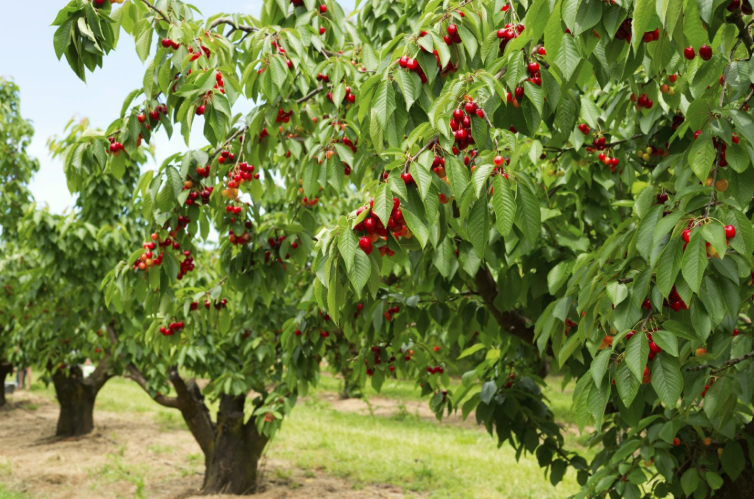
Self-pollinating cherries, also called self-fertile or self-fruitful cherries, possess flowers that successfully pollinate themselves without requiring pollen from another cherry variety. This characteristic is much more common in sour cherries than sweet cherries, with most sour cherry varieties being self-fertile while the majority of sweet cherries require cross-pollination. Self-fertile cherries produce fruit when planted as a single tree, though like most fruit trees, yields often improve when pollinators are abundant and weather during bloom is favorable.
While self-pollinating cherry varieties produce fruit when planted alone, several important factors affect their success and productivity. Sweet cherries generally require fewer chill hours (400-900 hours depending on variety) and prefer moderate climates, while sour cherries typically need more chill hours (700-900 hours) and demonstrate superior cold hardiness making them suitable for northern regions.
Cherry trees bloom early in spring making them susceptible to frost damage that can eliminate the crop, so site selection with good cold air drainage is critical. Birds are extremely attracted to cherries and netting is usually necessary to protect the crop, particularly for sweet cherries which birds prefer over sour varieties. Proper pruning maintains tree structure and encourages consistent fruiting, with sweet cherries requiring less pruning than sour cherries which benefit from regular thinning to maintain vigor.
Dwarf varieties on dwarfing rootstocks like Gisela 5 or Gisela 6 remain 8-12 feet tall making harvest easier and fitting smaller spaces better than standard trees reaching 15-25 feet. Self-pollinating cherries typically begin bearing within 3-5 years depending on variety and rootstock, with dwarf trees producing sooner but yielding less total fruit than standard trees at maturity.
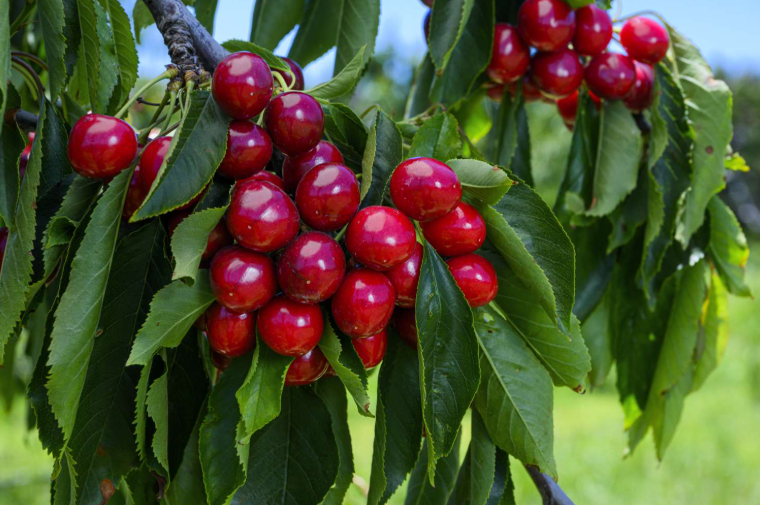
Self-Fertile Cherries
Stella
Stella is the most famous self-pollinating sweet cherry, being the first truly self-fertile sweet cherry variety introduced in 1968. This late-season cherry ripens in July, produces large dark red fruits with excellent sweet flavor, and revolutionized home cherry growing by eliminating the need for multiple trees.
Stella reaches 15-25 feet tall on standard rootstock or 10-15 feet on dwarfing rootstock, requires 400-500 chill hours, and begins bearing within 4-5 years. The large heart-shaped fruits are excellent for fresh eating and canning, and Stella also serves as an excellent pollinator for other sweet cherry varieties that require cross-pollination.
Montmorency
Montmorency is the most popular sour cherry in North America and is completely self-fertile, producing abundant tart red cherries perfect for pies and preserves. This mid-season variety ripens in late June to early July, produces heavy crops without requiring another tree, and accounts for the majority of sour cherry production.
Montmorency reaches 12-15 feet tall, requires 700-800 chill hours making it suitable for colder climates, and demonstrates excellent cold hardiness to -30°F or lower. The bright red fruits are outstanding for pies, jams, juice, and cooking, and the tree produces reliably year after year with minimal care.
North Star
North Star is a compact self-pollinating sour cherry reaching only 8-10 feet tall, perfect for small gardens and container growing. This early to mid-season variety ripens in late June, produces dark red tart cherries with mahogany-colored juice, and fruits heavily despite its small size.
North Star requires 800-900 chill hours, demonstrates exceptional cold hardiness, and begins bearing within 3-4 years. The small tree size makes harvest easy without ladders, and the tart cherries are excellent for pies, preserves, and freezing.
Lapins
Lapins is a self-fertile sweet cherry producing large, dark red fruits with excellent flavor and firm texture resistant to cracking. This late-season variety ripens in July to early August, produces consistently without requiring pollinators, and features fruits that resist rain-induced cracking better than many sweet cherries.
Lapins reaches 15-25 feet tall on standard rootstock, requires 800-900 chill hours, and begins producing within 4-5 years. The large, firm fruits are outstanding for fresh eating and shipping, and the tree serves as an excellent pollinator for other sweet cherry varieties.
Sweetheart
Sweetheart is a late-season self-pollinating sweet cherry producing large, bright red fruits with excellent sweet flavor. This very late variety ripens in August, extending the cherry harvest season, and produces without requiring another tree.
Sweetheart reaches 15-25 feet tall, requires 700-800 chill hours, and demonstrates good crack resistance and firm texture. The late ripening provides fresh cherries when most varieties have finished, and the tree also pollinates other sweet cherry varieties blooming at similar times.
Black Gold
Black Gold is a self-fertile sweet cherry producing large, dark mahogany fruits with rich sweet flavor. This mid-season variety ripens in late June to early July, produces consistently without cross-pollination, and features exceptionally dark, almost black cherries when fully ripe.
Black Gold reaches 15-20 feet tall, requires 700-800 chill hours, and begins bearing within 4-5 years. The dark, sweet fruits are excellent for fresh eating and the tree demonstrates good productivity as a single specimen.
Meteor
Meteor is a compact self-pollinating sour cherry reaching only 10-12 feet tall with excellent cold hardiness. This early to mid-season variety ripens in late June, produces bright red tart cherries, and demonstrates superior cold tolerance for harsh climates.
Meteor requires 800-900 chill hours, tolerates temperatures to -40°F or lower, and begins fruiting within 3-4 years. The compact size and extreme cold hardiness make Meteor ideal for northern gardens with limited space.
Carmine Jewel
Carmine Jewel is a dwarf bush cherry reaching only 6-8 feet tall that is completely self-fertile, producing dark red fruits with sweet-tart flavor. This University of Saskatchewan introduction ripens in July, produces heavily on compact plants perfect for small gardens, and features cherries suitable for both fresh eating and preserving.
Carmine Jewel requires 800-900 chill hours, demonstrates exceptional cold hardiness to -40°F or lower, and begins bearing within 2-3 years. The extremely compact size, early bearing, and dual-purpose fruits make Carmine Jewel outstanding for small spaces and containers.
Skeena
Skeena is a self-fertile sweet cherry producing large, dark red fruits with firm texture and excellent crack resistance. This mid to late-season variety ripens in July, produces consistently without requiring pollinators, and features exceptionally firm fruits that resist rain damage.
Skeena reaches 15-20 feet tall, requires 800-900 chill hours, and begins producing within 4-5 years. The firm texture and crack resistance make Skeena particularly valuable in regions with summer rains during harvest.
Whitegold
Whitegold is a self-pollinating sweet cherry producing unique yellow-blushed fruits with sweet flavor and firm texture. This mid-season variety ripens in late June to early July, produces without requiring another tree, and features attractive yellow cherries with red blush.
Whitegold reaches 15-20 feet tall, requires 700-800 chill hours, and demonstrates good crack resistance. The unusual yellow coloring and sweet flavor make Whitegold distinctive, and birds are often less attracted to yellow cherries than red.
Balaton
Balaton is a self-fertile sour cherry producing dark red fruits with higher sugar content than typical sour cherries. This Hungarian variety ripens in July, produces consistently without cross-pollination, and features dark juice and firmer texture than Montmorency.
Balaton reaches 12-15 feet tall, requires 800-900 chill hours, and demonstrates excellent cold hardiness. The darker color, firmer texture, and higher sweetness make Balaton excellent for both cooking and eating fresh.
Evans Cherry
Evans Cherry is an extremely cold-hardy self-pollinating sour cherry reaching 8-12 feet tall with exceptional tolerance to harsh climates. This Canadian variety ripens in August, produces dark red tart cherries, and demonstrates cold hardiness to -50°F making it suitable for the coldest regions.
Evans Cherry requires 800-900 chill hours, begins bearing within 3-4 years, and produces reliably in regions too cold for most cherries. The extreme hardiness and compact size make Evans Cherry ideal for northern gardeners with limited space.