Culinary sages are a group of herbs from the genus Salvia that are specifically valued for their use in cooking. These plants are known for their aromatic leaves, which contain essential oils that give them a distinctive, savory flavor. They have been an important part of culinary traditions across many cultures for centuries.
Among the most widely used is Salvia officinalis, often considered the classic culinary sage. However, there are several other varieties with slightly different flavors, ranging from mild and earthy to more pungent or even slightly sweet. This diversity allows cooks to experiment and match different types of sage to specific dishes.
Culinary sages are commonly used to season meats, especially poultry, lamb, and pork, as well as vegetables, soups, and sauces. Their strong flavor means they are usually used in small amounts, either fresh or dried. Drying often intensifies their taste, making them even more potent in cooking.
These plants are generally easy to grow, thriving in full sun and well-drained soil. Most culinary sages are drought-tolerant once established and require minimal maintenance. Regular trimming helps keep the plants compact and encourages the production of fresh, flavorful leaves.
NOTE: Across all varieties, fresh sage is more nuanced and floral, while dried sage is more concentrated and earthy. Frying sage leaves briefly in butter or oil mellows bitterness and brings out a nutty, caramelised depth that is one of the most transformative techniques in herb cookery.
Types of sage for Cooking
Common Sage (Salvia officinalis)
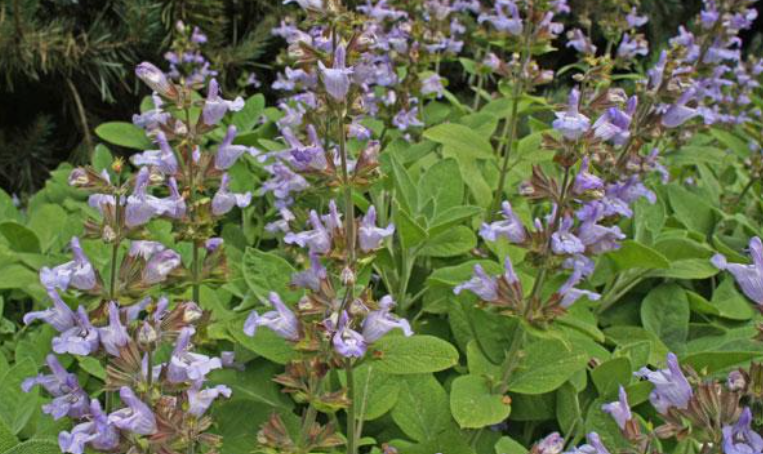
The cornerstone of the sage family, common sage is native to the Mediterranean coastline, particularly the rocky hillsides of Croatia, Albania, and the Adriatic region. It is identified by its oblong, pebbly-textured leaves with a distinctive silvery-green colour, purple-blue flower spikes, and a strong, earthy, slightly peppery aroma.
It is the most widely used sage in Western cooking — a classic partner to pork, sausages, and poultry stuffings. It is indispensable in Italian cuisine, most famously in saltimbocca and burro e salvia (brown butter and sage sauce for pasta). Dried common sage is intensely aromatic and often used in spice blends and herb rubs.
Purple Sage (Salvia officinalis ‘Purpurascens’)
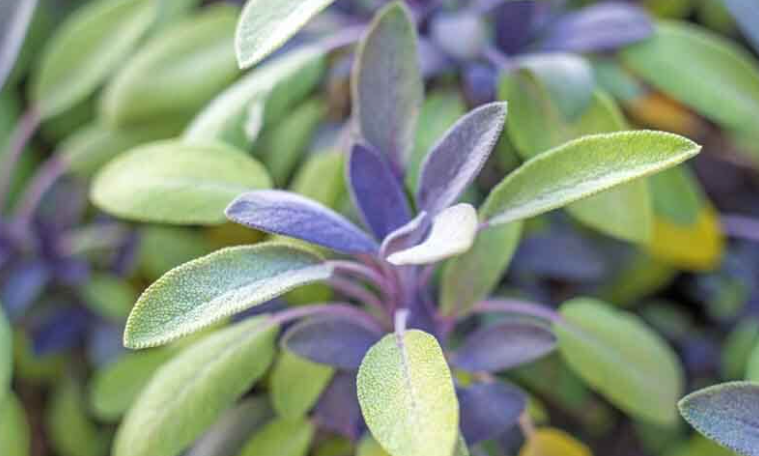
A cultivar of common sage originating from Mediterranean Europe, purple sage is easily identified by its striking deep purple-to-burgundy young leaves, which fade to grey-green with age, and its velvety, wrinkled texture.
The aroma is slightly sweeter and more floral than standard common sage. In the kitchen, it serves the same broad purposes as its parent — pork roasts, rich pasta sauces, and compound butters — but it is particularly prized for its visual appeal in garnishing, infused oils, and herb vinegars, where it imparts a beautiful lavender hue.
Golden Sage (Salvia officinalis ‘Icterina’)
Also a cultivar of S. officinalis, golden sage originates from Mediterranean Europe and is instantly recognisable by its variegated leaves of green and golden yellow, often with cream margins. The flavour is milder and slightly sweeter than common sage, making it more approachable raw.
It is favoured as a finishing herb — scattered over roasted vegetables, folded into herb butter for fish, or used to garnish creamy soups. It also makes a beautiful addition to herb salads and cheese boards, where both its flavour and ornamental colour can shine.
Tricolour Sage (Salvia officinalis ‘Tricolor’)
Another cultivar of common sage, tricolour sage is native to the Mediterranean but widely cultivated in European herb gardens. Its leaves are its most remarkable feature — a mosaic of green, white, and pink-purple markings on each individual leaf, making it one of the most visually spectacular culinary herbs.
The flavour is milder than common sage, with subtle floral notes. It is most used as an edible garnish and in presentations where aesthetics matter: adorning cheese plates, decorating savoury tarts, or frying whole in butter for an elegant crispy herb accompaniment to gnocchi and risotto.
Pineapple Sage (Salvia elegans)
Native to the pine-oak forests of Mexico and Guatemala, pineapple sage is distinguished by its bright green, soft, slightly hairy leaves and slender scarlet-red tubular flowers.
When the leaves are crushed, they release a remarkably clear, sweet pineapple fragrance — quite unlike any other sage. Its flavour is delicate and fruity, making it unusual in the savoury herb world. It is most commonly used in fruit salads, refreshing cold drinks, herbal teas, desserts, and cocktails. It can also be stirred into salsas, used to infuse syrups, or paired with tropical fruits and light poultry dishes.
Clary Sage (Salvia sclarea)
Clary sage is native to Central Asia, the Mediterranean Basin, and parts of North Africa, thriving on dry, rocky slopes and roadsides. It is identifiable by its large, wrinkled, heart-shaped leaves with a coarse, almost sticky texture, and tall flowering spikes bearing small pink or lavender-white flowers with colourful bracts.
The aroma is intensely herbaceous, musky, and slightly nutty — bolder than common sage. In culinary use, its flowers and young leaves are used in fritters, infused into wine and vermouth-style aperitifs, and historically added to ales and beers as a flavouring and mild preservative. It is also used to flavour herbal liqueurs.
Greek Sage (Salvia fruticosa)
Native to the Eastern Mediterranean — particularly Greece, Cyprus, Turkey, and the Levant — Greek sage grows wild on rocky limestone hillsides and is one of the world’s most consumed sages, widely sold in health and spice markets across the region.
It is identified by its grey-green, woollier, more softly felted leaves compared to common sage, often with small lateral leaflets at the base, and pale pink-white flowers. The flavour is more subtle and less bitter than S. officinalis, with a lighter, slightly piney quality. It is used extensively in herbal teas, stuffed vegetable dishes, lamb marinades, and traditional Levantine cooking.
Spanish Sage (Salvia lavandulifolia)
Native to the Iberian Peninsula — Spain and southern France — Spanish sage grows on dry, rocky, calcareous terrain. Its leaves are narrower, more elongated, and smoother than common sage, with a grey-green colour and a softer texture.
The aroma is lighter and more rosemary-like, with lavender undertones, making it notably more pleasant raw. In Spanish cuisine it is used to flavour roasted meats, particularly lamb and kid, as well as rice dishes and stews. It is also an important component in traditional herb infusions and is valued as a lower-thujone alternative to common sage for people who use sage medicinally.
White Sage (Salvia apiana)
White sage is native to the coastal scrublands and mountain slopes of Southern California and Baja California, Mexico. It is immediately recognisable by its intensely silver-white leaves — thick, oblong, and coated in fine white hairs that give the plant an almost luminous appearance — and its tall wand-like flower spikes with white to pale lavender blooms.
The flavour is deeply aromatic, camphor-like, and more pungent than Mediterranean sages. Though primarily known in ceremonial and spiritual contexts, indigenous communities of the region have long used white sage to flavour meats, season acorn dishes, and brew teas. It should be used sparingly in cooking due to its potency.
Autumn Sage (Salvia greggii)
Native to the Chihuahuan Desert along the Texas–Mexico border, autumn sage thrives in dry, rocky soils at higher altitudes. It is identified by small, glossy, oval leaves that are intensely aromatic when bruised, and profuse tubular flowers in shades of red, pink, salmon, or white.
The flavour is bright, slightly spicy, and resinous — more delicate than common sage. In Tex-Mex and northern Mexican cooking traditions, it is used to season bean dishes, wild game, grilled meats, and salsas. The flowers are edible and visually striking, used as garnishes in salads and as decorative accents on plated dishes.
Tangerine Sage (Salvia elegans ‘Scarlet Pineapple’ / related cultivar)
Tangerine sage is closely related to pineapple sage and shares its Mexican highland origins. It is identified by its soft, velvety green leaves and bright scarlet tubular flowers, and when the leaves are crushed, they release a warm, sweet fragrance with distinct citrusy tangerine and tropical fruit notes.
Like pineapple sage, its culinary applications lean toward the sweeter end of cooking — it is used in fruit-based desserts, sweet herb syrups, fruit preserves, flavoured honeys, herbal teas, and tropical cocktails. The flowers are particularly decorative and are used fresh to garnish cakes, drinks, and desserts.
Berggarten Sage (Salvia officinalis ‘Berggarten’)
Berggarten sage is a cultivar developed in Germany — the name literally means “mountain garden” — and is a selection of S. officinalis bred for its exceptionally broad, rounded leaves rather than the typical oblong shape, and for rarely flowering, which keeps the plant’s energy focused on leaf production.
The leaves are thick, soft, and intensely silvery grey-green. The flavour is rich, full-bodied, and slightly less bitter than standard common sage — considered by many chefs to be the finest flavoured of all the common sage cultivars. It excels in brown butter sauces, deep-fried sage crisps, slow-braised pork dishes, and any recipe where a full, clean sage presence is desired without bitterness.