Botanical Classification
The purple orchid tree is a deciduous to semi-evergreen flowering tree in the genus Bauhinia, which belongs to the family Fabaceae (the legume or pea family). Its scientific name is Bauhinia purpurea.
The species is part of the order Fabales, which includes many nitrogen-fixing trees and shrubs. Bauhinia species are commonly called orchid trees due to their showy, orchid-like flowers. The purple orchid tree is widely cultivated for ornamental purposes in tropical and subtropical regions around the world.
Description / Characteristics
The purple orchid tree is a medium-sized tree, typically reaching 6–12 meters (20–40 feet) in height. It has a spreading, rounded crown with irregular, twisting branches.
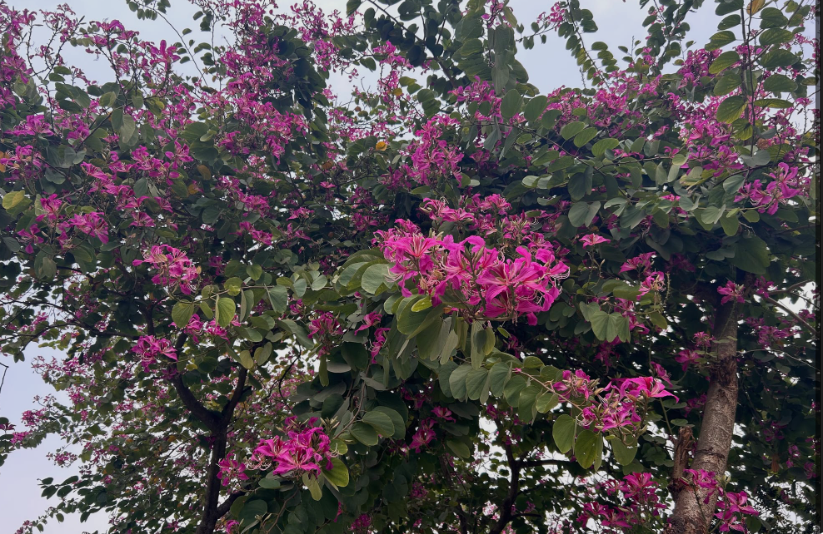
The leaves are bilobed, resembling a camel’s hoof or butterfly wings, and are bright green, turning slightly yellow before dropping in the dry season. Its most striking feature is the large, purple to magenta flowers that bloom profusely in clusters, usually in spring and summer.
Each flower is five-petaled with a delicate, orchid-like appearance, making the tree highly ornamental. After flowering, the tree produces flat, elongated seed pods containing multiple seeds, which mature in the dry season.
Distribution & Habitat
The purple orchid tree is native to India, Sri Lanka, and other parts of tropical South and Southeast Asia. It grows naturally in open forests, along riverbanks, and in well-drained soils at low to moderate elevations. The tree prefers full sun, warm temperatures, and moderate rainfall but can tolerate short dry periods once established.
Due to its ornamental appeal, it has been widely introduced to tropical and subtropical regions worldwide, including Thailand, Hawaii, and parts of the United States (southern Florida, southern California).
Conservation
The purple orchid tree (Bauhinia purpurea) is not considered threatened and is widely cultivated throughout tropical and subtropical regions. Its populations are stable in both native and introduced areas due to its adaptability to a range of soils, climates, and human-planted landscapes.
Conservation efforts mainly focus on preserving genetic diversity in its native range and maintaining natural habitats where it contributes to local ecosystems, including pollinator support and soil stabilization.
Uses
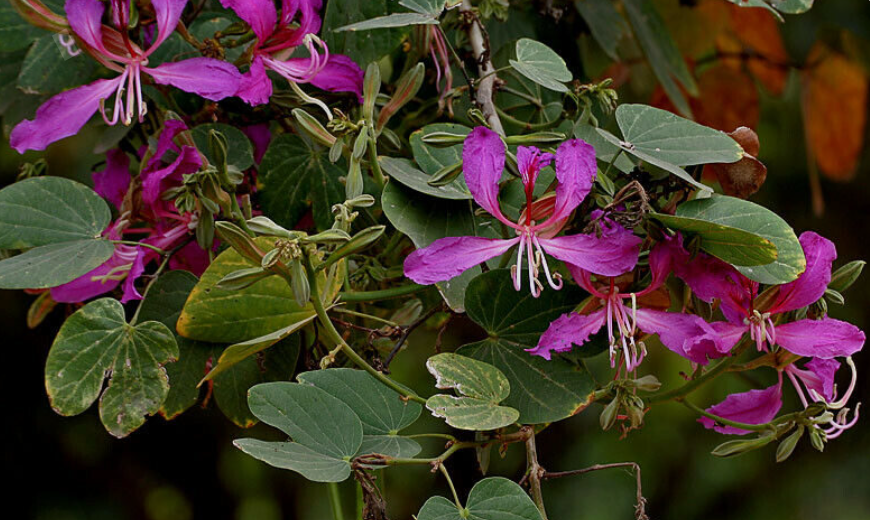
The purple orchid tree is highly valued as an ornamental tree because of its spectacular purple flowers and unique bilobed leaves. It is commonly planted in gardens, parks, streetscapes, and temple grounds for aesthetic appeal. Ecologically, the flowers attract bees, butterflies, and other pollinators, supporting local biodiversity.
In some regions, parts of the tree, such as flowers and young leaves, are used in traditional medicine for treating minor ailments. Additionally, the durable wood is sometimes used for small craft projects or fuel in rural areas.
Varieties and Cultivars
Several cultivars and selections have been developed to enhance ornamental qualities:
- Bauhinia purpurea ‘Alba’ – A white-flowered variety prized for its elegant blooms.
- Bauhinia purpurea ‘Variegata’ – Features variegated leaves with cream or yellow patterns, adding foliage interest.
- Bauhinia purpurea ‘Rubro-Purpurea’ – Known for deeper purple flowers and vigorous flowering habit.
Growth Rate
The purple orchid tree (Bauhinia purpurea) has a moderate to fast growth rate, especially in tropical and subtropical climates. Young trees can grow approximately 30–60 centimeters (1–2 feet) per year under optimal conditions.
Once established, it develops a broad, spreading crown and can reach maturity in 10–15 years. Its rapid early growth, combined with spectacular flowering, makes it a popular choice for landscaping and ornamental planting.
USDA Zones
Purple orchid tree thrives in warm climates and is suitable for USDA Hardiness Zones 9–11. These zones correspond to tropical to subtropical regions with minimal frost and warm temperatures year-round.
The tree prefers full sun and well-drained soils, but it is tolerant of moderate drought once established. In regions outside its native range, it is commonly planted in southern Florida, southern California, Hawaii, and similar climates worldwide.
Problems
The purple orchid tree is generally hardy, but it can face a few issues:
- Pests: Aphids, caterpillars, and scale insects may occasionally infest the leaves or flowers.
- Fungal diseases: Leaf spot, powdery mildew, or root rot can occur if the tree is planted in poorly drained soils or overly humid conditions.
- Structural weakness: Branches may break during strong winds or storms because of the spreading growth habit.
- Seed pod litter: The flat seed pods can drop and create litter beneath the tree in gardens or streetscapes.
Invasiveness Status
The purple orchid tree (Bauhinia purpurea) is generally not considered highly invasive, but it can naturalize in some tropical and subtropical areas outside its native range. It produces numerous seeds in flat pods, which can germinate in disturbed soils or open spaces, especially in warm, humid climates.
In most cultivated landscapes—gardens, parks, and streetscapes—the tree is well-behaved and rarely spreads aggressively. Volunteer seedlings may occasionally appear, but they are easy to remove and do not usually dominate natural ecosystems.
Poisonous Status
the purple orchid tree (Bauhinia purpurea) is mildly poisonous. Its seeds and seed pods contain compounds that can cause digestive upset if ingested in large quantities. Eating the seeds may result in nausea, vomiting, or stomach discomfort.
The leaves and flowers are generally considered non-toxic in small amounts, but it is still recommended to avoid ingestion, especially by children or pets. Accidental consumption is uncommon because the seeds are hard and contained in pods.