Plants that grow near volcanoes live in some of the most extreme environments on Earth. These areas often have hot soils, volcanic ash, rocky ground, and gases released from underground activity. Despite these harsh conditions, certain plants have developed special adaptations that allow them to survive and even thrive.
Volcanic soils can actually become very fertile over time because ash and lava break down into mineral-rich soil. This provides nutrients such as potassium and phosphorus, which support plant growth. As a result, once conditions stabilize, vegetation can grow quickly in volcanic regions.
Many pioneer plants are the first to appear after a volcanic eruption. These hardy species can grow in poor soil and help stabilize the ground. Mosses, lichens, and small grasses often arrive first, slowly creating organic matter that allows larger plants to grow later.
Plants near volcanoes are usually adapted to drought, heat, and strong sunlight. Some have deep roots to reach moisture, while others have thick leaves or protective coatings that reduce water loss and protect them from ash and heat. These features help them survive sudden environmental changes.
Plants that Grow Near Volcanoes
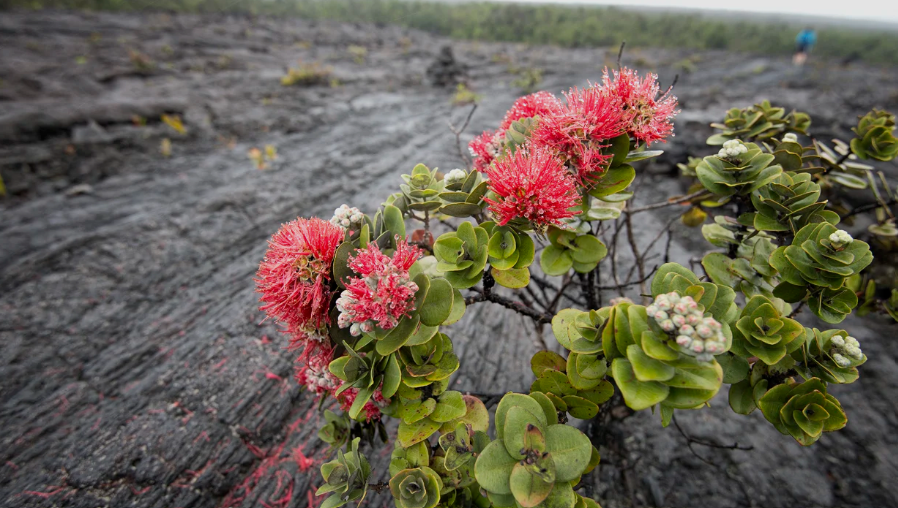
Ohia Lehua
Ohia lehua is Hawaii’s most iconic volcanic plant, often the first tree to colonize fresh lava flows on the Big Island. This hardy native produces brilliant red, yellow, or orange pom-pom flowers and can survive directly on barren lava rock.
Ohia trees are sacred in Hawaiian culture and demonstrate remarkable adaptation to volcanic conditions, establishing on fresh lava within months of eruptions and creating the foundation for future forest development on new volcanic land.
Sword Fern
Sword ferns are among the first plants to colonize cooled lava flows in the Pacific Northwest, particularly around volcanoes like Mount St. Helens. These hardy ferns establish in volcanic ash and cracks in lava rock, sending roots deep into crevices.
Sword ferns help break down volcanic rock into soil through their root action and decomposing fronds, creating conditions for other plants to follow in the ecological succession on volcanic terrain.
Silversword
Silversword is an extraordinary Hawaiian plant found only on the volcanic slopes of Haleakalā and Mauna Kea, thriving at high elevations in harsh volcanic cinder. This rare plant forms a dramatic silvery rosette of dagger-shaped leaves that can survive freezing nights and intense sun.
Silversword can live for decades before producing a spectacular flowering stalk covered in hundreds of purple flowers, then dying, representing one of the most remarkable adaptations to extreme volcanic environments.
Lupine
Lupines are pioneer plants that colonize volcanic ash and pumice around volcanoes like Mount St. Helens, fixing nitrogen and improving barren volcanic soil. These nitrogen-fixing legumes establish quickly on fresh volcanic deposits and produce colorful flower spikes.
Lupines are critical for volcanic ecosystem recovery, transforming sterile ash into fertile soil that supports subsequent plant communities, and their deep taproots help stabilize loose volcanic materials.
Mosses and Lichens
Mosses and lichens are typically the absolute first colonizers of fresh lava flows, establishing directly on bare volcanic rock within months of cooling. These primitive plants require no soil and survive on moisture from rain and fog while slowly breaking down rock surfaces.
Mosses and lichens create the first organic matter on new volcanic terrain, initiating soil formation that eventually allows more complex plants to establish, making them essential pioneers of volcanic landscapes.
Hawaiian Tree Fern (Hapu’u)
Hawaiian tree ferns thrive in the moist volcanic forests of Hawaii, particularly around active volcanic areas where they benefit from nutrient-rich volcanic soil. These large ferns can grow 20+ feet tall and colonize areas disturbed by volcanic activity relatively quickly.
Tree ferns are important in Hawaiian ecosystems, providing habitat and helping stabilize volcanic slopes while their fibrous trunks have been traditionally used for construction and growing orchids.
Strawberry Guava
Strawberry guava, while invasive in Hawaii, demonstrates remarkable ability to colonize volcanic terrain and thrives in areas affected by volcanic disturbance. This aggressive shrub establishes quickly on volcanic soils and produces edible red or yellow fruits.
Though problematic for native ecosystems, strawberry guava’s ability to thrive near volcanoes shows how certain plants exploit the nutrient-rich but challenging conditions of volcanic regions.
Volcanic Juniper
Volcanic juniper species grow on the slopes of volcanoes in regions like East Africa and the Mediterranean, tolerating volcanic soils and harsh conditions.
These tough conifers establish on volcanic slopes where few other trees can survive, developing deep roots that access water and nutrients. Volcanic junipers help stabilize steep volcanic terrain and provide important habitat and food for wildlife in otherwise barren volcanic landscapes.
Mountain Mamane
Mountain mamane is a Hawaiian flowering tree that grows on the high volcanic slopes of Mauna Kea and Mauna Loa, tolerating extreme conditions. This yellow-flowering tree survives freezing temperatures, intense UV radiation, and nutrient-poor volcanic cinder at elevations above 6,000 feet.
Mamane is crucial habitat for endangered Hawaiian birds and demonstrates remarkable adaptation to the harsh volcanic alpine environment where few woody plants can establish.
Fireweed
Fireweed rapidly colonizes areas disturbed by volcanic eruptions, particularly in regions affected by ash fall and pyroclastic flows. This pioneering plant produces tall spikes of pink-purple flowers and establishes quickly on bare volcanic ash and disturbed ground.
Fireweed gets its name from colonizing burned areas, including those affected by volcanic heat, and it helps stabilize and enrich volcanic soils while providing nectar for pollinators in recovering volcanic landscapes.
Volcanic Bamboo
Certain bamboo species grow on volcanic slopes in tropical regions, particularly in Indonesia and the Philippines near active volcanoes. These hardy grasses tolerate volcanic soils and occasional ash fall while stabilizing steep volcanic terrain with their extensive root systems.
Volcanic bamboos grow rapidly on nutrient-rich volcanic soils and provide important resources for local communities including construction materials and food, while helping prevent erosion on unstable volcanic slopes.
Puna Geranium (Nohoanu)
Puna geranium is a rare Hawaiian plant endemic to recent lava flows on the Big Island, often colonizing fresh lava within years of eruption. This low-growing geranium produces delicate pink flowers and demonstrates remarkable ability to establish on barren lava with minimal soil.
Nohoanu is specially adapted to the extreme conditions of active volcanic zones and represents one of Hawaii’s most specialized volcanic colonizers.
Alpine Buttercup
Alpine buttercups grow at high elevations on volcanic peaks including those in the Cascade Range and Hawaii, tolerating volcanic soils and extreme conditions. These small flowering plants establish in volcanic gravel and ash at elevations where few other flowering plants survive.
Alpine buttercups on volcanic slopes demonstrate remarkable cold tolerance and ability to extract nutrients from barren volcanic substrates while providing early-season flowers in harsh alpine volcanic environments.
Volcanic Shrub Daisy
Volcanic shrub daisies are found on volcanic slopes in regions like the Canary Islands and Hawaii, colonizing relatively fresh volcanic terrain. These woody daisies establish on volcanic ash and lava, producing flowers that attract pollinators to otherwise barren volcanic landscapes.
The shrubs help stabilize volcanic slopes and create microclimates that allow other plants to establish, playing important roles in volcanic ecosystem succession.
New Zealand Tea Tree (Manuka)
Manuka thrives on volcanic soils throughout New Zealand, including areas near volcanic peaks like Mount Taranaki and the Taupo Volcanic Zone. This hardy shrub produces white or pink flowers that yield the famous manuka honey and establishes readily on volcanic terrain.
Manuka tolerates poor volcanic soils, helps stabilize slopes, and its essential oils have antimicrobial properties, making it both ecologically and economically important in New Zealand’s volcanic regions where it creates dense thickets on relatively young volcanic deposits.