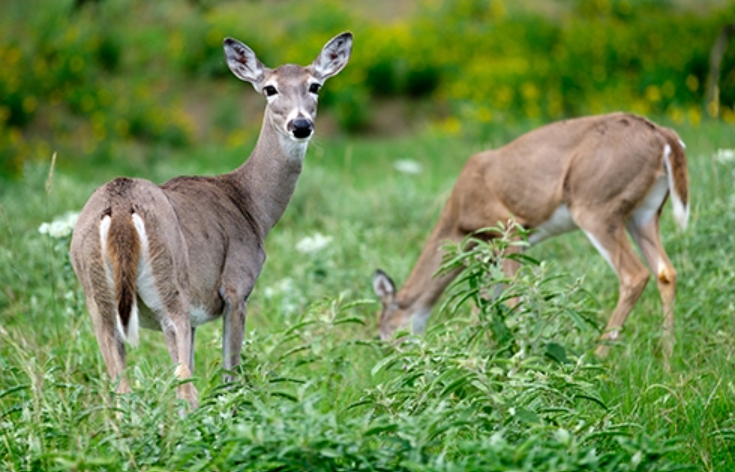
The White‑tailed Deer is one of the most adaptable and widely recognized deer species in North America. It thrives in forests, farmland edges, and even suburban landscapes where food and cover are available. Because whitetails are herbivores, their diet consists mainly of leaves, twigs, fruits, nuts, and grasses. Shrubs are especially important because they provide both nutrition and easy-to-reach browse throughout much of the year.
Shrubs are a major part of a whitetail deer’s natural diet. Deer often feed on the tender new growth of shrubs during spring and summer, when leaves and stems are soft and full of nutrients. These plants provide essential protein that helps support antler growth in males and healthy development in young deer.
Many shrubs that produce berries or small fruits are especially attractive to whitetail deer. These fruits provide a valuable energy source during late summer and fall. As the seasons change and other food becomes scarce, deer may rely more heavily on woody shrubs, eating buds, twigs, and remaining foliage.
Shrubs also provide important shelter for deer. Dense thickets allow deer to hide from predators and harsh weather while resting during the day. Areas with thick shrub growth often become bedding sites where deer feel safe and protected, making these plants valuable for creating wildlife-friendly habitats.
Land managers and gardeners who want to attract whitetail deer often plant a mixture of shrubs that provide food across different seasons. Some shrubs offer spring leaves, others produce summer fruits, and some provide winter browse. This variety ensures that deer have something to eat for much of the year.
In addition to feeding deer, these shrubs also benefit other wildlife species. Birds, small mammals, and pollinating insects often use the same shrubs for food and shelter.
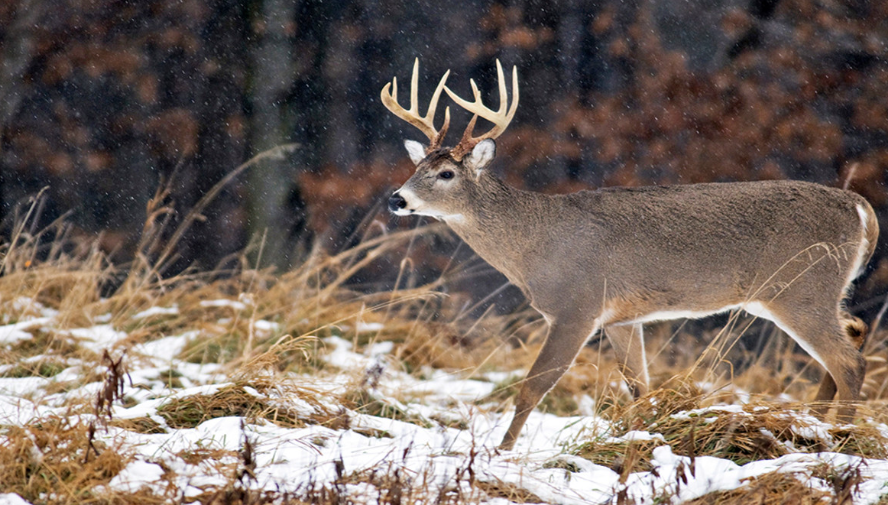
Best shrubs for whitetail deer
White Clover
White clover is among the most attractive plants to whitetail deer, providing high-protein forage that deer consume heavily spring through fall. This low-growing perennial legume spreads to form dense mats in food plots and lawn areas that deer graze intensively. White clover provides exceptional nutrition for antler growth, lactation, and fawn development making it a staple of deer food plots.
Chicory
Chicory produces deep taproots and nutritious foliage that whitetail deer consume throughout the growing season, especially during summer. This perennial forb reaches 2-4 feet tall and remains green during summer drought when other plants wither. Chicory provides crucial summer nutrition when deer need quality forage for fawn rearing and antler development.
Soybeans
Soybeans provide highly nutritious forage and beans that whitetail deer consume from emergence through winter providing year-round attraction. These annual legumes reach 2-4 feet tall and deer browse tender leaves throughout summer then consume high-protein beans in fall. Soybeans offer exceptional nutritional value for antler growth, body conditioning, and winter survival making them premier deer food plot crops.
Sugar Beet
Sugar beets produce large nutritious roots and leafy tops that whitetail deer dig up and consume heavily from fall through winter. These root crops develop massive underground bulbs high in sugar providing crucial energy during cold months when deer need calories. Sugar beets remain available under snow when other foods are inaccessible making them valuable winter deer attractants.
Brassicas (Rape, Kale, Turnips)
Brassicas including rape, kale, and turnips provide highly nutritious forage and roots that become sweeter after frost attracting whitetail deer heavily. These cool-season crops reach 1-3 feet tall and deer initially avoid them but consume them heavily after cold weather sweetens the foliage. Brassicas provide crucial late-season and winter nutrition when deer need energy for surviving cold weather.
Corn
Corn provides grain, stalks, and leaves that whitetail deer consume from emergence through winter making it a year-round deer attractant. This annual grain reaches 6-8 feet tall and deer browse young plants, consume ripening ears, and utilize standing stalks for cover. Corn offers high-energy grain crucial for winter survival though agricultural corn damage can be problematic.
Oak Trees
Oak trees produce acorns that are among the most preferred whitetail deer foods, with deer congregating under producing trees in fall. These hardwoods reach 40-100 feet tall and produce mast crops that provide high-fat nutrition crucial for deer entering winter. White oak acorns are preferred over red oak due to lower tannin content and deer feed heavily under productive oaks.
Apple Trees
Apple trees produce fruit that whitetail deer consume eagerly from summer through winter, creating predictable feeding patterns under fruiting trees. These fruit trees reach 15-30 feet tall and deer eat fallen apples, browse low branches, and return repeatedly to productive trees. Apples provide sugar and moisture that deer find highly palatable making orchards major deer attractants.
Honeysuckle
Honeysuckle provides tender shoots, leaves, and berries that whitetail deer browse heavily despite the plant’s invasive nature in many regions. This vigorous vine or shrub spreads aggressively and deer consume the palatable foliage and berries throughout the growing season. Honeysuckle remains green longer than native plants providing browse when other vegetation has senesced.
Greenbriar
Greenbriar produces tender shoots and leaves that whitetail deer browse heavily despite thorny stems protecting mature growth. This native vine forms dense tangles providing both nutritious browse and protective cover that deer utilize for bedding. Deer consume tender new growth in spring and the berries provide fall and winter nutrition.
Wild Grape
Wild grape produces tender shoots, leaves, and fruit that whitetail deer consume throughout the growing season and into winter. These climbing vines reach high into tree canopies and deer browse accessible portions while consuming fallen grapes. The fruit provides sugar and moisture while the foliage offers palatable summer browse.
Poison Ivy
Poison ivy provides tender foliage, stems, and berries that whitetail deer consume readily without the allergic reactions affecting humans. This climbing vine or groundcover spreads prolifically and deer browse it heavily throughout summer consuming leaves and winter berries. The high palatability and abundance make poison ivy significant deer forage despite human toxicity.
Alfalfa
Alfalfa provides high-protein forage that whitetail deer consume heavily spring through fall making it among the most nutritious deer foods. This perennial legume reaches 1-3 feet tall and deer graze it intensively sometimes preventing successful establishment. Alfalfa offers exceptional nutrition for antler growth and lactation but requires protection from overgrazing when establishing.
Red Clover
Red clover produces nutritious foliage and flowers that whitetail deer consume throughout the growing season providing high protein content. This biennial or short-lived perennial legume reaches 1-2 feet tall and deer graze the palatable leaves and blooms. Red clover provides excellent nutrition though white clover is generally preferred by deer managers for food plots.
Ryegrass
Ryegrass provides tender green forage that whitetail deer graze heavily especially during fall, winter, and spring in southern regions. This cool-season grass reaches 1-2 feet tall and remains green during cool months providing browse when warm-season plants are dormant. Ryegrass offers palatable forage though nutritional value is lower than legumes like clover.
Wheat
Wheat produces tender green foliage in fall and spring that whitetail deer graze heavily before plants mature and become less palatable. This cool-season grain reaches 2-4 feet tall and deer consume the succulent growth during fall and spring green-up. Wheat provides attractive fall and spring forage though deer typically abandon it once it matures.
Oats
Oats produce highly palatable foliage and grain that whitetail deer consume from emergence through grain maturity making them excellent attractants. This cool-season grain reaches 2-4 feet tall and deer browse tender foliage then consume grain heads as they mature. Oats provide both nutritious forage and grain making them versatile food plot crops.
Persimmon Trees
Persimmon trees produce sweet orange fruits that whitetail deer consume eagerly when they fall in autumn creating concentrated feeding areas. These native trees reach 30-60 feet tall and deer congregate under fruiting trees consuming every fruit that drops. Persimmons provide high-sugar nutrition during fall when deer are building fat reserves for winter.
Crabapple Trees
Crabapple trees produce small fruits that whitetail deer consume from fall through winter providing reliable food sources during cold months. These small trees reach 15-25 feet tall and fruits persist on branches or under trees attracting deer throughout winter. Crabapples provide emergency winter nutrition when other foods are snow-covered or depleted.
Mulberry Trees
Mulberry trees produce abundant sweet berries in early summer that whitetail deer consume heavily during the critical fawn-rearing period. These fast-growing trees reach 30-50 feet tall and produce such abundant fruit that deer feed for weeks. Mulberries provide crucial early-summer nutrition when does are lactating and fawns are growing rapidly.
Blackberry
Blackberry produces tender shoots, leaves, and berries that whitetail deer consume despite thorny protection on mature canes. These spreading brambles form dense thickets providing both nutritious browse and protective cover for bedding. Deer browse tender new growth in spring and consume ripe berries in summer finding both highly palatable.
Raspberry
Raspberry provides tender foliage, shoots, and fruit that whitetail deer browse readily with similar value to blackberry. These brambles reach 3-6 feet tall and deer consume new growth and ripe berries while utilizing thickets for cover. The combination of food and cover makes raspberry patches attractive deer habitat.
Sumac
Sumac produces fuzzy red berry clusters and tender shoots that whitetail deer consume especially during winter when other foods are scarce. These fast-spreading shrubs reach 10-20 feet tall and form dense thickets providing both browse and winter berries. The persistent berries provide reliable winter food when deep snow limits access to other vegetation.
Ragweed
Ragweed produces seeds that whitetail deer consume heavily during fall and winter along with tender foliage during summer. This annual forb reaches 1-6 feet tall and produces abundant seeds that provide important fall nutrition. Ragweed seeds are highly preferred by deer and the foliage provides summer browse despite causing human allergies.