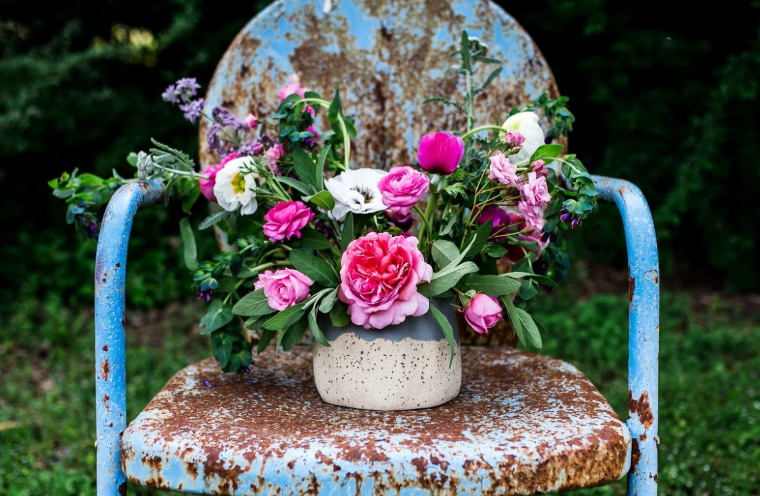
Plants for flower arranging are chosen for their beauty, structure, and how well they hold up after being cut. A good mix usually includes focal flowers, filler blooms, and greenery. Together, these elements create balanced arrangements that look natural and appealing in a vase.
Focal flowers are the main attraction in any arrangement. These are often larger blooms like roses, lilies, or dahlias that draw the eye and set the tone. Their color, shape, and size help define the overall style, whether it’s bold and dramatic or soft and delicate.
Filler flowers play a supporting role by adding texture and fullness. Smaller blooms such as baby’s breath or clusters of tiny flowers help fill empty spaces and create a more complete look. They also soften the arrangement and blend different elements together.
Greenery is just as important as the flowers themselves. Leaves and stems from plants like eucalyptus, ferns, or ivy provide contrast and structure. They frame the flowers, add depth, and can even give the arrangement a fresh, natural scent.
Another key factor is stem strength and vase life. Plants used for arranging should have sturdy stems and be able to last several days in water without wilting quickly. Many garden plants, including some herbs and flowering shrubs, are excellent choices because they combine durability with visual appeal.
In general, the best plants for flower arranging are those that offer a variety of shapes, colors, and textures. By mixing bold blooms, delicate fillers, and lush greenery, you can create arrangements that feel balanced, lively, and suited to any setting or occasion.
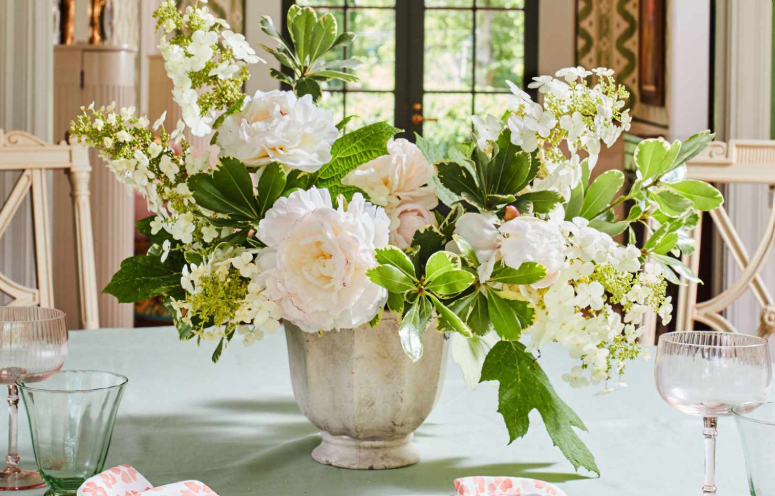
Beautiful Flowers For Cutting Garden
Roses (Rosa spp.)
The undisputed queen of the vase, roses are available in virtually every color imaginable and in forms ranging from tight, spiraled hybrid teas to loosely cupped garden varieties. Their long stems, exquisite fragrance, and timeless elegance make them the benchmark against which all other cut flowers are measured.
Eucalyptus (Eucalyptus spp.)
Eucalyptus is arguably the most versatile foliage in the arranger’s toolkit. Its silver-green, aromatic leaves come in a range of shapes — from small, round coins to long, slender blades — and it provides a beautiful structural backdrop that makes every flower it accompanies look more intentional and refined.
Sweet Peas (Lathyrus odoratus)
Delicate, ruffled, and intoxicatingly fragrant, sweet peas are a cottage-garden treasure that brings an unmatched softness to arrangements. Their tendrilling vines and pastel blooms in lilac, pink, cream, and coral give bouquets a romantic, just-picked-from-the-garden quality that no florist flower can replicate.
Lilac (Syringa vulgaris)
Few plants evoke the feeling of spring quite like lilac, with its dense, cone-shaped clusters of tiny flowers in purple, lavender, white, and pink. Brought indoors, the fragrance fills an entire room, and the lush flower heads create a full, generous look in large statement arrangements.
Ranunculus (Ranunculus asiaticus)
With their tightly layered, paper-thin petals and jewel-bright colors, ranunculus are among the most exquisite flowers for cutting. They look deceptively complex — resembling peonies or garden roses in miniature — and are available in a stunning range of shades from white and blush to deep burgundy and saffron orange.
Tulips (Tulipa spp.)
Tulips are endlessly useful in arrangements, offering clean lines, bold color, and the irresistible quality of continuing to grow and gently curve in the vase. Single-flowered, parrot, fringed, and double varieties each bring a distinct personality, making them as at home in a minimal, architectural arrangement as in a lush, overflowing spring bouquet.
Hellebore (Helleborus spp.)
Hellebores bring an air of quiet, moody sophistication to arrangements that few other flowers can match. Their nodding, cup-shaped blooms in dusty plum, slate-green, blush, and near-black have a subtle, painterly beauty, and their tendency to face downward gives arrangements a natural, unstudied elegance.
Fritillaria (Fritillaria spp.)
The pendant, bell-shaped flowers of fritillaria hang in graceful clusters from arching stems, giving arrangements an unusual, sculptural quality. The deep purple-and-white checkered F. meleagris is particularly striking, while taller species like the stately crown imperial add dramatic height and unexpected color.
Anemone (Anemone coronaria)
With their jewel-bright petals — poppy red, violet, deep blue, and white — and striking dark centers, anemones are among the most graphically bold of all cutting flowers. Their wiry stems and windmill-like flowers add movement and a vivid pop of color to spring and early summer arrangements.
Viburnum (Viburnum spp.)
Viburnum is a supremely useful shrub for the flower arranger, offering beautiful, snowball-like clusters of white or greenish-cream flowers in spring, followed by attractive berried stems in autumn and winter. Its branches add generous volume and a naturalistic, woodland quality to large-scale arrangements.
Narcissus / Daffodil (Narcissus spp.)
The cheerful trumpet flowers of daffodils and narcissus herald the cutting season earlier than almost any other flower. Grouped in simple bunches or mixed with other spring bloomers, they bring an unbeatable freshness and sunny energy — though it’s worth noting they should be conditioned separately before mixing with other flowers, as their sap can shorten the vase life of companions.
Ivy (Hedera spp.)
Trailing stems of ivy are a florist’s secret weapon, used to soften the edges of arrangements, drape over the sides of vessels, and link flowers together with a sense of flowing, organic movement. The deep green, lobed leaves provide a rich, classic backdrop that works with almost any color palette.
Nigella / Love-in-a-Mist (Nigella damascena)
Nigella is treasured for both its delicate, thread-like foliage and its sky-blue, white, or pale pink flowers, which are surrounded by a feathery green ruff that gives them an ethereal, mist-like quality. After flowering, the inflated, striped seed pods are equally beautiful and extend the plant’s usefulness well into autumn.
Pittosporum (Pittosporum tenuifolium)
Pittosporum is one of the most popular foliage choices among professional florists, prized for its small, wavy-edged leaves on dark, slender stems. Available in plain green and in silver-and-green variegated forms, it adds graceful, layered texture without ever competing with the flowers it supports.
Waxflower (Chamelaucium uncinatum)
An Australian native, waxflower produces masses of tiny, starry flowers in white, pink, and cerise along fine, needle-like stems. It works beautifully as a delicate filler throughout a bouquet, adding an airy, cloudlike texture and lasting exceptionally well — often far longer than the other blooms it accompanies.
Bupleurum (Bupleurum rotundifolium)
Bupleurum is a florist’s filler of choice for its unusual lime-green, star-shaped bracts that seem to glow in arrangements. It bridges the gap between flower and foliage, adding freshness, a cool color note, and a fine-textured, naturalistic feel that makes mixed bouquets look effortlessly composed.
Lisianthus (Eustoma grandiflorum)
Lisianthus produces silky, fluted blooms in purple, white, pink, and bicolored forms that are often likened to a cross between a rose and a peony. They have exceptionally long vase life, multiple buds per stem that open in succession, and a refined, elegant quality that suits both formal arrangements and relaxed garden-style bouquets.
Ornamental Grasses
The seed heads and flowing blades of ornamental grasses — such as pennisetum, panicum, and miscanthus — are invaluable for adding movement, naturalistic texture, and a soft, meadow-inspired quality to arrangements. They introduce a lightness and sense of gentle motion that heavier, more structured flowers cannot provide on their own.
Snapdragon (Antirrhinum majus)
Snapdragons produce tall, densely packed spikes of lipped, tubular flowers in a wide spectrum of colors, from palest ivory through coral, yellow, and deep burgundy. They add important vertical structure to arrangements, open progressively up the stem for a long display, and have a satisfying weight and presence that anchors mixed bouquets beautifully.
Hypericum / St John’s Wort (Hypericum spp.)
Hypericum is prized primarily for its berries — clusters of glossy, round fruits in shades of red, terracotta, green, and deep burgundy — which add rich color and a tactile, organic quality to arrangements. The berries have an exceptionally long vase life and are a staple in both fresh and dried floral design.
Feverfew (Tanacetum parthenium)
Feverfew produces an abundance of tiny, white-petaled daisy flowers with bright yellow centers on branching, airy stems. It acts as a natural filler that adds a light, wildflower quality to bouquets, softening the edges of arrangements and providing a charming, informal freshness that ties other elements together without drawing attention to itself.