Botanical Classification
Pentas is a genus of flowering plants in the family Rubiaceae, commonly known as the coffee family. The most widely cultivated species is Pentas lanceolata.
Pentas belongs to the order Gentianales, which includes many tropical and subtropical flowering plants. Members of this genus are prized for their clusters of star-shaped flowers and their ability to attract pollinators, making them popular in ornamental horticulture.
Description / Characteristics
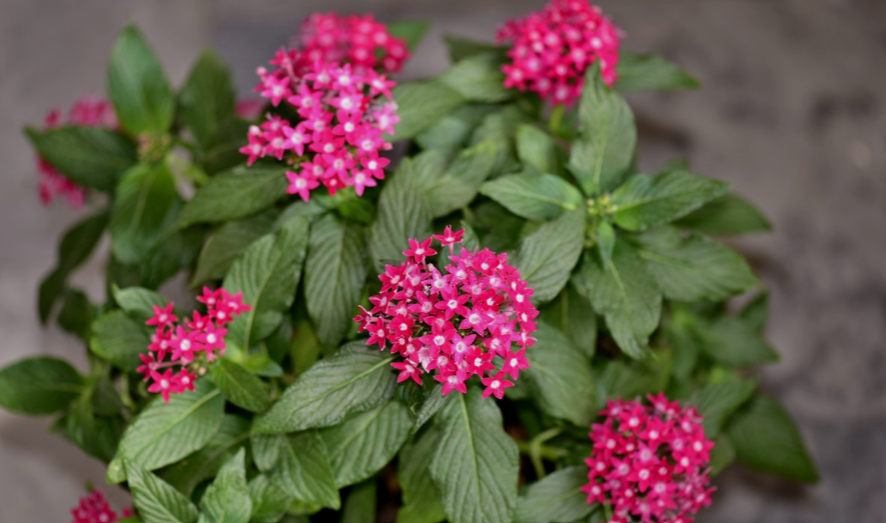
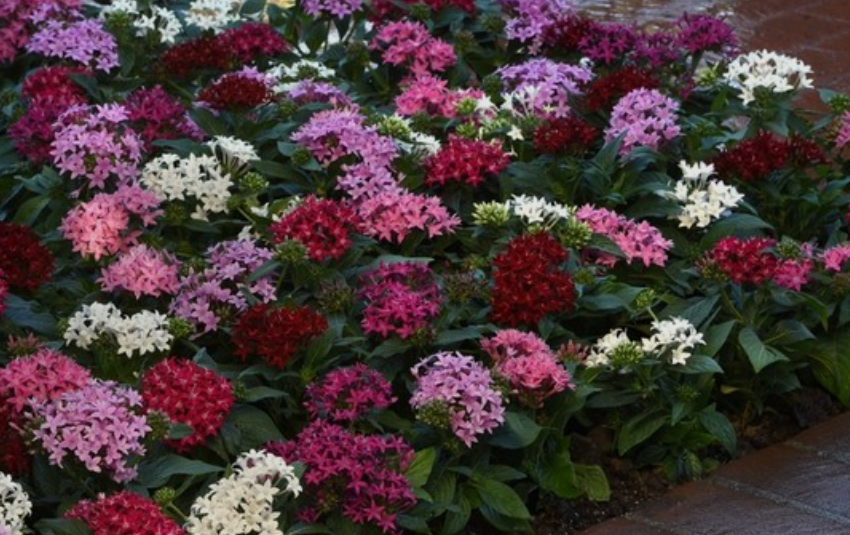
Pentas lanceolata is a low-growing perennial or tender shrub, typically reaching 30–90 centimeters (1–3 feet) in height with a similar spread. The leaves are dark green, lance-shaped, and arranged oppositely along the stems. Its most distinctive feature is its clusters of star-shaped flowers, which bloom continuously in vibrant shades of red, pink, purple, or white.
These flowers are highly attractive to butterflies, bees, and hummingbirds, earning Pentas the nickname “butterfly plant.” Pentas is heat- and sun-tolerant, prefers well-drained soil, and thrives in full sunlight to partial shade.
Distribution & Habitat
Pentas lanceolata is native to tropical and subtropical regions of East Africa, including countries like Kenya and Tanzania. It naturally grows in open grasslands, savannas, and disturbed areas where sunlight is abundant and soils are moderately fertile.
Because of its ornamental value, it has been widely introduced to tropical and subtropical regions around the world, including parts of United States (southern Florida and Hawaii), Australia, and Asia. It is commonly used in flower beds, borders, containers, and butterfly gardens.
Conservation
Pentas (Pentas lanceolata) is not considered a threatened species. Its populations are stable in native East African habitats and widely cultivated globally in tropical and subtropical regions. Because it thrives in both gardens and disturbed habitats, the species does not face significant conservation concerns.
Efforts focus on maintaining genetic diversity and preserving wild populations in East Africa, while cultivated plants continue to support pollinators and ornamental horticulture worldwide.
Uses
Pentas is primarily valued as an ornamental plant for its long-lasting, vibrant flowers. It is widely used in flower beds, borders, containers, hanging baskets, and butterfly gardens, providing continuous color throughout the growing season. The flowers are highly attractive to butterflies, bees, and hummingbirds, making it a key plant in pollinator-friendly landscapes. In some tropical regions, Pentas is also used in educational and demonstration gardens to promote awareness of butterfly and pollinator ecology.
Varieties and Cultivars
Several cultivars of Pentas have been developed for flower color, growth habit, and disease resistance:
- Pentas lanceolata ‘Graffiti Red’ – Features vibrant red blooms and compact growth.
- Pentas lanceolata ‘Butterfly Deep Pink’ – Known for deep pink flowers and high butterfly attraction.
- Pentas lanceolata ‘Purple Queen’ – Produces striking purple flower clusters and vigorous growth.
- Pentas lanceolata ‘White Star’ – White-flowered cultivar valued for contrast in mixed plantings.
Growth Rate
Pentas (Pentas lanceolata) has a moderate growth rate, establishing quickly in favorable conditions. Young plants typically grow about 15–30 centimeters (6–12 inches) per year.
With regular watering, sunlight, and well-drained soil, Pentas can reach its mature height of 30–90 centimeters (1–3 feet) within one growing season for annual plantings, while perennial plants may expand in width over multiple seasons. Its relatively fast flowering cycle makes it a popular choice for gardeners seeking continuous color throughout the year in warm climates.
USDA Zones
Pentas thrives in USDA Hardiness Zones 10–11, corresponding to tropical and subtropical regions where frost is minimal or absent. In cooler areas, it is often grown as an annual or container plant that can be brought indoors during winter.
The species prefers full sun to partial shade, fertile, well-drained soils, and warm temperatures for optimal flowering. It is widely cultivated in southern Florida, southern Texas, Hawaii, and other frost-free tropical or subtropical zones worldwide.
Problems
Pentas is generally low-maintenance and hardy, but some issues may arise:
- Pests: Aphids, spider mites, whiteflies, and mealybugs can infest leaves and flowers.
- Fungal diseases: Root rot or powdery mildew may occur in poorly drained or overly humid conditions.
- Environmental stress: Drought, excessive shade, or cold temperatures can reduce flowering and overall vigor.
How to Grow and Care
- Sunlight – Plant Pentas in full sun for the best flowering, though it can tolerate partial shade. At least 6 hours of direct sunlight per day encourages vibrant blooms and compact growth.
- Soil Requirements – Use well-drained, fertile soil enriched with organic matter. Avoid waterlogged or heavy clay soils, which can lead to root rot. A slightly acidic to neutral pH (6.0–7.0) is ideal.
- Watering – Water regularly to keep the soil consistently moist but not soggy. Established plants are somewhat drought-tolerant, but frequent watering during hot, dry periods promotes continuous blooming.
- Fertilization – Feed Pentas every 4–6 weeks during the growing season with a balanced, water-soluble fertilizer (e.g., 10-10-10) to encourage lush foliage and abundant flowers. Slow-release fertilizers can also be used for container plants.
- Pruning and Deadheading – Pinch back or lightly prune young plants to encourage bushier growth. Remove faded flowers (deadheading) to prolong blooming and maintain a tidy appearance.
- Pest and Disease Management – Monitor for aphids, spider mites, whiteflies, and mealybugs. Use insecticidal soap or neem oil if infestations occur. Ensure good air circulation and well-drained soil to prevent fungal diseases like powdery mildew or root rot.