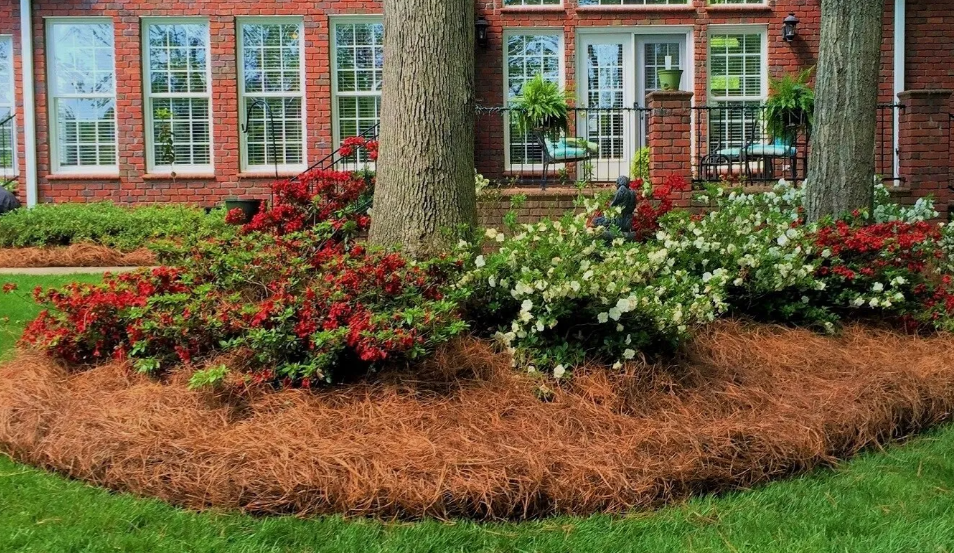
Mulching is crucial for roses, which thrive with consistent moisture, cool roots, and protection from diseases like black spot (caused by soil splash on leaves). Mulch helps retain water (roses are thirsty during blooming), suppresses weeds that steal nutrients, moderates soil temperature (preventing root stress in heat or cold), reduces fungal issues by blocking splash-back, enriches soil as organics decompose, and adds aesthetic appeal with a tidy, contrasting backdrop for blooms.
Roses prefer slightly acidic to neutral soil (pH 6.0–7.0), so acidic mulches like pine straw work well, while nutrient-rich options support vigorous growth and repeat flowering.Apply mulch 2–4 inches deep (thicker for weed control or winter protection), in a wide ring around the base (to the drip line if possible), but keep it 2–3 inches away from canes/stems to avoid rot, fungal harbors, or rodent issues. Never pile against the base (“volcano” style).
Apply in spring after soil warms or in fall for insulation; refresh annually or as it breaks down. Organic mulches are ideal for soil health and beneficial microbes; avoid fresh materials or those with herbicides/dyes.
Here are some of the best mulch options for roses, based on expert sources like rose societies, extension services, and grower experiences. Pine straw and bark top many lists for longevity and disease prevention, while compost/manure excel for nutrition.
Types of Mulch For Roses
Compost
Compost is one of the best mulches for roses because it improves both soil fertility and structure. It helps retain moisture, feeds beneficial soil organisms, and supplies slow-release nutrients that support healthy foliage and abundant blooms. A layer of compost also improves drainage while keeping roots cool.
Bark Mulch
Bark mulch provides excellent weed control and moisture retention around rose bushes. It helps regulate soil temperature, protecting roots from heat and cold stress. Its slow decomposition makes it a long-lasting, low-maintenance option that also gives rose beds a neat appearance.
Wood Chips
Wood chips create a protective layer that reduces evaporation and suppresses weeds effectively. They are especially useful in established rose beds where long-term mulch is needed. As they break down gradually, wood chips improve soil structure and encourage beneficial microbial activity.
Shredded Leaves
Shredded leaves are a natural, cost-effective mulch for roses. They insulate roots, retain moisture, and prevent weed growth. Over time, the leaves decompose and enrich the soil with organic matter, improving overall soil health.
Straw
Straw is a lightweight mulch that helps keep soil evenly moist and reduces temperature fluctuations. It prevents soil from splashing onto rose leaves, lowering the risk of disease. As straw decomposes, it adds organic material to the soil.
Pine Needles
Pine needles form a loose mulch that allows air and water to reach rose roots easily. They resist compaction, suppress weeds, and last longer than many other organic mulches. Pine needles are especially useful for roses growing in well-drained soil.
Grass Clippings
Grass clippings are a readily available, nutrient-rich mulch for roses. When applied in thin, dry layers, they help retain soil moisture, suppress weeds, and gradually add nitrogen to the soil. It’s important to avoid thick layers to prevent matting and odor.
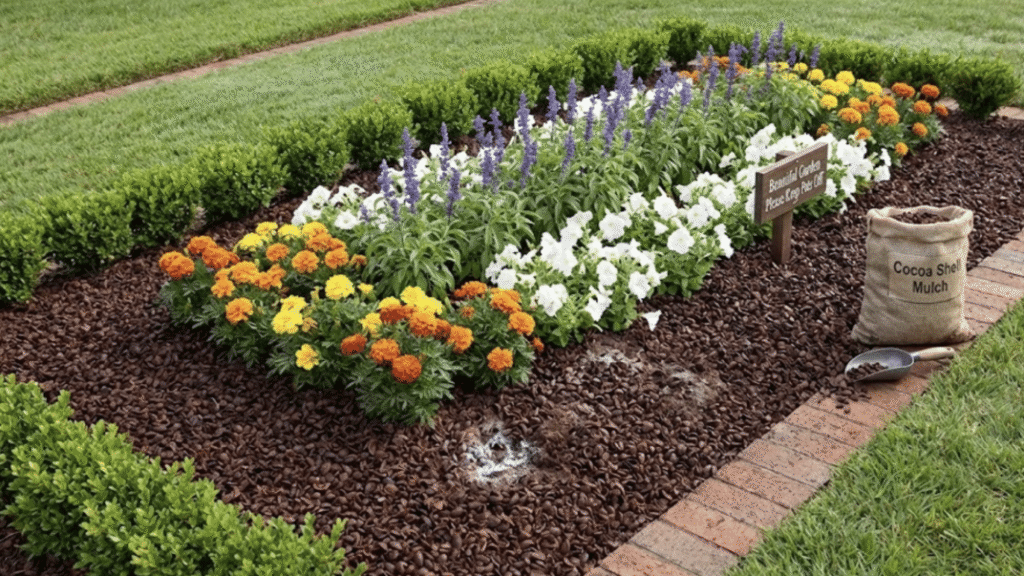
Cocoa Bean Hulls
Cocoa bean hulls are an attractive mulch that helps retain moisture and suppress weeds around roses. They slowly decompose, adding organic matter and enriching the soil. Their fine texture and dark color also enhance the visual appeal of rose beds.
Leaf Mold
Leaf mold, made from fully decomposed leaves, is excellent for improving soil structure and water retention. It creates a soft, insulating layer for rose roots and supports beneficial microbes. This mulch is especially useful in organic or woodland-style rose gardens.
Straw Mulch with Compost Layer
Combining straw with a thin layer of compost provides both protection and nutrients for roses. The straw conserves moisture and reduces weeds, while the compost enriches the soil and encourages strong root development.
Sawdust
Sawdust can be used as mulch for roses if applied carefully in a thin layer. It helps retain soil moisture and suppress weeds. Since fresh sawdust can tie up nitrogen in the soil, it’s best to mix it with compost or add a nitrogen-rich fertilizer to balance nutrients.
Gravel or Pebbles
Gravel or pebble mulch is a decorative, low-maintenance option for roses, particularly in dry climates. It reduces soil erosion, suppresses weeds, and improves drainage. Gravel works best when paired with organic mulch underneath to maintain soil fertility.
Rubber Mulch
Rubber mulch is a long-lasting, low-maintenance option for rose beds. It effectively suppresses weeds, retains soil moisture, and does not decompose, making it ideal for areas where frequent re-mulching is inconvenient. However, it does not improve soil fertility, so pairing it with organic amendments may be beneficial.
Pine Bark Nuggets
Pine bark nuggets are larger chunks of bark that provide excellent insulation for rose roots. They help regulate soil temperature, reduce weed growth, and retain moisture. Their chunky texture also creates a tidy, natural-looking garden bed that lasts for multiple seasons.
Living Mulch (Cover Crops)
Living mulch involves growing low-growing plants, such as clover or thyme, around rose bushes. These plants suppress weeds, reduce soil erosion, and improve soil fertility over time. They also attract beneficial insects, enhancing the overall health of the rose garden.
Newspaper or Cardboard
Newspaper or cardboard works as an effective weed barrier beneath organic mulch. It helps conserve moisture, prevents weeds from emerging, and gradually decomposes to improve soil structure. Covering it with compost, straw, or bark enhances both appearance and effectiveness.