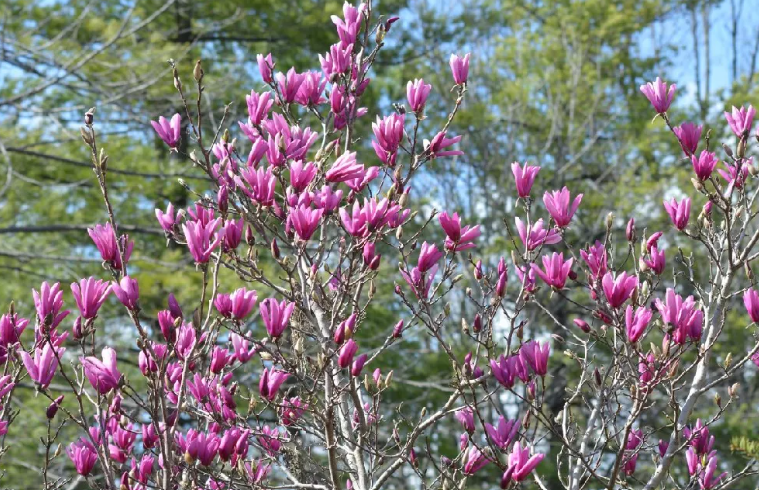
Magnolia trees are among the oldest flowering plants on Earth, known for their elegant form and large, fragrant blossoms. They range from small shrubs to towering trees, and can be either evergreen or deciduous depending on the species. Their leaves are typically broad and glossy, giving them a lush, tropical appearance even in temperate regions. Magnolias are widely admired for their ornamental value and are often planted in gardens, parks, and along streets.
These trees are especially valued for their striking flowers, which can appear in shades of white, cream, pink, yellow, and purple. The blooms are often large and cup-shaped or star-like, sometimes appearing before the leaves emerge, creating a dramatic early-season display. Magnolias tend to prefer well-drained, slightly acidic soil and thrive best in locations with full sun to partial shade. While many species are hardy, their flowers can sometimes be sensitive to late frosts, which may damage early blooms.
Magnolia trees are relatively low-maintenance once established, making them a popular choice for both beginner and experienced gardeners. They benefit from regular watering during dry periods and occasional pruning to maintain shape and remove dead or damaged branches. Their long lifespan and resistance to many pests add to their appeal, and they can serve as long-term focal points in a landscape.
Magnolia trees with purple flowers, such as saucer and lily magnolias, are particularly eye-catching due to their rich, vibrant coloration. Their blooms often range from deep pink to purplish tones, sometimes with lighter interiors that create a striking contrast. These trees typically flower in early spring, often before the leaves appear, covering the branches in bold, tulip-like blossoms. Purple magnolias are commonly used as ornamental specimens in gardens, where they add a dramatic burst of color and elegance to the landscape.
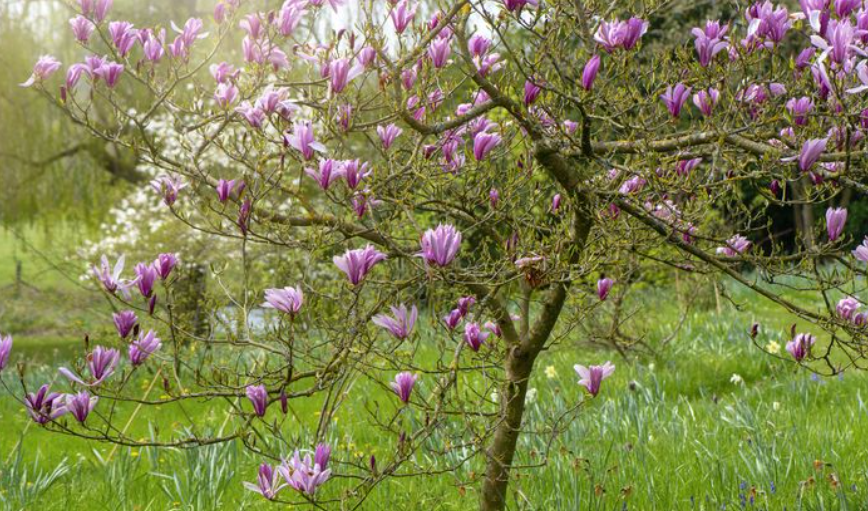
Types of Magnolia Tree Cultivars With Purple Flowers
Jane Magnolia (Magnolia × ‘Jane’)
Jane Magnolia is one of the most popular and widely planted purple-flowering magnolias, celebrated for its deep reddish-purple buds that open into large, goblet-shaped blooms with a soft lavender interior.
It blooms later than many other magnolias, which helps it avoid damage from late spring frosts — a tremendous practical advantage. A compact, slow-growing tree reaching 10 to 15 feet, it fits beautifully into smaller gardens and suburban landscapes alike.
Susan Magnolia (Magnolia × ‘Susan’)
Susan Magnolia is another beloved member of the Little Girl hybrid series, producing slender, elegantly twisted petals in a rich reddish-purple that fade to soft lilac at the tips. It blooms prolifically in early spring and often produces a second, lighter flush of flowers later in the season.
Growing to around 10 feet tall, Susan is a graceful, manageable tree that works well as a specimen plant or as part of a mixed border.
Saucer Magnolia (Magnolia × soulangeana)
Saucer Magnolia is arguably the most iconic of all the purple-flowering magnolias, producing enormous, saucer-shaped blooms in shades ranging from pale lavender to deep rosy purple depending on the cultivar.
It is one of the earliest magnolias to bloom each spring, often putting on its spectacular floral display while winter still lingers in the air. The tree grows to 20 to 30 feet and makes a magnificent focal point in any large garden or open landscape.
Royal Purple Magnolia (Magnolia × soulangeana ‘Royal Purple’)
Royal Purple is a standout cultivar of the Saucer Magnolia group, distinguished by its exceptionally deep, vivid purple-pink blooms that are among the most intensely colored of any magnolia variety.
The flowers are large and goblet-shaped, appearing in profusion before the foliage emerges for a truly dramatic early spring display. It grows to a medium size and is well suited as a bold specimen tree where its striking color can be fully appreciated.
Liliiflora Magnolia (Magnolia liliiflora ‘Nigra’)
Often called the Lily Magnolia, this species produces slender, elegant flowers in a deep wine-purple on the outside with a softer, pale purple interior, giving the blooms a beautifully two-toned appearance.
It is a multi-stemmed shrubby tree that stays relatively compact, typically reaching 8 to 12 feet, and it has the useful habit of blooming over an extended period rather than all at once. ‘Nigra’ is one of the darkest-flowered magnolias available and is a parent of many popular hybrids.
Galaxy Magnolia (Magnolia ‘Galaxy’)
Galaxy Magnolia is a fast-growing, upright tree that produces an abundance of large, reddish-purple to rosy-pink blooms with a sweet fragrance in early spring.
Its tall, pyramidal form — reaching up to 30 feet — makes it one of the more stately purple magnolias, well suited to larger gardens, parks, and streetscapes. The blooms appear slightly later than those of Saucer Magnolia, giving it some protection against late frosts.
Ann Magnolia (Magnolia × ‘Ann’)
Ann Magnolia is a compact, hardy member of the Little Girl hybrid series that produces deep reddish-purple, slightly fragrant flowers with a graceful, upright form.
Like Jane and Susan, it blooms later in spring than older varieties, significantly reducing the risk of frost damage to the delicate flowers. It typically reaches 8 to 10 feet in height and works wonderfully as a foundation planting, a container specimen, or a small accent tree in tight spaces.
Vulcan Magnolia (Magnolia ‘Vulcan’)
Vulcan Magnolia is a showstopper, bearing some of the largest and most vividly colored blooms in the magnolia world — rich, ruby-purple flowers that can measure up to 12 inches across.
Developed in New Zealand, it is a vigorous grower that reaches 15 to 20 feet and begins flowering at a young age, often blooming within just a few years of planting. The intensity of its color and the sheer size of its flowers make it one of the most dramatic purple magnolias available to home gardeners.
Black Tulip Magnolia (Magnolia × ‘Jurmag1’)
Black Tulip Magnolia earns its evocative name with its deep, velvety, goblet-shaped blooms in a shade of burgundy-purple so dark it appears almost black in certain light. It is a compact, upright tree reaching 15 to 20 feet with a tidy, elegant form that fits naturally into formal and contemporary garden designs. The blooms are large, long-lasting, and appear reliably each spring, making Black Tulip one of the most sought-after ornamental magnolias in cultivation today.
Genie Magnolia (Magnolia ‘Genie’)
Genie Magnolia is a compact New Zealand–bred hybrid that has rapidly gained popularity for its exceptionally dark, rich magenta-purple blooms and its remarkably long flowering season.
Unlike many magnolias that bloom just once in spring, Genie often re-blooms through summer and into autumn, providing color and interest over many months. It stays small — typically 6 to 10 feet — making it one of the finest choices for container growing, courtyard gardens, and any space where a bold floral display is wanted without a large footprint.