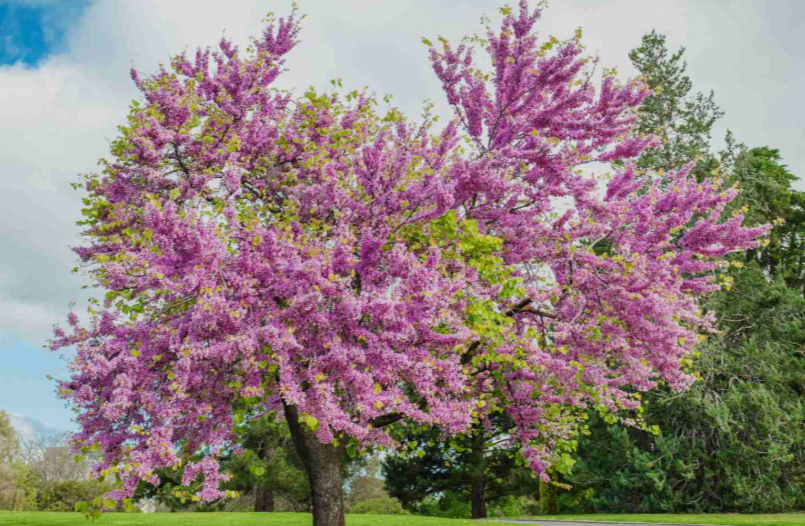
Botanical Classification
The Judas tree is a deciduous flowering tree belonging to the genus Cercis in the family Fabaceae, commonly known as the legume or pea family. Its scientific name is Cercis siliquastrum. The species falls under the order Fabales, which includes many flowering plants such as beans, peas, and acacias.
The genus Cercis contains several species of redbud trees known for their striking spring blossoms. The Judas tree is one of the best-known members of this group and has been cultivated for centuries in ornamental gardens and landscapes.
Description / Characteristics
The Judas tree is a small to medium-sized deciduous tree that typically grows between 6 and 12 meters (20–40 feet) tall. It has a spreading crown with irregular, sometimes twisted branches that give the tree a distinctive appearance. The bark is grayish-brown and becomes rough and fissured as the tree matures.
One of its most remarkable features is its vibrant pink to purplish flowers that appear in early spring before the leaves emerge. These flowers grow directly from the branches and trunk, a botanical phenomenon known as cauliflory. The leaves are round to heart-shaped and bright green, turning yellow in autumn. After flowering, the tree produces flat, elongated seed pods that remain on the branches for several months.
Distribution & Habitat
The Judas tree is native to regions around the Mediterranean Basin and parts of Western Asia. It naturally occurs in countries such as Turkey, Greece, Italy, and Israel. The tree typically grows in open woodlands, rocky hillsides, and scrublands where the climate is warm and relatively dry. It prefers well-drained soils and full sunlight, although it can tolerate partial shade.
Because of its attractive spring flowers and moderate size, the Judas tree has been widely planted as an ornamental tree in gardens, parks, and urban landscapes throughout temperate regions of Europe and beyond.
Conservation
The Judas tree (Cercis siliquastrum) is not considered a threatened species and is widely distributed throughout the Mediterranean Basin and parts of Western Asia. Natural populations remain relatively stable because the tree adapts well to dry climates and rocky soils where fewer large trees can thrive.
In several countries, such as Turkey and Greece, the species is protected in certain natural habitats and valued as part of the region’s native flora. Conservation efforts mainly focus on preserving natural woodland ecosystems and maintaining genetic diversity, while cultivated trees in gardens and parks also help sustain the species globally.
Uses
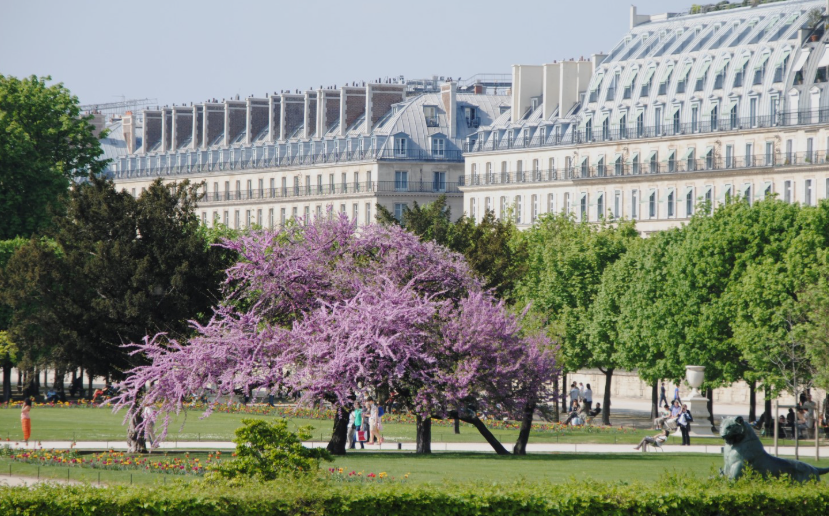
The Judas tree is widely valued as an ornamental tree because of its spectacular spring blossoms. Its bright pink or purplish flowers appear before the leaves and often grow directly from the trunk and branches, making it a striking feature in gardens, parks, and streetscapes.
In landscaping, the tree is used as a decorative specimen tree in warm temperate regions. The flowers are sometimes edible and have been used in salads or as garnishes in Mediterranean cuisine. Ecologically, the blossoms attract pollinators such as bees and butterflies, contributing to local biodiversity. Additionally, the tree has cultural and historical significance in parts of the Mediterranean where it has been cultivated for centuries.
Varieties and Cultivars
Several ornamental cultivars of the Judas tree have been developed for landscaping purposes. One well-known variety is Cercis siliquastrum ‘Alba’, which produces elegant white flowers instead of the typical pink blossoms. Another cultivar, Cercis siliquastrum ‘Bodnant’, is valued for its vigorous growth and abundant flowering display.
Some selections also emphasize compact growth habits or improved ornamental characteristics, making them suitable for smaller gardens or decorative plantings. These cultivars highlight the aesthetic appeal of the Judas tree and its adaptability in ornamental horticulture.
Growth Rate
The Judas tree (Cercis siliquastrum) has a moderate growth rate. Under favorable conditions, young trees typically grow about 30–50 centimeters (1–1.5 feet) per year. The tree usually reaches a mature height of 6–12 meters (20–40 feet) within a few decades.
Growth is best in full sun with well-drained soil, particularly in warm temperate climates. Although it does not grow as rapidly as some shade trees, the Judas tree is valued for its steady growth, attractive structure, and early spring flowering display.
USDA Zones
The Judas tree grows well in USDA Hardiness Zones 6–9. These zones correspond to regions with relatively mild winters and warm summers, similar to the climate of the Mediterranean Basin where the species naturally occurs.
The tree prefers full sunlight and well-drained soils and can tolerate moderate drought once established. Because of its adaptability, it is commonly cultivated in gardens and parks across parts of Europe, Asia, and the southern regions of the United States.
Problems
The Judas tree is generally hardy but may encounter several pests and diseases. Common insect pests include aphids, scale insects, and caterpillars that feed on the leaves. Fungal diseases such as leaf spot, canker, and verticillium wilt can occasionally affect the tree, especially if it is stressed or planted in poorly drained soil.
Root rot may develop in waterlogged conditions. Environmental stress factors such as severe frost, drought, or soil compaction can also weaken the tree. Proper planting in well-drained soil, adequate sunlight, and regular monitoring for pests help maintain healthy growth and reduce potential problems.
Invasiveness Overview
The Judas tree is considered safe for ornamental planting and urban landscaping. It is not invasive in Europe, the United States, or other temperate regions where it has been introduced, though gardeners may occasionally remove volunteer seedlings to maintain formal landscapes.
What to Know About Its Spread:
- Limited naturalization: While it produces seeds, the tree tends to spread slowly and rarely becomes established outside cultivated landscapes.
- Cultivation-focused: Most populations outside its native Mediterranean Basin are intentionally planted in gardens, parks, or streetscapes. Seedlings occasionally appear nearby, but they rarely dominate natural ecosystems.
- Non-aggressive growth: It is a moderate grower and prefers well-drained soils and temperate climates, which limits its ability to outcompete native species in most areas.