Botanical Classification
Jabuticaba belongs to the family Myrtaceae and the genus Plinia (formerly Myrciaria), with several species commonly cultivated including Plinia cauliflora, Plinia jaboticaba, and Plinia trunciflora. This evergreen tree is a close relative of guava and is native to Brazil, with the name “jabuticaba” (also spelled jaboticaba) derived from the indigenous Tupi word meaning “like turtle fat,” referring to the fruit’s pulp texture.
The tree produces white flowers with numerous stamens typical of the Myrtaceae family, and botanically, the fruits are berries containing one to four large seeds surrounded by sweet, translucent pulp within a thick purple-black skin.
History
Jabuticaba has been cultivated and consumed in Brazil for centuries, with indigenous peoples utilizing the fruit long before European colonization. The tree is deeply embedded in Brazilian culture and cuisine, traditionally grown in home gardens throughout southern Brazil, particularly in the states of Minas Gerais, São Paulo, and Rio de Janeiro.
Portuguese colonizers embraced the fruit and spread its cultivation, though jabuticaba remained relatively unknown outside South America until the 20th century. In recent decades, the tree has gained international attention as a botanical curiosity due to its unusual trunk fruiting habit, and it’s now cultivated in Florida, California, parts of Asia, and other subtropical regions where collectors prize it as an exotic ornamental and fruit tree.
Identifying Characteristics
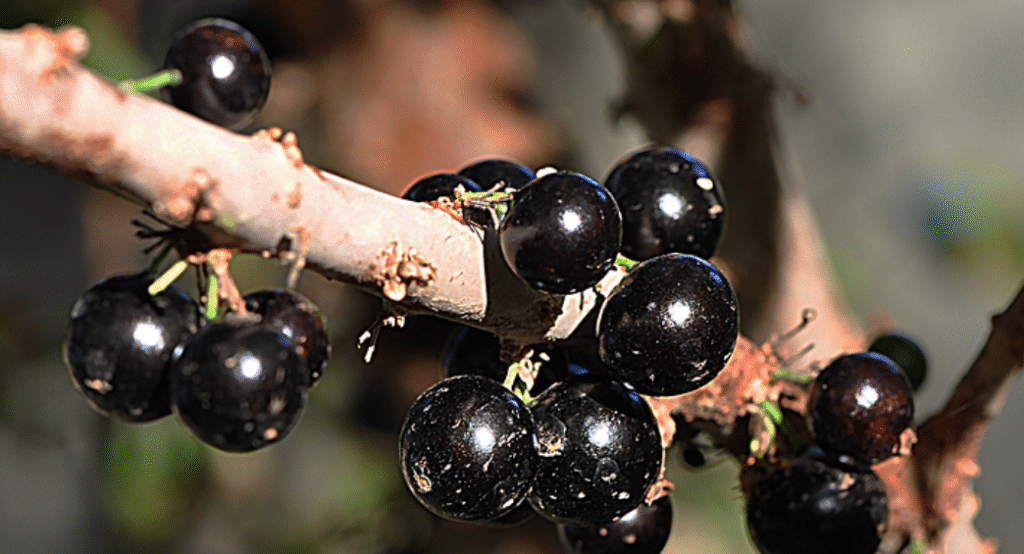
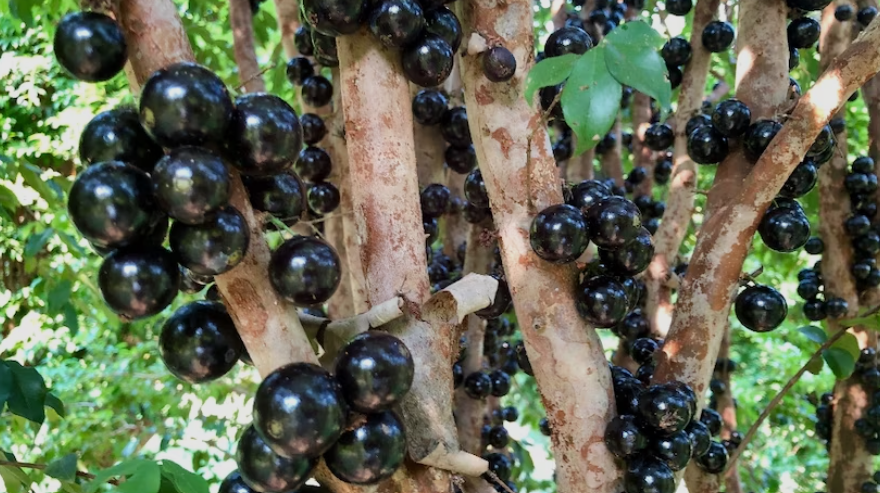
Jabuticaba is instantly recognizable by its unique cauliflorous fruiting habit, with grape-like fruits growing directly on the trunk and main branches. The tree grows 10-45 feet tall depending on species and age, with a dense, rounded crown of glossy, lance-shaped evergreen leaves that emerge bronze or reddish before maturing to dark green.
The bark is light gray to pinkish and smooth, peeling in irregular patches to reveal lighter inner bark, creating attractive mottled patterns. White flowers with prominent stamens emerge directly from the bark in clusters, blooming multiple times per year in ideal conditions, followed by round fruits that progress from green to deep purple-black when ripe.
The fruits are 1-1.5 inches in diameter with thick, astringent skin covering sweet, translucent white pulp that resembles grape flesh in texture and flavor, and the sight of a mature tree with its trunk completely covered in purple fruits is one of the plant world’s most distinctive and memorable displays.
Habitat & Climate
Jabuticaba is native to the Brazilian rainforests and Atlantic Forest regions, thriving in warm, humid subtropical to tropical climates. The trees prefer temperatures between 70-85°F and can tolerate brief drops to 25-28°F once established, though young trees are more frost-sensitive. Jabuticaba grows best in USDA zones 9b-11 but can be cultivated in protected microclimates or containers in cooler areas.
The trees thrive in areas with consistent moisture and high humidity similar to their native Brazilian habitat, and they naturally grow as understory trees in forests, tolerating partial shade though fruiting best in full to partial sun. Well-drained, slightly acidic soil (pH 5.5-6.5) rich in organic matter is ideal, and the trees are sensitive to salt and perform poorly in alkaline conditions or areas with low humidity and intense heat.
Cultivation & Harvesting
Jabuticaba cultivation requires patience as trees grown from seed can take 8-15 years to begin fruiting, though grafted trees may produce in 3-5 years. The trees prefer rich, acidic, well-drained soil amended with organic matter and require consistent moisture, especially during flowering and fruiting periods.
Jabuticaba grows slowly, typically adding 6-12 inches annually, and benefits from regular fertilization with balanced fertilizer formulated for acid-loving plants. The trees can be grown in large containers, making them suitable for patios and greenhouses in cooler climates where they can be protected from frost.
Pruning is minimal, mainly removing dead wood and maintaining shape, and the trees are relatively pest-free though they can be affected by scale insects and fruit flies. Jabuticaba flowers and fruits multiple times per year in ideal tropical conditions, with peak fruiting in spring and fall, and the fruits ripen quickly, changing from green to deep purple-black within a week.
Harvesting involves picking ripe fruits directly from the trunk and branches by hand, and the fruits must be used within 3-4 days of harvest as they ferment quickly, making commercial cultivation and shipping challenging.
Uses
Jabuticaba fruits are primarily eaten fresh, with the sweet, grape-like pulp consumed by squeezing the fruit into the mouth and discarding the thick, astringent skin and large seeds. The fruits are highly perishable but are processed into jellies, jams, wines, liqueurs, and vinegars that are Brazilian specialties, with jabuticaba wine being particularly prized.
Fresh juice can be made though it requires significant quantities of fruit, and the pulp is used in desserts, smoothies, and as flavoring for ice cream and yogurt. The skin, though too astringent to eat fresh, is rich in antioxidants and anti-inflammatory compounds, leading to its use in traditional medicine for treating asthma, diarrhea, and dysentery.
Beyond culinary uses, jabuticaba trees are valued as ornamental specimens for their unusual fruiting habit, attractive evergreen foliage, and peeling bark, making them conversation pieces in botanical gardens and private collections.
The wood is occasionally used for small woodworking projects, and the entire tree has become a symbol of Brazilian biodiversity and unique tropical fruit culture, attracting fruit enthusiasts and collectors worldwide who appreciate both its unusual beauty and delicious fruit.