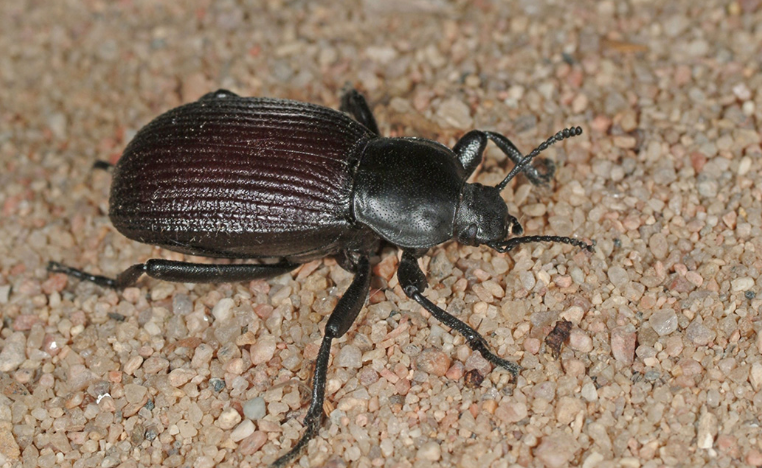
Many insects spend part or all of their lives in the ground, using soil as a place for shelter, protection, and growth. The underground environment offers stable temperatures, moisture, and safety from predators. Because of this, a wide range of insects—from tiny larvae to fully developed adults—have adapted to life beneath the surface.
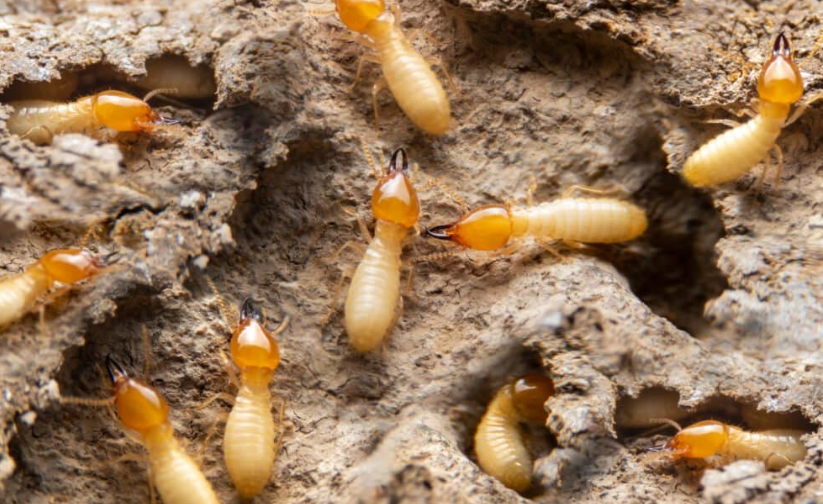
Ants and termites are among the most well-known ground-dwelling insects. They build complex tunnel systems with chambers for food storage, nurseries, and living spaces. These colonies are highly organized, with different members performing specific roles to keep the underground community functioning smoothly.
Some insects live underground only during certain stages of their life cycle. Beetle larvae, for example, often develop in the soil where they feed on roots or decaying organic matter. Cicada nymphs can remain underground for years, slowly growing as they draw nutrients from plant roots before emerging as adults.
Living in the ground requires special adaptations. Many of these insects have strong legs for digging, flattened bodies for moving through tight spaces, and sensitive antennae to navigate in the dark. Their coloring is usually dull, helping them blend into the soil rather than stand out.
Ground-dwelling insects play an important role in the ecosystem. They help break down organic material, improve soil structure, and recycle nutrients that plants need to grow.
Insects that Live Underground
Mole Cricket (Gryllotalpa gryllotalpa)
The Mole Cricket is one of the most perfectly adapted underground insects in the world. Its powerful, shovel-like forelegs are remarkably similar in structure and function to those of a mole, allowing it to tunnel rapidly through soil in search of roots, earthworms, and other organic matter.
Found across Europe, Asia, and parts of Africa, it spends the vast majority of its life beneath the surface, only emerging at night — particularly during mating season when males produce a distinctive, far-carrying chirping call from specially constructed acoustic burrow chambers that amplify sound.
Ant Lion (Myrmeleon formicarius)
The Ant Lion larva is one of nature’s most cunning underground predators. It excavates a conical pit trap in dry, loose sand or soil, burying itself at the bottom with only its enormous, sickle-like jaws exposed.
When an ant or other small insect tumbles into the pit and scrambles to escape, the larva flicks sand to trigger miniature avalanches that drag the prey downward — directly into its waiting jaws. After feeding, it flicks the empty husk out of the pit and resets its trap, sometimes spending two to three years as a larva before pupating underground.
Dung Beetle (Scarabaeus sacer)
The Dung Beetle is one of the most ecologically important underground insects on the planet. After locating a dung deposit, it rolls a ball of dung across the ground — navigating by the Milky Way, making it the only known insect to use the galaxy for orientation — before burying it underground as a food cache and brood ball.
Females lay their eggs inside buried dung balls, and the larvae develop entirely underground, feeding on the nutritious organic material. Their burrowing and burying behavior aerates soil and recycles nutrients at a remarkable scale.
Black Garden Ant (Lasius niger)
The Black Garden Ant is perhaps the most familiar underground insect in the temperate world, building elaborate multi-chambered colonies beneath lawns, pavements, and flowerbeds. A single colony may contain hundreds of thousands of workers, all serving a single queen whose sole role is egg-laying.
The colony’s underground architecture is a marvel of natural engineering, incorporating chambers for brood rearing, food storage, waste disposal, and even fungal gardens in some species. Workers maintain the colony for many years, with queens known to live for up to 30 years.
Periodical Cicada (Magicicada septendecim)
The Periodical Cicada holds the extraordinary distinction of spending either 13 or 17 years underground as a nymph — the longest known underground development period of any insect. Nymphs hatch from eggs laid in tree branches, fall to the ground, and immediately burrow into the soil where they attach to tree roots and feed on xylem fluid.
After their precisely timed subterranean period, billions of individuals emerge simultaneously across the eastern United States in a spectacular event that overwhelms predators through sheer numbers, a survival strategy known as predator satiation.
Fire Ant (Solenopsis invicta)
The Red Imported Fire Ant is one of the most aggressive and ecologically disruptive underground insects in the world. Native to South America, it has spread invasively across the southern United States, Australia, and parts of Asia, building large mound nests that can extend more than a meter below the surface.
The underground colony structure is highly organized, with distinct chambers for the queen, brood, and food storage. Workers are notoriously defensive, swarming in massive numbers when the nest is disturbed and delivering painful, burning stings that can cause severe allergic reactions.
Velvet Ant (Dasymutilla occidentalis)
Despite its common name and furry, ant-like appearance, the Velvet Ant is actually a solitary wasp whose wingless females spend much of their time on and beneath the ground.
Females burrow into the sandy nests of ground-nesting bees and wasps, laying their eggs on the host larvae which serve as food for Velvet Ant young. Their striking red and black coloration is a warning signal — they possess one of the most painful stings in the insect world. In fact, they are colloquially known as “cow killers” in the American South, though this is an exaggeration.
Termite (Reticulitermes flavipes)
The Eastern Subterranean Termite is the most economically destructive insect in North America, building vast underground colony networks through which millions of workers travel to reach and consume structural timber in buildings. Colonies extend deep into the soil, where they maintain moisture-rich tunnels that protect the soft-bodied workers from desiccation.
A mature colony can contain several million individuals and may have been established for many decades. Workers construct characteristic mud tubes on above-ground surfaces — tubes which are one of the key telltale signs of an infestation.
Harvester Ant (Pogonomyrmex barbatus)
Harvester Ants are desert-dwelling ground insects whose underground colonies are among the most architecturally sophisticated of any ant species. Their nests can extend up to 3 meters below the surface, with dozens of chambers arranged for maximum thermal stability in the extreme temperature fluctuations of their arid habitats.
Workers forage on the surface for seeds, which are carried underground and stored in dedicated granary chambers. The nests are easy to identify from above due to the large, cleared circular area of soil that surrounds the entrance — cleared of vegetation to reduce fire risk and improve visibility.
European Earwig (Forficula auricularia)
The European Earwig is one of the few insects to display maternal care, and this behavior is intimately tied to its underground lifestyle. Females excavate small chambers in loose, damp soil beneath rocks, bark, and leaf litter, where they lay and meticulously tend their eggs throughout winter.
The mother turns and cleans the eggs regularly to prevent fungal growth and guards them vigilantly from predators. After hatching, she continues to care for the nymphs until they are capable of fending for themselves — an unusually attentive level of parental investment for an insect.
Rhinoceros Beetle Larva (Dynastes hercules)
While adult Rhinoceros Beetles are famous for their spectacular horns and above-ground displays, it is the larval stage that defines the species’ relationship with the soil. Larvae spend up to two years burrowing through decaying wood and rich leaf litter beneath the forest floor, feeding voraciously on decomposing organic matter.
They play a critical role in nutrient cycling in tropical forest ecosystems, breaking down dead wood and returning nutrients to the soil. The larvae are enormous — among the largest beetle grubs in the world — and can reach up to 12cm in length before pupating underground.
Ground Beetle (Carabus violaceus)
The Violet Ground Beetle is a stunning, iridescent beetle found across Europe and parts of Asia that spends its days hidden in burrows beneath rocks, logs, and dense soil. It is a highly effective nocturnal predator, emerging at night to hunt slugs, earthworms, and other soil-dwelling invertebrates.
Its powerful mandibles can dispatch prey much larger than itself. Females lay their eggs in underground chambers, and the larvae also develop underground, continuing the predatory lifestyle of the adults. Ground beetles as a family are considered one of the most important biological control agents in agricultural soils.
Leafcutter Ant (Atta cephalotes)
Leafcutter Ants are master underground architects whose colonies are among the largest and most complex of any insect on Earth. The colony is built around an underground fungus garden — workers cut and carry leaf fragments down into the nest, where they are processed and used as a substrate to cultivate a specific fungus that serves as the colony’s primary food source.
The underground city of chambers and tunnels can extend 8 meters deep and span 30 to 40 square meters of horizontal area, housing millions of workers divided into highly specialized castes.
Burrowing Cockroach (Geoscapheus dilatatus)
The Giant Burrowing Cockroach, native to Queensland, Australia, is the world’s heaviest cockroach species and one of the most remarkable underground insects. Unlike most cockroaches, it is a dedicated burrower, excavating deep tunnels in the soil of eucalyptus forests where it lives in small family groups.
It is a detritivore, feeding on dry fallen leaves which it drags underground, and it displays an unusual degree of parental care, with mothers raising their nymphs underground for extended periods. It is entirely harmless and plays a vital role in soil aeration and leaf litter decomposition.
Assassin Bug Nymph (Reduviidae)
The nymphs of several assassin bug species spend portions of their early development in and around the soil surface, sheltering in crevices and burrows among leaf litter and loose earth. These underground refuges protect the vulnerable nymphs from predators and desiccation.
Assassin bugs are highly effective predators from their earliest life stages, using their curved rostrum to inject immobilizing saliva into prey many times their own size. Some species inhabiting underground burrows have evolved paler coloration compared to their above-ground relatives, reflecting their reduced exposure to light.
Digger Bee (Anthophora plumipes)
Digger Bees are solitary bees that excavate individual burrows in bare or sparsely vegetated soil, often in sandy banks or garden paths. Each female constructs and provisions her own nest without assistance from other individuals, filling brood cells with a mixture of pollen and nectar before laying a single egg in each.
The larvae develop entirely underground, feeding on the pollen provisions through winter before emerging as adults the following spring. Large aggregations of Digger Bee burrows can make it appear as though a colony is present, though each tunnel belongs to a single independent female.
Wireworm (Agriotes lineatus)
Wireworms are the underground larvae of click beetles, and they are among the most damaging soil-dwelling insects in agricultural systems. They can spend three to five years in the soil before pupating, during which time they tunnel through the root systems of crops including wheat, potato, carrot, and corn, causing significant economic losses for farmers.
Their tough, yellowish, wire-like bodies are well suited to pushing through compacted soil. A single heavily infested field may harbor millions of wireworm larvae per hectare, making them one of the most persistent challenges in soil pest management.
Ant (Atta laevigata)
Atta laevigata, the Leafcutter or Saúva Ant of South America, takes underground construction to an extraordinary extreme. Its colonies excavate some of the largest underground structures built by any animal other than humans, with nests documented at up to 7 meters deep containing thousands of interconnected chambers.
These chambers serve specialized purposes — fungus cultivation, brood rearing, waste disposal, and queen housing. The scale of soil displacement involved in building such a nest is equivalent, proportionally, to humans excavating the Great Wall of China, making this species one of the most remarkable engineers in the natural world.
Scarab Beetle Larva (Cotinis nitida)
The Green June Beetle larva is a white, C-shaped grub that lives in the top layers of soil and thatch in lawns, pastures, and gardens across the eastern United States. Unlike most scarab grubs, which lie curled and still within their burrows, Green June Beetle larvae are active crawlers — they move through the soil on their backs using stiff dorsal hairs to propel themselves.
They feed on organic matter and grass roots and can cause significant damage to lawns when present in large numbers. They pupate in the soil before emerging as brilliant metallic green adult beetles in summer.
Yellow Meadow Ant (Lasius flavus)
The Yellow Meadow Ant is a subterranean specialist that spends virtually its entire life underground, rarely venturing to the surface except during the annual mating flight. It builds distinctive small soil mounds in grasslands and meadows, which are a characteristic feature of ancient, undisturbed grassland habitats.
The species tends underground herds of root aphids, from which it harvests honeydew — a sugary secretion — in much the same way that other ant species tend aphids on plant surfaces. The mounds created by colonies improve soil drainage and aeration and can persist for decades.
Mining Bee (Andrena fulva)
The Tawny Mining Bee is one of the most common and charming solitary bees in European gardens. Females excavate neat, vertical burrows in lawns and soft soil, often in sunny, south-facing spots, creating small volcano-like mounds of excavated earth at the entrance. Each tunnel branches into individual brood cells, each stocked with pollen and nectar before a single egg is laid.
Although many females may nest in close proximity — giving the appearance of a colony — each is fully independent. They are completely harmless, extremely unlikely to sting, and are important early-season pollinators of fruit trees and spring wildflowers.
Hairy-Footed Flower Bee (Anthophora plumipes)
The Hairy-Footed Flower Bee is a fast-flying, bumblebee-sized solitary bee that nests in earthen banks, cliff faces, and the soft mortar of old walls. Males emerge in early spring and are among the first bees on the wing each year.
Females excavate burrows in relatively firm but workable soil or mortar, creating brood cells provisioned with pollen gathered almost exclusively from flowers of the borage family. The female’s distinctive hairy hind legs — used to collect and transport pollen — give the species its common name. Its underground nest is sealed after provisioning and the female does not return.
Giant Weta (Deinacrida heteracantha)
The Giant Weta of New Zealand, while not strictly an insect that burrows deeply into the soil, spends its daytime hours concealed in ground-level burrows, rock crevices, and fallen logs. It is one of the heaviest insects in the world, and its ground-dwelling lifestyle makes it particularly vulnerable to introduced mammalian predators.
It emerges at night to feed on leaves, fruit, and small invertebrates. On offshore islands where predator-free conditions exist, Giant Weta populations have been successfully re-established and continue their ancient lifestyle of sheltering underground by day.
Australian Bull Ant (Myrmecia gulosa)
The Australian Bull Ant, also known as the Jack Jumper or Inch Ant, builds deep underground nests in Australian forests, woodlands, and gardens. Unlike most ant species whose colonies contain vast numbers of workers, Bull Ant colonies are relatively small, often numbering only a few hundred to a few thousand individuals.
What they lack in numbers they more than compensate for in size and aggression — workers can be up to 40mm long and possess both excellent vision and extremely painful, venomous stings. Bull Ant underground nests are deceptively simple in appearance from above, with a single entrance hole that belies the extensive chambers below.
Subterranean Termite (Coptotermes formosanus)
The Formosan Subterranean Termite is widely considered the most destructive termite species in the world. Originating from southern China, it has spread to Japan, Hawaii, and the Gulf Coast of the United States, where it causes billions of dollars in structural damage annually.
Its underground colonies are colossal — a single mature colony can contain several million workers and span an underground foraging network covering an area the size of a football field. Workers construct extensive networks of mud tubes that connect underground galleries to above-ground food sources, giving the colony access to virtually any cellulose-containing material.
Bumblebee (Bombus terrestris)
The Buff-Tailed Bumblebee is one of several bumblebee species that establishes its colony underground, typically taking over an abandoned rodent burrow — particularly old mouse or vole nests — which it lines with moss and grass.
A mated queen emerges from hibernation in early spring and begins the colony alone, laying the first batch of eggs that will become her initial workforce. Underground nesting provides thermal insulation and protection from rain and predators. Colonies typically house between 150 and 400 workers at peak season before producing new queens and males for mating in late summer.
Bark Beetle (Ips typographus)
While bark beetles are most commonly associated with the interior of tree bark rather than soil, the European Spruce Bark Beetle pupates in the soil beneath infested trees after completing larval development under the bark. Mature larvae drop from the tree and burrow into the soil to pupate in earthen cells.
Emerging adults then fly to new host trees. This species has caused catastrophic destruction to spruce forests across Europe in recent decades, with bark beetle outbreaks — exacerbated by drought stress and climate change — killing millions of trees across Scandinavia, Germany, and Central Europe.
Potato Moth Larva (Phthorimaea operculella)
The Potato Tuber Moth is a global agricultural pest whose larvae are intimately associated with underground crop damage. Females lay eggs in the soil near potato plants, and the emerging larvae tunnel down to attack potato tubers — eating through the flesh and creating galleries contaminated with frass.
Infestations can destroy entire stored potato crops in warm conditions. The larvae can follow the plant underground by hatching in soil cracks created during drought. Control of this soil-stage pest is notoriously difficult due to the protection offered to larvae by the surrounding soil and tuber.
Glowworm (Arachnocampa luminosa)
The New Zealand Glowworm is the larva of a fungus gnat species that constructs silken hammock-like nests on the ceilings and walls of caves, overhangs, and damp earthen banks — effectively living embedded in the surface of the earth or rock. From these nests, each larva suspends dozens of sticky, bioluminescent threads to trap flying insects attracted by its blue-green glow.
In famous locations like Waitomo Caves, thousands of larvae illuminate cave ceilings like a living starscape, creating one of the most otherworldly natural spectacles on Earth. The larvae spend most of their lives in this underground or cave-surface stage.
Camel Cricket (Ceuthophilus maculatus)
The Spotted Camel Cricket is a cave- and soil-dwelling insect found across North America that spends much of its life in cool, dark, damp underground environments including caves, burrows, basements, and beneath rocks and logs. Named for its humpbacked appearance, it lacks wings entirely and relies on its enormously long antennae and hind legs to navigate its dark subterranean world.
It is an omnivore, feeding on fungus, decaying plant matter, and carrion. When threatened, it jumps unpredictably and erratically — a behavior designed to startle predators — which can be alarming to humans who encounter them in basements.
Ground Cricket (Allonemobius fasciatus)
The Striped Ground Cricket is a common small cricket found across eastern North America that lives primarily on and just beneath the surface of the ground in grasslands, meadows, and woodland edges. It shelters under stones, loose bark, and in shallow soil burrows during the day and emerges to feed and sing at night.
Its high-pitched, rapid chirping song — produced by wing-stridulation — is one of the characteristic sounds of late summer and autumn evenings. Females use their long ovipositors to insert eggs directly into the soil, where they overwinter and hatch the following spring.
Corn Rootworm (Diabrotica virgifera)
The Western Corn Rootworm is one of the most economically significant soil-dwelling insects in North America, costing the agricultural industry over a billion dollars annually in crop losses and pest management. The larvae hatch from eggs laid in the soil and immediately begin feeding on corn root systems, stunting plant growth, reducing water and nutrient uptake, and making plants susceptible to lodging — falling over — during storms.
Its remarkable adaptability has allowed it to evolve resistance to crop rotation strategies and multiple insecticides, making it one of the most challenging agricultural pests ever faced by the corn industry.
Ant Cricket (Myrmecophila acervorum)
The Ant Cricket is a tiny, wingless cricket that lives an extraordinary life entirely within the underground nests of ants, making it one of the most specialized subterranean insects known to science. It mimics the chemical signals of its host ants, allowing it to move freely through the colony’s tunnels and chambers without being attacked.
Inside the nest, it feeds by stealing food directly from the mouths of ant workers — a behavior known as trophallaxis theft — or by consuming the colony’s larval secretions. It is one of the smallest cricket species in the world, rarely exceeding 3mm, which likely helps it evade detection.
Robber Fly Larva (Asilidae)
The larvae of many Robber Fly species are dedicated subterranean predators that develop entirely underground, hunting through the soil for the grubs and larvae of other insects. They are long, pale, and cylindrical in shape — ideally suited for navigating through soil — and possess strong mouthparts capable of subduing beetle larvae, earthworms, and other soil invertebrates.
Some species spend two to three years as underground larvae before pupating in the soil and emerging as the formidable aerial predators for which the family is well known. Their role in controlling underground pest populations makes them valuable, if largely invisible, members of soil ecosystems.
Acorn Weevil Larva (Curculio glandium)
The Acorn Weevil has one of the most fascinating life cycles in the insect world, and a significant portion of it unfolds underground. Females use their extraordinarily long, curved snouts to drill through acorn shells and deposit eggs inside. Larvae develop inside the acorn, feeding on the nutritious interior, before chewing through the shell and dropping to the ground in autumn.
Once on the ground, they immediately burrow into the soil, sometimes to depths of 20 to 30cm, where they overwinter and pupate. They may remain dormant underground for one or even two winters before finally emerging as adult weevils.
Migratory Locust Nymph (Locusta migratoria)
The Migratory Locust — infamous for its devastating adult swarms — begins its life cycle underground as an egg buried in a foam pod known as an egg pod. Females insert their abdomens deep into soil to deposit these pods at depths of 5 to 10cm, with each pod containing up to 80 eggs surrounded by a protective frothy substance that hardens into a casing.
The eggs incubate underground for two to three weeks before hatchling nymphs — called hoppers — emerge and dig their way to the surface. Soil temperature and moisture are critical determinants of egg survival and hatch timing, making soil conditions a key factor in locust outbreak prediction.