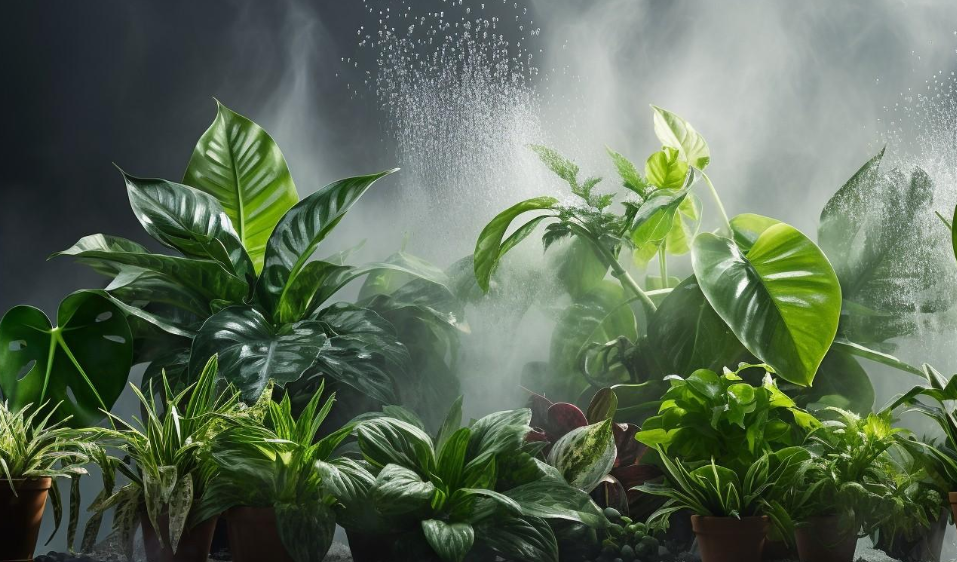
Houseplants that like high humidity are usually native to tropical or rainforest environments where the air is warm and moist. These plants are adapted to absorb moisture not just through their roots, but also through their leaves. Because of this, they tend to struggle in dry indoor air and thrive when humidity levels are higher.
Many popular indoor plants fall into this category, including ferns, peace lilies, and calatheas. These plants often have thin or broad leaves that lose moisture quickly, so they benefit from humid conditions that prevent drying out. In the right environment, they display lush growth and vibrant foliage.
High humidity helps these plants maintain healthy leaf structure and prevents issues like browning edges or curling leaves. It also supports proper growth and can even encourage flowering in some species. Without enough moisture in the air, these plants may appear dull or stressed over time.
There are several ways to increase humidity for indoor plants. Grouping plants together can create a mini humid zone, while placing them near a humidifier provides consistent moisture. Bathrooms and kitchens are also good spots, as they naturally have higher humidity levels.
Misting is sometimes used, but it offers only a temporary boost and may not be enough on its own. A more effective method is using a tray filled with water and pebbles beneath the plant pot, allowing moisture to slowly evaporate around the plant.
In general, houseplants that like high humidity reward proper care with rich, tropical-looking growth. By recreating a moist environment indoors, you can keep these plants healthy and enjoy their vibrant appearance throughout the year.
Plants That Decrease Humidity
Bird of Paradise (Strelitzia reginae)
The bird of paradise is a bold, tropical showstopper whose large, paddle-shaped leaves and extraordinary orange-and-blue flowers are a direct reflection of its origins in the humid subtropical regions of South Africa.
Indoors, it performs best when ambient humidity is kept consistently high, which prevents the leaf edges from browning and splitting — the most common sign that the air around this magnificent plant is far too dry.
Boston Fern (Nephrolepis exaltata)
The Boston fern is one of the most humidity-dependent of all common houseplants, and its long, arching fronds of bright green will begin to yellow and drop their leaflets with discouraging speed the moment the air around them becomes too dry.
It positively thrives in steamy bathrooms and kitchens, where the natural moisture in the air provides exactly the humid atmosphere its tropical origins demand.
Calathea (Calathea spp.)
Calatheas are famed for their intricately patterned, richly coloured leaves — striped, spotted, and feathered in combinations of green, purple, silver, and cream — but those spectacular markings come at a price: they are among the most humidity-sensitive of all foliage houseplants.
The leaf edges curl and crisp at the first hint of dry air, making a consistently humid environment not just beneficial but absolutely essential for keeping them looking their best.
Orchid (Phalaenopsis spp.)
Moth orchids are epiphytic plants that grow naturally anchored to the bark of trees in the warm, humid rainforests of Southeast Asia, where moisture-laden air surrounds their exposed roots at almost all times.
Indoors, replicating that humidity is one of the most important factors in keeping them healthy — it supports root vitality, prolongs the life of the blooms, and encourages the development of new flower spikes after the previous display has finished.
Monstera (Monstera deliciosa)
The iconic monstera, with its dramatic, fenestrated leaves, hails from the deeply humid understorey of Central American tropical rainforests, and it grows most vigorously when indoor humidity is kept well above the levels typically found in a heated home.
Regular misting, a pebble tray, or a nearby humidifier will reward you with larger, more dramatically split leaves and the kind of lush, fast growth that makes this plant so satisfying to own.
Peace Lily (Spathiphyllum spp.)
The peace lily is one of the most communicative of all houseplants — its leaves droop dramatically when it needs water and its tips brown visibly when the air is too dry.
As a native of the humid tropical forests of Colombia and Venezuela, it appreciates a consistently moist atmosphere and will reward good humidity levels with glossy, upright foliage and a more generous production of its elegant white spathes.
Anthurium (Anthurium andraeanum)
Anthuriums are tropical plants whose waxy, heart-shaped spathes in vivid red, pink, and white are among the most long-lasting of any flowering houseplant — but only when humidity levels are kept sufficiently high.
In dry air, the glossy leaves develop brown tips and the flowers lose their characteristic lacquered sheen, so placing an anthurium in a humid bathroom or near a humidifier makes a visible and immediate difference to its appearance and overall vigour.
Fiddle Leaf Fig (Ficus lyrata)
The fiddle leaf fig is a fashionable and dramatic indoor tree whose enormous, violin-shaped leaves are as demanding as they are beautiful.
Native to the lowland tropical rainforests of West Africa, where humidity is extremely high year-round, it suffers visibly in dry indoor air — the leaf edges brown, growth slows, and the plant becomes vulnerable to the spider mites that thrive in arid conditions and love nothing more than an already-stressed fiddle leaf fig.
Croton (Codiaeum variegatum)
Crotons produce some of the most extravagantly coloured foliage in the houseplant world, with leaves painted in startling combinations of red, orange, yellow, and green — but that vivid colouring depends heavily on the plant receiving adequate humidity alongside bright light.
In dry air, the leaves drop with frustrating speed and the brilliant colour palette fades, making a humid environment one of the single most important contributions you can make to keeping a croton at its spectacular best.
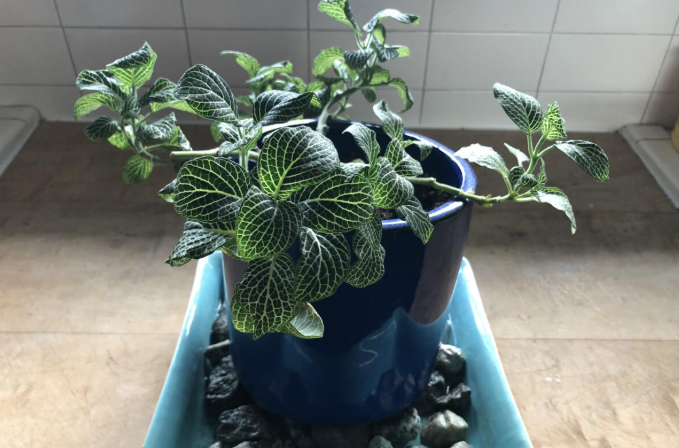
Nerve Plant (Fittonia albivenis)
The nerve plant is a low-growing, ground-hugging tropical from the rainforests of South America, where it lives in conditions of near-constant warmth and very high humidity beneath the forest canopy.
Its intricately veined, jewel-like leaves — traced in white, pink, or red — collapse dramatically and almost immediately in dry air, making it one of the most reliable indicators of insufficient humidity in a room and one of the most rewarding plants to grow inside a glass terrarium.
Rubber Plant (Ficus elastica)
The rubber plant is a vigorous indoor tree from the humid tropical forests of South and Southeast Asia, and while it is considerably more tolerant of indoor conditions than many of its tropical counterparts, it grows most lushly and develops its finest, most glossy foliage in a humid environment.
Regular wiping of the large leaves removes dust and supports their ability to absorb moisture from the surrounding air — a simple practice that makes a noticeable difference to the plant’s appearance and health.
Parlour Palm (Chamaedorea elegans)
The parlour palm is one of the most elegant and adaptable of all indoor palms, capable of tolerating lower light than most, but genuinely thriving when it is also given the warm, moist air that its Central American jungle origins call for.
In humid conditions its slender, arching fronds remain a deep, lustrous green without the browning tips that are the signature complaint of parlour palm owners who keep them in centrally heated rooms with very dry air.
Zebra Plant (Aphelandra squarrosa)
The zebra plant is a dazzling, attention-commanding houseplant with large, dark green leaves boldly striped with ivory-white veins and dramatic yellow flower bracts that rise from the centre of the plant like a torch.
It is also one of the most humidity-demanding of all indoor plants, originating from the wet, tropical forests of Brazil, and it will drop its leaves rapidly and without much warning if placed in a dry, draughty, or centrally heated room.
Bird’s Nest Fern (Asplenium nidus)
Unlike the more feathery fern varieties, the bird’s nest fern produces broad, entire, glossy fronds that unfurl in a rosette from a central nest-like crown, giving it an almost tropical, architectural quality.
It thrives in the warm, steamy humidity of a bathroom environment and rewards consistently high moisture levels with fronds that are wide, smooth-edged, and a deep, satisfying shade of bright green, in contrast to the narrow, crinkled fronds produced under drier conditions.
Philodendron (Philodendron spp.)
Philodendrons are vigorous, tropical foliage plants with origins in the humid rainforests of Central and South America, and whether trailing, climbing, or growing as bold, upright specimens, they share a genuine appreciation for warm, moist air.
High humidity encourages the production of larger, more dramatically shaped leaves — particularly important for the split-leaved and velvety varieties that are currently so popular — and helps prevent the browning leaf margins that signal air that is too dry for their liking.
Dracaena (Dracaena spp.)
Dracaenas are among the more tolerant of tropical houseplants, but they still show a clear preference for humid conditions over the parched air of a centrally heated home.
Their long, strap-like or sword-shaped leaves develop brown, papery tips in dry atmospheres — a widely recognised problem with this popular genus — and a modest increase in ambient humidity, whether through misting or a humidifier, goes a long way towards keeping the foliage clean, green, and tip-free.
Chinese Evergreen (Aglaonema spp.)
Chinese evergreens are deservedly popular as low-maintenance, low-light houseplants, but their lush, patterned foliage — which ranges from deep green through silver, pink, and red depending on the variety — looks its most vibrant when humidity is kept at a comfortable level.
In very dry air, the beautifully variegated leaves begin to brown at the tips and margins, gradually losing the crisp, colourful appearance that makes aglaonema one of the most decoratively rewarding of all indoor foliage plants.
Pothos (Epipremnum aureum)
Pothos is one of the toughest and most forgiving houseplants available, capable of surviving neglect and poor conditions that would finish off more sensitive species — but it rewards higher humidity with noticeably more vigorous, lusher trailing growth and larger, more richly coloured leaves.
In genuinely humid conditions, such as a bathroom shelf, the variegated forms in particular develop their cream-and-green or golden markings with greater intensity and clarity.
Begonia (Begonia spp.)
The begonia family encompasses an enormous range of forms — from the wax begonia with its cheerful flowers to the extraordinary rex begonia with its fantastically patterned, metallic-sheen foliage — but virtually all of them share a preference for warm, humid growing conditions.
High humidity supports both vigorous foliage development and prolific flowering, and it is particularly critical for the rex varieties, whose papery, intricately textured leaves are especially prone to crisping in dry air.
Pitcher Plant (Nepenthes spp.)
Tropical pitcher plants are among the most extraordinary of all houseplants, producing hanging, liquid-filled pitchers from modified leaf tips that trap and digest insects to supplement the nutrients absent from the very poor soils of their native rainforest habitat.
That same rainforest origin means they demand very high humidity as a non-negotiable growing condition — without it, the pitchers fail to develop properly, the leaves yellow, and the plant declines rapidly, making a terrarium or a heated, humid greenhouse the most reliably successful home for these remarkable carnivores.
Maidenhair Fern (Adiantum spp.)
The maidenhair fern is widely considered the most beautiful and also the most unforgiving of all ferns commonly grown as houseplants. Its clouds of tiny, fan-shaped leaflets carried on delicate, wiry black stems are breathtakingly delicate in appearance — and equally delicate in their requirements, demanding exceptionally high humidity at all times.
Even a few hours in dry air can cause the fronds to brown and shrivel irreversibly, making it best suited to a steamy bathroom, a glass case, or the company of a dedicated owner willing to provide the consistently moist atmosphere it absolutely cannot do without.