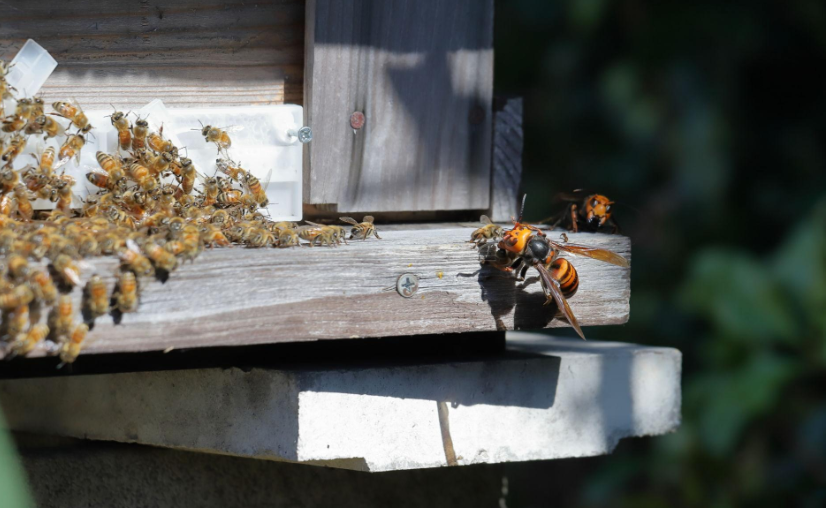
Some hornet species are known for preying on bees, making them important but sometimes feared predators in the insect world. These hornets hunt bees as a reliable source of protein, especially when feeding their developing larvae. While this behavior may seem harsh, it is part of a natural balance within ecosystems.
Hornets that eat bees are usually strong, fast hunters. They can catch bees in midair or ambush them near flowers and hive entrances. Once captured, the hornet may chew the bee into smaller pieces to carry back to the nest, where it is shared among the colony.
One of the most well-known examples is the large hornet species found in parts of Asia, which can attack entire beehives. A small group of these hornets can overwhelm a hive by killing worker bees and taking over the nest’s resources. This behavior can have a serious impact on local bee populations.
Bees are not completely defenseless, however. Some species have developed clever ways to fight back. For example, groups of bees may surround a hornet and generate heat by vibrating their bodies, effectively overheating the predator and protecting the colony.
Hornets benefit from this hunting behavior because bees provide a rich source of nutrients. By feeding on bees and other insects, hornets help regulate insect populations, preventing any single species from becoming too dominant in an area.
Although hornets that eat bees can pose challenges for beekeepers, especially in certain regions, they are still a natural part of the environment.
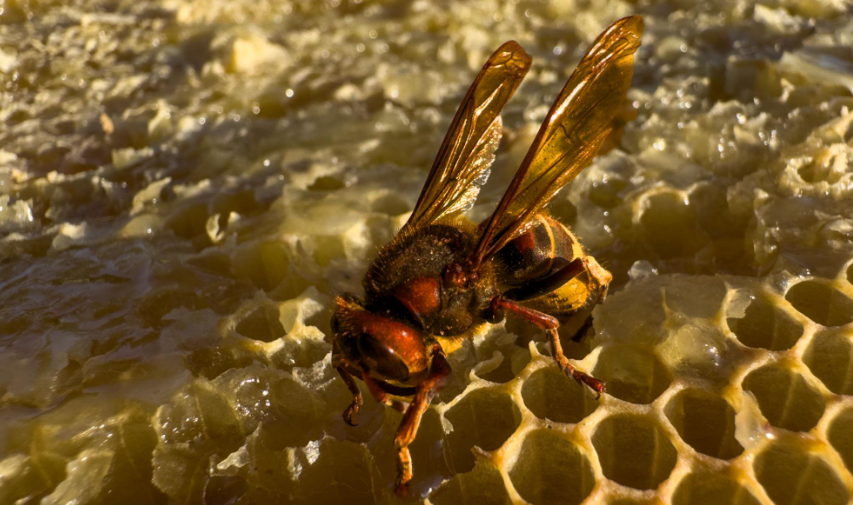
Hornets that Eat Bees
Asian Giant Hornet (Vespa mandarinia)
The Asian Giant Hornet is perhaps the most notorious bee predator on the planet. Native to the forests of East and Southeast Asia, it conducts devastating mass attacks on honeybee colonies, with a small group of scouts able to slaughter thousands of bees in a matter of hours using their powerful mandibles.
They decapitate the bees and carry the thoraxes back to their nest as protein-rich food for their larvae. Japanese honeybees have developed a remarkable defense — surrounding attacking hornets in a tight ball and generating lethal heat — but European honeybees, lacking this adaptation, are virtually defenseless.
European Hornet (Vespa crabro)
The European Hornet is a well-documented predator of honeybees and is considered a significant threat to managed bee colonies across Europe and North America. It hunts individual bees near hive entrances, capturing them in flight or snatching them from flowers.
Rather than launching mass colony attacks, it typically preys on lone foragers, biting off their wings and legs before carrying the protein-rich thorax back to its nest. Beekeepers in affected regions often use entrance reducers on hives to limit the hornet’s ability to pick off bees one by one.
Yellow-Legged Hornet (Vespa velutina)
Originally from Southeast Asia, the Yellow-Legged Hornet — also called the Asian Hornet — has become an invasive species across Europe, particularly in France, Spain, and the UK, where it poses a devastating threat to native honeybee populations.
It employs a hunting strategy called “hawking,” hovering near the entrance of beehives and snatching returning foragers mid-flight with remarkable precision. A single colony of Yellow-Legged Hornets can destroy multiple beehives in a season, making it one of the most ecologically damaging invasive insects in Europe today.
Black-Bellied Hornet (Vespa basalis)
The Black-Bellied Hornet of Southeast Asia is an aggressive and highly capable bee predator that conducts both solo hunts and coordinated group raids on bee colonies. It is known to target both wild and managed honeybee hives, killing guard bees at the entrance before advancing deeper into the colony.
Its attacks are swift and relentless, and smaller bee colonies often have no effective means of repelling an assault. The hornet dismembers its prey and transports the nutrient-dense muscle tissue back to feed developing larvae in its own nest.
Lesser Banded Hornet (Vespa affinis)
The Lesser Banded Hornet is a common and persistent predator of bees found throughout South and Southeast Asia. It actively hunts honeybees both at hive entrances and at flowering plants where bees forage. Though smaller than the Asian Giant Hornet, it compensates with high colony numbers and frequent raiding behavior.
It has been observed targeting both Apis cerana (Asian honeybee) and Apis mellifera (Western honeybee) colonies, making it a notable concern for beekeepers in tropical regions. Its bold, fearless hunting style makes it one of the more persistent bee predators in its range.
Greater Banded Hornet (Vespa tropica)
The Greater Banded Hornet is widely distributed across Asia and is one of the more powerful predators of social bees and wasps in its range. It has a particular preference for raiding the nests of other social insects, including bumblebees and various bee species.
It is a specialist in attacking the brood of its prey — breaking into nests to steal larvae and pupae, which are rich in protein and fat. Beekeepers in tropical Asia frequently cite it as a persistent threat, especially to smaller or weaker colonies that lack sufficient guard bees to mount an effective defense.
Vespa soror
Vespa soror is a large and relatively understudied hornet found in parts of South and Southeast Asia, closely related to the Asian Giant Hornet. Like its famous cousin, it is known to conduct mass raids on bee colonies, using sheer numbers and physical power to overwhelm defenders.
Workers use their strong mandibles to kill guard bees and breach hive defenses, then harvest brood and adult bees as food. Its size and aggressive colony behavior make it a formidable predator, and it is believed to have a similarly devastating impact on local bee populations wherever it is found.
Chinese Yellow Hornet (Vespa analis)
The Chinese Yellow Hornet, also known as the Fine-Banded Hornet, ranges across East and Southeast Asia and is a persistent predator of honeybees. It adopts a hawking strategy similar to the Yellow-Legged Hornet, stationing itself near beehive entrances to intercept foragers returning laden with nectar and pollen.
It has been recorded attacking both wild bee colonies and managed apiaries, and its wide geographic range means it poses a threat to bee populations across a broad swath of the continent. Beekeepers in China, Japan, and Korea regard it as a regular and troublesome hive pest.
Yellow Hornet (Vespa simillima)
The Yellow Hornet, native to East Asia, is a well-known predator that frequently targets honeybee colonies during late summer and autumn when its own colony is at peak size and protein demands are highest. Workers hunt bees both individually at foraging sites and in coordinated groups near hive entrances.
During peak predation season, a single Yellow Hornet colony can make hundreds of raids on nearby beehives, significantly depleting bee populations in the surrounding area. Japanese beekeepers have long had to contend with this species and employ various protective measures to shield their hives.
Vespa ducalis
Vespa ducalis, sometimes called the Japanese Hornet or Canetti’s Hornet, is a large predatory hornet found across East and Southeast Asia. It is known for raiding the nests of other social wasps and bees, carrying off adult insects and larvae alike to provision its own colony.
Its hunting behavior is methodical — scouts locate a target hive before workers are recruited to conduct a sustained assault. Though not as well studied as Vespa mandarinia, it is considered a significant natural enemy of honeybees in its range and is frequently encountered by beekeepers in forested and semi-rural areas.
Bald-Faced Hornet (Dolichovespula maculata)
Technically a yellowjacket rather than a true hornet, the Bald-Faced Hornet of North America nonetheless earns its place on this list through its well-documented predation of bees. It is an opportunistic hunter that captures individual bees on flowers and in flight, killing them and processing the thorax to feed larval young back in the nest.
While it does not conduct mass raids on beehives the way Asian hornets do, it can persistently prey on foraging bees throughout the warm season, making it a nuisance in gardens and near apiaries. Its aerial agility makes it a highly effective hunter of flying insects.
Oriental Hornet (Vespa orientalis)
The Oriental Hornet, found across the Middle East, Central Asia, and parts of southern Europe and Africa, is a significant predator of honeybees in arid and semi-arid regions. It specifically targets Apis mellifera colonies, conducting raids that can range from individual hunts to coordinated group attacks during summer and early autumn.
Uniquely among hornets, it has a layer of yellow tissue in its cuticle capable of harvesting solar energy, and its peak activity interestingly corresponds with periods of high solar radiation. Beekeepers across the Middle East and North Africa have long regarded it as one of the primary biological threats to their hives.