Botanical Classification
Gray birch is a deciduous hardwood tree in the genus Betula, part of the family Betulaceae. Its scientific name is Betula populifolia. The species belongs to the order Fagales, which also includes oaks, beeches, and alders.
Gray birch is closely related to other North American birches, including paper birch (Betula papyrifera) and sweet birch (Betula lenta), but it is distinguished by its small size, short lifespan, and adaptability to poor, dry soils. It is native to the northeastern United States and is often found in secondary forests, disturbed sites, and open areas.
Description / Characteristics
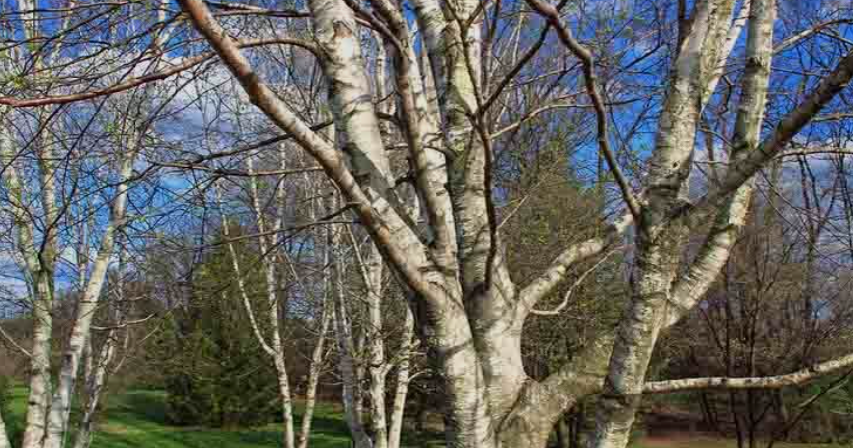
Gray birch is a small to medium-sized deciduous tree, typically reaching 6–12 meters (20–40 feet) in height. Its bark is smooth, grayish-white, and may develop dark, rough patches with age. Young twigs are slender and reddish-brown, while the leaves are triangular to ovate with double-serrated edges, turning yellow in autumn.
The species produces slender catkins in spring, characteristic of birches, which are wind-pollinated. Gray birch often exhibits a multi-stemmed growth habit, forming small clusters or thickets, and it has a short lifespan of approximately 30–50 years. Its adaptability and fast early growth make it a common pioneer species in disturbed or poor soils.
Distribution & Habitat
Gray birch is native to the northeastern United States, including New England, the Mid-Atlantic states, and parts of southeastern Canada. It thrives in open fields, abandoned farmland, forest edges, and disturbed sites, often colonizing poor, dry, sandy, or rocky soils. The species prefers full sun but can tolerate partial shade.
Gray birch is particularly suited to well-drained soils and is commonly found at low to moderate elevations. Its natural role as a pioneer species helps stabilize soil, enrich successional habitats, and provide cover and food for wildlife, including birds and insects.
Conservation
Gray birch (Betula populifolia) is not considered a threatened or endangered species. Its populations are stable and widespread across the northeastern United States and parts of southeastern Canada. Its ability to colonize disturbed or poor soils helps maintain resilient populations even in areas affected by urbanization or land-use changes.
Conservation efforts focus on preserving secondary forest habitats and maintaining ecological diversity in open fields and post-agricultural landscapes where gray birch often serves as a pioneer species.
Uses
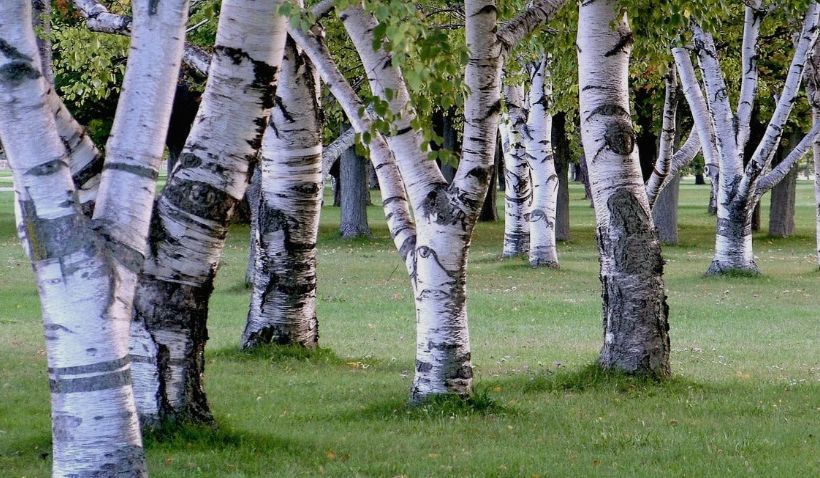
Gray birch has ecological, practical, and ornamental value. Ecologically, it stabilizes soil on poor or disturbed sites, provides early successional habitat for wildlife, and supports insects, birds, and small mammals. Its wood is light and moderately strong, suitable for small woodworking projects, pulp, or fuel, though it is not widely used commercially.
Ornamental planting sometimes utilizes gray birch for naturalized landscapes, erosion control, and wildlife gardens, where its striking bark, small stature, and fast early growth make it appealing. Its yellow fall foliage adds seasonal color to gardens and open areas.
Varieties and Cultivars
Gray birch has few formally recognized cultivars because it is primarily valued for ecological restoration rather than ornamental horticulture. However, natural variation occurs across its range in bark color, leaf size, and growth form. Some selections emphasize compact, multi-stemmed forms that are useful in small landscapes or urban plantings.
In botanical collections, gray birch is sometimes cultivated alongside other native species to demonstrate pioneer species’ roles or for use in naturalized settings where its hardiness and adaptability to poor soils are advantageous.
Growth Rate
Gray birch (Betula populifolia) is a fast-growing pioneer species, especially in its early years. Young trees can grow approximately 30–60 centimeters (1–2 feet) per year under favorable conditions.
However, its growth slows as the tree matures, and its overall lifespan is relatively short, typically around 30–50 years. Its rapid early growth allows it to quickly colonize disturbed sites, abandoned fields, and poor soils, making it an important species for natural succession and soil stabilization.
USDA Zones
Gray birch thrives in temperate climates and is suitable for USDA Hardiness Zones 3–7. These zones correspond to areas with cold winters and moderate summers, reflecting its native range in the northeastern United States and southeastern Canada.
The species prefers full sun and well-drained soils but can tolerate poor, sandy, or rocky substrates, making it highly adaptable to disturbed or marginal landscapes.
Problems
Gray birch faces several common challenges despite its hardiness. The bronze birch borer is a notable pest, often attacking stressed trees and potentially causing significant decline. Other insects, such as aphids and leaf miners, may occasionally affect foliage. Fungal diseases, including leaf spot and cankers, can also occur, particularly on weakened trees.
Environmental stressors such as drought, soil compaction, or excessive shade reduce vigor and increase susceptibility to pests and disease. Maintaining healthy growing conditions—adequate sunlight, proper drainage, and minimal stress—is crucial for sustaining gray birch in both natural and cultivated settings.