Some fruits have the unusual habit of growing directly on the trunks or large branches of trees, a phenomenon known as cauliflory. This unique adaptation is most common in tropical rainforests, allowing heavy fruits to be supported by the sturdiest part of the tree while making them easily accessible to ground-dwelling pollinators and seed dispersers.
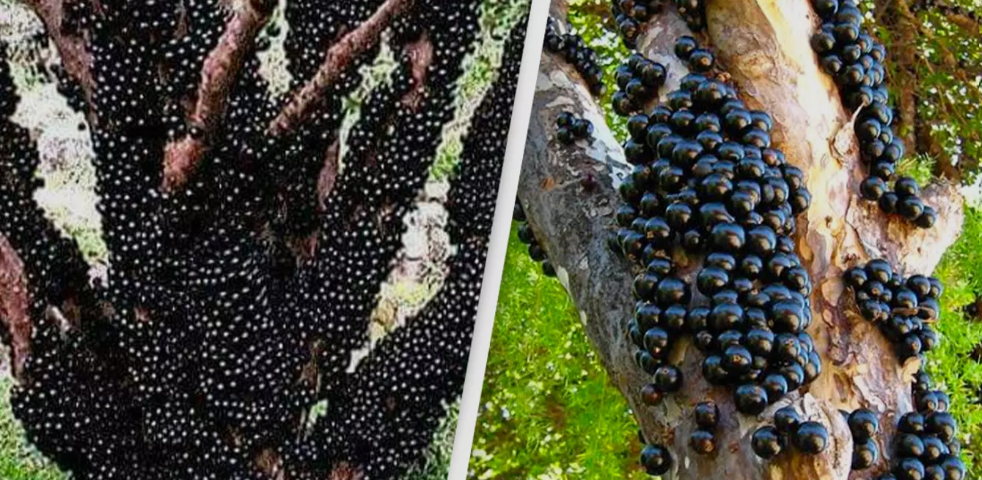
Fruits that grow on tree trunks develop directly from the main stem or large branches instead of from the outer twigs. This unusual growth habit is known as cauliflory, a natural adaptation seen mostly in tropical regions. It allows fruits to grow close to the strong central part of the tree where they can be better supported.
This growth pattern helps trees produce large or heavy fruits without breaking smaller branches. By growing on the trunk, the plant can safely hold the weight as the fruits mature. It also makes the fruits easier for certain animals to reach, which helps with seed dispersal.
Many plants that grow fruits on their trunks live in warm, humid forests. In these environments, pollinators such as insects and bats can easily access flowers that appear along the trunk. This increases the chances of successful pollination and fruit production.
Fruits growing on trunks often appear in dense clusters, creating a striking visual effect. Because they grow close to the tree’s core, they receive steady nutrients and water, which supports healthy development. This unique feature also allows farmers to harvest fruits more easily without climbing high branches.
Fruits That Grow on Tree Trunks
Jabuticaba
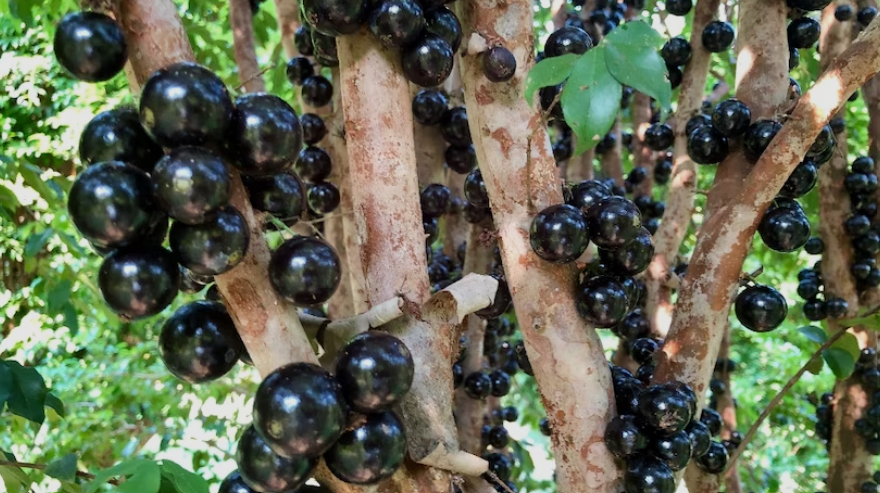
Jabuticaba is a Brazilian tree that produces grape-like purple-black fruits directly on its trunk and main branches in a stunning display. The white flowers emerge directly from the bark, followed by fruits that cluster so densely they can completely cover the trunk.
Jabuticaba fruits have sweet, translucent flesh similar to grapes and are eaten fresh, made into jellies and wines, and the sight of a trunk covered in purple fruits is one of nature’s most remarkable displays.
Cacao
Cacao trees produce colorful pods directly on their trunks and main branches, with these football-shaped fruits containing the beans used to make chocolate. The small flowers emerge directly from the bark, followed by pods that change from green to yellow, orange, or red as they mature.
Cacao’s trunk fruiting is an evolutionary adaptation allowing ground-dwelling animals to disperse seeds, and each pod contains 20-40 cocoa beans surrounded by sweet, white pulp.
Jackfruit
Jackfruit produces the world’s largest tree-borne fruit directly on massive trunks and main branches, with individual fruits weighing 10-80 pounds or more. These enormous, spiky green fruits emerge from the bark and can grow to three feet long, hanging impressively from the trunk.
Jackfruit contains sweet, fragrant flesh used both ripe as fruit and unripe as a meat substitute, and the trunk-bearing habit prevents branches from breaking under the massive fruit weight.
Durian
Durian, the notorious “king of fruits,” grows directly on tree trunks and lower branches, producing spiky, football-sized fruits famous for pungent aroma. These heavy fruits develop from flowers that emerge directly from the bark, and their trunk placement prevents branches from breaking under their 2-7 pound weight.
Durian’s custard-like flesh is prized in Southeast Asia despite its strong smell, and the trunk fruiting ensures the heavy, spiky fruits can develop safely without damaging the tree’s structure.
Papaya
Papaya trees produce their melon-like fruits in clusters directly on the main trunk, spiraling around the stem just below the leaf crown. These fast-growing trees develop fruits continuously along the trunk as they grow taller, with green fruits maturing to yellow or orange.
Papayas can weigh 1-10 pounds and their trunk placement makes harvesting straightforward, and the trees often fruit within the first year, producing abundantly on their single, unbranched trunks.
Breadfruit
Breadfruit grows directly on tree trunks and main branches, producing large, round, bumpy fruits that are staple starches in tropical regions. These basketball-sized fruits emerge from the bark and can weigh 2-10 pounds, developing in clusters along the trunk.
Breadfruit has starchy flesh that’s cooked like potatoes when immature or eaten sweet when ripe, and the trunk fruiting allows these substantial fruits to develop without stressing smaller branches.
Wampi
Wampi is a Southeast Asian fruit tree that produces clusters of small, grape-like fruits directly on its trunk and older branches. These golden-brown fruits grow in bunches that emerge from the bark, creating unusual displays of clustered fruits on the trunk.
Wampi has sweet-tart flavor with large seeds, and while less known globally, the trunk fruiting makes these fruits accessible and creates distinctive ornamental appeal in tropical gardens.
Cannonball Tree
Cannonball tree produces spectacular flowers and large, round fruits directly on rope-like structures emerging from the trunk. The enormous, fragrant flowers bloom directly from the bark on long stalks, followed by hard, spherical fruits resembling cannonballs.
These fruits can be 6-10 inches in diameter and while not commonly eaten, they contain edible pulp, and the dramatic trunk flowering and fruiting makes cannonball trees remarkable botanical specimens.
Carambola (Starfruit)
Carambola trees produce their distinctive star-shaped fruits on small branches that emerge directly from the trunk and main limbs. While not exclusively cauliflorous, starfruit often develops on trunk and branch clusters, making harvesting convenient.
The waxy, yellow fruits are sweet-tart with crisp texture, and the trunk and branch fruiting allows carambola to produce abundantly without stressing the tree’s structure with heavy fruit loads.
Miracle Fruit
Miracle fruit grows on small trees or shrubs that produce bright red berries directly on trunks and main stems. These small, olive-sized fruits contain glycoproteins that temporarily alter taste perception, making sour foods taste sweet.
Miracle fruit berries cluster on the trunk and older wood, and while the fruits are fascinating for their taste-modifying properties rather than nutrition, the trunk fruiting pattern makes them accessible and ornamental.
Jambolan (Java Plum)
Jambolan produces dark purple, oblong berries directly on its trunk and main branches in dense clusters during summer. These astringent fruits emerge from flowers that bloom directly on the bark, creating purple-stained trunks during fruiting season.
Jambolan fruits are eaten fresh despite their astringency, used in preserves, and valued in traditional medicine, and the trunk fruiting creates dramatic displays when the tree is laden with purple berries.
Salak (Snake Fruit)
Salak palms produce clusters of scaly, reddish-brown fruits at the base of the trunk in bunches that grow from ground level. These “snake fruits” have distinctive scale-like skin and grow in tight clusters emerging from the lower trunk.
Salak has sweet-tart, crunchy flesh with apple-like texture, and the low trunk fruiting makes harvest accessible though the plants are protected by sharp spines.
Cupuaçu
Cupuaçu is an Amazonian relative of cacao that produces large, football-shaped fruits directly on its trunk and lower branches. These melon-sized fruits have hard shells containing aromatic pulp with chocolate-pineapple flavor used in desserts and beverages.
Cupuaçu’s trunk fruiting is similar to cacao, and the fruits can weigh 2-4 pounds, with their trunk placement preventing branch damage from the substantial fruit weight.
Pond Apple
Pond apple trees produce round, yellowish fruits directly on trunks and main branches in tropical wetland environments. These custard apple relatives develop fruits that emerge from the bark and fall into water when ripe, allowing aquatic seed dispersal.
Pond apple fruits have sweet, custard-like flesh though they’re less commonly eaten than other annonas, and the trunk fruiting combined with wetland habitat creates unique ecological fruit dispersal strategies.
Genipap
Genipap trees produce large, brown fruits directly on trunks and main branches in tropical American regions. These baseball to softball-sized fruits emerge from bark-borne flowers and contain aromatic pulp used for beverages and traditional body paint.
Genipap fruits can weigh 1-2 pounds and their trunk placement allows the tree to support these substantial fruits, and the pulp oxidizes to dark blue-black, historically used for ceremonial body decoration.