Fruit that grows on the ground develops on low-growing plants that spread along the soil surface rather than on trees or tall shrubs. These plants often produce trailing stems or compact growth habits, allowing the fruit to rest directly on or very close to the ground as it ripens. This growth pattern is common in many warm-season crops.
Ground-growing fruits usually have protective features such as thick rinds, firm skins, or low, leafy coverage that shields them from sun exposure. The leaves often spread widely to protect the fruit from excessive heat and to reduce moisture loss. This natural covering helps prevent sunburn and supports healthy development.
These fruits typically require well-drained soil and plenty of sunlight to thrive. Because the fruit touches the soil, gardeners often use mulch or straw underneath to reduce rot, pests, and moisture-related problems. Good air circulation is also important to prevent fungal diseases.
Ground-growing fruit plants often spread outward, making them suitable for larger garden spaces or open fields. Their vines or runners can cover significant ground, helping to suppress weeds and retain soil moisture. Some varieties are fast-growing and produce abundant harvests within a single growing season.
Fruit that Grows On the Ground
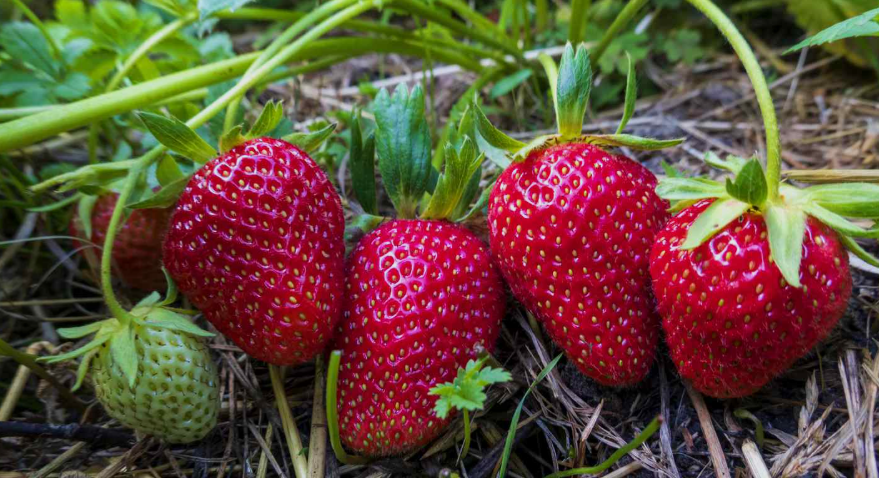
Strawberries
Strawberries grow on low-growing plants with fruits developing at or just above ground level on short stems from the crown. These perennial plants produce sweet, red berries that rest directly on the soil or mulch surface.
Strawberries are among the most popular ground-level fruits, developing from white flowers into juicy berries within weeks, and they spread through runners that create new plants, forming dense mats of fruit-bearing crowns close to the earth.
Peanuts
Peanuts are unique fruits that actually develop underground after the flower is pollinated and the fertilized ovary pushes itself into the soil. The plant produces yellow flowers above ground, but after pollination, the flower stalk elongates and pushes the developing pod into the earth where the peanuts mature.
Harvesting requires digging up the entire plant to reveal clusters of peanut pods clinging to the roots, making peanuts one of the few true underground fruits.
Watermelons
Watermelons grow on sprawling vines with the heavy fruits resting directly on the ground as they develop and ripen. These large, sweet melons form at ground level along the running vines and can weigh 10-50 pounds or more.
Watermelons require warm soil and develop their characteristic sweetness while lying on the earth, often requiring careful positioning or supports to prevent rot where the fruit contacts moist soil during the long growing season.
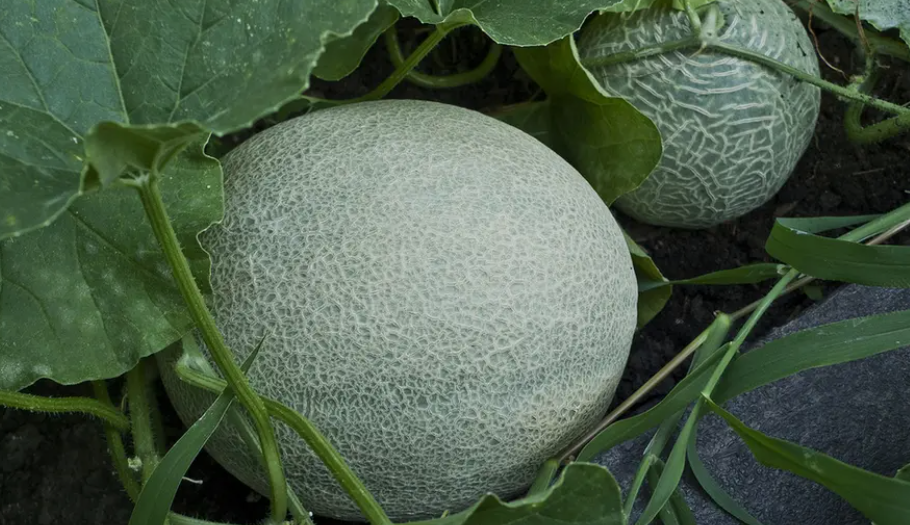
Cantaloupes
Cantaloupes grow on vining plants with the round, netted melons developing on the ground along trailing stems. These sweet, orange-fleshed melons form at ground level and ripen while resting on the soil surface.
Cantaloupes benefit from mulch or supports to keep fruits clean and prevent rot, and they’re ready for harvest when they easily slip from the vine, having developed their sweet flavor and distinctive aroma while growing close to the earth.
Honeydew Melons
Honeydew melons grow on ground-level vines with the smooth, pale green fruits developing directly on the soil surface. These sweet melons can weigh 4-8 pounds and rest on the ground throughout their development.
Honeydew requires warm soil and a long growing season, and the fruits develop their characteristic sweetness while lying on the earth, often benefiting from straw or cardboard underneath to prevent soil contact and potential rotting.
Pumpkins
Pumpkins grow on sprawling vines with fruits developing on the ground and often growing to enormous sizes while resting on the soil. These iconic fall fruits range from small pie pumpkins to giant varieties weighing hundreds of pounds.
Pumpkins develop their orange color and thick shells while sitting directly on the earth, and growers often rotate developing fruits to ensure even ripening and place boards underneath to prevent flat spots and rot.
Winter Squash
Winter squash varieties including butternut, acorn, and spaghetti squash grow on vining plants with fruits resting on the ground as they mature. These hard-shelled fruits develop at ground level along sprawling vines and can weigh from 1-15 pounds depending on variety.
Winter squash hardens its shell while sitting on the soil, and the fruits are harvested in fall after fully maturing on the ground throughout the summer growing season.
Cucumbers
Cucumbers grow on vining or bush plants with fruits developing at or near ground level unless trellised. These cylindrical green fruits hang from vines or rest on the ground, growing rapidly during warm weather. Ground-grown cucumbers often develop yellow spots where they contact soil, and many gardeners use mulch or trellises to keep fruits clean, though traditionally cucumbers sprawl along the ground producing abundant harvests.
Groundcherries
Groundcherries produce small, sweet fruits enclosed in papery husks that drop to the ground when ripe. These low-growing plants in the nightshade family develop fruits that fall from the plant and can be harvested from the soil surface.
The paper-wrapped fruits have a sweet, tropical flavor reminiscent of pineapple and tomato, and they literally grow to the ground, with ripe fruits naturally dropping and waiting to be collected from beneath the sprawling plants.
Zucchini and Summer Squash
Zucchini and summer squash grow on bush or compact vining plants with fruits developing at ground level near the plant’s base. These fast-growing fruits emerge from large yellow flowers and rest on or near the soil as they expand rapidly.
Summer squash benefits from mulch underneath to keep fruits clean and prevent rot, and the fruits are harvested while immature and tender, often growing from flower to harvest size in just days while developing close to the ground.
Cranberries
Cranberries grow on low, creeping vines in bog conditions with the small red berries developing close to the ground or floating on water during harvest. These evergreen plants produce berries that form at ground level on prostrate vines in acidic, waterlogged soils.
Commercial cranberry harvest involves flooding bogs so berries float to the surface, but the fruits actually develop on low vines essentially at ground level in their native wetland habitats.
Lingonberries
Lingonberries grow on very low, spreading evergreen shrubs just inches tall with small red berries developing close to the ground. These cold-hardy plants produce tart berries on plants that rarely exceed 6-12 inches in height.
Lingonberries are essentially ground-level fruits that grow on prostrate plants, and harvesting requires bending down to pick the small berries that develop on these diminutive shrubs hugging the earth.
Armenian Cucumber
Armenian cucumber, actually a melon despite its name, grows on sprawling vines with long, ridged fruits resting on the ground. These pale green, curved fruits can grow 12-18 inches long while lying on the soil surface along trailing vines. Armenian cucumbers develop their mild, sweet flavor while growing at ground level, and like other melons, they benefit from mulch or supports to keep the fruits clean as they expand during the warm growing season.
Bitter Melon
Bitter melon grows on vining plants, and while it can climb, the warty, oblong fruits often develop close to or resting on the ground when not trellised. These distinctive Asian vegetables/fruits have bumpy skin and bitter flavor valued in traditional cuisines.
Bitter melons grow rapidly during warm weather and can trail along the ground, developing their characteristic warty texture and medicinal properties while resting on the soil surface.
Chayote
Chayote grows on vigorous perennial vines with pear-shaped fruits developing along sprawling stems that can trail on the ground. These mild-flavored squash relatives produce prolifically on extensive vines that can cover large ground areas.
Chayote fruits develop at ground level on sprawling vines in frost-free climates, and the entire plant including roots, shoots, and fruits is edible, with the pear-shaped fruits developing their mild flavor while growing close to the earth on the vine’s extensive ground coverage.