Frogs that hatch and carry their babies on their backs show a remarkable level of parental care that is rare among amphibians. Instead of leaving eggs behind to develop on their own, these frogs stay closely involved, ensuring their young are protected during their most vulnerable stages. This behavior often begins right after the eggs hatch, when the parent takes on the role of transporter and guardian.
In many species, the eggs are laid in a safe, moist spot rather than directly in water. Once the eggs hatch into tiny tadpoles, the parent—often the male—allows them to climb onto its back. The tadpoles cling to the skin, sometimes with the help of mucus that helps them stay attached. From there, the parent carries them to suitable water sources where they can continue developing.
Some frogs go even further by transporting each tadpole individually to small pools of water, such as those found in plant leaves or tree holes. This reduces competition and lowers the risk of predators wiping out the entire brood at once. Although it requires multiple trips and a lot of energy, it greatly improves the chances that at least some offspring will survive.
In other cases, the young remain on the parent’s back for a longer time, continuing their development while being carried around. The parent’s body provides moisture and some protection from harsh conditions like heat or dryness. This close contact can also reduce the likelihood of the young being eaten or washed away.
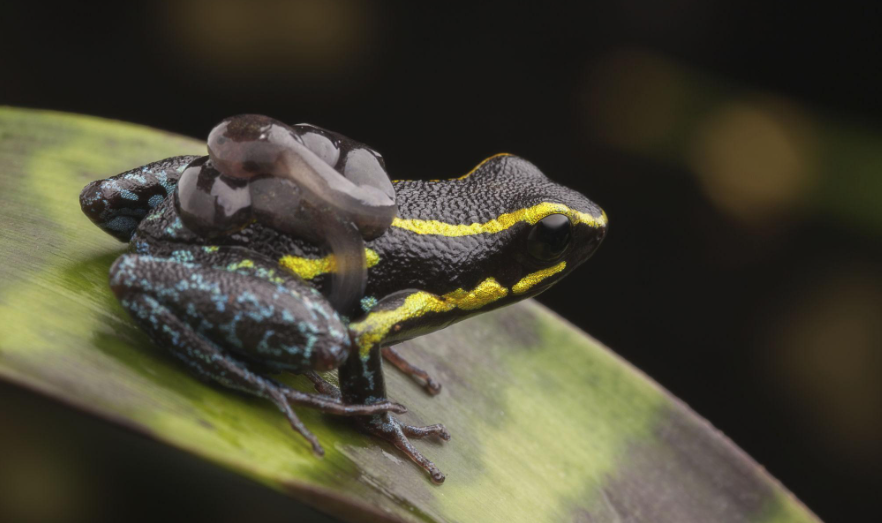
Frog that Hatches Babies on Back
Surinam Toad
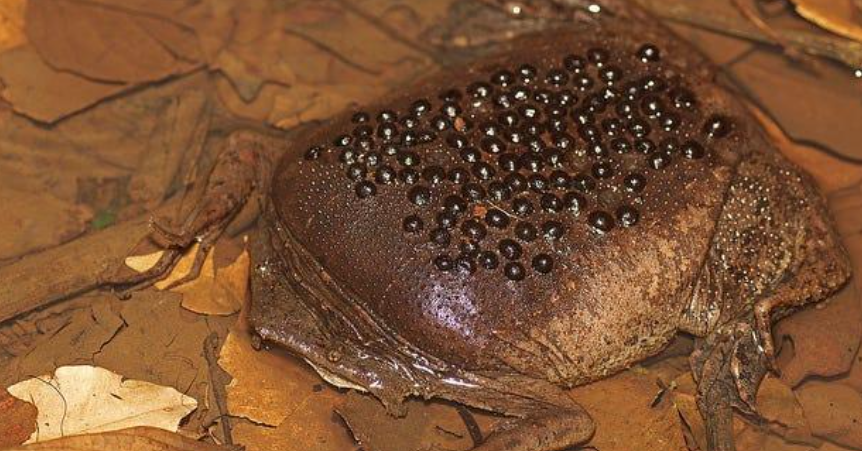
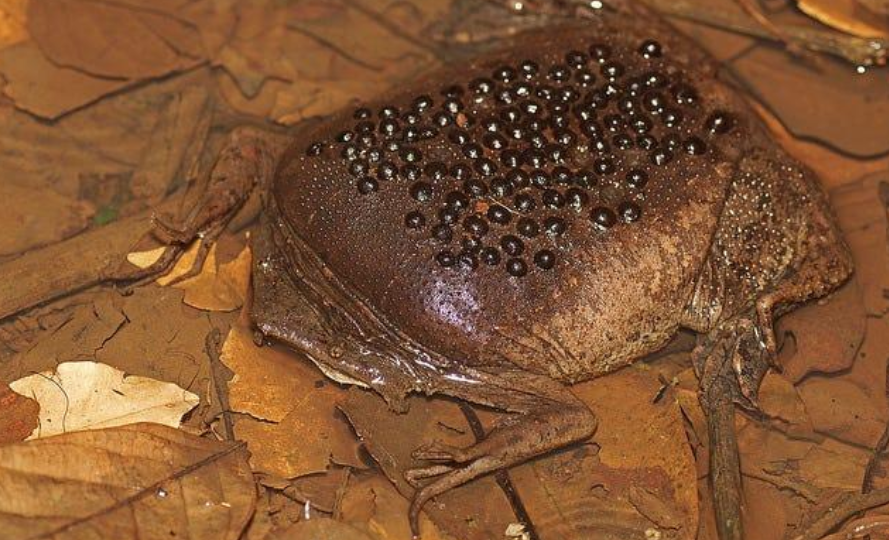
The Surinam toad is one of the strangest frogs when it comes to parenting. The female carries fertilized eggs embedded directly into the skin on her back, where they sink into small pockets. Over time, the eggs develop safely inside these chambers until fully formed froglets emerge.
This unusual method protects them from predators and environmental threats. The mother’s back looks almost honeycombed during this period. These frogs are native to the slow-moving waters of northern South America, especially in countries like Brazil, Suriname, and Guyana.
Pipa Snethlageae
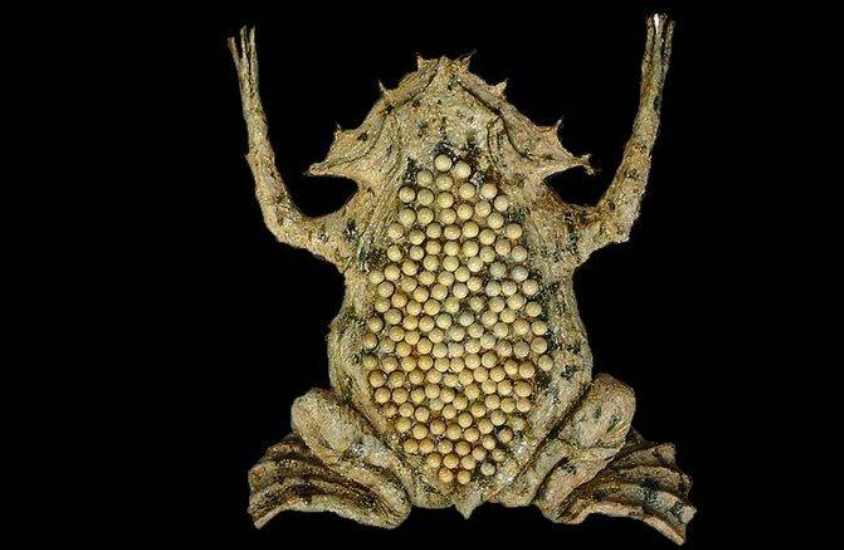
Closely related to the Surinam toad, this species also carries its young embedded in the skin of its back. The eggs are fertilized externally and then pressed into the female’s back by the male. As the embryos grow, they remain protected under a layer of skin until they are ready to emerge.
This method reduces the risk of predation compared to free-floating eggs. The species lives in the Amazon Basin, mainly in Brazil and surrounding regions. It prefers quiet, shallow freshwater habitats.
Midwife Toad (Male Carrier)
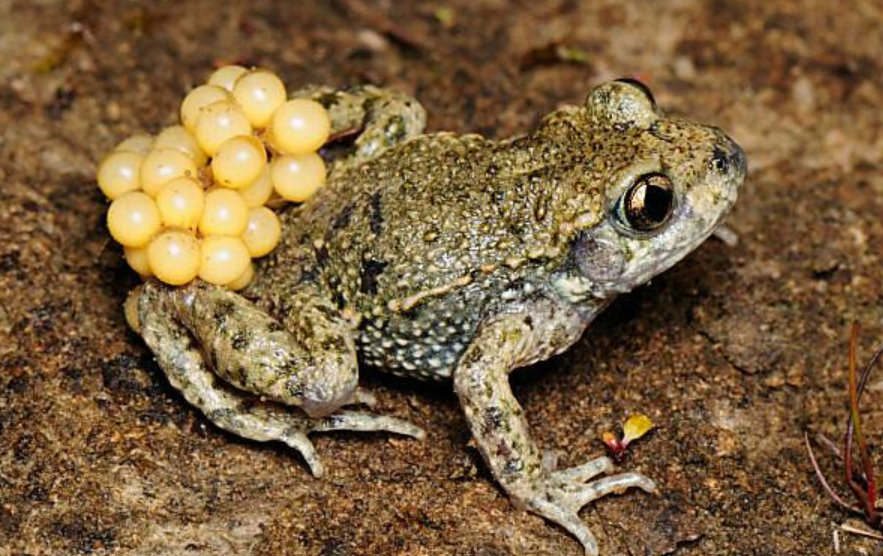
Unlike most frogs, the male midwife toad takes on the role of carrying eggs. He wraps long strands of fertilized eggs around his hind legs and back area, keeping them moist until they hatch. While the eggs are not embedded in skin, they are still visibly carried on his body.
This behavior ensures the eggs are protected from drying out and predators. When the eggs are ready, he releases them into water to hatch. These toads are found across Western and Central Europe, especially in countries like Spain, France, and Germany.
Darwin’s Frog
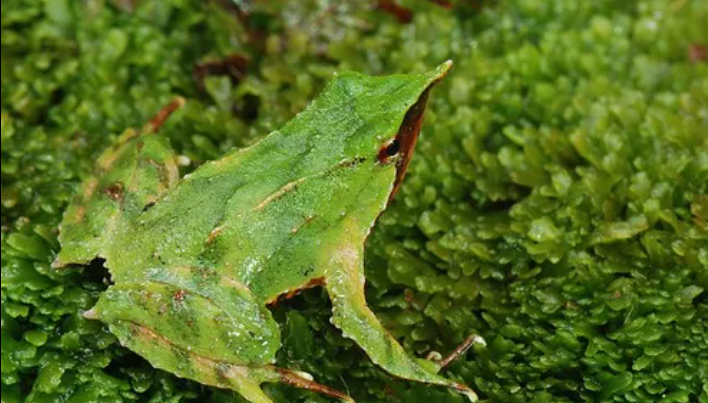
Darwin’s frog uses a unique but related method of carrying its young. Instead of the back, the male keeps developing tadpoles inside his vocal sac. However, during early development, the eggs may briefly be associated with the parent’s body before transfer.
This frog shows how diverse parental care can be among amphibians. The young remain safe inside the male until they are ready to leave as tiny froglets. This species is native to the temperate forests of Chile and Argentina in South America.
Common Surinam-like Toad (Pipa Parva)
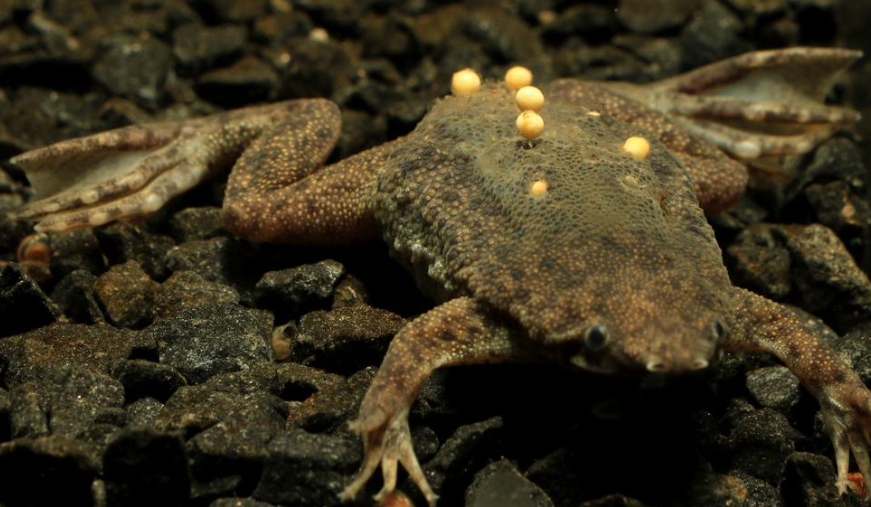
This smaller relative of the Surinam toad also carries its young in the skin of its back. After fertilization, the eggs are pressed into the female’s dorsal surface where they develop in protective pockets. The mother’s body provides moisture and safety throughout development.
Eventually, tiny froglets emerge directly from her back. This strategy allows them to skip vulnerable free-swimming stages. The species is found in northern South America, including Venezuela and Colombia.
Aparasphenodon Tree Frog
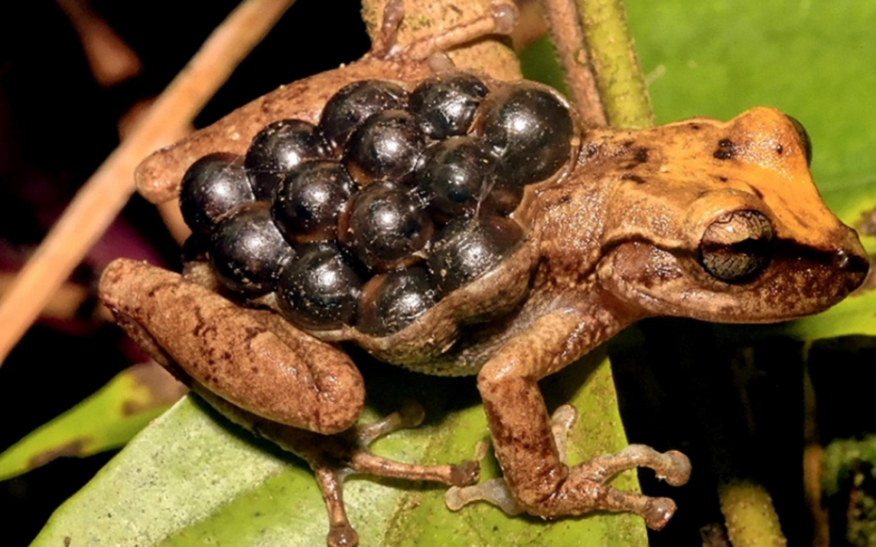
Some species in this group show behaviors where eggs are carried or closely guarded on the back. While not embedded like Pipa species, the female may transport or remain closely associated with eggs positioned on her body. This helps shield them from predators and drying conditions.
The frogs are known for their tough, helmet-like heads used for defense. Their parental care strategies vary slightly by species. They are native to Brazil and parts of eastern South America, often living in forested habitats.
Marsupial Frog (Gastrotheca)
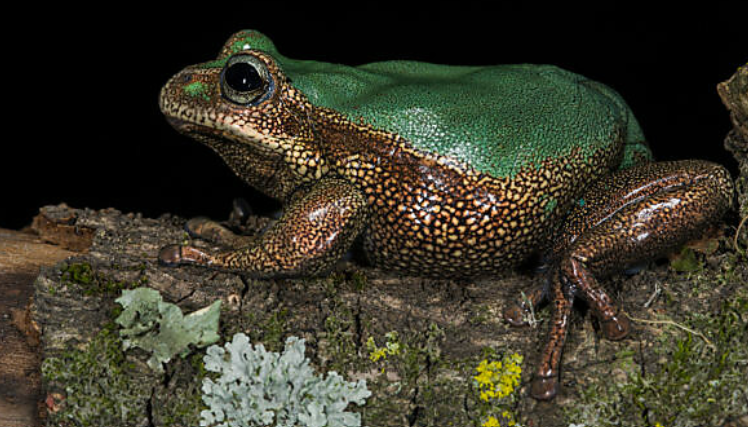
Marsupial frogs are famous for their pouch-like structure on the female’s back. After fertilization, eggs are placed inside this pouch, where they develop safely. The pouch acts much like a kangaroo’s, offering protection and moisture.
In some species, tadpoles develop fully into froglets inside the pouch before emerging. This reduces the need for standing water during early life stages. These frogs are native to Central and South America, particularly in mountainous regions like the Andes.
Hemiphractus Frog
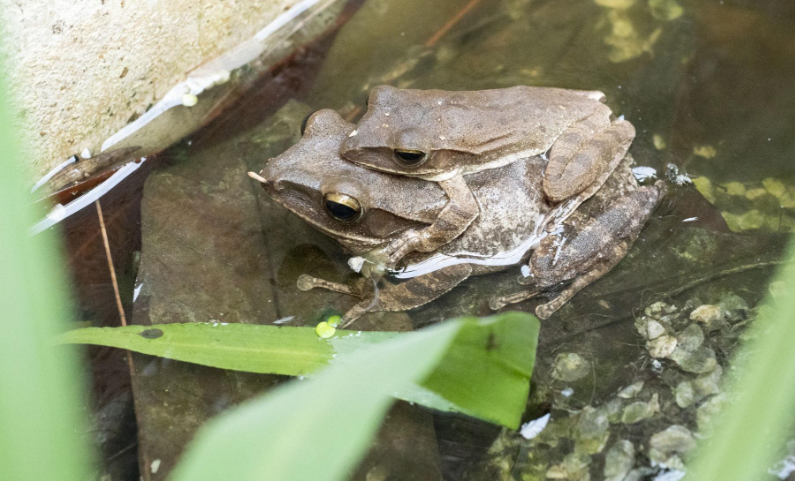
Hemiphractus frogs carry eggs attached openly on their backs rather than enclosed in a pouch. The eggs stick to the skin and are exposed but still protected by the parent’s presence. The female often remains still to avoid dislodging them. This method provides a balance between protection and simplicity.
The developing young eventually hatch and drop off as tadpoles or froglets. These frogs are found in tropical forests of northern South America, including Colombia and Ecuador.
Cryptobatrachus Frog
This lesser-known frog also carries eggs on its back in a similar exposed fashion. The eggs adhere to the skin and develop externally while the parent provides protection. The frog may remain hidden in moist environments to keep the eggs from drying out.
This strategy avoids the need for open water during early development. It is an example of how parental care evolves in different environments. These frogs are native to Colombia, especially in humid forest regions.
Flectonotus (Caribbean Marsupial Frog)
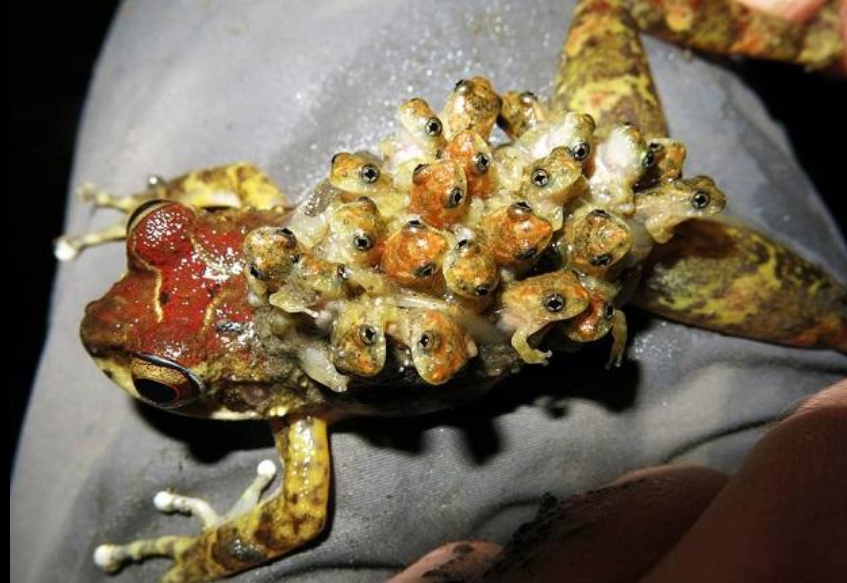
Flectonotus species are small frogs that carry eggs in a dorsal pouch on their backs. The female stores fertilized eggs in this pouch, where they develop with protection from predators and dehydration. The pouch may remain open or partially sealed depending on the species.
The young are released once they are sufficiently developed. This reproductive method is especially useful in environments where water bodies are scarce. These frogs are found in the Caribbean and parts of northern South America, including Venezuela and nearby islands.