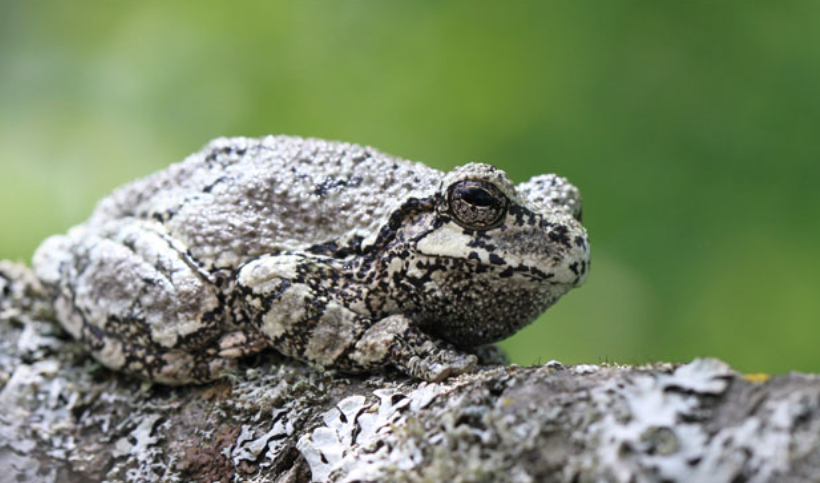
Frogs that camouflage are masters of blending into their surroundings, using color, texture, and shape to avoid being seen. Instead of relying on speed or toxins, these frogs depend on staying hidden from predators. Their ability to disappear into leaves, bark, or mud makes them some of the most difficult animals to spot in the wild.
Many of these frogs have skin patterns that closely match their environment. Some resemble dead leaves, complete with vein-like markings, while others look like patches of moss or lichen. This natural disguise allows them to remain motionless and nearly invisible, even when predators are nearby.
Color-changing is another strategy used by certain species. These frogs can adjust their skin tone slightly to match changes in light, temperature, or background. While the change is not always dramatic, it can be enough to improve their camouflage and help them stay concealed.
Texture also plays an important role in camouflage. Some frogs have rough, bumpy skin that mimics tree bark or mossy surfaces. Others have flattened bodies that help them press closely against leaves or rocks, reducing shadows that might give away their position.
Camouflage is not only useful for avoiding predators but also for hunting. Many camouflaged frogs are ambush predators, waiting patiently for insects or small animals to come close. Their hidden appearance allows them to strike quickly without being detected.
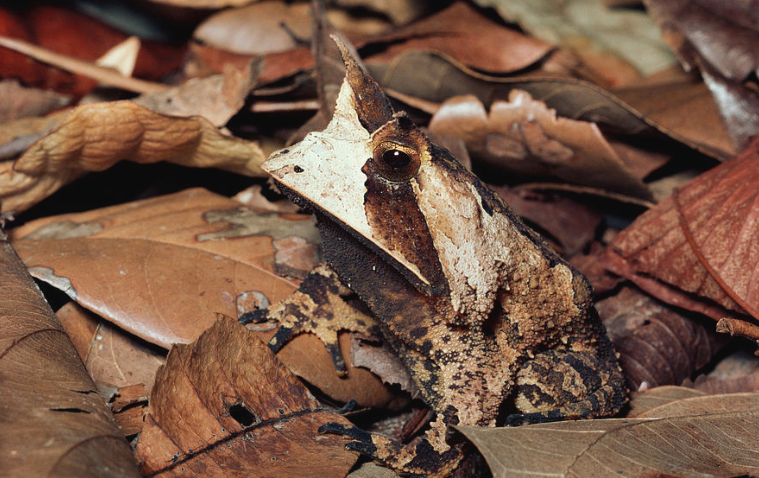
Frogs That Camouflage
Malaysian Horned Frog (Megophrys nasuta)
The undisputed master of leaf litter camouflage, this Bornean forest frog has pointed projections above its eyes and on its snout that perfectly mimic the tips of dead leaves. Its mottled brown body replicates the veining, discoloration, and irregular edges of decaying foliage so precisely that field researchers have stepped directly over specimens without noticing them.
Vietnamese Mossy Frog (Theloderma corticale)
Covered in irregular green and black tubercles that replicate dripping moss with uncanny accuracy, this northern Vietnamese frog is essentially invisible on any moss-covered surface. When threatened it rolls into a ball and plays dead, becoming indistinguishable from a clump of wet forest debris — a camouflage strategy so effective it works even under close human inspection.
Amazon Leaf Frog (Cruziohyla craspedopus)
This Amazonian tree frog is edged with irregular skin flaps that break up its outline against leaves and bark, eliminating the sharp silhouette that predators learn to recognize. Its upper surface mimics the texture, color, and venation of dried leaves so faithfully that it can rest in full daylight on forest vegetation and remain completely undetected.
Solomon Islands Leaf Frog (Ceratobatrachus guentheri)
Built for absolute stillness, this remarkable frog from the Solomon Islands has a flattened, leaf-shaped body complete with a pointed snout, ridged back, and irregular skin edges that replicate a dead leaf in extraordinary detail. It walks slowly and deliberately when it must move, but its primary survival strategy is simply to sit motionless on the forest floor and be a leaf.
Gray Tree Frog (Hyla versicolor)
One of North America’s most accomplished camouflage artists, the Gray Tree Frog can change its skin color from gray to green to brown within minutes, adjusting to match bark, lichen, or foliage depending on where it rests. Pressed flat against tree bark with its limbs tucked tightly against its body, it becomes virtually a part of the surface itself.
Mossy Frog of Borneo (Theloderma licin)
Sharing the remarkable camouflage strategy of its Vietnamese relative, this Bornean species is covered in green and brown tubercles that give it the precise appearance of moss-encrusted bark. It inhabits humid rainforest and shelters in tree cavities and rock crevices near streams, where its disguise renders it effectively invisible to both predators and the human researchers trying to study it.
Brazilian Horned Frog (Ceratophrys cornuta)
The Amazon’s Pac-Man Frog buries itself to its chin in leaf litter, leaving only its enormous upward-facing mouth visible — the rest of its mottled brown, tan, and green body blending seamlessly with the forest floor. Its stillness is absolute and its camouflage is so effective that its most common predators stumble upon it accidentally rather than by detection.
Bornean Flat-Headed Frog (Barbourula kalimantanensis)
This remarkably flattened frog from Borneo’s forest streams presses itself against moss-covered boulders in fast-moving water, its dark, mottled coloration matching the texture of algae-covered rock with startling precision. Its extreme dorsoventral flattening means it casts virtually no shadow, removing one of the key visual cues predators use to detect prey on a surface.
Common Baron Frog (Huia cavitympanum)
Found in the mountain streams of Borneo, this frog displays a remarkably detailed replication of wet, mossy rock surfaces through its mottled green-brown coloration and slightly granular skin texture. It rests motionless on streamside boulders during daylight hours, where its coloration renders it nearly indistinguishable from the surrounding substrate even at close range.
Tungara Frog (Engystomops pustulosus)
This small Central American frog relies on cryptic brown coloration and a warty skin texture to disappear against the dry leaf litter and soil of the forest floor. Its mottled patterning disrupts its outline so effectively that it is far easier to locate by its distinctive whine-and-chuck mating call than by any visual search of the habitat it inhabits.
European Common Frog (Rana temporaria)
Widespread across Europe, the Common Frog displays a variable coloration ranging from yellow-brown to olive to reddish-brown, always closely matching the particular muddy bank, leaf litter, or damp grassland it inhabits. Its skin pattern includes darker blotches and spots that further disrupt its outline, making it one of the most effectively camouflaged amphibians in the temperate world.
Indian Bullfrog (Hoplobatrachus tigerinus)
Outside of breeding season, when males turn brilliant yellow, the Indian Bullfrog displays a muted olive-green and brown coloration with darker patches that blends with remarkable effectiveness into the muddy, vegetation-choked margins of ponds, rice paddies, and slow rivers across South Asia. Motionless at the water’s edge, it is far more often heard than seen.
Wood Frog (Lithobates sylvaticus)
The Wood Frog of North America is a masterclass in forest floor camouflage — its warm brown, tan, or reddish coloration with a distinctive dark mask through the eye mirrors the exact tones of the dead leaves it inhabits. When it freezes motionless among autumn leaf litter, which it does with great commitment, it becomes so perfectly integrated into the background that it disappears entirely.