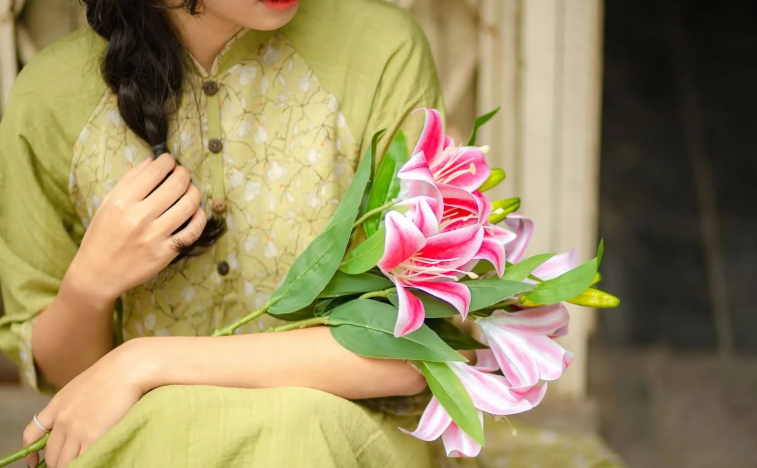
Hope is the most quietly radical of all human emotions — the insistence, against all evidence, that tomorrow will be better than today. And new beginnings carry their own particular beauty — the clean page, the first breath, the door opening onto an unknown landscape. These 24 flowers have been chosen by cultures across the world to carry that most essential and most human of messages: that something wonderful is about to begin.
Flowers That Symbolize New Beginnings
1. Snowdrop (Galanthus nivalis)
The Snowdrop is the purest symbol of hope in the entire plant kingdom — a tiny white flower that pushes through frozen ground while winter still holds dominion over the world. Its appearance is not a celebration of spring’s arrival but something braver — the announcement, in the heart of cold and darkness, that spring is coming. It is hope before there is any reasonable evidence for hope.
2. Daffodil (Narcissus — yellow varieties)
Bright, bold, and utterly fearless in early spring winds, the Daffodil is the flower of new beginnings in their most joyful, confident form. Its vivid yellow trumpets blowing into the cold air carry the unmistakable energy of a fresh start — optimistic, upright, and facing forward. It is the official flower of cancer hope organizations worldwide for exactly this reason.
3. Cherry Blossom (Prunus serrulata)
The Cherry Blossom represents new beginnings in their most breathtaking and transient form — bare winter branches exploding into clouds of pink and white almost overnight, transforming the entire landscape in days. In Japanese tradition it signals the new year of nature’s cycle, a reminder that the most beautiful beginnings are often brief and should be fully present for.
4. Crocus (Crocus vernus)
Few sights in the natural world are as genuinely moving as a Crocus pushing through late winter snow — its purple, gold, or white cup a declaration of faith in the returning warmth. It is the bravest of the early spring bulbs, flowering before conditions are remotely comfortable, making it the perfect emblem of hope that acts before certainty arrives.
5. Lotus (Nelumbo nucifera)
The Lotus rises every morning from dark, muddy water to open an immaculate bloom — a daily new beginning performed with effortless grace and perfect consistency. In Buddhist tradition it represents the soul’s capacity to begin again each day regardless of what darkness surrounded it the night before, making it the supreme symbol of perpetual spiritual renewal.
6. Iris (Iris germanica)
Named for the Greek goddess who carried messages of hope across the rainbow bridge between heaven and earth, the Iris has symbolized new beginnings and the arrival of better times since antiquity. Its upward-reaching petals in every color of the rainbow represent the message that difficult periods are ending and that the passage to something better has opened.
7. Sunflower (Helianthus annuus)
The Sunflower’s habit of turning its face to follow the sun across the sky — always seeking the light, always oriented toward warmth and brightness — makes it one of the most active and intentional symbols of hope in the plant world. It does not wait passively for good things; it turns toward them with every cell of its being, making it the flower of hope as a daily practice.
8. Bluebell (Hyacinthoides non-scripta)
The arrival of the Bluebell — carpeting ancient woodland floors in hazy violet-blue each April and May — is one of the most powerfully felt seasonal transitions in the British natural calendar. Its blue mist beneath newly leafing trees represents the new beginning of spring in its fullest, most established form — not hope’s first whisper but hope’s confident arrival in abundance.
9. Tulip (Tulipa — spring varieties)
The Tulip’s emergence from bare brown earth in early spring — a perfect, geometric cup of pure color rising on a clean green stem — is one of the most eloquent botanical expressions of new beginning. In Persian and Ottoman tradition the Tulip symbolized paradise on earth and the perfect happiness of a fresh start, and the name itself may derive from the Persian word for turban — a new crown placed upon the returning world.
10. Plum Blossom (Prunus mume)
Blooming in the deepest cold of winter — sometimes against a backdrop of snow — the Plum Blossom is China’s supreme symbol of hope and the courage to begin again in the most unpromising conditions. It represents the spirit that does not wait for circumstances to improve before offering its beauty, but blooms precisely because the conditions are difficult, as an act of defiant hopefulness.
11. Primrose (Primula vulgaris)
Pale yellow, soft, and tentative as new beginnings often are, the Primrose is the quiet herald of spring — not the loud announcement of the Daffodil but the gentle whisper that change is already underway beneath the surface. In Celtic tradition it opened the door to the fairy realm of perpetual spring, symbolizing the thin, hopeful place where winter ends and new warmth begins.
12. Lily of the Valley (Convallaria majalis)
In French tradition Lily of the Valley — le muguet — is the flower of hope given on the first day of May to usher in a new season of happiness. Its tiny, bell-shaped white flowers nodding on arching stems represent the tender, careful beginnings of new things — too delicate to be showy, too fragrant to be ignored, carrying their hope in the most understated and genuine way.
13. Bird of Paradise (Strelitzia reginae)
The Bird of Paradise’s extraordinary flower — its vivid orange and electric blue petals erupting from a pointed bract like a tropical bird taking flight — represents the kind of new beginning that arrives with spectacular, unexpected beauty. It symbolizes joyful anticipation and the freedom of a horizon that has suddenly, dramatically opened into something magnificent.
14. Hyacinth (Hyacinthus orientalis)
In Persian tradition the Hyacinth is one of the seven sacred items placed on the Haft-Seen table at Nowruz — the Persian New Year — as a symbol of spring’s return and life’s renewal. Its dense spikes of intensely fragrant flowers represent the abundance of new beginnings — the generous, overflowing quality of a fresh start that fills the air with promise.
15. Forget-Me-Not (Myosotis spp.)
The Forget-Me-Not carries a specific form of hope — the hope of continuity, of carrying something precious forward into a new chapter without losing it. Its tiny blue flowers represent the new beginning that honors what came before — the fresh start that does not erase the past but takes its most essential treasures forward into what comes next.
16. Anemone (Anemone coronaria)
In Greek mythology the Anemone sprang from the tears of Aphrodite and the blood of Adonis — from the most profound grief came a flower of extraordinary beauty and the promise that love and life would return. Its vivid, poppy-like flowers in red, purple, and white represent new beginnings born specifically from difficulty — the hope that grows most powerfully from the ground of loss.
17. Magnolia (Magnolia grandiflora)
One of the most ancient flowering plants on Earth, the Magnolia opens its enormous, waxy white flowers on completely bare branches in earliest spring — before a single leaf has emerged — as if saying that beauty and new life need not wait for ideal conditions before declaring themselves. Its ancient lineage makes every flowering a living connection to life’s most primal capacity for renewal.
18. Sweet Pea (Lathyrus odoratus)
The Sweet Pea carries the symbolism of departure and new beginnings — it was traditionally given as a farewell flower in Victorian England, wishing someone well as they embarked on a new phase of life. Its delicate, ruffled flowers in soft sunset colors and its sweet, distinctive fragrance represent the tender hopefulness of setting out toward something unknown with a light heart.
19. Jasmine (Jasminum officinale)
In many Asian cultures Jasmine represents the hopeful optimism of new love and new beginnings — its white, star-shaped flowers opening at night and releasing their extraordinary fragrance into the darkness are a perfect metaphor for hope that shines most clearly against a background of uncertainty. In Hawaiian tradition Jasmine garlands mark every significant new beginning from birth to graduation.
20. Cosmos (Cosmos bipinnatus)
The Cosmos flowers with an effortless, airy abundance that makes it the botanical emblem of a new beginning approached with lightness rather than effort — the fresh start that comes when you stop forcing things and allow life to arrange itself with natural grace. Its name means order and harmony in Greek, representing the hope that new beginnings will bring clarity and rightness after a period of confusion.
21. Lilac (Syringa vulgaris)
The Lilac’s sudden, overwhelming arrival each spring — its purple and white plumes filling the air with fragrance that seems to announce the new season more loudly than any other flower — has made it a symbol of the first hopeful emotions after a long winter of the spirit. In the language of flowers it represents the first tender feelings of renewed joy, the tentative hopefulness that arrives before full confidence is restored.
22. Peach Blossom (Prunus persica)
In Chinese tradition the Peach Blossom is one of the most auspicious symbols of new beginnings, longevity, and the arrival of good fortune — its soft pink flowers covering bare branches in earliest spring representing the tender, delicate quality of hopeful new starts. Peach trees in Chinese mythology bore the fruit of immortality, and their blossoms carry the optimistic energy of a beginning that holds the seed of something enduring.
23. Freesia (Freesia spp.)
The Freesia’s delicate, arching stems of small, brilliantly colored and intensely fragrant flowers symbolize the innocence of new beginnings — the clean, fresh quality of a start that has not yet been complicated by experience. Its sweet, uncomplicated fragrance carries the particular hopefulness of something that has not yet been disappointed, full of the pure potential that every genuine new beginning contains.
24. Morning Glory (Ipomoea tricolor)
The Morning Glory opens a fresh, perfect flower every single morning — each bloom existing for only one day before closing forever and being replaced the next dawn by an entirely new creation. This daily ritual of beginning makes it the most literally accurate symbol of new beginnings in the plant world — the living reminder that every morning is a completely fresh start, carrying no obligation to yesterday’s closed flower, only the bright, open promise of today.