Flowers that change color throughout the seasons are fascinating plants that add dynamic beauty to gardens. Unlike flowers that keep a single shade, these blooms shift in color as they age, respond to environmental conditions, or move through different stages of growth. This natural transformation makes them especially appealing, as the same plant can look different over time.
One of the main reasons flowers change color is due to changes in soil chemistry, especially pH levels. Some plants can absorb different minerals depending on the soil, which directly affects their pigment. Others change color as their blooms mature, starting with one shade and gradually fading or deepening into another.
Temperature and sunlight also play a role in these changes. Cooler weather can intensify certain colors, while strong sunlight may cause flowers to fade or develop lighter tones. Seasonal shifts in climate can therefore influence how vibrant or subtle the colors appear at different times of the year.
Some flowers change color to attract pollinators more effectively. A bloom may start bright to signal that it has fresh nectar, then shift to a duller color once pollination has occurred. This helps guide insects like bees to the flowers that are most rewarding, improving the plant’s chances of reproduction.
Gardeners often enjoy these flowers because they bring variety without needing to plant multiple species. A single plant can provide a range of colors across weeks or months, creating a constantly changing display. This makes them a popular choice for decorative gardens and landscaping.
Flowers That Change Color
Hydrangea (Hydrangea macrophylla)
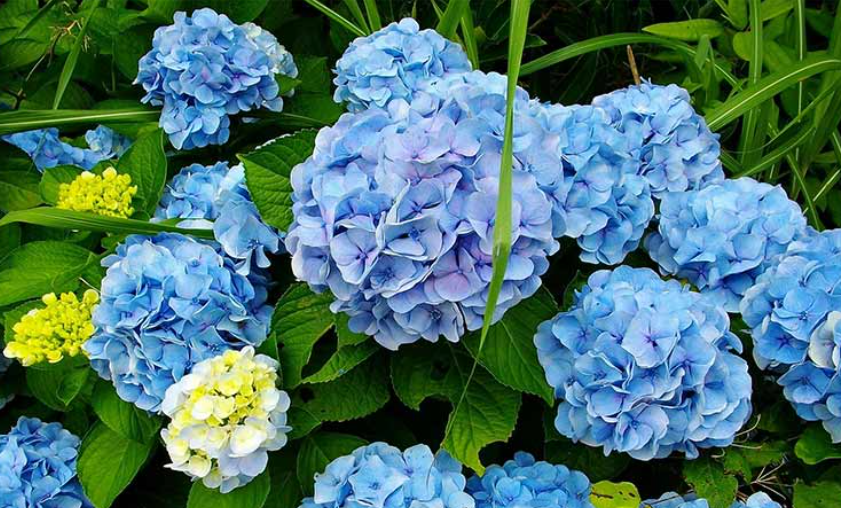
The most famous color-changing flower in the garden world, the Bigleaf Hydrangea shifts its bloom color from vivid blue to rich pink — or anywhere in between — depending on the pH of the soil it grows in.
Acidic soils produce blue flowers by making aluminum ions available to the plant, while alkaline soils yield pink. Beyond soil chemistry, the blooms themselves age through the season from their initial vivid color through progressively muted antique tones of green, burgundy, and dusty rose as autumn arrives.
Lantana (Lantana camara)
Lantana is a master of color change at the individual flower head level — each rounded cluster contains florets at different stages of development, with newly opened inner flowers displaying yellow or white and older outer flowers aging through orange, pink, and deep red simultaneously.
The result is a single flower head displaying three or four distinct colors at once, and as the season progresses the dominant color of the entire plant shifts as proportions of young and old florets change. It is one of the most dynamically multicolored plants in the garden.
Brunfelsia (Brunfelsia pauciflora)
Commonly called Yesterday, Today and Tomorrow — a name that perfectly describes its extraordinary color progression — this tropical shrub opens its flowers a deep violet-purple, fades them to lavender the following day, and by the third day has bleached them to pure white before they fall.
A single plant in full bloom simultaneously displays all three colors, creating a striking tricolor effect that changes daily as new flowers open and old ones fade. It is one of the most dramatic and reliably color-changing flowering shrubs in cultivation.
Lungwort (Pulmonaria officinalis)
One of the earliest spring flowers and one of the most reliably bicolored, Lungwort opens its small tubular flowers in pink and ages them to blue-purple within days — a color shift caused by changes in the acidity of the flower’s cell sap as it matures.
A plant in full spring bloom simultaneously carries pink buds and blue open flowers, creating a naturally two-toned display. The color shift is driven by anthocyanin chemistry and is one of the most clearly visible examples of flower aging in the temperate garden.
Hellebore (Helleborus spp.)
Hellebores are long-lasting winter and spring flowers that undergo a remarkable color transformation as their blooms age through the months. Flowers that open in deep burgundy, rich plum, or soft white gradually shift toward green as the petals — which are technically sepals — age, thicken, and take on an increasingly verdant tone as they transition to seed-bearing structures.
By late spring many hellebore blooms have turned almost entirely green, having spent months slowly shifting from their original rich winter colors through a subtle seasonal palette.
Tweedia (Oxypetalum caeruleum)
The Tweedia is one of the few flowers in the world that opens in true sky blue — a color rare in the flower kingdom — before aging through lilac and soft lavender to pink as the individual blooms mature.
A plant in full flower carries blooms at every stage of this progression simultaneously, displaying blue, violet, and pink florets on the same stem. The color change is caused by progressive alterations in the pH of the flower’s cell vacuoles as anthocyanins are chemically modified during the bloom’s aging process.
Morning Glory (Ipomoea tricolor)
The classic ‘Heavenly Blue’ Morning Glory opens its trumpets in a vivid, luminous sky blue in the cool hours of the morning and shifts through lavender toward reddish-purple as temperatures rise through the day — a color change driven by temperature-induced shifts in the acidity of the flower’s pigments.
Across the season the flowers also respond to the gradually shifting light and temperature conditions of late summer and autumn, with blooms in cooler weather showing more intense and stable blue than those produced in the heat of midsummer.
Echinacea (Echinacea purpurea)
The Purple Coneflower undergoes a seasonal color transformation that is as much about the changing proportion of its parts as about pigment shifts. In early summer freshly opened flowers display vivid magenta-pink petals around an orange-bronze central cone.
As summer progresses the petals fade to a softer pink and the central cone darkens to deep brown-bronze, and by autumn the petals have often dropped entirely, leaving the dramatic spiky seed cone — now almost black — standing through winter as a structural garden feature beloved by goldfinches.
Viola (Viola spp.)
Many Viola and Pansy varieties display marked color shifts in response to temperature — producing their most vivid, saturated colors in the cool conditions of spring and autumn, while the same plants in summer heat produce blooms that are paler, washed-out, and less distinctly patterned.
Some varieties shift dramatically from deep purple in cool weather to blue-violet in mild conditions, and the faces — the darker central markings — can fade and blur in summer heat before reappearing in autumn coolness. Temperature-sensitive anthocyanin production drives these seasonal shifts.
Wisteria (Wisteria spp.)
Wisteria’s color change is a subtle but striking seasonal progression — the long, pendulous racemes open in deep violet-blue or rich lilac at their tips first, with the rest of the raceme following progressively.
As the season advances and individual florets age, the vivid opening color fades through lavender to a soft, bleached mauve-white before the flowers drop, and subsequent flushes of bloom on repeat-flowering varieties are often paler than the initial spring display. In full spring flush the racemes display a gradient from deep color at the base to pale at the tip on a single flower cluster.
Nigella (Nigella damascena)
Love-in-a-Mist is a seasonal transformer that changes its character dramatically from flower to seed. Its delicate blue, white, or pink flowers are nestled in a cloud of feathery green bracts in early summer, giving way by midsummer to inflated, striped, papery seed pods that age from green through cream to a rich tawny brown by autumn.
The same plant that was a soft blue floral cloud in June becomes a sculptural arrangement of striped balloon-like pods in September — a transformation so complete that early and late season plants of the same variety can look like entirely different species.
Muscari (Muscari armeniacum)
Grape Hyacinth displays a subtle but consistent color change from its initial deep indigo-blue in early spring through progressively lighter, softer blue-violet tones as the season advances and the blooms age. The topmost flowers on each spike — the last to open — are often distinctively paler or even white compared to the deep blue of the older lower flowers, giving mature spikes a natural two-toned effect.
As spring warmth intensifies the blooms fade further, and by the time the foliage begins to die back the spent flower spikes have shifted to a soft, bleached lavender-gray.
Scabiosa (Scabiosa caucasica)
The Pincushion Flower opens in a vivid lavender-blue or soft lilac in early summer before aging through progressively paler, more silvery tones as individual blooms mature toward seed. The color shift is most apparent during extended bloom periods when plants carry flowers at multiple stages simultaneously — vivid newly opened blooms alongside pale aging ones — creating a naturally varied tonal palette across the plant.
The fading is most pronounced in hot summer conditions, where the bleaching effect of intense sunlight accelerates the anthocyanin breakdown that drives the color change.
Baptisia (Baptisia australis)
Blue Wild Indigo produces vivid indigo-blue flowers in late spring that fade rapidly as the season advances — the blooms aging from their initial deep blue through progressively lighter blue-gray tones within days of opening. More dramatically, the ornamental seed pods that follow the flowers change from green through gray to a shiny jet black by autumn, inflating like small balloons and developing a papery rattle as they dry.
The same plant thus transitions through spring blue, summer green-podded, and autumn black-podded phases — three entirely distinct seasonal appearances.
Rose (Rosa spp. — temperature-sensitive varieties)
Several rose varieties are remarkable for their sensitivity to temperature — displaying dramatically different colors in cool versus warm conditions. Varieties bred specifically for color-changing include ‘Hot Cocoa,’ which shifts between smoky orange-brown and deep rust-red depending on seasonal temperatures, and many purple and mauve varieties that bleach toward pale pink or white in summer heat before recovering their intensity in autumn coolness.
The ‘Intuition’ and ‘Blue Moon’ families are particularly noted for autumn re-bloom flowers that are significantly deeper and more intensely colored than their summer equivalents.
Camellia (Camellia japonica — some varieties)
Certain Camellia varieties — particularly those bred with striped or variegated coloring — display marked seasonal color variation, with flowers produced in the cooler months showing more vivid and distinctly patterned markings than those produced in warming spring conditions.
The variety ‘Tricolor,’ for instance, produces striped flowers whose precise pattern, color intensity, and proportion of red to white shifts across its long flowering season. Temperature affects the enzyme activity that controls pigment distribution in the petals, making cool-season flowers the most dramatically marked.
Penstemon (Penstemon digitalis)
Foxglove Beardtongue opens its tubular flowers in white with subtle purple-pink veining in early summer, and as both the individual blooms age and the season progresses the flowers develop more pronounced pink flushing — particularly in the throat.
In cooler autumn conditions any new growth or secondary flowering tends to display significantly more pink pigmentation than the early summer blooms, and the calyx and stem coloration shifts from green to rich burgundy-red in autumn sunlight, changing the character of the whole plant even as the main flowering season winds down.
Allium (Allium spp.)
Ornamental Alliums undergo a color journey that spans from bud to seed head — the spherical flowerheads open in vivid violet, purple, or pink depending on variety, then age through the season as individual florets first fade and then as the seed heads dry and bleach to a warm parchment-silver by autumn.
The giant Allium ‘Globemaster’ begins as a vivid purple globe in late spring and by midsummer has transformed into a silvery-green architectural seed head that holds its structural beauty well into winter, changing character entirely while remaining ornamentally valuable throughout.
Peony (Paeonia spp.)
Many peony varieties display a striking color progression as their blooms open and age — flowers that emerge from bud in deep cerise or magenta often open through progressively softer shades of pink to finish their short display in the palest blush or near-white before the petals drop.
The transformation from bud to fully open flower can span several days and cover a tonal range of three or four distinct color gradations. Varieties like ‘Sarah Bernhardt’ are particularly noted for this fading progression, opening vivid and deepening or lightening as the bloom matures.
Salvia (Salvia nemorosa)
Ornamental Salvia produces its most vivid violet-blue flower spikes in early summer, but the color contribution of the plant changes significantly as the season advances — the spent flower spikes leaving behind vivid purple-red or burgundy bracts that remain colorful long after the true petals have dropped.
The plant therefore transitions from blue-purple in early summer to purple-burgundy in midsummer and deep wine-red by late summer, with the bract color often more persistent and weather-resistant than the original flower color. Cutting back spent spikes triggers fresh flushes of blue bloom in late summer.
Delphinium (Delphinium elatum)
Delphiniums produce their most intense, saturated blue and violet colors in the cool conditions of early summer, with flowers showing maximum color depth when temperatures are moderate and sunlight is not overwhelming.
As summer heat intensifies the pigmentation fades progressively — the same variety appearing significantly paler in midsummer than in early June — and the secondary late-summer spikes produced after cutting back are often in a noticeably different, sometimes richer tone than the bleached midsummer flowers. The transition from vivid spring blue to pale midsummer lavender is one of the most consistent seasonal color changes in the herbaceous border.
Cerinthe (Cerinthe major ‘Purpurascens’)
Honeywort is a fascinating plant that shifts color as both its bracts and tubular flowers age through the season. The bracts — the leaf-like structures surrounding the flowers — transition from blue-green through deep purple to almost blue-black as they mature, while the nodding tubular flowers age from yellow-green at the tip through purple at the base.
In spring the entire plant has a lighter, more variegated appearance, while by summer the intensifying purple-black bracts give the mature plant a dramatically darker, more mysterious character that looks almost entirely different from its spring growth.
Platycodon (Platycodon grandiflorus)
The Balloon Flower is named for the inflated, balloon-like buds that precede the open star-shaped flowers — and these buds display a deeper, more saturated violet-blue than the fully opened blooms, which spread and lighten as they mature.
Across the season the flowers also respond to temperature, with cooler late-summer and autumn conditions producing blooms of more vivid blue intensity than the slightly washed-out flowers of peak summer heat. The white-flowered varieties notably flush with very subtle pink veining in cool autumn conditions that is entirely absent from their summer flowers.
Weigela (Weigela florida — some varieties)
Several modern Weigela varieties are bred specifically for seasonal color change — the popular ‘Wine and Roses’ series produces deep burgundy foliage in spring that shifts toward olive-green in summer heat before returning to richer tones in autumn cool.
The trumpet flowers open in vivid pink-red in spring, but varieties like ‘Midnight Wine’ produce noticeably different flower tones in their occasional summer re-bloom compared to the spring flush. The interplay between changing foliage color and repeat flower coloring makes these varieties among the most seasonally dynamic shrubs in the temperate garden.
Loropetalum (Loropetalum chinense)
Chinese Fringe Flower displays dramatic seasonal foliage and flower color variation — the spring growth emerges in vivid burgundy-red before maturing to deep purple-bronze in summer and shifting toward olive-bronze and copper tones in autumn and winter.
The strappy, fringe-like pink flowers produced in spring are most vivid against the young burgundy foliage, and occasional summer or autumn re-bloom produces flowers against a much more muted, bronzed foliage backdrop that creates an entirely different color combination. The winter foliage of many varieties turns almost entirely green before the cycle restarts.
Anemone (Anemone coronaria)
The Poppy Anemone displays some of the most vivid seasonal color intensity variation of any spring bulb — flowers produced in the cool conditions of early spring are dramatically more saturated and richly colored than those produced as temperatures rise toward summer.
The deep blue, scarlet, and purple varieties in particular fade noticeably in warm conditions, and the central ring of stamens transitions from black to gray-brown as flowers age, significantly changing the overall appearance of each bloom. The shift from vivid early-spring intensity to the paler, washed tones of late-season flowers is one of the most pronounced seasonal color progressions in the spring bulb garden.
Kolkwitzia (Kolkwitzia amabilis)
The Beauty Bush produces its soft pink, yellow-throated trumpet flowers in late spring in a brief but spectacular display, and as the flowers age through their short season they fade progressively from warm pink through pale blush to near-white before dropping.
More dramatically, the bristly seed heads that follow the flowers transition from green through pink-bronze to a rich tawny-russet by autumn, and in winter the exfoliating bark reveals warm cinnamon and honey tones that give the plant an entirely different seasonal character — making it a genuinely four-season garden plant with distinct color contributions in every month.
Agapanthus (Agapanthus africanus)
African Lily produces its spherical heads of trumpet flowers in a range of blues that shift notably with the seasonal progression of the plant’s bloom. Individual florets open at the deepest, most vivid blue tone at the outer margin of the flower head first, aging through softer sky-blue to pale lavender-white as they mature and as the inner florets of the sphere open progressively later.
The changing proportion of mature and newly opened florets across the summer season means that the apparent color of the entire flower head shifts gradually from vivid blue-purple to a softer, more mixed, lavender-dominated palette as summer advances.
Hypericum (Hypericum calycinum)
Rose of Sharon produces vivid golden-yellow five-petaled flowers in summer — each bloom aging from vivid gold through paler yellow to a nearly white tone within days — before the flowers give way to berries that undergo one of the most striking seasonal color transformations of any ornamental fruit.
The berries begin green, ripen through white and cream to pink, then shift through salmon and coral to vivid scarlet and finally to deep, almost black-red by late autumn — with all color stages often present on a single plant simultaneously, creating a multicolored berry display that spans the entire autumn season.