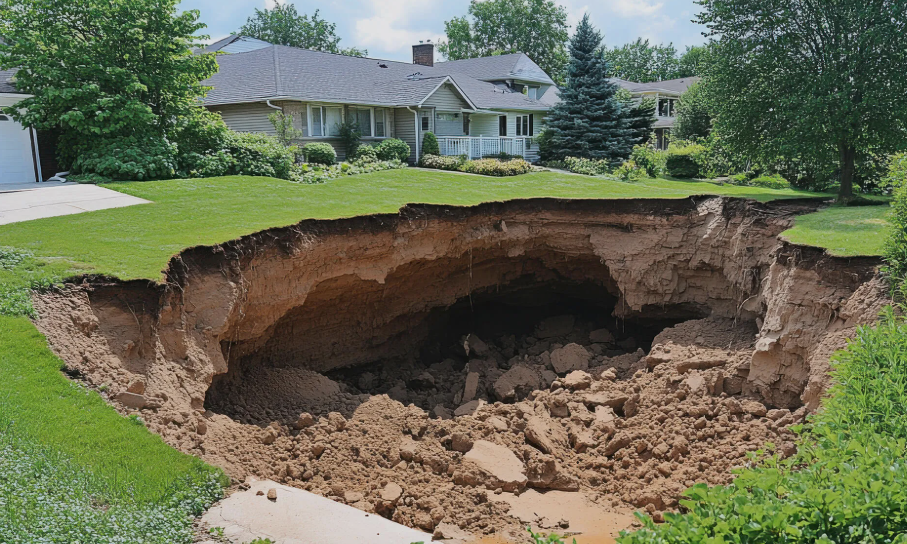
Fixing a sinkhole in a lawn is a common DIY project for most homeowners, especially when the “sinkhole” is actually a small-to-medium depression (under 3 feet wide and deep) caused by settling soil, decaying buried debris (like old stumps, construction waste, or roots), poorly compacted fill from past landscaping, or drainage issues. True geological sinkholes (from underground limestone erosion, or “karst” terrain) are rarer in many areas but follow similar repair principles.
These depressions form gradually or suddenly after heavy rain, and water often washes away supporting soil, creating a void. The good news: if it’s stable, not growing, not near your house/foundation, and not filling with water or smelling foul (which could indicate a pipe leak), you can usually fix it yourself in a weekend. The goal is to remove unstable material, create a stable base, fill in layers with proper compaction to prevent re-settling, and restore the lawn surface.
Addressing the problem quickly helps prevent the hole from expanding and protects the surrounding landscape.
Important safety warnings first (never skip these):
- Monitor the hole for a few days. If it grows, deepens rapidly, or water is flowing into it, stop and call a professional immediately.
- Never enter a hole deeper than chest height—the walls can collapse suddenly.
- Probe gently with a long stick or pole first (don’t stand on the edges).
- Check for underground utilities (call your local utility locator service before digging—free in most places).
- If it’s near your home, driveway, or structures; larger than 3 feet across; or in an area prone to true sinkholes, hire a landscaper, geotechnical engineer, or foundation repair specialist right away. In places like Nairobi, heavy seasonal rains can worsen issues, so address drainage early.
- Evacuate if it threatens your house—sinkholes can expand without warning.
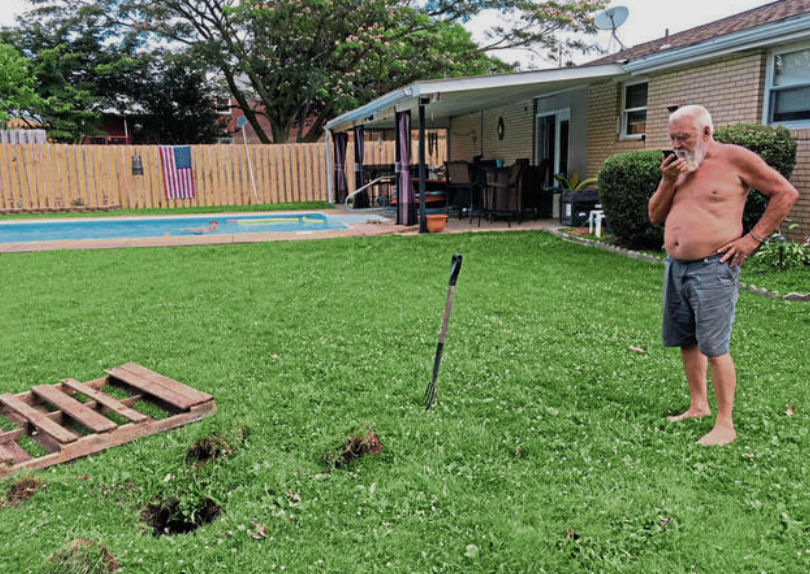
How To Go About It
1. Inspect the Sinkhole Carefully
The first step is to examine the sinkhole to understand its size and possible cause. Look for signs such as exposed pipes, water pooling, or cracks spreading outward from the hole. Small lawn sinkholes are often shallow depressions caused by soil settling, while deeper holes may indicate underground erosion. If the hole is extremely deep, continues expanding, or reveals underground cavities, it may require professional evaluation.
2. Remove Loose Soil and Debris
Before filling the sinkhole, clear away loose soil, rocks, grass, and debris from inside the hole. Use a shovel to remove unstable soil around the edges so that only firm ground remains. This helps prevent the fill material from collapsing later. If the hole contains roots, decaying organic matter, or buried debris, remove them as well since they can continue decomposing and cause future settling.
3. Fill the Bottom with Coarse Material
For better drainage and stability, start filling the sinkhole with a base layer of coarse materials such as gravel, crushed stone, or small rocks. This layer strengthens the base and prevents water from accumulating underneath the lawn. Add the material gradually in layers and compact it using a tamper or the back of a shovel to reduce air pockets.
4. Add Soil Layers and Compact Them
After the gravel base is in place, begin filling the remaining space with a mixture of topsoil and sand. Add the soil in several thin layers rather than all at once. Each layer should be compacted firmly before adding the next. Layered filling helps prevent the soil from settling too quickly and keeps the lawn surface stable over time.
5. Restore the Lawn Surface
Once the hole is filled and level with the surrounding ground, add a final layer of quality topsoil. Replant grass using sod, grass plugs, or seed that matches the existing lawn. Water the area lightly but consistently to encourage the grass to establish. Mulch or straw can also be applied temporarily to help retain moisture while the grass grows.
6. Monitor the Area for Future Settling
After repairing the sinkhole, monitor the area over the following weeks and months. Newly filled soil may settle slightly as it compacts naturally. If the ground sinks again, simply add more soil and level it. Maintaining good drainage and avoiding heavy traffic in the area will help prevent the sinkhole from reappearing.
7. Investigate Underlying Causes
If sinkholes appear repeatedly in the same location, the underlying issue should be investigated. Leaking irrigation lines, drainage problems, underground erosion, or decomposing tree roots can create voids beneath the lawn. Identifying and correcting these problems will prevent future ground collapse and keep the landscape stable.