
Botanical Classification
Coleus plants belong to the species Coleus scutellarioides, which is part of the genus Coleus in the family Lamiaceae (the mint family). This family also includes many aromatic herbs and ornamental plants.
Coleus was previously classified under the genus Plectranthus but has since been reclassified. The plant is widely cultivated for its colorful foliage rather than its flowers and is considered one of the most popular ornamental foliage plants used in gardens and containers.
Description / Characteristics
Coleus is a tender perennial often grown as an annual, typically reaching 30–90 centimeters (1–3 feet) in height. The plant is best known for its vibrant and highly decorative leaves, which come in a wide range of colors including green, red, pink, purple, yellow, and bronze. Many varieties have striking patterns, contrasting edges, or multicolored foliage.
The leaves are usually soft, slightly hairy, and arranged opposite each other along square stems, which is characteristic of plants in the mint family. Although coleus produces small spikes of bluish or lavender flowers, they are usually less noticeable than the colorful leaves.
Distribution & Habitat
Coleus plants are native to tropical regions of Southeast Asia, including Indonesia, Malaysia, and Thailand. In their natural habitat, they grow in warm, humid environments such as forest edges, clearings, and shaded tropical landscapes where soils are moist and well-drained.
Because of their striking foliage and adaptability, coleus plants are now widely cultivated in gardens around the world, particularly in tropical and subtropical regions and as seasonal plants in temperate climates.
Conservation
Coleus plants, particularly Coleus scutellarioides, are not considered threatened because they are widely cultivated and easily propagated. The plant is grown in gardens, nurseries, and botanical collections around the world, which helps preserve its genetic diversity.
In its native regions of Southeast Asia, wild populations still occur naturally in forest edges and disturbed habitats. Conservation attention mainly focuses on protecting natural tropical ecosystems rather than the cultivated plant itself.
Uses
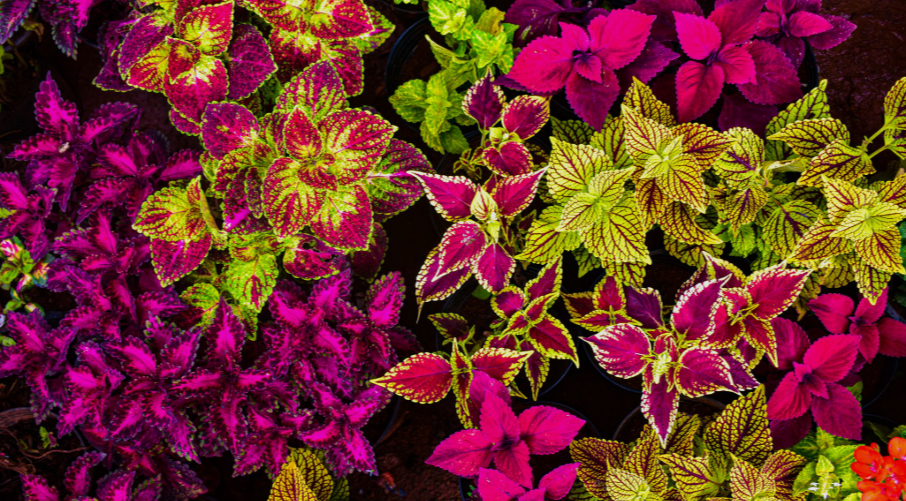
Coleus is primarily valued as an ornamental foliage plant. Its brightly colored leaves make it popular for garden beds, borders, container planting, hanging baskets, and indoor decoration. Landscape designers often use coleus to add color contrast and texture in shaded or partially shaded gardens.
In addition to ornamental use, the plant is sometimes grown for educational and botanical display purposes because of its remarkable variety of leaf patterns and colors. In some traditional practices, related plants in the genus have been used in herbal preparations, though coleus is mainly grown for decorative purposes.
Varieties and Cultivars
Many cultivars of coleus have been developed to showcase different leaf colors, shapes, and growth habits. Popular examples include:
- Coleus ‘Wizard Scarlet’ – Known for bright red leaves with contrasting green edges.
- Coleus ‘Kong Rose’ – Features very large leaves with pink centers and dark green margins.
- Coleus ‘Black Dragon’ – A dramatic cultivar with deep burgundy to almost black foliage.
- Coleus ‘Rainbow Mix’ – A group of cultivars producing a mixture of colorful leaf patterns.
- Coleus ‘Lime Delight’ – Characterized by bright lime-green foliage that adds contrast in gardens.
Growth Rate
Coleus plants, especially Coleus scutellarioides, have a fast growth rate under warm conditions. Young plants can grow rapidly and often reach their mature height of about 30–90 centimeters (1–3 feet) within a single growing season.
With regular watering, fertile soil, and occasional pruning, the plants become bushy and produce dense foliage. Because of their quick growth and vibrant leaves, coleus is commonly used for seasonal garden displays and container plantings.
USDA Zones
Coleus grows best in USDA Hardiness Zones 10–11, where temperatures remain warm year-round. In cooler climates, it is usually grown as an annual plant during the warm season or kept indoors as a houseplant during winter.
Coleus prefers partial shade to full sun, depending on the cultivar, and thrives in moist, well-drained soil rich in organic matter.
Problems
Although coleus is generally easy to grow, it can encounter several issues:
- Pests: Aphids, whiteflies, spider mites, and mealybugs may infest the leaves.
- Fungal diseases: Root rot, stem rot, or mildew may occur if the soil remains too wet or if air circulation is poor.
- Leggy growth: Insufficient light or lack of pruning can cause plants to become tall and sparse instead of bushy.
- Cold sensitivity: Coleus is sensitive to frost and cold temperatures, which can quickly damage or kill the plant.
How to grow and care for Coleus plants (Coleus scutellarioides)
- Sunlight – Coleus grows best in partial shade to filtered sunlight. Some modern varieties can tolerate full sun, but too much direct sunlight may fade or scorch the colorful leaves. Providing bright but indirect light helps maintain vibrant foliage colors.
- Soil Requirements – Plant coleus in rich, well-drained soil with plenty of organic matter. The soil should retain moisture but not stay soggy, as waterlogged soil can lead to root rot.
- Watering – Keep the soil consistently moist, especially during warm weather. Water when the top layer of soil begins to dry out, but avoid overwatering. Mulching can help maintain soil moisture and regulate temperature.
- Fertilization – Feed coleus every 3–4 weeks during the growing season with a balanced liquid fertilizer or slow-release fertilizer. Proper feeding supports healthy growth and keeps the foliage bright and colorful.
- Pruning and Pinching – Pinch back the growing tips regularly to encourage bushier growth and prevent the plant from becoming tall and leggy. Removing flower spikes can also help the plant focus energy on producing more foliage.
- Pest and Disease Management – Watch for common pests such as aphids, spider mites, whiteflies, and mealybugs. Treat infestations with insecticidal soap or neem oil. Ensure good air circulation and proper watering to prevent fungal problems like mildew or root rot.