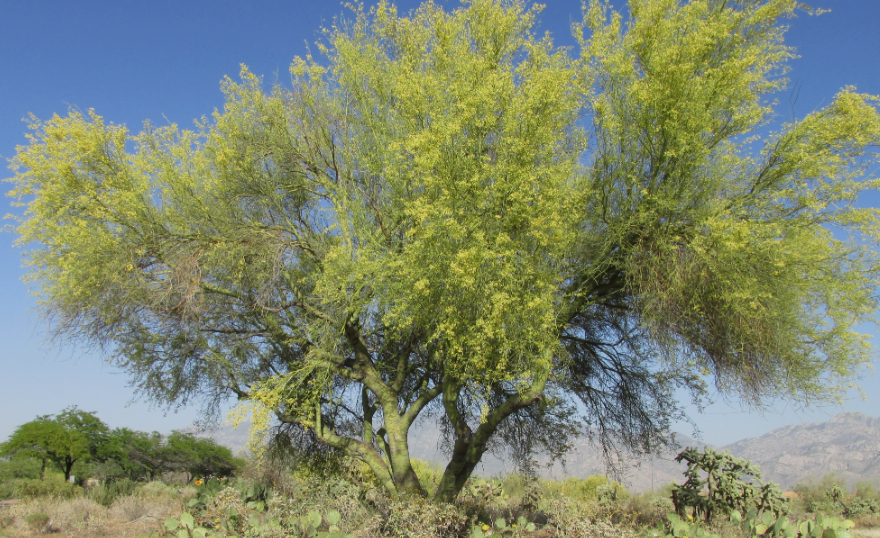
Arizona has a predominantly hot and dry climate, with long, scorching summers, mild winters, and abundant sunshine throughout most of the year. Rainfall is limited, and many areas experience periods of drought. These conditions make shade especially valuable, both for cooling outdoor spaces and protecting plants and people from extreme heat.
Shade trees in Arizona are often selected for their ability to thrive under intense sun and dry conditions. They typically have strong root systems that can access deep soil moisture and leaves that provide dense coverage to block sunlight effectively. The right trees can create cool retreats even in the hottest parts of the day.
Many shade trees in Arizona are hardy and drought-tolerant, allowing them to survive extended dry spells. They are also resilient to high temperatures and occasional desert winds, making them low-maintenance options for landscapes in both urban and rural settings.
Wide, spreading canopies are common among shade trees suitable for Arizona. These canopies not only provide relief from the sun but also help reduce heat reflected from pavement and buildings, improving comfort around homes, parks, and streets. They also contribute to the overall aesthetic of the landscape.
Proper care helps shade trees establish quickly and remain healthy in Arizona’s challenging climate. Regular deep watering during the establishment period, mulching to conserve moisture, and occasional pruning support strong growth.
Shade Trees for Arizona
Palo Verde
Palo verde is Arizona’s state tree and an iconic desert shade tree with distinctive green bark that photosynthesizes even when leaves are absent. These fast-growing trees produce masses of brilliant yellow flowers in spring, creating spectacular displays throughout the desert.
Blue palo verde and foothill palo verde are native species perfectly adapted to Arizona’s extreme heat, alkaline soils, and drought, providing filtered shade that allows understory plants to thrive while requiring virtually no supplemental water once established.
Mesquite
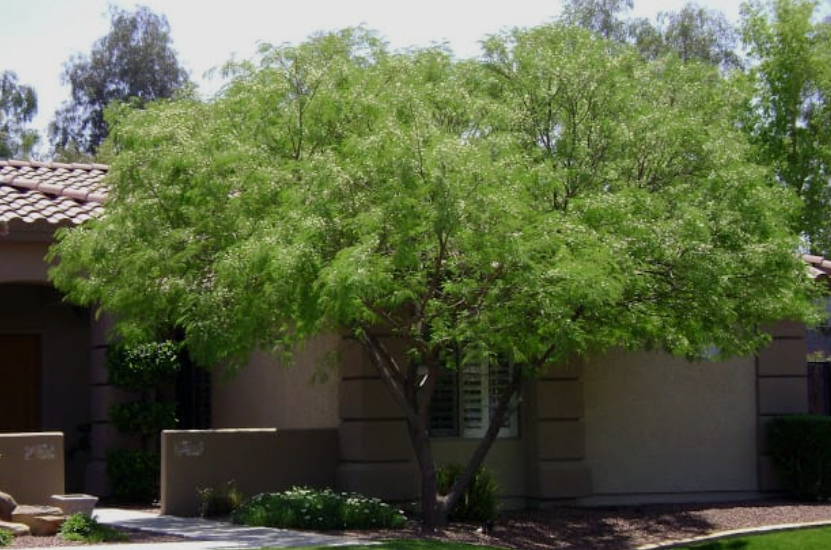
Mesquite trees are quintessential desert shade trees that thrive in Arizona’s hottest, driest conditions while providing deep shade through their fine, compound leaves. Chilean mesquite and Argentine mesquite are popular choices that grow faster and larger than native varieties, reaching 30-40 feet tall with spreading canopies.
These nitrogen-fixing trees improve soil quality, tolerate extreme drought and heat, and their filtered shade creates comfortable outdoor spaces while supporting desert-adapted landscapes.
Desert Willow
Desert willow is a graceful, fast-growing native tree that produces stunning orchid-like flowers in shades of pink, purple, burgundy, or white throughout summer. These drought-tolerant trees reach 15-25 feet tall with airy, willowy foliage that provides light, filtered shade perfect for patios and small yards.
Desert willows attract hummingbirds, thrive in Arizona’s alkaline soils and intense heat, and require minimal water once established, making them ideal for water-wise landscapes.
Tipu Tree
Tipu tree is a South American native that has become popular in Arizona for its fast growth, spreading canopy, and tolerance of desert conditions. These semi-evergreen trees can add 3-4 feet per year, reaching 30-50 feet tall with broad, umbrella-like canopies that provide dense shade.
Tipu trees produce golden-yellow flowers in summer, tolerate alkaline soils and heat exceptionally well, and while they require regular water during establishment, mature specimens become reasonably drought-tolerant.
African Sumac
African sumac is a popular evergreen shade tree valued for its graceful, weeping form and year-round foliage that provides consistent shade. These trees grow at a moderate rate, developing dense canopies reaching 20-30 feet tall with aromatic leaves that release a pleasant scent when crushed.
African sumac tolerates Arizona’s heat, drought, and alkaline soils once established, and its evergreen nature makes it excellent for providing shade throughout the year, though male trees can produce allergenic pollen.
Chinese Pistache
Chinese pistache is one of the most reliable fall color trees for Arizona, providing brilliant orange and red displays even in low desert areas. These adaptable trees grow at a moderate to fast rate, reaching 30-40 feet tall with rounded, spreading canopies that offer excellent shade.
Chinese pistache tolerates extreme heat, cold, drought, alkaline soils, and urban pollution, and while it requires regular water during establishment, mature trees become quite drought-tolerant and exceptionally low-maintenance.
Thornless Honeylocust
Thornless honeylocust provides filtered shade through its fine, compound leaves that allow grass and plants to grow beneath while still cooling outdoor spaces. These fast-growing trees add 2-3 feet annually, reaching 40-60 feet tall with spreading canopies.
Honeylocust tolerates Arizona’s alkaline soils, heat, and drought better than most deciduous shade trees, and the small leaves decompose quickly in fall, reducing cleanup while newer cultivars are seedless and thornless.
Willow Acacia
Willow acacia is a fast-growing Australian native that quickly provides shade with its weeping, willow-like foliage and can add 3-5 feet per year. These trees reach 20-40 feet tall and produce fragrant cream-colored flowers in spring, creating an attractive display.
Willow acacia tolerates extreme heat, alkaline soils, and drought exceptionally well once established, though it has a relatively short lifespan of 20-30 years and can become messy with dropping seed pods and branches.
Sissoo Tree
Sissoo tree is a fast-growing Indian native that provides quick shade, adding 3-4 feet annually and reaching 40-60 feet tall with spreading canopies. These semi-evergreen trees have attractive heart-shaped leaves that flutter in the breeze and provide dense shade throughout most of the year.
Sissoo tolerates Arizona’s heat and alkaline soils well, though it requires regular watering and can develop aggressive surface roots that may interfere with hardscaping if not planted with adequate space.
Ironwood
Ironwood is a slow-growing but exceptionally long-lived native desert tree that can survive for centuries in Arizona’s harshest conditions. These trees develop dense, spreading canopies reaching 25-30 feet tall and produce lavender-pink flowers in spring that attract pollinators.
Ironwood provides important habitat and food for desert wildlife, tolerates extreme drought and heat, and while it grows slowly at 6-12 inches per year, it creates valuable shade that improves microclimate for other plants and outdoor living spaces.
Sweet Acacia
Sweet acacia is a small to medium-sized tree that produces intensely fragrant yellow flowers in spring, perfuming entire neighborhoods with a sweet, grape-like scent. These drought-tolerant trees grow moderately fast, reaching 15-25 feet tall with spreading canopies that provide light, filtered shade.
Sweet acacia thrives in Arizona’s alkaline soils and extreme heat, requires minimal water once established, and while it has thorns and can be somewhat messy, its spectacular fragrance makes it a beloved choice for desert landscapes.
Arizona Ash
Arizona ash is a fast-growing tree adding 3-4 feet annually and providing quick shade with its dense, rounded canopy. These deciduous trees reach 30-50 feet tall and produce golden-yellow fall color, and they’re specifically adapted to Arizona’s climate and alkaline soils.
While Arizona ash requires more water than desert natives and has been overplanted in some areas leading to pest problems, it remains valuable for quickly establishing shade in newer developments and urban areas with adequate irrigation.
Chitalpa
Chitalpa is a sterile hybrid combining desert willow and catalpa that produces large, showy flowers continuously throughout summer without setting seed. These fast-growing trees reach 20-30 feet tall with rounded canopies and produce pink, white, or lavender trumpet-shaped flowers that attract hummingbirds.
Chitalpa tolerates Arizona’s extreme heat, alkaline soils, and drought exceptionally well while requiring minimal water, making it an improved alternative to desert willow for those seeking tidier trees without seed pod mess.
Mulga
Mulga is an Australian acacia that forms a dense, evergreen canopy providing year-round shade while tolerating extreme drought and heat. These slow to moderate-growing trees reach 15-25 feet tall with fine-textured, silvery-gray foliage that creates an attractive appearance.
Mulga thrives in Arizona’s poorest soils, requires virtually no supplemental water once established, and provides excellent habitat for birds while creating reliable shade in the most challenging desert locations.
Shoestring Acacia
Shoestring acacia is a graceful tree with distinctive long, narrow foliage that provides filtered shade while creating an elegant, tropical appearance. These fast-growing trees reach 20-30 feet tall and produce fragrant cream-colored flowers in spring.
Shoestring acacia tolerates Arizona’s heat and alkaline soils well, requires moderate water, and its unique foliage texture adds visual interest to landscapes while providing comfortable shade that allows air circulation in outdoor living areas.
Evergreen Elm
Evergreen elm, also called Chinese elm, is a tough, adaptable tree that retains its foliage year-round in milder Arizona climates, providing consistent shade. These fast-growing trees reach 40-50 feet tall with spreading canopies and attractive mottled bark that provides winter interest.
Evergreen elm tolerates heat, drought, alkaline soils, and urban pollution exceptionally well, and while it can be semi-deciduous in colder areas, it’s one of the most reliable and low-maintenance shade trees for Arizona landscapes.
Western Soapberry
Western soapberry is a tough native tree that develops rounded canopies reaching 25-40 feet tall while thriving in Arizona’s harshest conditions. These deciduous trees produce compound leaves that turn golden-yellow in fall and clusters of translucent golden berries that persist through winter.
Western soapberry tolerates extreme drought, heat, alkaline soils, and neglect better than most shade trees, making it excellent for low-water landscapes and areas where minimal maintenance is desired.
Blue Palo Verde
Blue palo verde is the most common palo verde species and provides excellent filtered shade with its blue-green bark and fine foliage. These fast-growing native trees reach 25-35 feet tall and produce spectacular masses of bright yellow flowers in spring that can completely cover the canopy.
Blue palo verde is perfectly adapted to Arizona’s low desert conditions, requires no supplemental water once established, and provides the ideal balance of shade and light penetration for desert-adapted landscapes while supporting native wildlife and pollinators.