Mulching is one of the most important practices for growing healthy, high-yielding tomato plants. Tomatoes are susceptible to soil-borne diseases like early and late blight, septoria leaf spot, and bacterial issues, which spread via rain splash from soil onto lower leaves. Good mulch creates a barrier to prevent this splash, conserves soil moisture (tomatoes need consistent watering to avoid blossom end rot and cracking), suppresses weeds that compete for nutrients, moderates soil temperature (warmer for early growth and fruit set in cool climates, cooler in hot summers), and reduces erosion.
Organic mulches improve soil structure and microbial activity over time, while synthetic options like plastic excel at warming soil and boosting yields.Apply mulch after the soil warms (around 60–70°F/15–21°C) and plants are established—typically 3–6 weeks after transplanting—to avoid cooling the soil too much early on. Use 2–4 inches for organic mulches (thinner near stems to prevent rot), or full sheets of plastic with holes for plants. Leave a small gap around stems, and reapply as needed.
Here are some of the best mulch options for tomatoes, based on expert recommendations from university extensions, horticultural trials, and gardener experiences. Plastic mulches often top lists for yield and disease control, while straw is a favorite organic choice for splash prevention.
Types of Mulch for Tomatoes
Straw
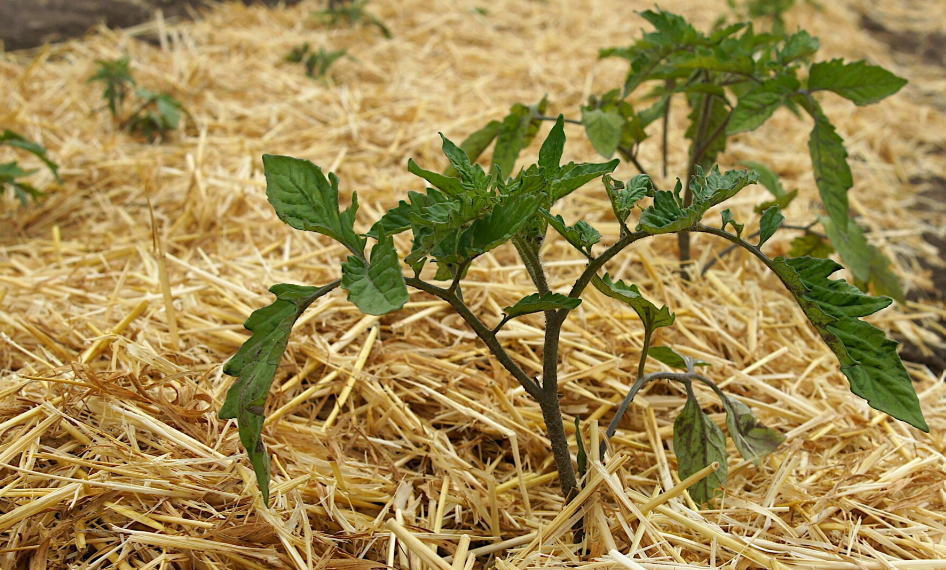
Straw is one of the most popular mulches for tomatoes because it keeps soil moisture levels stable and prevents soil from splashing onto leaves. This reduces the risk of soil-borne diseases while also suppressing weed growth. As it decomposes, straw adds organic matter that improves soil structure.
Grass Clippings
Grass clippings make a nutrient-rich mulch when applied in thin, dry layers. They help retain moisture, limit weed growth, and release nitrogen into the soil as they break down. Properly dried clippings prevent matting and odor problems around tomato plants.
Compost
Compost serves as both mulch and fertilizer for tomatoes. It enhances moisture retention, improves soil texture, and supplies essential nutrients throughout the growing season. Compost also supports beneficial microbes that promote healthy root development and fruit production.
Shredded Leaves
Shredded leaves provide excellent insulation for tomato roots. They reduce evaporation, regulate soil temperature, and suppress weeds effectively. Over time, the leaves decompose and enrich the soil with valuable organic matter.
Pine Straw
Pine straw forms a loose, airy layer that allows water and air to reach the soil easily. It helps keep tomato fruits clean, reduces moisture loss, and resists compaction. Pine straw is also longer-lasting than many lightweight mulches.
Newspaper or Cardboard
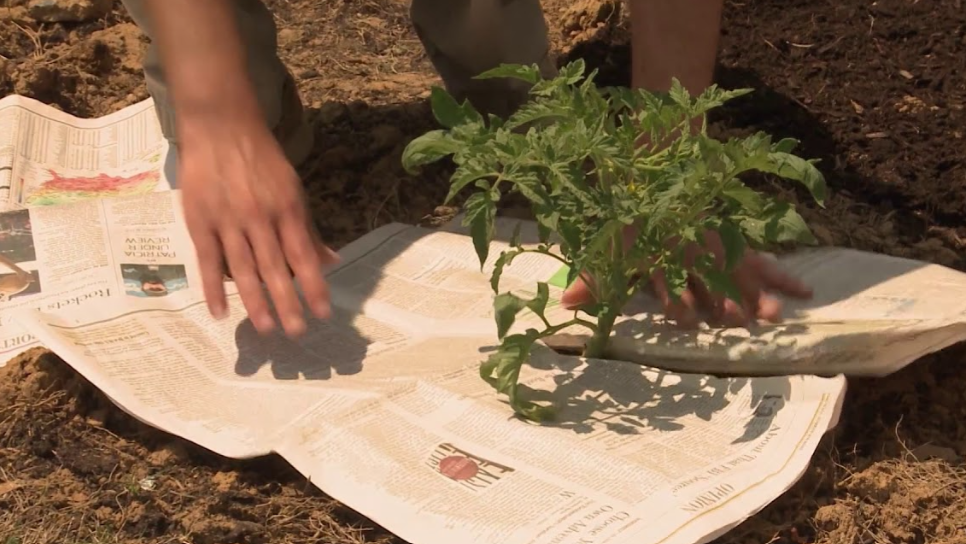
Newspaper or cardboard blocks sunlight, making it highly effective at controlling weeds. It helps conserve soil moisture and gradually breaks down into organic material. When covered with another mulch, it stays in place and improves overall soil health.
Wood Chips
Wood chips are a durable mulch option best suited for established tomato beds. They suppress weeds effectively, reduce moisture evaporation, and protect soil from erosion. Their coarse texture allows rain and irrigation water to reach the roots while maintaining soil stability.
Bark Mulch
Bark mulch provides long-lasting coverage and helps regulate soil temperature around tomato plants. It limits weed growth and slows moisture loss during hot weather. As it decomposes gradually, it adds organic matter that improves soil quality over time.
Black Plastic
Black plastic mulch warms the soil early in the growing season, encouraging faster tomato growth. It conserves moisture and offers excellent weed control. However, it does not enrich the soil and requires proper placement to prevent overheating.
Landscape Fabric
Landscape fabric allows water and air to penetrate while blocking weeds. It keeps soil moisture consistent and reduces garden maintenance. Covering it with organic mulch improves appearance and provides extra insulation for tomato roots.
Cocoa Bean Hulls
Cocoa bean hulls create an attractive mulch that helps retain moisture and suppress weeds. They break down slowly, adding organic matter to the soil. Their fine texture makes them ideal for neatly maintained tomato gardens.
Hay
Hay provides thick coverage that protects tomato roots from heat stress and moisture loss. It suppresses weeds effectively and decomposes into organic matter. Using weed-free hay is important to avoid introducing unwanted seeds.
Leaf Mold
Leaf mold, made from fully decomposed leaves, improves soil structure and moisture retention. It supports beneficial soil organisms and keeps tomato roots cool. This mulch is especially useful in gardens with rich, organic soil systems.
Gravel or Pebbles
Gravel or pebble mulch offers a low-maintenance option for tomato beds in dry climates. It reduces evaporation, limits weed growth when paired with landscape fabric, and improves drainage. This mulch works best for tomatoes grown in raised beds or well-drained soils.