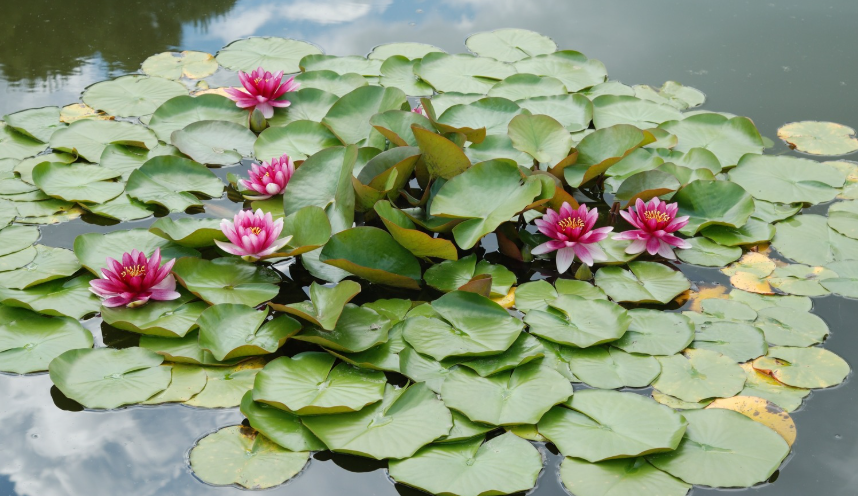
Some acquatic plants are specially adapted to live without being rooted in soil or sediment. Instead of anchoring themselves in the ground, they float freely on the water’s surface or remain suspended within the water column. This allows them to thrive in environments where the bottom may be too deep, unstable, or nutrient-poor.
These plants absorb nutrients directly from the surrounding water through their leaves and stems. Because of this, they depend heavily on the quality and composition of the water they inhabit. Nutrients such as nitrogen and phosphorus are taken in efficiently, often making these plants fast-growing under the right conditions.
Floating varieties have direct access to sunlight, which allows them to photosynthesize efficiently. Submerged, free-floating types have adapted to capture available light even at lower depths, often having thin or finely divided structures to maximize surface area for light absorption.
Reproduction among these plants is often rapid and effective. Many can reproduce asexually by fragmentation or budding, meaning a single individual can quickly give rise to many others. This ability allows them to spread across large areas of water in a relatively short time, sometimes forming dense mats on the surface.
These plants offer shelter and breeding grounds for small aquatic organisms, help oxygenate the water, and can improve water quality by absorbing excess nutrients. In some cases, they are even used in water treatment systems to naturally filter pollutants.
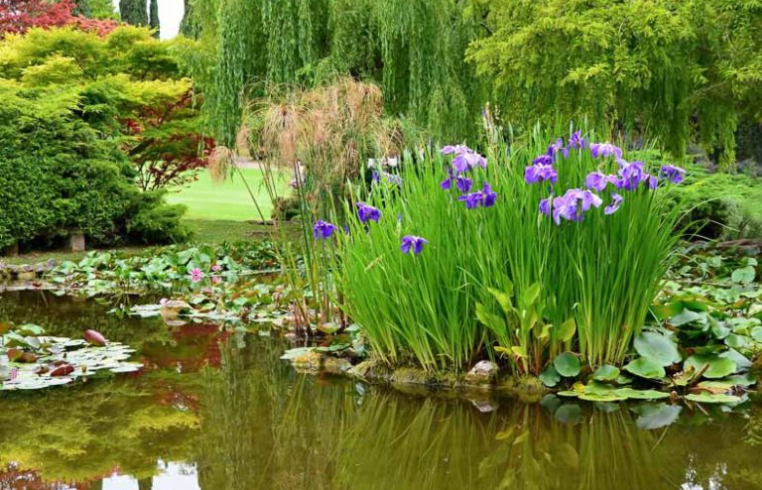
Aquarium plants that don’t need substrate
Java Moss (Taxiphyllum barbieri)
The most popular aquarium plant in the world, Java Moss attaches itself to any surface — driftwood, rocks, mesh, or filter intake — with tiny, thread-like rhizoids, requiring no soil whatsoever. It grows in almost any light level, tolerates a wide temperature range, and provides invaluable shelter for fry and shrimp, making it the single most recommended plant for beginners and experts alike.
Java Fern (Microsorum pteropus)
Java Fern is one of the most forgiving and adaptable aquarium plants available — its thick, leathery dark green fronds attached to driftwood or rock by rhizomes that must never be buried in substrate or the plant will rot and die. It thrives in low to moderate light, tolerates hard water, and is almost completely ignored by plant-eating fish due to its tough, unpalatable leaves.
Anubias (Anubias barteri)
Anubias is the quintessential low-light, substrate-free aquarium plant — its thick, waxy, deep green leaves attached to driftwood or rock by a robust rhizome that, like Java Fern, must remain above the substrate to prevent rotting.
It grows extremely slowly but is virtually indestructible, tolerating low light, wide temperature ranges, and the attention of most herbivorous fish whose teeth cannot penetrate its tough leaf surfaces.
Amazon Frogbit (Limnobium laevigatum)
Amazon Frogbit is a South American floating plant producing rosettes of rounded, slightly spongy leaves that sit on the water surface while long, feathery white roots hang freely beneath — providing extraordinary shelter for fry, shrimp, and surface-feeding fish.
It grows rapidly in good light, its trailing roots absorbing nutrients directly from the water column and making it one of the most effective natural water purifiers available to the aquarist.
Duckweed (Lemna minor)
The smallest flowering plant on Earth, Duckweed forms a bright green carpet of tiny, coin-like fronds across the water surface with roots hanging freely in the water below.
It grows with explosive speed in good light and high nutrients — sometimes doubling its coverage in twenty-four hours — making it an extraordinary natural filter but requiring regular thinning to prevent it smothering the entire surface and blocking light to lower plants.
Water Sprite (Ceratopteris thalictroides)
Water Sprite is one of the most versatile substrate-free plants in the hobby — it can be floated at the surface with roots trailing in the water or left free-floating in the mid-column, where its delicate, finely divided fronds create a lace-like curtain of green that provides exceptional shelter for small fish and invertebrates.
It is a fast grower that absorbs nutrients rapidly, helping control algae, and produces daughter plants prolifically from its leaf margins.
Hornwort (Ceratophyllum demersum)
Hornwort is a tough, fast-growing stem plant that thrives without any substrate — floating freely in the water column or loosely anchored to decor, its dense, bristly whorls of dark green needle-like leaves providing one of the most effective shelters for egg-scattering fish and shrimp in the hobby.
It is virtually indestructible, tolerating a wider range of water conditions than almost any other aquarium plant, and its rapid nutrient uptake makes it one of the most effective algae-suppressing plants available.
Crystalwort (Riccia fluitans)
Crystalwort is a bright, vivid green liverwort that naturally floats in tangled mats at the water surface but can be tied to rocks or mesh to create a carpet-like effect without any substrate.
Its extraordinary bright green color — one of the most vivid in the aquarium plant palette — and its production of oxygen bubbles that collect within the mat create a sparkling, jewel-like effect that has made it one of the signature plants of the Nature Aquarium style pioneered by Takashi Amano.
Floating Pennywort (Hydrocotyle leucocephala)
Floating Pennywort produces rounded, coin-shaped leaves on trailing stems that float freely at the surface — its roots absorbing nutrients directly from the water while its attractive foliage creates a natural, pond-like surface cover.
It grows rapidly, provides good surface cover for shy fish and fry, and its stems can be trained to trail across the water surface in decorative patterns. It is an excellent nutrient exporter when regularly trimmed.
Salvinia (Salvinia natans)
Salvinia is a floating fern of remarkable beauty — its paired oval leaves covered in tiny, water-repellent hairs that trap air bubbles and create a silvery, beaded effect when submerged, while the plant itself sits dry on the water surface.
Its ability to rapidly cover a surface with attractive, textured floating foliage makes it popular in both aquariums and outdoor ponds, and its dangling underwater roots provide shelter for shrimp and small fish fry seeking protection from larger tank inhabitants.
Water Lettuce (Pistia stratiotes)
Water Lettuce produces rosettes of pale, velvety, ribbed leaves with the texture of soft lettuce — floating on the water surface while long, feathery roots hang one to fifteen centimeters below, providing extraordinary shelter for fish and dramatically filtering the water column of excess nutrients.
Its large size relative to other floating plants — rosettes reaching fifteen centimeters across — makes it more suitable for larger aquariums and outdoor ponds, and its vigorous root system is one of the most effective natural biological filters in the floating plant category.
Subwassertang (Lomariopsis lineata)
Subwassertang — German for freshwater seaweed — is a mysterious, round-lobed liverwort-like plant of uncertain taxonomy that grows in loose, fluffy clumps attached to any surface or free-floating in the water column, its overlapping, succulent green lobes creating a texture unlike any other aquarium plant.
It is particularly popular in shrimp tanks where its complex, multi-layered structure provides shelter for newly hatched shrimp and biofilm-grazing surfaces that shrimp spend hours exploring with their feeding appendages.
Guppy Grass (Najas guadalupensis)
Guppy Grass is a fast-growing, fine-textured stem plant that thrives without substrate — floating freely in the water column or loosely arranged among decor, its dense, feathery growth providing some of the finest shelter for livebearer fry and shrimp of any aquarium plant.
It is exceptionally vigorous, capable of consuming large quantities of dissolved nutrients rapidly, and its soft, fine texture means fish and shrimp move through it with ease while finding the concealment they need.
Willow Moss (Fontinalis antipyretica)
Willow Moss is a cold-water aquarium moss that attaches to rocks and driftwood without any substrate — its long, flowing, branching stems resembling underwater willow branches waving gently in the current.
It requires cooler water than most tropical aquarium mosses, making it ideal for temperate and coldwater setups housing goldfish, white cloud mountain minnows, and similar cool-water species. Its soft texture and complex structure make it valuable for spawning fish and sheltering small invertebrates.
Christmas Moss (Vesicularia montagnei)
Christmas Moss earns its festive name from the tiered, overlapping branch structure of its fronds — each side branch arranged like the layered boughs of a Christmas tree when growing well.
It attaches to any hard surface without substrate and is widely used to create moss walls, moss trees, and moss carpets in aquascapes. Its slightly more demanding light requirements compared to Java Moss are rewarded with a more structured, decorative growth form that holds its shape better than looser-growing mosses.
Flame Moss (Taxiphyllum sp. ‘Flame’)
Flame Moss is one of the most visually distinctive of the aquarium mosses — its upward-growing, twisted fronds creating a spiraling, flame-like effect that gives it an almost animated quality when waving in gentle current.
It attaches to rocks and driftwood without substrate and grows more slowly than Java Moss, but its unusual, sculptural growth form makes it highly prized in aquascaping for creating focal points and adding vertical visual interest to hardscape compositions.
Weeping Moss (Vesicularia ferriei)
Weeping Moss produces drooping, pendulous fronds that hang downward from attachment points on driftwood or rock — creating a curtain-like, weeping willow effect of considerable beauty when grown on elevated hardscape pieces.
Its graceful, downward-growing habit distinguishes it from virtually every other aquarium moss and makes it particularly effective when attached to overhanging driftwood branches where its weeping fronds can trail freely into the water column below.
Pellia (Monosolenium tenerum)
Pellia is a flat, dark green liverwort that grows in dense, overlapping sheets attached to any hard surface or freely on the substrate surface — but since it requires no rooting medium and attaches to rocks and wood, it is perfectly suited to substrate-free tanks.
Its flat, slightly glossy, deep green thallus has an almost succulent appearance quite different from the feathery mosses, and it is extraordinarily popular in shrimp tanks where the dense, flat sheets provide grazing surfaces covered in the biofilm and algae that shrimp eat continuously.
Marimo Moss Ball (Aegagropila linnaei)
The Marimo Moss Ball is technically a species of filamentous green algae — not a true moss — that naturally grows into perfect, velvety spheres on the beds of cold, clear lakes in Japan, Iceland, and Scotland.
In aquariums it requires no substrate whatsoever, sitting freely on the tank floor or floating in gentle current, its dense, uniform green sphere adding a unique, sculptural element to any aquascape. It grows extremely slowly, requires no special care, and its pleasant, tactile texture makes it a favorite decorative element in minimalist aquarium designs.
Rotala rotundifolia (floating form)
While Rotala rotundifolia is typically planted in substrate, it can be grown as a free-floating stem plant with impressive results — its delicate, pink-tinged leaves and fine stems creating a loose, flowing mass of color in the water column that provides excellent shelter for small fish.
In high light conditions the floating form develops intensely pink to red coloration, particularly at the growing tips, creating one of the most vivid color effects achievable with a substrate-free stem plant in a well-lit aquarium.
Azolla (Azolla filiculoides)
Azolla — the Fairy Moss or Mosquito Fern — is a tiny floating fern that covers the water surface in a dense, overlapping mosaic of red, orange, and green fronds that change color dramatically depending on light intensity and nutrient levels.
It contains symbiotic cyanobacteria in its leaf cavities that fix atmospheric nitrogen — making it one of the few aquarium plants capable of enriching rather than merely absorbing water nutrients — and its vivid coloration when grown in strong light creates one of the most striking surface displays of any floating plant.
Riccardia (Riccardia chamedryfolia)
Also known as Mini Pellia or Coral Moss despite being neither, Riccardia is a delicate, branching liverwort that attaches to rock and driftwood surfaces — its tiny, succulent-looking thallus branches creating a textured, coral-like coating of deep emerald green.
It is one of the most prized plants in the high-end aquascaping hobby for creating naturalistic, detailed hardscape surfaces, and its small scale makes it particularly suited to nano aquariums where larger mosses would overwhelm the composition. It grows slowly and requires moderate to high light.
Giant Salvinia (Salvinia molesta)
Giant Salvinia produces much larger, more textured floating leaves than the common Salvinia — its corrugated, boat-shaped leaves covered in elaborate water-repelling hairs sitting dramatically on the water surface. It provides substantial surface cover and excellent filtration through its extensive hanging root system.
It is important to note that Giant Salvinia is classified as an invasive species in many regions and should never be released into natural waterways — but within a contained aquarium or greenhouse pond it is a spectacular and effective floating plant.
Star Grass (Heteranthera zosterifolia)
Star Grass can be grown as a free-floating stem plant — its star-shaped whorls of narrow, bright green leaves creating a distinctive, geometric texture as it drifts through the water column. In good light it grows rapidly and develops a compact, bushy form, and floating colonies provide excellent shelter for small fish and shrimp.
Its sky-blue flowers — produced above the water surface on floating plants in good light — are an unexpected bonus that few aquarists anticipate from a plant grown primarily for its foliage.
Water Wisteria (Hygrophila difformis)
Water Wisteria is a fast-growing, highly adaptable plant that can be floated freely in the water column — its deeply divided, feathery leaves creating an extraordinarily attractive, lace-like texture that is unlike the leaves of any other common aquarium plant.
Floating specimens develop a different, more divided leaf form than planted specimens in the same species — a phenomenon called heterophylly — and the floating form’s especially delicate, finely cut leaves are considered by many aquarists to be even more beautiful than the planted form.
Bolbitis Fern (Bolbitis heudelotii)
The African Water Fern is one of the most beautiful large aquarium plants available — its deeply divided, translucent dark green fronds attached to driftwood or large rocks by a thick rhizome that must never be buried.
It thrives in flowing water and moderate to high light, and its large, dramatic fronds create a lush, jungle-like effect in aquascapes where its substrate-free attachment allows it to be positioned anywhere in the tank — on elevated driftwood, rock faces, or even the back wall of the aquarium — without any restriction from planting position.