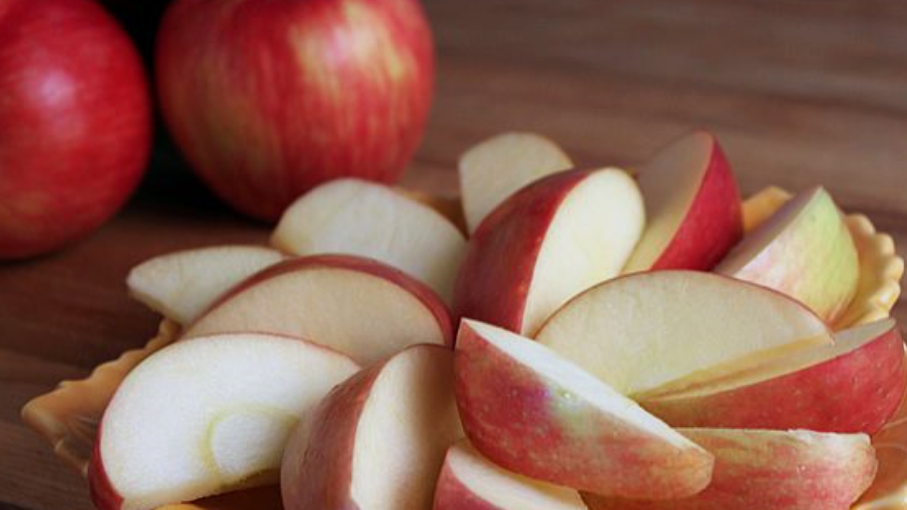
Apples that do not brown quickly when cut share specific internal traits that slow the oxidation process. Browning normally occurs when enzymes in the flesh react with oxygen, but in these apples the enzyme activity is lower or the flesh structure limits how fast oxygen can spread through the tissue.
Texture plays a major role in this resistance to browning. Apples with dense, firm, or fine-grained flesh tend to hold their color longer because their tightly packed cells reduce exposure to air. Instead of turning dark brown, their cut surfaces may stay pale or slowly develop a light yellow tone.
Flavor characteristics are often linked to this quality as well. Many slow-browning apples are mildly sweet and low in sharp acidity, which further reduces rapid discoloration. Their clean taste and juicy texture make them especially suitable for eating fresh.
Apples that Don’t Brown When Cut
Opal
Opal apples were developed in the Czech Republic and are valued for their bright yellow skin and naturally slow-browning flesh. Their low oxidation rate keeps the creamy-white interior looking fresh for a long time after cutting, while their crisp texture and sweet, lightly floral flavor make them ideal for fresh slices and salads.
Arctic Apples
Arctic apples were developed in Canada using modern breeding techniques specifically to prevent browning. By reducing the enzyme responsible for oxidation, their flesh remains white for hours after slicing, while still retaining a crisp texture and clean, mildly sweet apple flavor suited for snacking and food service use.
Cortland
Cortland apples originated in New York State, USA, and are well known for their exceptionally white flesh. They brown very slowly when cut due to their low oxidation activity, and they offer a mildly sweet flavor with a tender, juicy texture, making them popular for fruit trays and fresh desserts.
Empire
Empire apples were also developed in New York, as a cross between two classic American varieties. They have firm, white flesh that resists browning better than many apples, along with a balanced sweet flavor and crisp bite that holds up well in fresh-cut preparations.
Gala
Gala apples originated in New Zealand and are now grown worldwide. Although not completely non-browning, their flesh oxidizes slowly compared to many varieties, staying pale for longer periods, while offering a sweet, aromatic flavor and fine texture that makes them a favorite for fresh eating.
Golden Delicious
Golden Delicious apples originated in West Virginia, USA, and are known for their tender flesh and low acidity. When cut, they tend to yellow gradually rather than turning dark brown quickly, and their honeyed sweetness and smooth texture make them especially useful in salads and fresh dishes.
Honeycrisp
Honeycrisp apples were developed in Minnesota, USA, for cold climates and superior eating quality. Their dense, juicy flesh browns more slowly than many softer apples, while their crisp texture and balanced sweetness help sliced pieces stay appealing for a longer time.
Pink Lady (Cripps Pink)
Pink Lady apples originated in Australia and are known for their firm structure and bright flavor. Their dense, fine-grained flesh slows oxygen penetration after cutting, helping the slices remain lighter in color while offering a refreshing sweet-tart taste.
Jazz
Jazz apples were developed in New Zealand as a modern dessert apple with firm flesh. Their tight cell structure helps reduce browning once sliced, and they deliver a crisp bite with a clean, mildly sweet flavor that works well for fresh consumption.
Envy
Envy apples were developed in New Zealand and are especially known for their resistance to browning. Their naturally low oxidation rate keeps cut surfaces white for extended periods, while their dense, juicy flesh and rich sweetness make them ideal for fresh-cut fruit use.
SweeTango
SweeTango apples were developed in the United States and are prized for their explosive juiciness and firm texture. While they will brown eventually, their crisp flesh slows the process, allowing slices to stay bright longer than many traditional apples.
Cameo
Cameo apples originated in the United States and are recognized for their pale, dense flesh. They brown slowly when exposed to air and offer a sweet, slightly pear-like flavor with a firm texture that holds its appearance well in salads and platters.