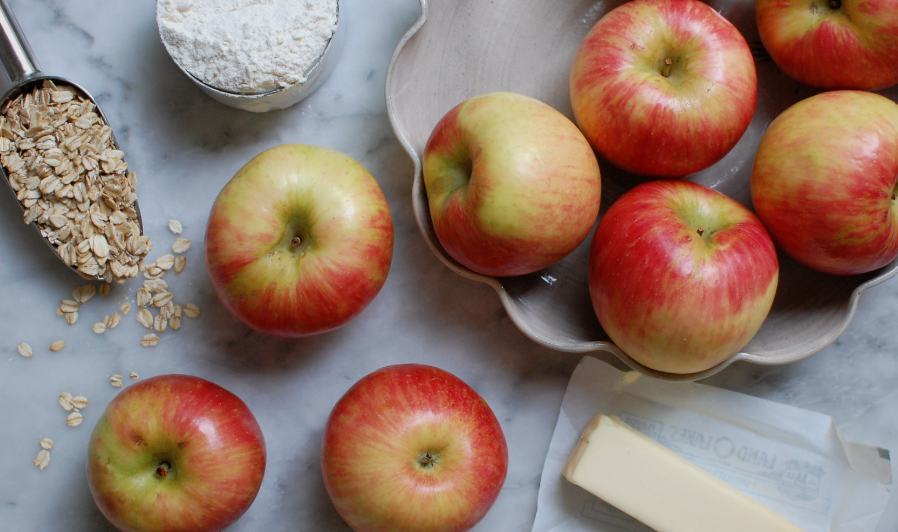
Apples that are good for baking are usually firm and hold their shape well when exposed to heat. Their flesh does not turn to mush easily, which allows baked dishes like pies, tarts, and crisps to maintain a pleasing texture while still becoming tender and flavorful.
These apples typically have a mix of sweetness and acidity, which intensifies during cooking and creates a rich, well-rounded taste. The natural sugars caramelize in the oven, adding depth and complexity to desserts without requiring excessive additional sweeteners.
Apples suitable for baking release enough juice to keep pastries moist while avoiding sogginess. This quality ensures that pies and crumbles have a perfect filling consistency and that cakes or breads remain tender.
Apples that Are Good for Baking
Granny Smith
Originating from Australia in the 1860s, Granny Smith apples are bright green with a crisp, firm texture. They are highly tart, which makes them perfect for pies, tarts, and crisps, as their acidity balances sweetness in desserts. They also hold their shape well during baking, avoiding mushiness.
Honeycrisp
Developed in Minnesota, USA, in the 1960s, Honeycrisp apples are known for their explosive juiciness and sweet-tart flavor. Their firm texture ensures they maintain structure when baked, making them ideal for pies and muffins. Their natural sweetness often reduces the need for added sugar in recipes.
Braeburn
Braeburn apples were discovered in New Zealand in the 1950s. They have a balanced flavor, combining sweetness with a hint of tartness, and a firm texture that withstands high-heat baking. Braeburn is excellent for pies, tarts, and even apple cakes because it retains both flavor and shape.
Fuji
Originating from Japan in the 1930s, Fuji apples are extremely sweet and crisp. They are less acidic, which makes them better suited for desserts where a natural sweetness is desired. While they can soften slightly when baked, their juicy flavor enriches muffins, crisps, and baked apple dishes.
Jonagold
Jonagold apples were developed in the United States in the 1940s as a cross between Jonathan and Golden Delicious apples. They have a sweet-tart flavor with a honeyed undertone and a firm, slightly coarse texture. Jonagold is ideal for pies, galettes, and apple crisps because it holds its shape while offering rich flavor.
Golden Delicious
Originating from West Virginia, USA, in the late 1800s, Golden Delicious apples are sweet with a mild flavor and tender, yet firm flesh. They bake well and develop a soft, buttery texture in pies, cakes, and tarts. Their sweetness often complements spices like cinnamon and nutmeg perfectly.
Cortland
Cortland apples were developed in New York, USA, in 1898. They are slightly tart with a hint of sweetness and have a tender, crisp texture. Cortlands are excellent for pies and salads because they resist browning when cut, and when baked, they hold their shape moderately well while offering a juicy, flavorful result.
Rome Beauty (Rome)
Originating in Ohio, USA, in the early 1800s, Rome Beauty apples are mildly sweet with low acidity. They have a firm, dense flesh that holds up exceptionally well during baking, making them ideal for pies, tarts, and baked apples. Rome apples are known for maintaining their shape even after long baking times.
Empire
Empire apples were developed in New York, USA, in the 1940s as a cross between McIntosh and Red Delicious. They are crisp, juicy, and have a balanced sweet-tart flavor. Empire apples are versatile in baking—they hold their shape in pies and crisps, while their natural sweetness enhances muffins and cakes.
McIntosh
McIntosh apples originated in Canada in the early 1800s. They are tender, juicy, and aromatic with a sweet-tart flavor. While they tend to soften quickly when baked, this makes them perfect for sauces, fillings, and soft-textured pies where a smooth consistency is desired.
Paula Red
Developed in Minnesota, USA, in the 1960s, Paula Red apples are slightly tart and very juicy. They are softer than some baking apples, so they work well for applesauce, crisps, or pies where a softer texture is acceptable. Their bright flavor adds a refreshing taste to baked desserts.
Winesap
Winesap apples date back to the 1700s in the USA. They have a firm texture with a tangy, slightly spicy flavor. Winesaps hold up well in pies and crisps, offering a strong, distinctive taste that pairs beautifully with warm spices like cinnamon, nutmeg, and cloves.
Stayman
Stayman apples were developed in Kansas, USA, in the early 1900s. They are firm, crisp, and slightly tart with a rich, full-bodied flavor. Stayman apples hold up very well in baking, making them excellent for pies and tarts, and their slightly tangy taste adds depth to desserts.
Pink Lady (Cripps Pink)
Pink Lady apples originated in Australia in the 1970s as a cross between Golden Delicious and Lady Williams. They are sweet-tart, very crisp, and slightly aromatic. Their firm texture makes them perfect for pies, crisps, and muffins, and their balanced flavor enhances both sweet and lightly spiced baked goods.
Northern Spy
Northern Spy apples come from New York, USA, and have been cultivated since the 1800s. They are large, firm, and tart, with a distinctive spicy-sweet flavor. Northern Spy holds its shape exceptionally well when baked, making it one of the top choices for pies and other baked apple desserts that require structure.
Jonathan
Jonathan apples were discovered in New York, USA, in the 1820s. They are medium-sized, crisp, and tangy with a bright, slightly acidic flavor. Jonathan apples are ideal for pies, crisps, and tarts because they hold their shape moderately well and add a sharp, classic apple flavor to baked dishes.
Empire State
Empire State apples are a modern cross of McIntosh and Red Delicious developed in New York, USA. They are sweet, juicy, and moderately firm. While they soften slightly when baked, their natural flavor enhances pies, muffins, and cobblers, making them a versatile baking apple for a variety of desserts.