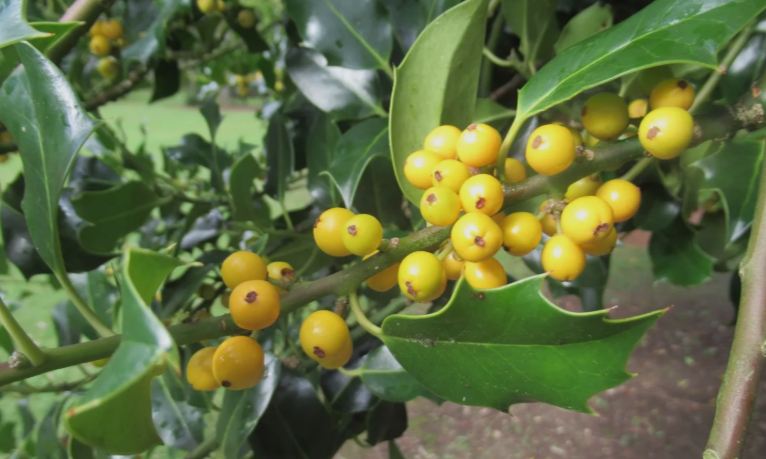
Poisonous yellow berries are less common than red or black ones, which is one reason they catch people off guard. Yellow fruit is fairly rare in the wild, because many plants ripen through yellow on the way to red, orange or black. A berry that stays yellow when ripe usually belongs to one of a few plant families.
The nightshade family accounts for many of them. Its yellow berries often resemble small tomatoes, and they contain bitter compounds that upset the stomach and affect the nerves. Other yellow fruits come from trees and shrubs planted for ornament, where the berries hang within easy reach of children.
Birds complicate the picture. They eat many of these berries without harm and spread the seeds, so a berry that birds enjoy is not safe for people. Dogs, cats and livestock are often at more risk than humans, because they may eat fruit in quantity.
Color alone never proves that a berry is safe or dangerous. The 14 yellow berries below are all poisonous to some degree, and each entry describes the plant, its effects and where it grows.
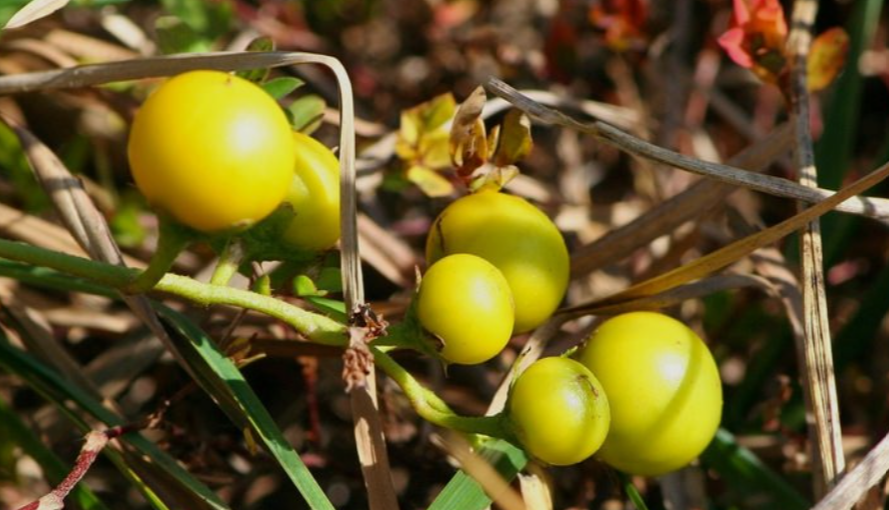
1. Horsenettle
Horsenettle is a prickly wild plant of the nightshade family. It grows 2 to 3 feet tall, with sharp spines on its stems and leaves. The flowers are white to pale violet, with a yellow center. The fruit is a smooth yellow berry about half an inch across. It looks very much like a tiny tomato. The berries often stay on the dead stems through winter.
North Carolina State University states that all parts of the plant are poisonous to humans. The toxin is a compound called solanine, and its level is highest in fall. The berries are the most dangerous part. The plant is also a problem for horses, cattle, dogs and cats. Its spines discourage grazing, so livestock poisonings are uncommon. It is native to the southeastern United States and grows in fields, pastures and roadsides across most of the country.
2. Chinaberry
Chinaberry is a fast-growing shade tree with fragrant lilac flowers. Its fruits are round and about half an inch across. They ripen from green to yellow or yellow-green. The flesh is sticky, and each fruit holds a hard, marble-like seed. The fruits wrinkle as they age. They hang on the bare branches through winter and into spring.
North Carolina State University rates the tree as having medium-severity poison characteristics. The fruit is poisonous to humans, some livestock, dogs and cats. Poisoning usually follows eating a large quantity. Symptoms include vomiting, diarrhea and, in severe cases, nervous-system effects. Birds eat the fruit and spread the seeds. The tree is native from India through China to Australia and is invasive across the southern United States, from the Carolinas to Texas.
3. Silverleaf Nightshade
Silverleaf nightshade is a perennial weed with silvery-gray leaves. It grows 1 to 3 feet tall and often has small prickles. The flowers are violet, with bright yellow centers. The berries are round and about half an inch across. They ripen from striped green to yellow or dull orange. They dry and wrinkle on the plant and persist for months.
The plant is poisonous to cattle, horses and sheep. Purdue University notes that in this species the ripe berries are more toxic than the green ones. An amount equal to about 0.1% of an animal’s body weight is considered toxic. The poison is the same type found in horsenettle. Affected animals drool, bloat and become weak. It is native to the southwestern United States and Mexico and grows from Texas to California, as well as in Australia and South Africa.
4. Tropical Soda Apple
Tropical soda apple is a thorny shrub of the nightshade family. It grows 3 to 6 feet tall. Its leaves and stems are covered in long, straight spines. The young fruit is green with pale mottling, like a small watermelon. It ripens to a smooth, dull yellow. Each fruit is about an inch across and holds hundreds of seeds.
The fruit contains a bitter nightshade compound and is considered poisonous to people. North Carolina State University notes that the plant is often confused with horsenettle. Cattle and wildlife eat the fruit and spread the seeds in their droppings. That habit has made it one of the worst pasture weeds in the South. A single plant can produce thousands of seeds. It is native to Brazil and Argentina and has invaded Florida, Georgia, Alabama, Mississippi and Texas.
5. Golden Dewdrop
Golden dewdrop is an evergreen shrub planted for its flowers and fruit. It can reach 18 feet tall in warm climates. The flowers are lavender-blue and hang in loose sprays. They are followed by bright yellow, round fruits about half an inch across. The fruits hang in long, trailing clusters. Mature plants bear thorns.
The University of Florida warns that the fruits are poisonous to humans and advises keeping children away from them. North Carolina State University adds that the fruit can be fatal to dogs and children. Birds eat the berries without harm. The leaves are toxic as well. Florida’s extension service now lists the shrub as a high invasion risk. It is native to tropical America and is grown in Florida, Texas, Louisiana, Arizona, California and Hawaii.
6. Jerusalem Cherry
Jerusalem cherry is a small shrub sold as a winter houseplant. It grows 1 to 2 feet tall, with dark green leaves. The flowers are small, white and star-shaped. The round fruits are about half an inch across. They ripen from green through yellow to orange or red, and some varieties stay yellow. They look like cherry tomatoes.
The plant belongs to the nightshade family. Its fruit contains a toxic compound that affects the stomach and the nervous system. Children are attracted to the bright berries. Symptoms include nausea, vomiting, stomach pain and drowsiness. The fruit is also poisonous to dogs, cats and birds kept as pets. It is native to South America and is grown as a pot plant worldwide, and it has gone wild in Florida, Texas, Hawaii, Australia and South Africa.
7. American Bittersweet
American bittersweet is a woody vine that twines up trees and fences. Its leaves turn yellow in fall. The fruits form in clusters at the tips of the stems. Each is a round capsule, yellow-orange and about the size of a pea. In autumn the capsule splits open to show a bright red seed covering. The fruiting stems are cut for wreaths and dried arrangements.
All parts of the plant are considered poisonous. The fruit causes vomiting and diarrhea if eaten. Dried arrangements bring the berries indoors, within reach of children and pets. Birds eat the fruit through winter. The vine has become scarce in parts of its range. It is native to eastern and central North America, from Quebec to Texas, and grows along woodland edges and fencerows.
8. Oriental Bittersweet
Oriental bittersweet is an aggressive Asian relative of the American vine. Its leaves are rounder. Its fruits grow all along the stem instead of only at the tips. Each capsule is yellow and pea-sized. It splits open in fall to reveal a red center. The yellow husks distinguish it from the native species.
The fruit is poisonous in the same way as American bittersweet. Eating it causes stomach upset, vomiting and diarrhea. The vine is widely sold in fall wreaths, which spreads its seeds. It strangles trees and smothers native plants. It also crosses with the native vine. It is native to China, Japan and Korea and is invasive across the eastern United States, from Maine to Georgia and west to the Great Plains.
9. Western Soapberry
Western soapberry is a native tree that reaches 25 to 50 feet. Its leaves are long and divided, and they turn gold in fall. Female trees bear large clusters of round fruits. Each fruit is about half an inch across. The flesh is yellow-orange and translucent, like amber. The fruits stay on the tree all winter and slowly darken.
Texas Tech University describes the fruit as potentially poisonous. The flesh is rich in soapy compounds called saponins. These lather in water and were once used for washing. They irritate the stomach if eaten and can cause skin rashes. The University of Florida advises planting the tree away from children. It grows from Missouri and Kansas south through Oklahoma and Texas to Arizona and northern Mexico.
10. Yellow-Fruited American Holly
Most hollies bear red berries, but some forms are yellow. The yellow-fruited American holly is a natural variant of the common evergreen holly. Its leaves are leathery and spiny. Its berries are round and about a third of an inch across. They ripen to a clear yellow in fall. They remain on female trees through winter.
Holly berries are mildly poisonous whatever their color. They contain saponins and related compounds. Eating a few can cause nausea, vomiting and diarrhea. Children are the most likely to try them, especially at Christmas. Pets can be affected in the same way. American holly is native to the eastern United States, from Massachusetts to Florida and west to Texas, and yellow forms are sold by specialist nurseries.
11. Yellow-Berried Yew
Yews normally have red fruit, but a few garden forms bear yellow. The yellow-berried yew is an evergreen shrub or small tree with flat, dark needles. Its fruit is a soft, cup-shaped berry. The cup is yellow and open at the tip. A single dark seed sits inside. The fruit ripens in early fall.
Yew is among the most dangerous garden plants. The seed, needles and bark contain compounds that stop the heart. The fleshy cup itself is not toxic, but the seed within it is. A small amount of foliage can kill a horse or cow. Death can come with little warning. Yellow-fruited yews are forms of the English yew, which is native to Europe, and they are grown in gardens in Britain, Europe and the cooler parts of North America.
12. Yellow-Berried Ivy
English ivy usually has black berries, but one form bears yellow. It is an evergreen climber with glossy, lobed leaves. It flowers only on mature, bushy growth. The flowers are small and greenish and open in fall. The berries follow in winter, in round clusters. On this form they ripen to dull yellow or orange-yellow.
Ivy berries are poisonous to people. They contain saponins that irritate the mouth and stomach. Eating them causes burning, vomiting and diarrhea. The leaves and sap can also cause a skin rash. The berries are very bitter, so serious poisoning is rare. The yellow-berried form is native to southern Europe, North Africa and western Asia, and it is grown in gardens across Europe and North America.
13. Mandrake
Mandrake is a low plant with a rosette of large, wrinkled leaves. It has a thick, forked root that can resemble a human figure. The flowers are pale violet or greenish-white. They sit at the center of the rosette. The fruits are round, smooth berries about an inch across. They ripen to yellow or orange-yellow and have a strong, sweet scent.
Mandrake belongs to the nightshade family and is highly poisonous. All parts contain compounds that disturb the heart and the nervous system. Symptoms include a dry mouth, blurred vision, confusion and hallucinations. Large doses can be fatal. The plant has a long history in medicine and folklore. It is native to the Mediterranean region, from Spain and Morocco east to Greece, Turkey and the Middle East.
14. Ginkgo
Ginkgo is an ancient tree with fan-shaped leaves that turn yellow in fall. Female trees produce round, yellow fruits about an inch across. These are not true berries but seeds with a fleshy coat. The coat is soft and yellow-orange. When it rots, it gives off a strong, unpleasant smell. The fruits drop in large numbers in late fall.
The fleshy coat causes skin rashes and blisters in many people. It contains compounds similar to those in poison ivy. The seed inside is toxic when raw and can cause seizures if eaten in quantity. Children are the most sensitive. Cooked seeds are eaten in small amounts in East Asia. Ginkgo is native to China and is planted as a street and park tree across North America, Europe, Japan and Korea.
Key Takeaway:
– Several plants produce poisonous yellow berries: Species such as horse nettle, yellow-berried nightshade relatives, and certain ornamental plants can produce yellow fruits containing toxic compounds.
– Color alone cannot determine toxicity: Yellow berries may be poisonous, edible, or inedible for other reasons. Correct identification requires examining the plant’s leaves, flowers, growth habit, and fruit characteristics.
– Some poisonous berries resemble edible fruits: Their size, color, and shape can make them difficult to distinguish from harmless species, particularly when encountered in gardens, forests, or along roadsides.
– Toxicity varies among plant species: Certain berries can cause digestive problems or other serious symptoms if swallowed. The level of risk depends on the plant, the amount consumed, and the individual exposed.
– Children and pets need extra protection: Keep unfamiliar yellow berries out of reach and avoid using unidentified berries in food, drinks, or homemade remedies.
– Accurate identification is essential: Use reliable botanical references, university extension resources, or a qualified plant expert to identify suspicious berries. If someone eats a potentially poisonous berry, contact a local poison information service or seek urgent medical advice rather than waiting for symptoms.
Sources:
- North Carolina State University: horsenettle
- University of Florida: Are the berries of the golden dewdrop poisonous to my children?
- Texas Tech University: Western Soapberry
- North Carolina State University: chinaberry
- North Carolina State University: golden dewdrop
- University of Florida: Golden Dewdrop, Do Not Use
- University of Florida: Soapberry
- Iowa State University: Horsenettle
- Purdue University: Carolina Horsenettle
- University of Tennessee: Horsenettle
- US Forest Service: western soapberry
- Wikipedia: Sapindus saponaria
- Grow Native: Western Soapberry