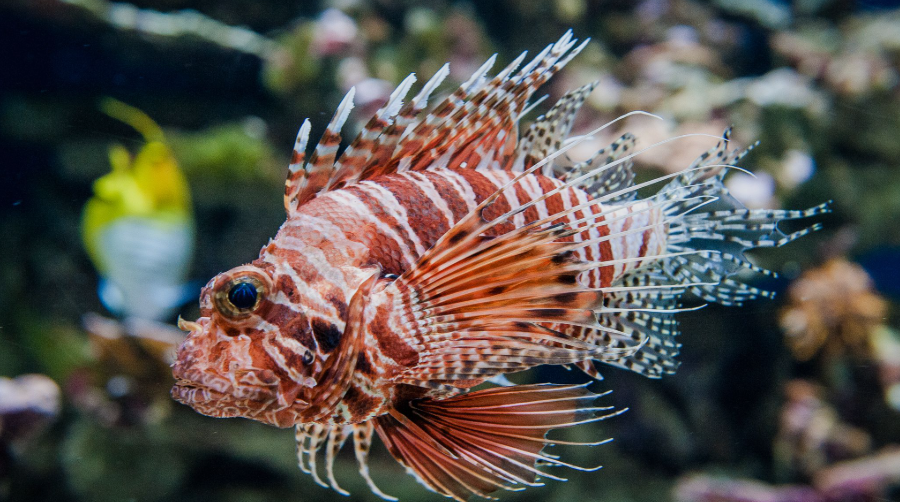
Poisonous fish species fall into two groups that are often confused. Poisonous fish carry toxins in their flesh, skin or organs and cause harm when eaten. Venomous fish deliver their toxin through spines, and this list covers both because both are commonly called poisonous.
The most dangerous poison belongs to the pufferfish and their relatives. It is a nerve toxin more than 1,000 times as toxic as cyanide, and one fish can hold enough to kill about 30 adults. The fish do not make it themselves but build it up from the small animals they eat.
Other fish become poisonous through the food chain in a different way. Large reef predators can accumulate a toxin made by tiny algae, and cooking does not destroy it. A few species carry oils, blood or eggs that sicken people.
Venomous fish are more numerous than venomous snakes, and most use their spines only in defense. The 28 fish below include the most important members of each group, and each entry notes where the fish lives.
1. Tiger Puffer
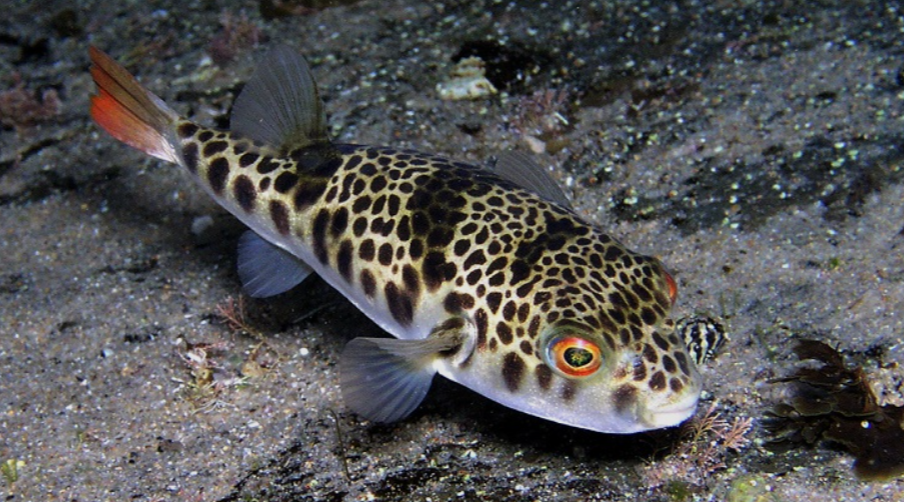
The tiger puffer is the fish served in Japan as fugu. It grows to about 2 feet long. Its back is dark, and its belly is white. A large black spot ringed with white sits behind each pectoral fin. It can inflate its body with water when threatened. It is the most prized of the edible puffers.
Its liver, ovaries and intestines hold a deadly nerve toxin. Louisiana State University notes that the toxin is more than 1,000 times as toxic as cyanide. Japan recorded 20 to 44 poisoning incidents a year between 1996 and 2006, with up to 6 deaths a year. Only licensed chefs may prepare the fish. Farmed puffers raised on controlled feed carry little or no toxin. It lives in the northwestern Pacific, around Japan, Korea and eastern China.
2. Silver-Cheeked Toadfish
The silver-cheeked toadfish is a large, highly toxic puffer. It can reach 3 feet in length. Its back is gray-green with dark spots. A broad silver band runs along each side. Its belly is white. Its teeth are strong enough to cut fishing line and nets.
Its flesh, skin and organs can all hold the pufferfish nerve toxin. It has caused deaths in several Mediterranean countries. It entered that sea from the Red Sea through the Suez Canal. It has spread quickly since the early 2000s. Many countries have banned its sale. It is native to the Indian and western Pacific oceans and now lives across the eastern Mediterranean.
3. Starry Puffer
The starry puffer is one of the largest pufferfish. It can grow to nearly 4 feet. Its body is pale gray to white. It is covered with small black spots. Young fish are yellow-orange with dark stripes. It swims slowly over reefs and sandy slopes.
Its organs and skin contain the pufferfish nerve toxin. Eating it has caused fatal poisonings. Divers can watch it safely, since it is not venomous. It feeds on corals, sponges, crabs and sea urchins. Its beak-like teeth can crush shells. It lives in the Indian and Pacific oceans, from the Red Sea and East Africa to Japan and Australia.
4. Long-Spine Porcupinefish
The long-spine porcupinefish is covered with long, sharp spines. The spines lie flat when the fish is relaxed. When it inflates, they stand straight out. Its body is pale brown with dark blotches. Its eyes are large. It grows to about 20 inches.
Louisiana State University lists porcupinefish among the relatives of the puffers that may carry the same nerve toxin. The poison is concentrated in the organs. The dried, inflated bodies are sold as souvenirs. The fish is active at night. It feeds on snails, crabs and urchins. It lives in tropical seas around the world, including the Caribbean, the Gulf of Mexico, Hawaii and the Indo-Pacific.
5. Northern Puffer
The northern puffer is a small pufferfish of the American coast. It reaches 8 to 10 inches. Its back is olive-gray with dark bars along the sides. Its belly is yellow to white. Its skin is covered with tiny prickles. It inflates into a ball when handled.
It is less dangerous than its tropical relatives. Its flesh is generally considered safe and is sold along the Mid-Atlantic coast. Its skin and organs may still contain toxin. Careful cleaning is essential. Related puffers from Florida have caused poisonings. It lives along the Atlantic coast of North America, from Newfoundland to Florida.
6. Yellow Boxfish
The yellow boxfish has a rigid, cube-shaped body. Young fish are bright yellow with black spots. Adults fade to a dull blue-gray or mustard color. It grows to about 18 inches. It swims by fluttering its small fins. It is popular in aquariums.
Its skin releases a poison when the fish is stressed. The toxin breaks down the blood cells of other fish. In a tank it can kill every fish, including the boxfish itself. Its bright juvenile colors warn predators. It is not dangerous to touch. It lives on coral reefs in the Indian and Pacific oceans, from the Red Sea to Hawaii.
7. Spotted Trunkfish
The spotted trunkfish is a boxfish of the western Atlantic. Its body is encased in a bony shell. It is white to pale gray with many black spots. Two small spines point backward near the tail. It grows to about 18 inches. It shelters under ledges on reefs.
It releases a colorless toxin from glands in its skin when disturbed. The poison is harmful only when swallowed. Divers are not at risk. Predators as large as nurse sharks have reportedly died after eating one. It is sometimes eaten in the Caribbean with care. It lives in the Caribbean Sea, the Gulf of Mexico and along Florida and the Bahamas south to Brazil.
8. Sixline Soapfish
The sixline soapfish is named for its slimy skin. Its body is dark brown to black. Several thin white or yellow lines run from head to tail. It grows to about 12 inches. It hides in holes and under ledges by day. It hunts at night.
Its skin produces a thick, bitter mucus. When the fish is stressed, the slime lathers like soap. It contains a toxin that repels predators. In an aquarium it can poison other fish. It is unpleasant but not dangerous to people who touch it. It lives on reefs in the Indian and Pacific oceans, from the Red Sea to Japan and Polynesia.
9. Moses Sole
The Moses sole is a small flatfish of the Red Sea. It grows to about 10 inches. Its upper side is pale brown with dark spots. It lies partly buried in sand. Both eyes are on one side of its head. It is hard to see on the seabed.
Glands along its fins release a milky toxin. The substance makes a shark’s jaws freeze before it can bite. Scientists studied it in the 1970s as a possible shark repellent. The toxin breaks down too quickly to be practical. It also kills small fish and other sea creatures. It lives in the Red Sea and the western Indian Ocean.
10. Reef Stonefish
The reef stonefish is the most venomous fish known. It looks like a lump of rock or coral. Its skin is warty and often covered with algae. It grows to about 14 to 20 inches. It lies still on the bottom and waits for prey. It strikes in a fraction of a second.
It has 13 stout spines along its back. Each has venom glands at its base. Stepping on the fish drives the spines into the foot. The pain is extreme, and the venom can stop the heart. An antivenom is available. It lives in shallow tropical waters of the Indian and Pacific oceans, from the Red Sea to northern Australia.
11. Red Lionfish
The red lionfish is striped in red, brown and white. Its fins spread into long, feathery rays. It grows to about 15 inches. It hovers near reefs and wrecks. It has few natural enemies. It eats large numbers of small fish.
The Florida Museum of Natural History at the University of Florida warns that its long fin spines are venomous and must be handled with extreme care. It carries 18 venomous spines. A sting causes intense pain and swelling. The fish was introduced to Florida’s Atlantic coast in the 1980s. Its flesh is white, flaky and safe to eat once the spines are removed. It is native to the Indian and Pacific oceans and is now invasive in the western Atlantic, the Caribbean and the Gulf of Mexico.
12. Spotted Scorpionfish
The spotted scorpionfish is a master of camouflage. Its body is mottled brown, red and gray. Fleshy flaps on its head break up its outline. It grows to about 18 inches. It rests motionless on rocks and reefs. The inner side of its pectoral fins is brightly spotted.
Its dorsal spines carry venom. A sting causes sharp pain, swelling and sometimes nausea. Most injuries happen when a swimmer or diver touches one by accident. The venom is far weaker than that of a stonefish. Hot water helps relieve the pain. It lives in the western Atlantic, from the eastern United States through the Caribbean to Brazil.
13. Greater Weever
The greater weever is a slender fish that hides in sand. It grows to about 15 inches. Its body is yellow-brown with slanted blue and yellow lines. Its eyes sit high on its head. It buries itself with only the eyes showing. It lies close to shore in summer.
It has venomous spines on its first dorsal fin and gill covers. Bathers step on it, and fishers are stung while sorting catches. The pain is severe and can last for hours. Stings are rarely fatal. Its flesh is good to eat and is used in fish soup. It lives in the northeastern Atlantic, the Mediterranean and the Black Sea.
14. Striped Eel Catfish
The striped eel catfish is the only catfish found on coral reefs. Its body is dark brown with two white stripes. Its tail tapers like an eel’s. It grows to about 12 inches. Young fish swim in tight, ball-shaped schools. Adults live alone or in small groups.
It has a sharp, venomous spine on its back and on each side. A sting is very painful. In rare cases it has been fatal. The fish also has toxic skin mucus. It has entered the Mediterranean through the Suez Canal. It is native to the Indian and western Pacific oceans, from the Red Sea to Japan and Australia.
15. Atlantic Stargazer
The Atlantic stargazer has eyes on top of its flat head. Its mouth points upward. Its body is brown and tapers toward the tail. It grows to about 12 inches. It buries itself in sand or mud. It lures prey with a small flap of skin in its mouth.
It carries a venomous spine above each pectoral fin. Fishers are stung when removing it from nets. The sting causes strong pain and swelling. Its flesh is edible and used in Mediterranean cooking. It is not aggressive. It lives in the eastern Atlantic, the Mediterranean and the Black Sea.
16. Foxface Rabbitfish
The foxface rabbitfish is a bright yellow reef fish. Its head is patterned in black and white, like a fox’s face. Its snout is long. It grows to about 9 inches. It feeds on algae. It is a common aquarium fish.
The spines of its dorsal, pelvic and anal fins are venomous. A sting is painful but not usually dangerous. Aquarium keepers are the most frequent victims. When frightened, the fish turns mottled brown. Rabbitfish are eaten in parts of Asia after careful handling. It lives on coral reefs in the western Pacific, from Indonesia and the Philippines to New Caledonia.
17. Spotted Ratfish
The spotted ratfish is a relative of sharks and rays. Its skeleton is made of cartilage. Its body is bronze with white spots. Its eyes are large and green. It has a long, pointed tail. It grows to about 2 feet.
A single sharp spine stands in front of its dorsal fin. The spine is mildly venomous. It gives a painful wound to anyone who handles the fish. It is often caught by accident. Its flesh has an unpleasant taste. It lives in the northeastern Pacific, from Alaska to Baja California.
18. Southern Stingray
The southern stingray is a flat, diamond-shaped fish. Its back is gray, brown or olive. Its underside is white. Females can reach 5 feet across. It lies buried in sand in shallow water. It feeds on clams, worms and crabs.
Its tail carries a long, barbed spine. The spine is coated in venom. A stingray strikes only when stepped on or cornered. The wound is very painful and may become infected. Shuffling the feet in shallow water warns rays away. It lives in the western Atlantic, from New Jersey to Brazil, including the Gulf of Mexico and the Caribbean.
19. Greenland Shark
The Greenland shark is a huge, slow shark of cold seas. It can exceed 20 feet in length. Its skin is gray-brown. It swims very slowly. It is the longest-lived vertebrate known. Some are thought to be several hundred years old.
Its fresh flesh is poisonous. It contains a compound that helps the shark survive in cold, deep water. Eating it causes effects like extreme drunkenness. In Iceland the meat is fermented and dried for months to make it safe. Sled dogs fed the raw meat have been unable to stand. It lives in the North Atlantic and Arctic oceans, around Greenland, Iceland, Norway and Canada.
20. Great Barracuda
The great barracuda is a long, silver predator. It can grow to 5 or 6 feet. Its jaw juts forward and is full of sharp teeth. Dark spots mark its lower sides. It hunts by sudden bursts of speed. It often follows divers out of curiosity.
Large barracudas are a leading cause of a reef-fish poisoning called ciguatera. The toxin is made by tiny algae and builds up through the food chain. Auburn University’s Alabama Extension advises taking precautions against this toxin in reef fish. Cooking and freezing do not destroy it. Symptoms include vomiting, tingling and a reversal of hot and cold sensations. The barracuda lives in tropical and subtropical seas worldwide, including Florida, the Caribbean and the Indo-Pacific.
21. Giant Moray
The giant moray is the heaviest of the moray eels. It can reach 10 feet in length. Its body is brown with dark speckles. It has no scales. It hides in reef crevices by day. It hunts fish and crustaceans at night.
Its flesh, and especially its liver, can hold very high levels of ciguatera toxin. Eating it has caused severe and fatal poisonings. As a top predator, it collects toxin from everything it eats. Its bite can also cause serious wounds. It is not venomous. It lives on reefs across the Indian and Pacific oceans, from the Red Sea and East Africa to Hawaii.
22. Escolar
The escolar is a dark, deep-water fish. It grows to about 6 feet. Its skin is dark brown to black. Its flesh is white, rich and buttery. It is caught as bycatch by tuna fishers. It is sometimes sold as white tuna or butterfish.
Its flesh contains a waxy oil that people cannot digest. Eating more than a small portion causes oily diarrhea. The effect begins within hours. It is unpleasant but not life-threatening. Japan and Italy have banned its sale. It lives in deep tropical and temperate waters around the world.
23. Oilfish
The oilfish is a close relative of the escolar. It can reach about 6 feet. Its skin is purplish-brown and rough. Small spiny scales cover its body. It lives in deep water by day. It rises toward the surface at night.
Its flesh is even richer in indigestible wax than the escolar’s. It causes the same oily diarrhea. It has been sold mislabeled as cod or sea bass. Such cases have led to outbreaks of illness. Some Pacific islanders have used it as a laxative. It lives in tropical and temperate seas worldwide.
24. Salema Porgy
The salema porgy is a silver fish with gold stripes. It grows to about 12 to 18 inches. It swims in large schools. It grazes on seagrass and algae. It is a common sight for snorkelers. It is eaten around the Mediterranean.
At certain times its head and organs can cause hallucinations. Affected people report vivid, frightening visions lasting a day or more. The cause is thought to be a toxin from the algae it eats. Cases are rare and unpredictable. In Arabic it is known as the fish that makes dreams. It lives in the Mediterranean Sea and the eastern Atlantic, from the Bay of Biscay to South Africa.
25. Scrawled Filefish
The scrawled filefish is a long, flat fish with a brush-like tail. It can reach 3 feet. Its body is olive to tan. It is covered with blue lines and black spots. It often drifts head down among sea plants. A slender spine stands above its eye.
Its gut and organs have been found to contain a powerful toxin. The poison comes from the soft corals and other toxic animals it eats. Eating the fish has been linked to poisoning. It is not venomous and is safe to watch. It is rarely used for food. It lives in tropical and subtropical seas worldwide, including the Caribbean, the Gulf of Mexico and the Indo-Pacific.
26. Alligator Gar
The alligator gar is one of the largest freshwater fish in North America. It can exceed 8 feet in length. Its snout is broad, like an alligator’s. Its body is armored with hard, diamond-shaped scales. It has two rows of sharp teeth. It can breathe air at the surface.
Its eggs are poisonous. They sicken people, mammals and birds that eat them. Symptoms include vomiting, diarrhea and dizziness. The flesh is safe and is eaten in the southern United States. The toxin is thought to protect the eggs from predators. It lives in the lower Mississippi River basin and the Gulf Coast, from Florida to Texas and Mexico.
27. Cabezon
The cabezon is a large sculpin of the Pacific coast. Its head is broad, and its mouth is wide. Its skin is smooth and mottled brown, green or red. It grows to about 3 feet. It sits among rocks and kelp. It feeds on crabs and abalone.
Its eggs are poisonous to people. Eating the roe causes violent stomach illness. The flesh is safe and well regarded. Its meat is sometimes blue-green before cooking. Males guard the egg masses on the rocks. It lives in the northeastern Pacific, from Alaska to Baja California.
28. Sea Lamprey
The sea lamprey is a jawless, eel-shaped fish. It grows to about 3 feet. Its mouth is a round sucker lined with teeth. It attaches to other fish and feeds on their blood. Its skin is slimy and mottled. It breeds in rivers.
Its skin mucus and blood are toxic. The fish must be cleaned thoroughly before cooking. Properly prepared, it is a traditional dish in Portugal, Spain and France. An English king is said to have died after eating too many. It has devastated fisheries in the Great Lakes. It is native to the North Atlantic and its rivers, in both Europe and North America.
Key Takeaways:
- Some fish contain natural toxins: Certain species, such as pufferfish, produce potent toxins that can cause severe illness or death if consumed improperly prepared.
- Poisonous and venomous fish are different: Poisonous fish can cause harm when eaten or touched, depending on the species, while venomous fish inject toxins through specialized structures such as spines.
- Pufferfish are among the best-known toxic fish: Many pufferfish contain tetrodotoxin, a powerful neurotoxin that can affect the nervous system and interfere with breathing.
- Some reef fish can cause food poisoning: Large tropical reef fish, including certain barracudas and groupers, may carry ciguatoxins that cause ciguatera fish poisoning.
- Appearance alone cannot establish whether a fish is toxic: Colorful patterns, unusual body shapes, and sharp spines may help identify certain species, but dangerous toxins are not always visible.
- Proper identification and handling are essential: Never eat an unfamiliar fish or attempt to prepare a potentially toxic species without appropriate expertise. Cooking and freezing do not reliably destroy many fish toxins, so follow official food-safety guidance.
Sources:
- Louisiana State University and Louisiana Sea Grant: tetrodotoxin and pufferfish
- Florida Museum of Natural History, University of Florida: Lionfish
- Alabama Extension, Auburn University: Venomous Lionfish
- Florida Atlantic University: lionfish spines
- University of Florida: The Red Lionfish and Devil Firefish
- Florida Sea Grant: lionfish and ciguatoxin
- Time: fugu
- Free Malaysia Today: the pufferfish explained
- JungleDragon: Spotted Trunkfish