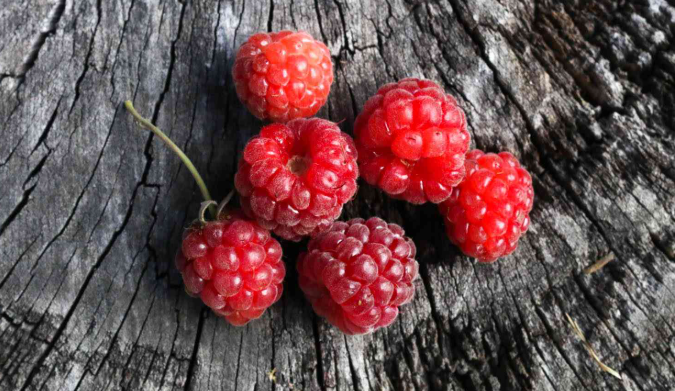
Berries without seeds sound like a contradiction, since a true botanical berry is technically defined as a fleshy fruit that develops from a single ovary and typically contains multiple seeds embedded directly in its flesh. That botanical definition is also where things get genuinely surprising, because it excludes several fruits most people would confidently call berries, including strawberries and raspberries, while including a long list of fruits almost nobody thinks of that way, such as bananas, tomatoes, and citrus fruits. Once that technical definition is on the table, “seedless berries” stops sounding like a contradiction and starts describing a real and fairly large category of cultivated produce.
Most of the seedless fruits on this list achieve their seedless state through one of two biological mechanisms: triploidy, where a plant inherits three sets of chromosomes instead of the usual two and becomes sterile as a result, or parthenocarpy, where a fruit develops without fertilization ever taking place at all. Both traits occur naturally on rare occasions, but virtually every seedless fruit sold commercially today exists because a plant breeder deliberately identified, propagated, and multiplied one of these rare natural mutations, sometimes with help from radiation-induced mutagenesis or targeted hybrid crosses.
These fruits are grown across a genuinely global range of climates, from the tropical lowlands of Southeast Asia and South America to the citrus groves of Texas, Florida, and California, and each one carries its own specific breeding history. Understanding where and how a given seedless variety originated helps explain not just its flavor and texture, but also why some seedless fruits remain rare specialty items while others have become the default version most people buy without a second thought.
What follows covers 15 true botanical berries grown specifically or predominantly in seedless form, along with where each one is cultivated, its breeding origin, and the growing data that sets it apart.
Banana
Banana is native to Southeast Asia and the western Pacific, and virtually every banana sold commercially worldwide today is a seedless, sterile triploid, meaning it carries three sets of chromosomes instead of the usual two. That triploidy disrupts normal seed formation entirely, which is why cultivated bananas must be propagated from suckers or through tissue culture rather than grown from seed. The dominant commercial variety accounts for roughly 47% of global banana production, and a single plant typically produces one bunch weighing 25 to 65 pounds within 9 to 12 months of planting.
Bananas are grown commercially across tropical regions of Latin America, Southeast Asia, and Africa, with global banana exports valued at over $8 billion annually. Because nearly all commercial banana plants are genetically identical clones descended from a single triploid ancestor, the crop remains highly vulnerable to disease outbreaks that can spread rapidly across entire growing regions.
Seedless Watermelon
Watermelon is native to Africa, and while wild and older cultivated varieties are packed with seeds, the seedless type sold in most grocery stores today is a triploid hybrid first bred in 1951 by a researcher at Kyoto University in Japan. According to a University of Georgia Cooperative Extension report, triploid watermelon plants are created by crossing a standard diploid plant with a tetraploid plant, and the resulting triploid offspring is sterile and requires a nearby diploid pollenizer plant to trigger fruit development even though no viable seeds form. More than 90% of watermelons grown in the United States today are seedless triploid cultivars, a dramatic shift from a crop that was almost entirely seeded just a few decades ago.
Watermelon production in the U.S. is concentrated in states including Georgia, Florida, Texas, and California, with a single seedless melon typically weighing 15 to 25 pounds at harvest.
Seedless Table Grapes
Grape is native to a wide swath of Europe, the Middle East, and Central Asia, and while ancient cultivated grapes were universally seeded, a spontaneous seedless mutation gave rise to some of the most widely planted varieties grown today. One such variety, first noted in the late 1800s, became foundational to seedless grape breeding programs, and a related cultivar bred in the 1960s and 70s combined a red skin with seedlessness to create one of the most commercially significant table grapes of the past half-century. According to research from the University of California’s agricultural extension program, seedless grape growers commonly apply a natural plant hormone at bloom time to increase berry size, since seedless grapes tend to develop smaller fruit than seeded varieties without that additional treatment.
Seedless table grapes are grown extensively in California’s San Joaquin Valley, which produces the large majority of table grapes consumed in the United States, with a single mature vine capable of producing 40 or more bunches in a good growing season.
Navel Orange
Navel orange is native to a mutation first discovered on a single tree in a Brazilian orchard in the early 1800s, and every navel orange tree grown today is a clone propagated from cuttings or grafts of that original tree or its descendants, since navel oranges rarely produce viable pollen and won’t reliably grow true from seed. Its seedlessness comes from a genetic mutation that disrupts normal pollen and ovule development, and the fruit’s distinctive “navel” is actually a small secondary fruit that develops inside the primary one. A mature tree can produce 200 to 300 pounds of fruit annually once fully established, typically after 4 to 5 years.
Navel oranges are grown commercially in California, Arizona, Florida, and Texas, with California’s San Joaquin Valley producing the majority of the U.S. crop for fresh eating rather than juice.
Seedless Cucumber
Cucumber is native to South Asia, likely the Indian subcontinent, and while most field-grown cucumbers still contain visible seeds, an entire category of parthenocarpic varieties has been bred specifically to develop fruit without pollination or seed formation at all. According to Purdue University’s Vegetable Crops Hotline, these parthenocarpic cucumbers are especially valued for greenhouse and high tunnel production, since they don’t require pollinators and produce a milder, less bitter cucumber with thinner, more tender skin. A single greenhouse cucumber vine can produce fruit continuously for 3 months or longer under proper conditions.
Seedless cucumbers are grown extensively in commercial greenhouses across the Netherlands, Canada, and the United States, with individual fruits typically reaching 12 to 14 inches in length.
Seedless Persimmon
Persimmon is native to China, and while many persimmon varieties develop several large seeds per fruit, certain cultivars are naturally parthenocarpic and produce fruit with little to no seed content even without cross-pollination from a compatible variety. One of the most widely grown seedless types is a flattened, non-astringent variety that can be eaten firm, unlike astringent persimmon types that must fully soften before eating. A mature tree typically reaches 20 to 30 feet and can produce fruit for well over 50 years once established.
Seedless persimmons are grown commercially in California, with additional production across parts of the Southeast, and a single tree can yield several hundred fruits annually at full maturity.
Seedless Kiwi
Kiwi is native to the Yangtze River valley of China, and while the fuzzy, brown-skinned kiwi most people know contains hundreds of tiny black seeds, several smooth-skinned, grape-sized relatives have been bred to be effectively seedless or nearly so through selective propagation of naturally low-seed mutations. These smaller kiwi varieties can be eaten whole, skin included, without the need to peel or scoop out the flesh. A mature vine requires a sturdy trellis system and can take 3 to 4 years to begin producing a substantial fruit crop.
Seedless kiwi varieties are grown commercially in New Zealand, Chile, and parts of the Pacific Northwest United States, with a single established vine capable of producing over 100 pounds of fruit annually.
Seedless Tomato
Tomato is native to western South America, and while the vast majority of tomato varieties develop numerous small seeds inside their flesh, certain parthenocarpic cultivars have been specifically bred to set fruit without pollination or seed development, a trait especially valued for greenhouse production and processing into products like paste and sauce where seeds are considered undesirable. These parthenocarpic tomatoes can produce a full fruit set even under greenhouse conditions where pollinating insects are scarce or absent. A mature indeterminate tomato plant can produce fruit continuously for 8 months or longer under controlled greenhouse conditions.
Seedless tomato cultivars are grown primarily in commercial greenhouse operations across North America and Europe, with individual fruits typically reaching 4 to 6 ounces depending on the specific variety.
Seedless Eggplant
Eggplant is native to South and East Asia, and while most eggplant varieties contain small, edible seeds scattered through their flesh, certain cultivars have been selectively bred to produce noticeably fewer seeds or none at all, resulting in a smoother, less bitter flesh preferred by many cooks. These lower-seed varieties are particularly popular in regions where eggplant is eaten young and tender, before significant seed development has occurred. A mature plant typically reaches 2 to 4 feet tall and can produce fruit continuously through a single growing season.
Seedless and low-seed eggplant varieties are grown widely across Asia, the Mediterranean, and parts of the southern United States, with individual fruits ranging from 4 ounces to over a pound depending on the cultivar.
Seedless Lime
Lime is native to Southeast Asia, and the variety most commonly sold in U.S. grocery stores today is naturally seedless, having arisen as a spontaneous hybrid mutation that produces fruit without the need for cross-pollination. Unlike its smaller, more acidic and notably seeded relative popular in certain regional cuisines, this seedless type produces larger fruit with a milder flavor and a longer shelf life, both traits that helped it become the dominant commercial lime variety worldwide. A mature tree can reach 15 to 20 feet and begins bearing fruit within 3 to 5 years of planting.
Seedless limes are grown commercially in Mexico, Florida, and California, with a single mature tree capable of producing several hundred fruits annually under good growing conditions.
Seedless Mandarin
Mandarin is native to southern China and Southeast Asia, and one particularly popular seedless variety was developed in Algeria in the late 1800s as a natural hybrid before spreading to citrus-growing regions worldwide. This variety remains reliably seedless specifically because it requires isolation from other citrus varieties during pollination; when grown near compatible pollinators, the same trees can develop small numbers of seeds. A mature tree typically reaches 8 to 12 feet and can produce fruit for several decades under proper care.
Seedless mandarins are grown commercially in California’s Central Valley, Spain, and Morocco, with individual fruits typically weighing 2.5 to 4 ounces at harvest.
Seedless Grapefruit
Grapefruit is native to the Caribbean, having originated as a natural hybrid between two other citrus species, and while early grapefruit varieties were heavily seeded, a series of mutations discovered in Texas and Florida orchards throughout the 20th century produced increasingly seedless, deeply pigmented varieties. One of the most notable, developed through irradiation-induced mutation breeding at a Texas research center in 1970, remains among the darkest-fleshed and lowest-seeded grapefruit varieties available, as documented by the University of California, Riverside’s citrus variety collection. A mature grapefruit tree can reach 15 to 20 feet and produce fruit for 50 years or more.
Seedless grapefruit varieties are grown commercially across Texas, Florida, and California, with red grapefruit having been officially designated the state fruit of Texas in 1993.
Seedless Zucchini
Zucchini, a type of summer squash, is native to Central America, and while standard field-grown zucchini develops numerous small, soft seeds throughout its flesh, certain parthenocarpic cultivars have been bred specifically for greenhouse production, setting fruit without pollination and developing little to no seed tissue. These seedless types tend to produce a more uniform, blemish-free fruit compared to open-pollinated field varieties, which depend on consistent bee activity for proper fruit shape. A mature plant can produce fruit within just 45 to 55 days of planting under favorable conditions.
Seedless zucchini varieties are grown commercially in greenhouse operations across Europe and North America, with individual fruits typically harvested at 6 to 8 inches long for the best texture and flavor.
Seedless Papaya
Papaya is native to Central America and southern Mexico, and while most commercially grown papaya varieties are packed with hundreds of small black seeds, breeding programs have developed experimental parthenocarpic lines capable of producing fruit with little to no seed development. These seedless lines remain far less common commercially than seeded papaya, since achieving reliable parthenocarpy in the species has proven more difficult than in crops like cucumber or tomato. A standard papaya plant begins producing fruit within 9 to 12 months of planting and can continue for 3 to 4 years.
Papaya is grown commercially across Hawaii, Mexico, Brazil, and parts of Southeast Asia, with a single mature plant capable of producing over 100 pounds of fruit annually under good conditions.
Seedless Guava
Guava is native to Central America and northern South America, and while most guava varieties are filled with dozens of hard, gritty seeds throughout the flesh, several seedless or low-seed cultivars have been developed specifically to address that texture complaint, particularly in parts of Asia where guava is eaten fresh as a snack rather than processed. These seedless types tend to have a smoother, more uniform flesh texture that’s considerably easier to eat without spitting out seeds. A mature guava shrub or small tree typically reaches 10 to 20 feet and can begin bearing fruit within 2 to 4 years of planting.
Seedless guava varieties are grown commercially in Thailand, Taiwan, and India, with individual fruits ranging from 3 to 6 ounces depending on the specific cultivar and growing conditions.
Further References
- University of Florida IFAS Extension — Parthenocarpy.
University of Florida IFAS Extension — Parthenocarpy
Explains how fruits can develop without fertilization and provides useful examples of parthenocarpic, seedless fruits. - FAO — Grape Production and Post-Harvest Information.
FAO — Grape Production and Post-Harvest Compendium
Particularly useful for seedless grapes. It explains that many commercially important seedless grape varieties are stenospermic, meaning fertilization occurs but the developing embryo aborts, leaving only tiny seed traces. - University of California Agriculture and Natural Resources — Seedlessness.
University of California Agriculture and Natural Resources — Seedlessness
A concise reference explaining the distinction between parthenocarpy, in which fruit develops without fertilization, and stenospermy, in which the embryo aborts after fertilization. - Frontiers in Plant Science — The Occurrence of Seedlessness in Higher Plants.
Frontiers in Plant Science — The Occurrence of Seedlessness in Higher Plants
A research-based source covering the biological mechanisms behind seedlessness and examples from crops such as grapes, citrus, bananas, pineapples, and watermelons. - Oxford Academic — The Making of Virgin Fruit: The Molecular and Genetic Basis of Parthenocarpy.
Oxford Academic — The Molecular and Genetic Basis of Parthenocarpy
A useful scientific reference for explaining how parthenocarpic fruits form without fertilization and why seedlessness is an important trait in fruit production. - NCBI/PubMed Central — Seedlessness Trait and Genome Editing: A Review.
NCBI — Seedlessness Trait and Genome Editing: A Review
Provides a modern review of seedlessness, including parthenocarpy, stenospermocarpy, breeding, polyploidy, and genetic approaches used to develop seedless fruit.